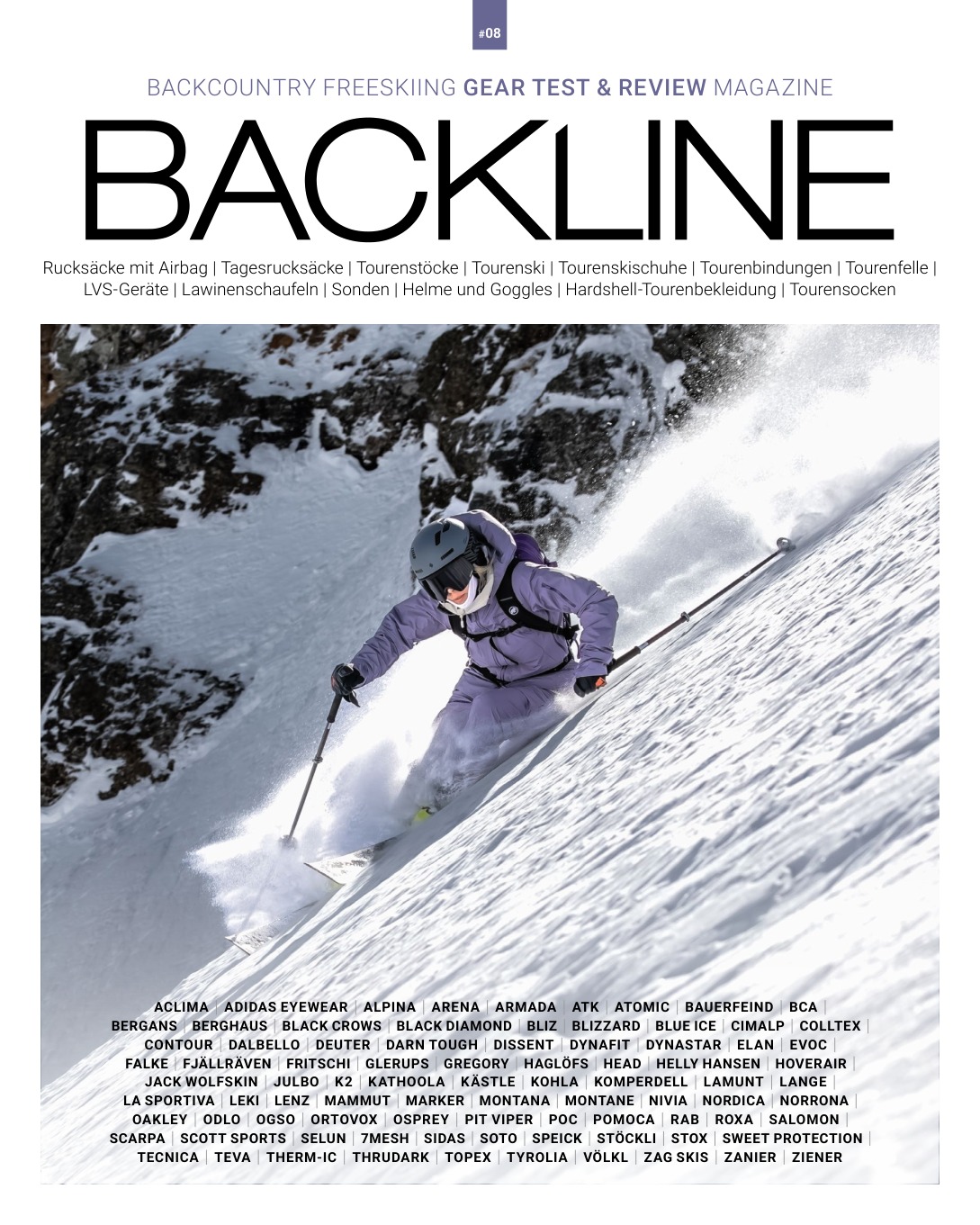
Ski touring skis · Test magazine 2026
Tech talk with Anja Blieninger, Marker, Dalbello, Völkl
Category Director · Print page 73
Tests, reviews and background on Marker, Dalbello, Völkl
What are the pros and cons of specific women's and men's touring ski models?
In contrast to some other segments, in my opinion, touring skis are less about gender and more about skiing ability, power, size and, above all, personal preferences. Some are looking for maximum efficiency on the climb, others place more value on skiing performance on the descent. Women's models are often simply given a softer flex - in my opinion that doesn't go far enough. A technically strong touring skier doesn't automatically need a softer ski, but rather a ski that suits her skiing style and needs. When developing our touring skis, we consciously try not to differentiate between women and men, but rather to cover different needs and areas of use.
The weight reduction of touring skis has been stagnating for several years. Do you expect new materials in the future that could make the skis even lighter while maintaining the same skiing performance?
We have made major development steps in recent years through material combinations and lighter wood core constructions. But getting the last few grams out becomes more difficult with every step. I therefore believe that new materials can still minimally optimize the ski weight, but the goal in the future is to achieve better skiing performance with a similar weight. Greater stability and control in changing conditions, an easier, more energy-saving approach to sporty skiing and overall more fun while skiing are a higher priority for me personally.
What strategy does Völkl pursue in the area of developing new models and technologies for touring skis?
It is precisely this balance mentioned above that is the core of our development work at Völkl. We don't want to build skis that are only convincing on paper, but rather products that work on the mountain and meet different requirements. We rely heavily on our own experience and our test team, which includes some very experienced ski and mountain guides. We all spend many days in the field, testing prototypes under a wide variety of conditions and trying to further perfect each model. An important part of our work is the technology transfer within our product lines. We use all our know-how from various areas and transfer technologies when they bring a real advantage to the respective area of application - such as the 3D Radius Sidecut, which was used in the freeride and all-mountain areas and specifically adapted for the touring area.
What are the main differences in ski set-up between the RISE and BLAZE models?
The two lines address different needs. The RISE models are the classic touring skis and stand for efficiency when climbing. They are made for everyone who collects a lot of altitude, goes on long tours and at the same time appreciates strong downhill performance. The BLAZE models are actually light, intuitive all-mountain freeride skis that are also used as touring skis by skiers who place great value on having fun while skiing. They provide more stability, cushioning and reserves at higher speeds or changing snow conditions. To put it simply: the RISE is the partner for long days on the mountain, the BLAZE is for everyone who wants to have fun skiing downhill in all conditions.
Which touring ski do you use most in winter?
I'm in the fortunate position of having more than one touring ski at home - even if that sometimes means that the decision the morning before the tour becomes almost more difficult than the tour itself. If I want to go faster and have more elevation gain on the agenda, I choose the Rise Above 88 with Alpinist bindings. The setup is light, agile and perfect for longer climbs and everything the day has to offer - and that's exactly what makes ski touring so appealing to me.