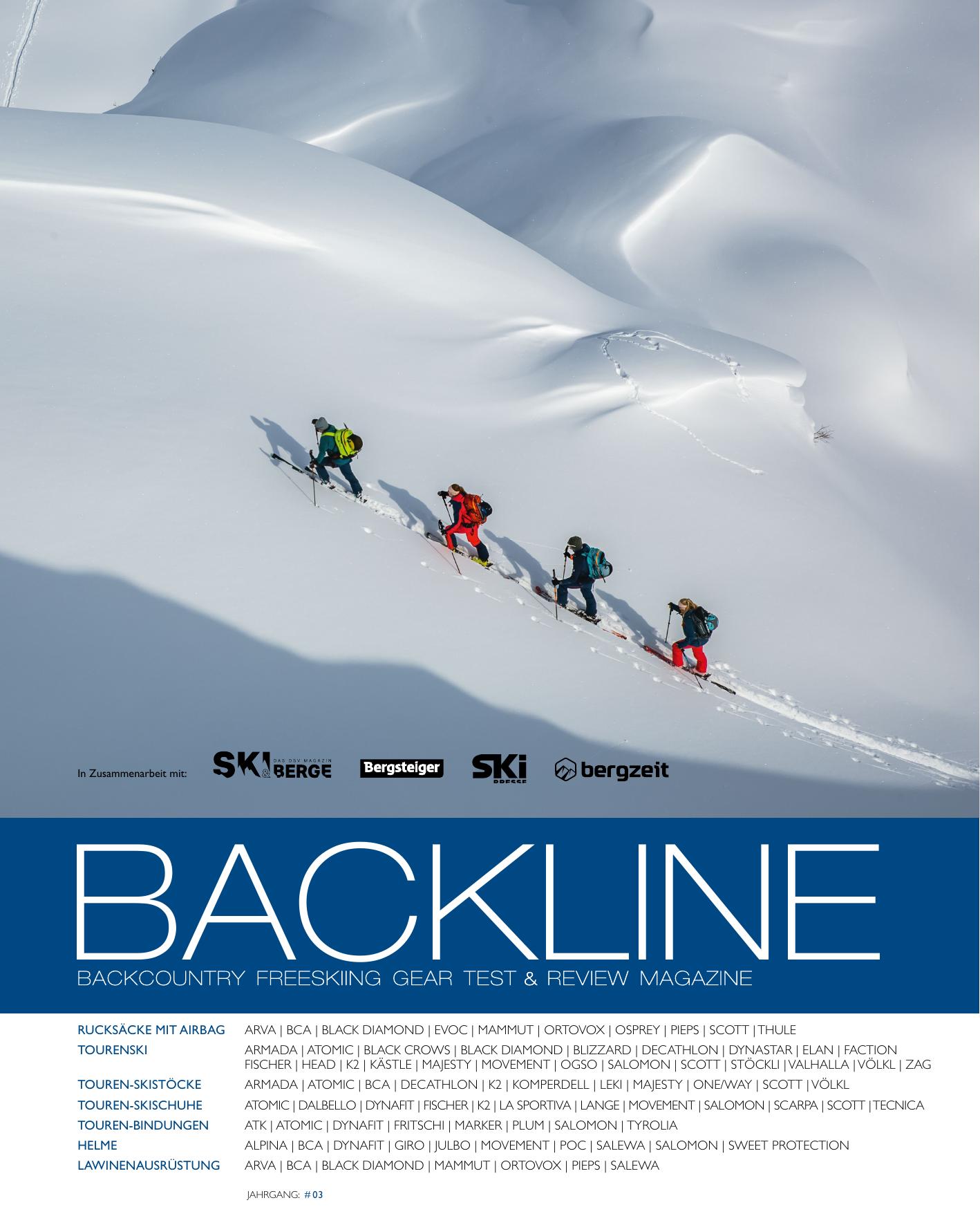
Ski touring backpacks · Test magazine 2021
Tech talk with Stefan Stankalla, BCA
K2 Ski / BCA Sales Manager · Print page 27
Who is Stefan Stankalla? K2 Ski / BCA Sales Manager
Stefan Stankalla is featured in the 2021 BACKLINE test magazine as K2 Ski / BCA Sales Manager, discussing ski touring backpacks and avalanche airbags. Born and raised in Garmisch-Partenkirchen, he moved into the backcountry after ten years as a World Cup ski racer, initially on telemark skis and later with ski touring equipment.
In the interview, Stankalla explains how airbag backpacks complement avalanche safety equipment. BCA’s Float system uses refillable compressed-air cylinders with a pressure gauge. According to Stankalla, the backpacks are developed together with guides. His key buying criteria include freeriding versus touring use, storage capacity, features, planned air travel and fit. He uses a 22-litre airbag backpack for freeriding and a 32-litre model for ski tours requiring additional equipment.
Stankalla warns against treating an avalanche airbag as insurance against harm and consequently neglecting avalanche hazard assessment. He points to BCA’s educational offerings, available online and through partners such as SAAC and Snow-How. He identifies reliable electronic systems and lower weight without compromising functionality as development goals. In the 2021 interview, he announces a new airbag collection for autumn 2022.
BCA has a comprehensive range of avalanche equipment. What role do airbag backpacks play at BCA?
Since it was founded, BCA has put avalanche safety first. Every product is developed to give skiers and snowboarders – and now snowmobilers too – optimum safety in the backcountry. Airbag packs play a big part in that, because in the event of an avalanche they significantly increase the chances of staying on the surface. Airbag packs add an important component to our range of avalanche safety equipment.
What are the main differences between the BCA airbag system and other systems on the market?
Our Float system works with compressed-air cylinders that can be refilled. Besides avoiding waste, a pressure gauge on the cylinder lets you check its status quickly and easily. BCA avalanche packs are also developed with professionals (guides) and offer all the features you need in the backcountry.
Which questions should a potential buyer of an airbag pack ask and answer before purchasing?
How and where will I mainly use the airbag pack? Do I only freeride, or do I also take the airbag ski touring? How much storage space do I want, and which features – helmet net, loops for carabiners, a compartment for an ice axe – do I need? Will I take the pack on flights? And in the end fit plays a big role.
Which innovation would you like to see in airbag packs in the coming years?
Reliable electronic systems and lighter weight without sacrificing functionality. We are working hard on both and will launch a new airbag collection in autumn 2022.
Does using an airbag pack influence people''s willingness to take risks?
Independently of any studies, I think yes. Many buyers of airbag packs think they are buying an insurance policy against harm and then forget to assess the avalanche situation. That is why BCA relies on comprehensive, well-founded education programmes, available online and through partners such as SAAC and Snow-How.
Which airbag pack do you use yourself in the backcountry?
Depending on the purpose I use a 22L or a 32L airbag pack. For pure freeriding the 22L offers plenty of space. When I carry more gear on a tour, such as an ice axe and helmet, I like to use the 32L. It swallows a lot and still sits comfortably on the body.