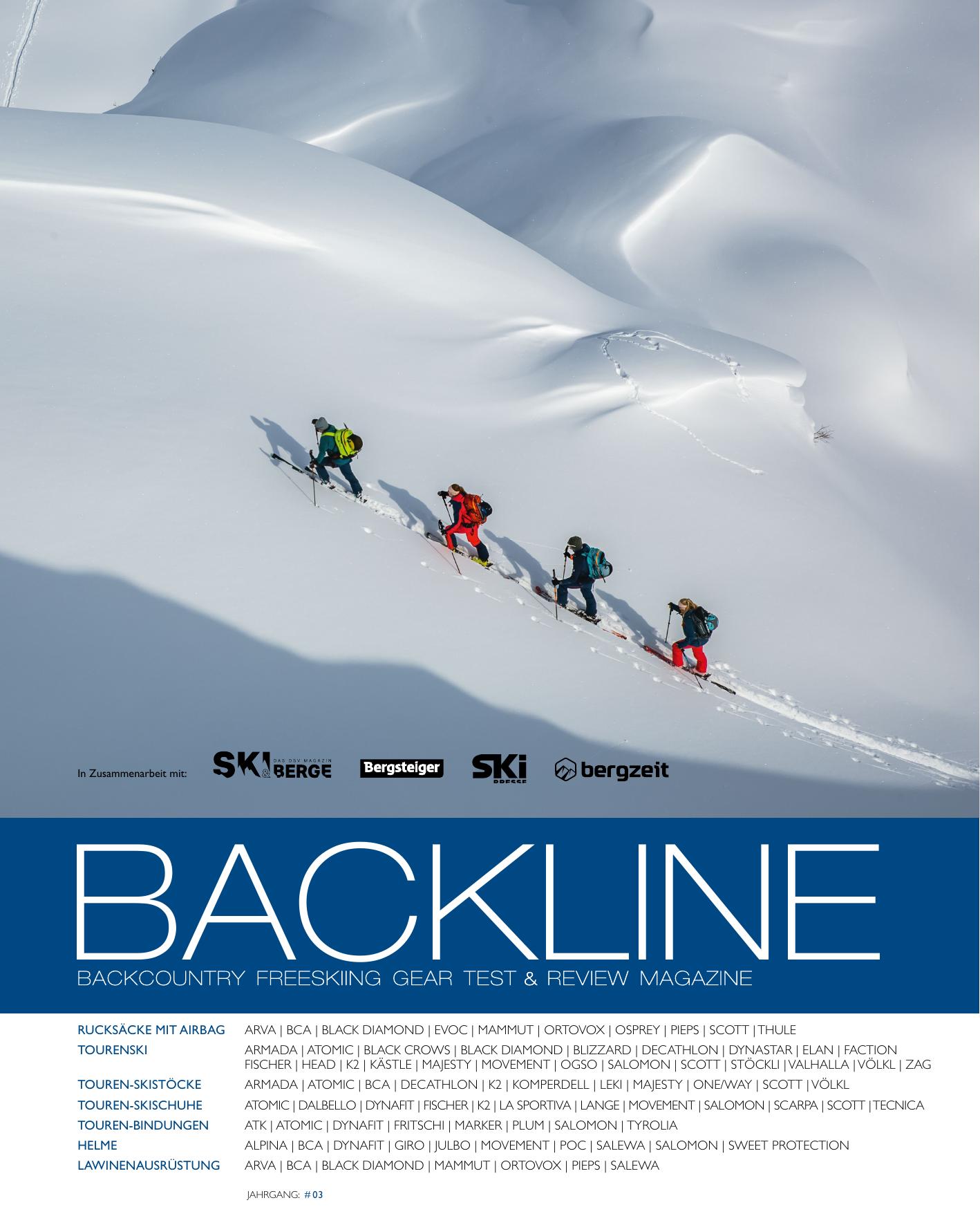
Ski touring poles · Test magazine 2021
Tech talk with Björn Herrmann, LEKI
Product Manager · Print page 37
Who is Björn Herrmann? LEKI product manager on ski touring poles
Björn Herrmann is a product manager at LEKI and discusses ski touring poles in the BACKLINE 2021 test magazine. He grew up in the Black Forest, started skiing as a child and spent many years competing in Nordic combined and cross-country skiing. Today, he spends his free time in winter ski touring, preferably away from crowds.
In the interview, Herrmann stresses that ski touring poles must be strong, lightweight and reliable in high-alpine terrain. Among LEKI’s technical developments, he names the Speed Lock 2+ adjustment system, the Aergon grip with grip extension and the Big Mountain Binding Basket for operating climbing aids and scraping ice off climbing skins. For fast ski touring and ski mountaineering, he points to particularly lightweight, performance-focused poles with the Shark grip, such as the Mezza Race. He links the demand boom at the time partly to the pandemic.
Looking ahead, Herrmann sees increasingly different requirements for touring on pistes and ambitious tours above 4,000 metres. Before buying, skiers should clarify their intended use, requirements and preferred technical components. His care advice includes regular cleaning, taking apart and drying the sections of telescopic and folding poles, and checking for damage before every tour. During transport, poles should be kept away from heavy objects and sharp ski edges.
In your view, what were the most important development trends and innovations in touring poles over the past five years?
Ski touring is a very special sport that requires optimised equipment. In high alpine terrain you have to be able to rely on your equipment 100 percent. Touring poles must be stable and at the same time extremely light. At LEKI we have built an enormous number of innovations into our touring poles: from the patented Speed Lock 2+ adjustment system to the Aergon grip with grip extension and the Big Mountain Binding Basket, which lets you operate the climbing aid and scrape ice off your skins. There is also a trend towards fast ski touring and ski mountaineering, which calls for extremely light poles optimised for speed and performance. Here our technical Shark grip, as used on the Mezza Race, is surely unbeatable.
How important is ski touring for LEKI at the moment, and how do you see the segment developing?
Last winter ski touring experienced a real boom, partly because of the pandemic. Europe had more snow than it had seen for a long time, but the ski areas were closed and travelling abroad was impossible. Thanks to our own production in Tachov, Czech Republic, we were able to meet the extreme demand and deliver quantities within days that nobody had thought possible. Sustainable ski touring will continue to grow in importance, and we are very well prepared for that development with optimal products.
Which innovations would you like to see in touring poles in the future?
The most important thing in ski touring is trust in your own equipment, and especially in your poles. Nothing is worse than a broken pole in demanding high mountain terrain. Still, a pole must not only be stable but also light. We have already reached an enormously high standard here. In future ski touring will become ever more specific, from the relaxed piste tourer to the ambitious tourer moving at altitudes above 4,000 metres. These two areas are very different and place different demands on a pole. The challenge is to know your target group precisely and to have the ideal pole for every area.
Which questions should a ski tourer answer before buying a touring pole?
Essentially there are three questions: What do I need the pole for? Which requirements does the pole have to fulfil? Which technical components would I like on my pole?
Which care tips for touring poles do you have for BACKLINE readers for the coming winter?
It is important to clean your poles regularly and, with telescopic or folding poles, to take the segments apart and let them dry. During transport, make sure not to place heavy objects on the poles and keep them away from sharp ski edges. Before every tour you should check your poles for possible damage.