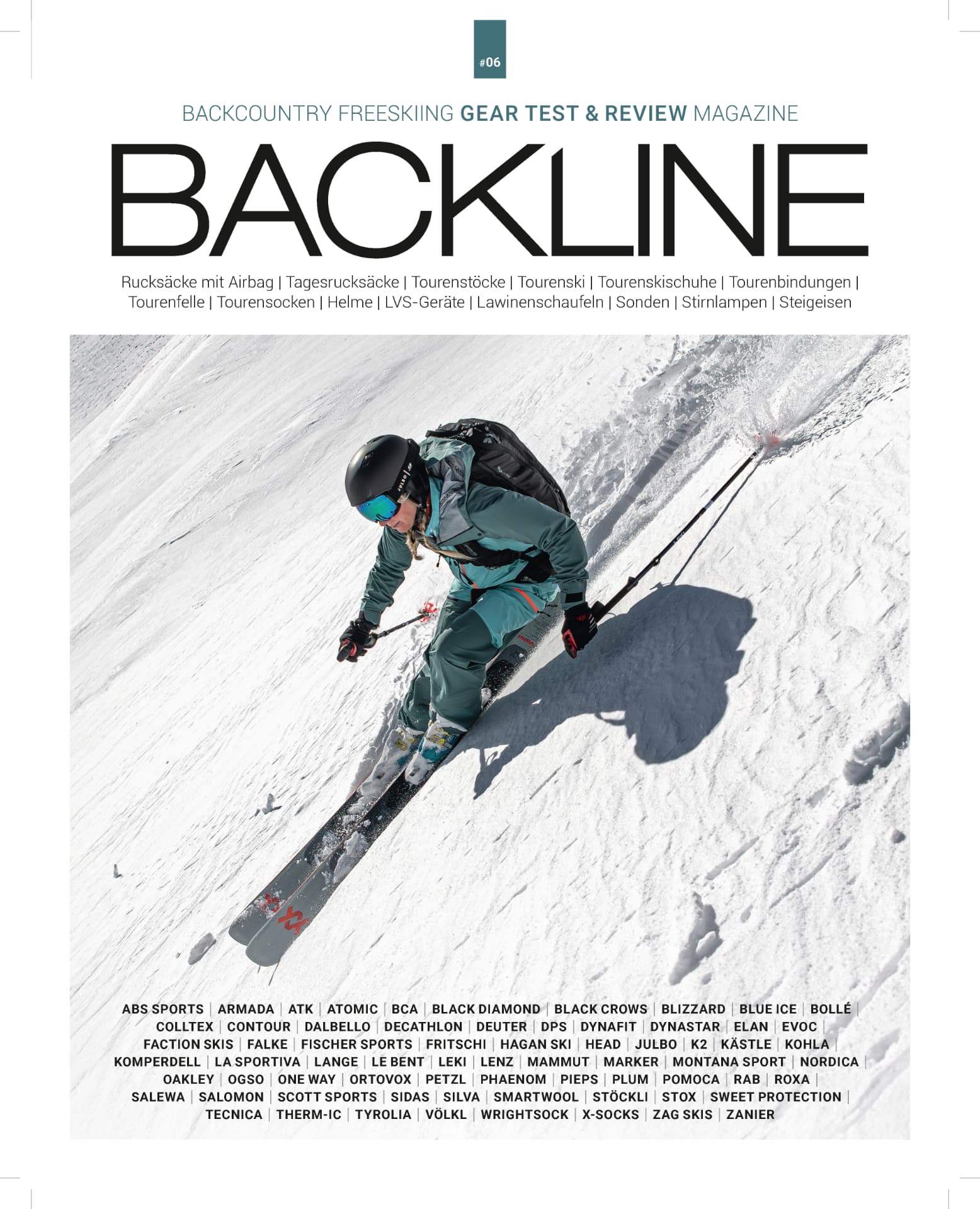
Ski touring skins · Test magazine 2024
Tech talk with Walter Muheim, MONTANA SPORT INTERNATIONAL AG
Head of Climbing Skins Department · Print page 117
Who is Walter Muheim? Head of Climbing Skins at MONTANA
Walter Muheim has headed the climbing skins department at MONTANA SPORT INTERNATIONAL AG since 2013. After joining the company in 2009, he initially spent four years working in logistics and skin production. A keen winter sports enthusiast, he combines knowledge of climbing skin manufacturing with practical experience that informs product development.
In his interview for the 2024 BACKLINE test magazine, Muheim discusses material selection, adhesion technologies and touring skin care. He considers mohair from Angora goats the benchmark for its glide and grip. MONTANA offers pure mohair skins, Montamix with 65 percent mohair and 35 percent nylon, and pure nylon skins, each balancing glide, durability and intended conditions differently. Technical developments he highlights include Ski-Clamp, Split-Clamp and FUSIONTEC technology with a washable adhesive layer.
Muheim observes growing demand for lightweight, robust materials and improved adhesive systems. He estimates an average lifespan of around three winters, depending on model, snow conditions and care. Wet skins should be dried thoroughly and stored away from heat sources and dirt. On sustainability, he cites the avoidance of PFCs, mohair from goats kept under species-appropriate conditions and regular supplier visits. These statements describe MONTANA’s approach to sourcing and manufacturing.
How has the development of ski skins changed over the years, and which innovations have had the greatest impact at Montana?
The mohair from Angora goats has established itself as an unsurpassed material for ski skins, thanks to its excellent gliding and climbing properties. Despite intensive efforts to develop alternatives, mohair remains the benchmark for ski skins. Technical innovations in the textile industry have produced lighter, water-repellent skins. Montana has set new standards with solutions like the Ski-Clamp and Split-Clamp, which guarantee secure attachment of the skins. Particularly noteworthy is the FUSIONTEC adhesive technology, which adheres reliably even at extreme temperatures and offers an innovative, washable adhesive layer. This technology allows for effortless cleaning of dirt and wax residues and restores adhesion.
What different types of ski skins does Montana offer?
Montana offers ski skins in three different qualities: 100% Mohair, Montamix (65% Mohair, 35% Nylon), and 100% Nylon. The 100% Mohair skin is the first choice for ski touring racing, specifically developed for lightness and speed. The Mohair Allround skin is aimed at ski tourers who value excellent gliding properties even at low temperatures. The bestseller, the Montamix skin, combines the advantages of mohair and nylon and impresses with durability and stable climbing properties. The Nylon skin offers extreme robustness and is ideal for wet old snow, making it an excellent choice for challenging conditions.
What trends and developments does Montana currently observe?
Currently, we observe a clear trend towards lightweight and robust materials that reduce the weight of ski skins and offer crucial advantages during ascents. Research increasingly focuses on synthetic fibers that are powerful and easy to maintain. Nevertheless, natural hair, especially mohair, remains highly valued for its excellent gliding properties. Furthermore, the trend towards sustainable and environmentally friendly materials is gaining importance. The demand for improved adhesive systems that offer better grip and are easy to remove is also increasing. Montana responds to these developments through continuous innovation and adaptation in product development.
How long should Montana ski skins typically last, and what care recommendations do you provide?
The lifespan of ski skins depends heavily on the specific model and snow conditions. In soft fresh snow, the abrasion of the skin hairs is less than in hard, frozen old snow, which affects lifespan. A 100% Mohair ski skin, known for its soft fiber, offers excellent gliding properties but has a shorter lifespan compared to robust Nylon skins. On average, ski skins last about three winters, but with good care, they can be used for several more seasons. To maximize lifespan, wet skins should be thoroughly dried after the tour and stored in the skin bag away from heat sources and dirt. For optimal water repellency and first-class gliding properties, Montana offers Glide Plus and impregnating wax, which prevents clumping in difficult snow conditions and enhances the skins' performance.
What steps does Montana take to ensure that its ski skins are produced in an environmentally friendly and sustainable manner?
To maximize compatibility with the environment and people, Montana consciously focuses on sustainability in the production of its skins. We avoid environmentally harmful per- and polyfluorinated chemicals (PFCs) without compromising our high standards for functionality and performance. Our skins continue to offer first-class climbing ability and excellent gliding properties – without any compromises. The origin of raw materials is also particularly important to us. Our mohair wool comes from Angora goats kept under species-appropriate conditions. We are in close contact with our suppliers and regularly visit them on-site to personally verify the transparency and environmental compatibility of our production chain. This ensures that our skins are not only technologically advanced but also ethically and ecologically sound.