
Source: Hansmann PR
Staying safe off-piste: Seven rules for skiers, winter hikers and snowshoers
A mountain guide’s advice on reducing risk in uncontrolled alpine terrain

Key facts at a glance
- Check the avalanche bulletin, weather and local conditions before every tour; match the route and terrain to the whole group.
- Existing tracks, forests and forestry roads are not proof of safety. Take warning signs seriously and reassess if in doubt.
- Carry an avalanche transceiver, probe, shovel and other emergency equipment, and practise using it regularly – including when snowshoeing.
- Adequate spacing reduces the additional load on the snowpack; companion rescue begins immediately after an avalanche.
- Zell am See-Kaprun offers safety information, an avalanche transceiver checkpoint and guided freeride, ski touring and snowshoe activities.
A mountain guide from Kaprun at the foot of the Kitzsteinhorn explains how good preparation, a trained eye for terrain and appropriate decisions reduce risk in uncontrolled terrain away from secured pistes.
No two mountains are alike, and no two days offer the same conditions. This is particularly evident in Zell am See–Kaprun, where conditions can vary considerably even on mountains facing each other, such as the Kitzsteinhorn and the Schmittenhöhe. In her high-alpine home region, the mountain guide has repeatedly seen winter sports enthusiasts struggle to assess conditions in alpine terrain, especially the snowpack. This can lead to poor decisions.
This applies to freeriders as well as winter hikers and snowshoers travelling in uncontrolled alpine terrain – in other words, away from marked winter hiking trails. The mountain guide stresses: “Avalanches and other accidents are a threat away from steep slopes, too. Forests and forestry roads do not provide reliable protection.” Her seven tips show how to reduce risk in uncontrolled terrain in winter.
1. Check the avalanche forecast, weather and local conditions
Checking the avalanche bulletin and weather forecast is part of preparing for any activity in uncontrolled alpine terrain. Strong winds can transport snow and increase avalanche danger. The course of the winter and regional differences in snow conditions also present potential hazards. “A good tip is to obtain information from locals, guides or local organisations whenever possible.”
2. Choose a tour that suits the group
Inexperienced people should never venture into uncontrolled terrain alone. The route and terrain must match the individual skills and capabilities of everyone involved. Those with little experience can attend an avalanche course or join a guided tour. “Mountain guides regularly offer courses and tours for different experience levels.”
3. Never follow tracks blindly
An existing track is not proof of safety. Freeriders and other winter sports enthusiasts should assess the situation themselves. The fact that someone has already skied or walked on a slope says nothing in itself about its current safety. The mountain guide considers this one of the most serious mistakes in snow-covered areas.
4. Assess forests and forestry roads critically
Trees do not automatically protect against avalanches, and a forestry road can also pass through hazardous terrain. “Forests are deceptive because you can feel safe there without actually being safe. A forestry road can also run through avalanche-prone terrain.” The specific situation on site is what matters.
5. Take warning signs and gut feelings seriously
Whumpfing sounds, cracks in the snowpack and recent avalanches are warning signs. At the latest, if something does not feel right, stop and reassess the situation. Whether a safe return is possible or a different decision is needed depends on the situation on site.
6. Carry equipment and practise using it
An avalanche transceiver, probe, shovel, charged mobile phone, first-aid kit and bivy sack are essential in uncontrolled alpine terrain and away from secured pistes. This applies to snowshoers, too. The mountain guide also recommends a ski helmet and an avalanche airbag backpack. It is important to practise using safety equipment regularly – in an emergency, every action must be second nature.
7. Maintain spacing
In snow-covered alpine terrain, adequate spacing between people is important to reduce the additional load on the snowpack. On the descent, steep, avalanche-prone slopes should be skied one at a time or with sufficient spacing. “Keeping your distance is important on the ascent, too. Once you reach terrain that requires kick turns, at the latest, there should be enough space between people.” The mountain guide calls on winter sports enthusiasts to remain disciplined, as the excitement of sharing the snow experience can easily make people forget the recommended spacing, particularly on the descent.
In an emergency
An accident in uncontrolled terrain calls for swift, considered action. The mountain guide advises taking a brief breath and gathering your thoughts. After an avalanche, companion rescue begins immediately. While one person makes the emergency call, the others can already begin searching for buried people using avalanche transceivers.
Further information: Staying safe in Zell am See-Kaprun
Those with little experience or who prefer to travel in a guided group will find various options around Zell am See-Kaprun for experiencing the winter mountains away from groomed pistes.
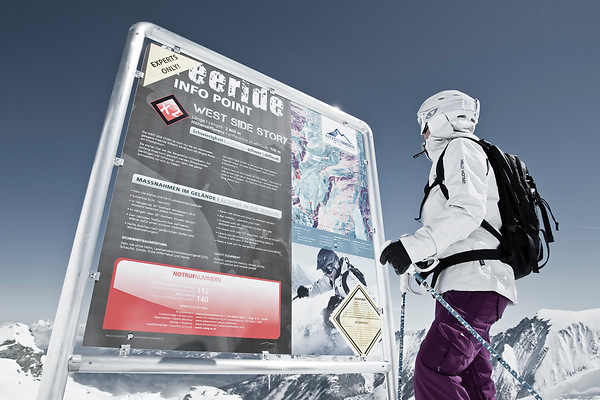
- On the Kitzsteinhorn, the Freeride INFO BASE at the Alpincenter and the INFO POINTS at route entrances provide information on routes, current conditions, the avalanche situation and safety equipment. An avalanche transceiver checkpoint also allows users to check their own device.
- Freeride Monday on the Kitzsteinhorn is aimed at beginners and advanced riders. Guides teach skiing technique and safety knowledge and accompany participants into uncontrolled terrain.
- On Ski Touring Thursday, state-certified mountain guides organise a guided ski tour on the Kitzsteinhorn.
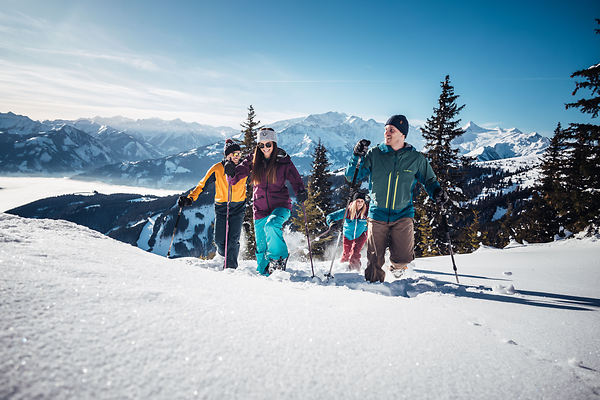
- Guided snowshoe hikes: Guided snowshoe tours are offered on Fridays on the Schmittenhöhe, including along the Höhenpromenade to the Sonnkogel and on a more demanding route towards the Maurerkogel.
- Winter sports camp: From 14 to 17 January 2027, the exclusive winter sports and inspiration weekend combines ski tours on the Maiskogel, Ronachkopf or Kitzsteinhorn with cross-country skiing training in classic and skating techniques. Participants are accompanied by an Olympic champion.
Zell am See-Kaprun: product views and variants
More about Zell am See-Kaprun
All products, dealers and details directly from the manufacturer.