Guide · Ski touring poles
Ski Touring Poles Compared: Two-Piece, Three-Piece, or Foldable?
Shaft geometry, locking mechanics, and packed length compared for experienced ski tourers. From rigid two-piece telescopic poles to compact foldable poles for alpine ridges: see which design suits steep climbs, freezing cold, and pack carry.
 OGSOLogo to follow

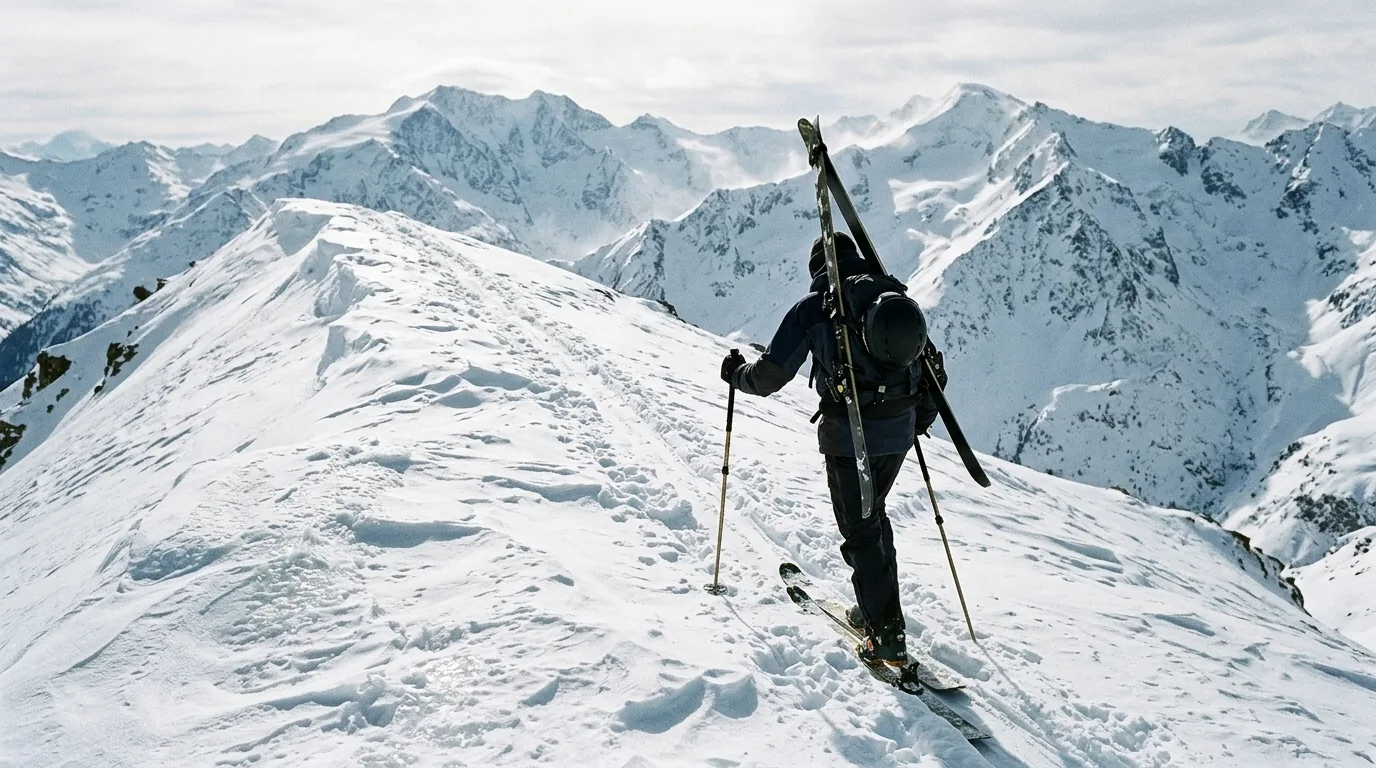
Why the pole makes the difference
On a ski tour, the pole is not an accessory but a tool that works with every stride. On the ascent it sets the pace: alternating pole plants bring arms and legs into an even rhythm that saves energy and stabilises balance in narrow skin tracks and long traverses.
At the same time, the pole transfers force. Pushing off actively on steep pitches and kick turns takes load off the legs and spreads the work across the whole body. On the descent it becomes a safety element: it times the turn, supports you in difficult snow, and helps you back onto your skis after a fall.
Which construction, material, and details suit a tour therefore has a real say in how efficient and safe it turns out.
The three constructions
The shaft decides what a pole can do: how much force it transfers, how short it collapses, and how many points can ice up in freezing conditions.
Two-Piece Poles: Classic Telescopic Construction
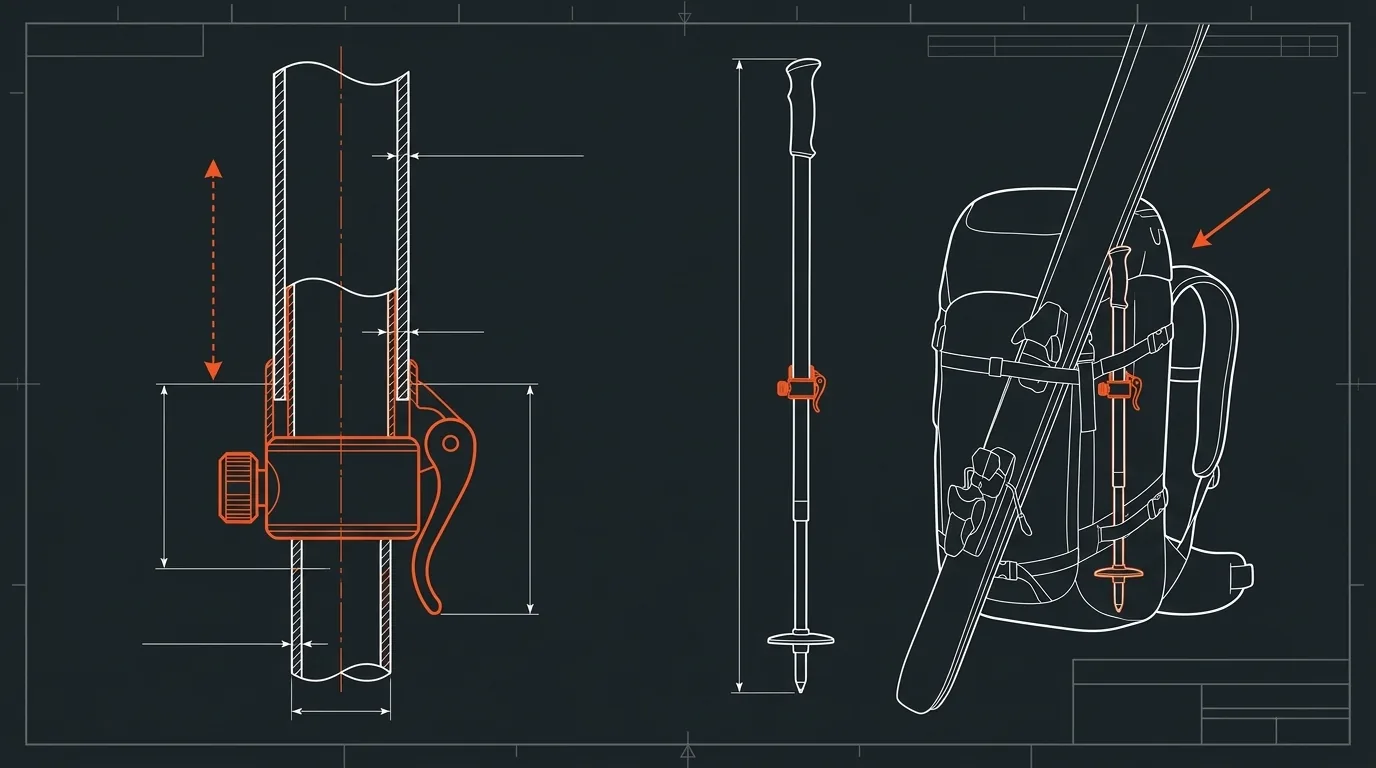
Two-piece telescopic ski touring poles pair a wider upper shaft with a narrower lower shaft that slides smoothly inside for stepless length adjustment. Thanks to generous tube overlap and a single junction, this layout delivers high lateral stiffness at a balanced weight. When traversing firm slopes, executing steep kick turns, or planting firmly in variable snow, the shaft transfers force directly with very little flex. Freezing conditions highlight another structural advantage: with only one external clamp, there is just a single mechanical interface where moisture can freeze. Adjusting the shaft length also remains straightforward while wearing thick winter gloves. In the BACKLINE test, the two-piece OGSO YOYO made from Aluminium 7075 measured a packed length of 88 cm, an adjustable range of 105–140 cm, and a weight of 277 g; its exact locking mechanism from the datasheet is OGSO locking mechanism. For classic ski tours across varied alpine terrain, this straightforward design remains the established benchmark.
Three-Piece Poles: Compact Stowing on the Pack
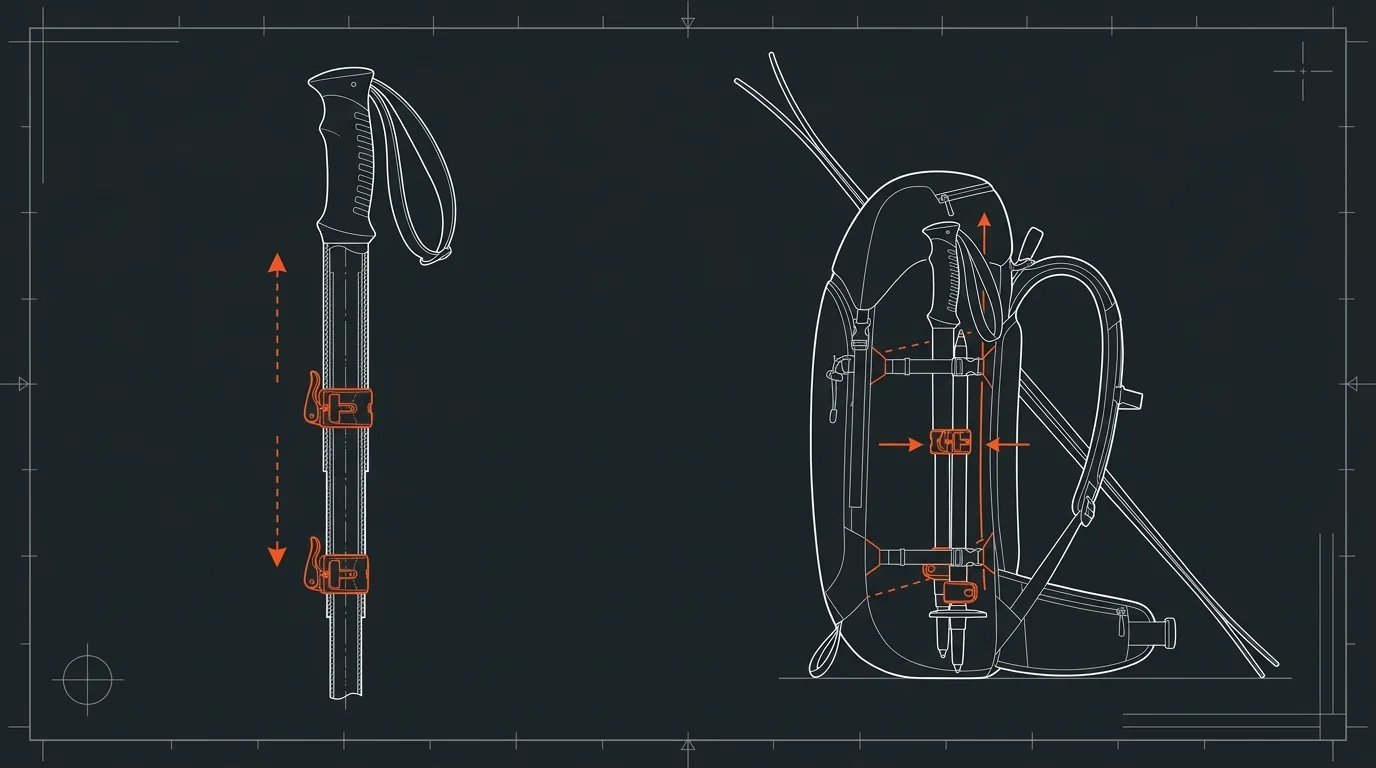
Three-piece telescopic poles divide the shaft into three graduated tube diameters secured by two separate locking clamps. Because two lower sections slide into the upper shaft, the collapsed length shrinks considerably, allowing the poles to sit flush along the side of a ski touring pack without protruding past the pack outline. This compact stowed profile proves especially helpful during steep bootpacks with skis strapped to the pack, when both hands must stay free for an ice axe or rock scrambling. That shorter packed size comes with clear mechanical trade-offs: reduced tube overlap across two joints lowers lateral stiffness under heavy load compared with a two-piece shaft. Two external clamps also add weight and create a second mechanical contact point that can collect wet snow, freeze in cold temperatures, or require maintenance. Ski tourers typically choose three-piece poles for steep alpine routes involving frequent ski-carrying sections.
Foldable Poles: Three Segments with Internal Tension Cord
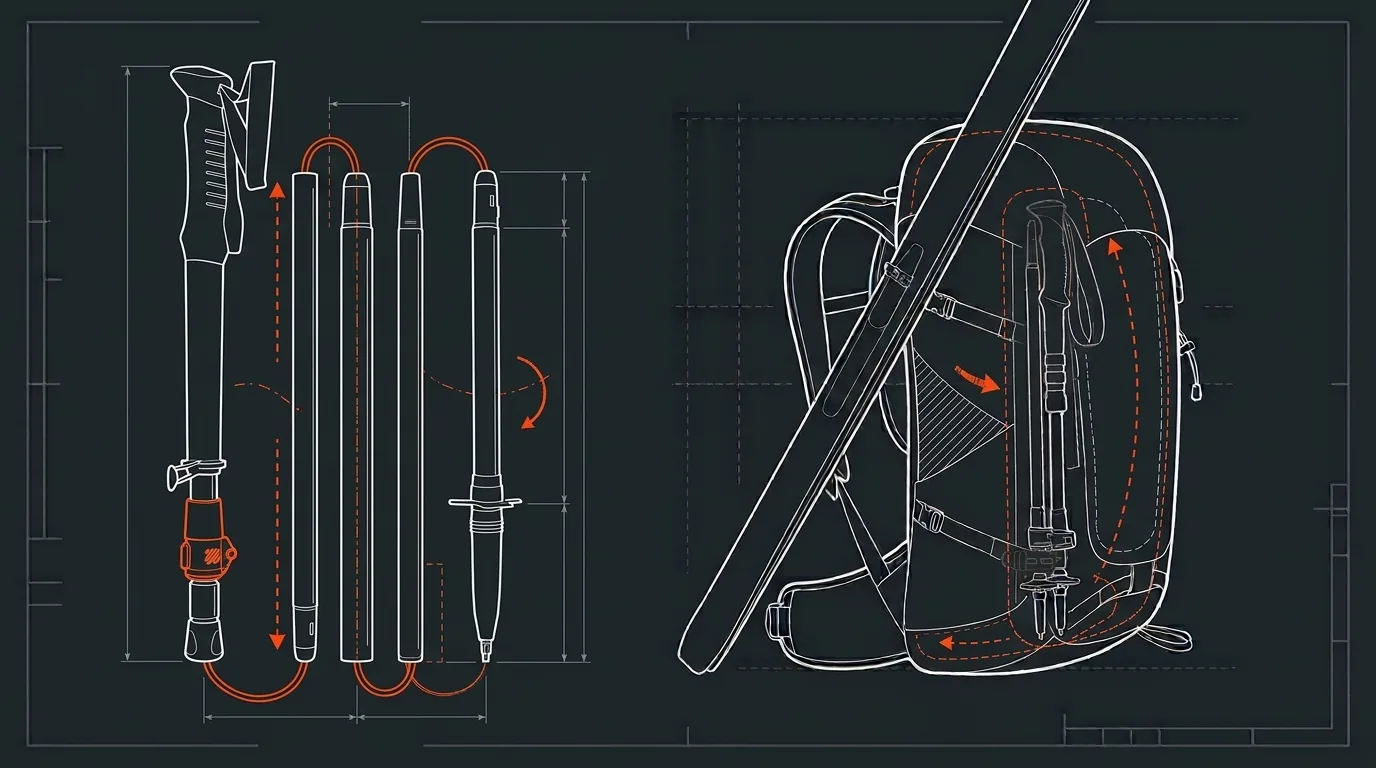
Foldable poles replace conventional telescoping shafts with three separate segments linked by an internal tension cord. When deployed, the segment ends slot into precision ferrules while an upper locking mechanism tensions the cable to hold the shaft together. Collapsed, the three segments fold neatly side by side into a very compact bundle that fits completely inside the main compartment of a ski touring backpack. On high-alpine tours featuring exposed ridge scrambles or climbing pitches, keeping poles inside the pack prevents protruding tips or grips from snagging on rock. That is why foldable poles are popular with splitboarders, who stow their poles in the pack for the descent, and in hike & fly, where every centimetre of packed size counts. In return, ferrule joints offer lower lateral stiffness under heavy side pressure than a clamped telescopic tube, most noticeable on firm traverses. Meltwater entering the open segment joints or internal cable channel can also freeze when temperatures drop rapidly. Technical specifications for the foldable OGSO APEX from the manufacturer datasheet are OGSO APEX datasheet.
Constructions side by side
| Criterion | Two-Piece | Three-Piece | Foldable Pole |
|---|---|---|---|
| Construction | Two telescopic tubes with a single locking clamp | Three graduated telescopic tubes with two locking clamps | Three ferrule-jointed segments with an internal tension cord |
| Packed Size | Long, extends past the backpack outline when carried outside | Compact, sits flush along the side of the backpack | Very compact, fits completely inside the backpack |
| Lateral Stiffness | Very high due to long tube overlap and a single joint | Moderate due to shorter overlap across two joints | Lower due to multi-segment ferrule joints |
| Icing Susceptibility | Low with only one exposed mechanical clamp | Moderate with two external locking clamps | Higher at segment joints and along the internal cable |
| Primary Use | Classic ski tours, firm traverses, and steep kick turns | Steep bootpacks with skis strapped to the backpack | High-alpine tours with exposed ridges and climbing sections |
Technical details: material, weight, locks, grip, and basket
Beyond the construction, a handful of details decide how a pole behaves in the field. Stiffness, weight, grip and strap comfort, adjustability, and basket function are separate scoring categories in the BACKLINE pole test.
Aluminium or carbon
Aluminium, usually the high-strength 7075 alloy, is the more robust material. Under a hard impact or overload, an aluminium tube tends to bend rather than break. In the mountains that is an advantage: a bent pole usually still gets you down to the valley, a broken one does not. A tube that has bent once will never be perfectly straight again, though, and stays weaker at the kink.
Carbon saves weight and is stiffer for the same weight. Its weak point is localised impacts, for example from a steel ski edge when stepping out of the bindings, carrying skis, or in transport. Such edge strikes can damage the fibres invisibly, and under load the tube may then snap without warning. Check carbon poles carefully for nicks and cracks after hard knocks.
The weight effect: weight and swing weight
A rule of thumb among ski tourers says that weight in your hands feels roughly twice as heavy as weight on your back. The reason: each pole is lifted, swung forward, and planted again with every stride. Over 1,000 metres of climbing this lifting work repeats thousands of times, and every gram travels along with each single movement.
What matters is not only the weight on the scale but swing weight, meaning how far the mass sits from the grip. A heavy basket or a massive lower shaft feels noticeably more sluggish when swinging forward than the same weight in the grip. Two poles of identical weight can therefore feel clearly different on the climb.
Locking systems: external lever lock or twist lock
External lever locks work reliably in the cold. They open and close with thick gloves, and you can see at a glance whether the lock is closed. If clamping force fades, most models let you readjust it with a screw on the lever.
Twist locks expand inside the tube. If moisture gets in and freezes, they become hard to release or no longer hold securely. Clamping force is also hard to dose with gloves on. For ski touring in deep winter, external lever locks are the more dependable choice.
Stability under load
A touring pole is loaded in two directions. Vertically, when you lean on it with your body weight in kick turns, on steep steps, or when getting up after a fall: then above all the lock has to hold without the tube slipping. And laterally, when the pole is planted at an angle while traversing firm, icy slopes and the shaft is put under bending load.
Lateral bending is the more critical load. Long tube overlap, large tube diameters, and few joints make a pole resistant to bending. That is why stiffness is a separate scoring category in the BACKLINE pole test.
The grip: your cockpit
A foam grip insulates the hand from the cold tube, stays grippy even with wet gloves, and absorbs sweat. An ergonomic shape spreads pressure across the whole palm when you lean on the pole.
Especially important for ski touring is a long grip extension below the main grip. On traverses you simply hold the uphill pole lower and shorten it that way without opening the lock. On traverses that change direction, this saves a lot of stops.
The strap: blessing or curse?
Used correctly, with the hand coming up through the strap so the webbing sits between thumb and heel of the hand, the strap transfers force via the wrist to the pole. The hand does not need to clench the grip, which spares forearms and fingers on long climbs.
The downside: if the pole snags in a fall, it acts as a lever on the thumb. Ligament injuries up to a dislocated thumb are possible consequences. In an avalanche, a pole fixed to the wrist can act like an anchor that pulls the body into the moving snow. In the trees it catches on branches.
- Our recommendation: take your hands out of the straps in steep terrain, in the trees, and on avalanche-prone slopes. Removable straps, such as those on the OGSO YOYO, can be taken off completely for such tours.
The winter basket
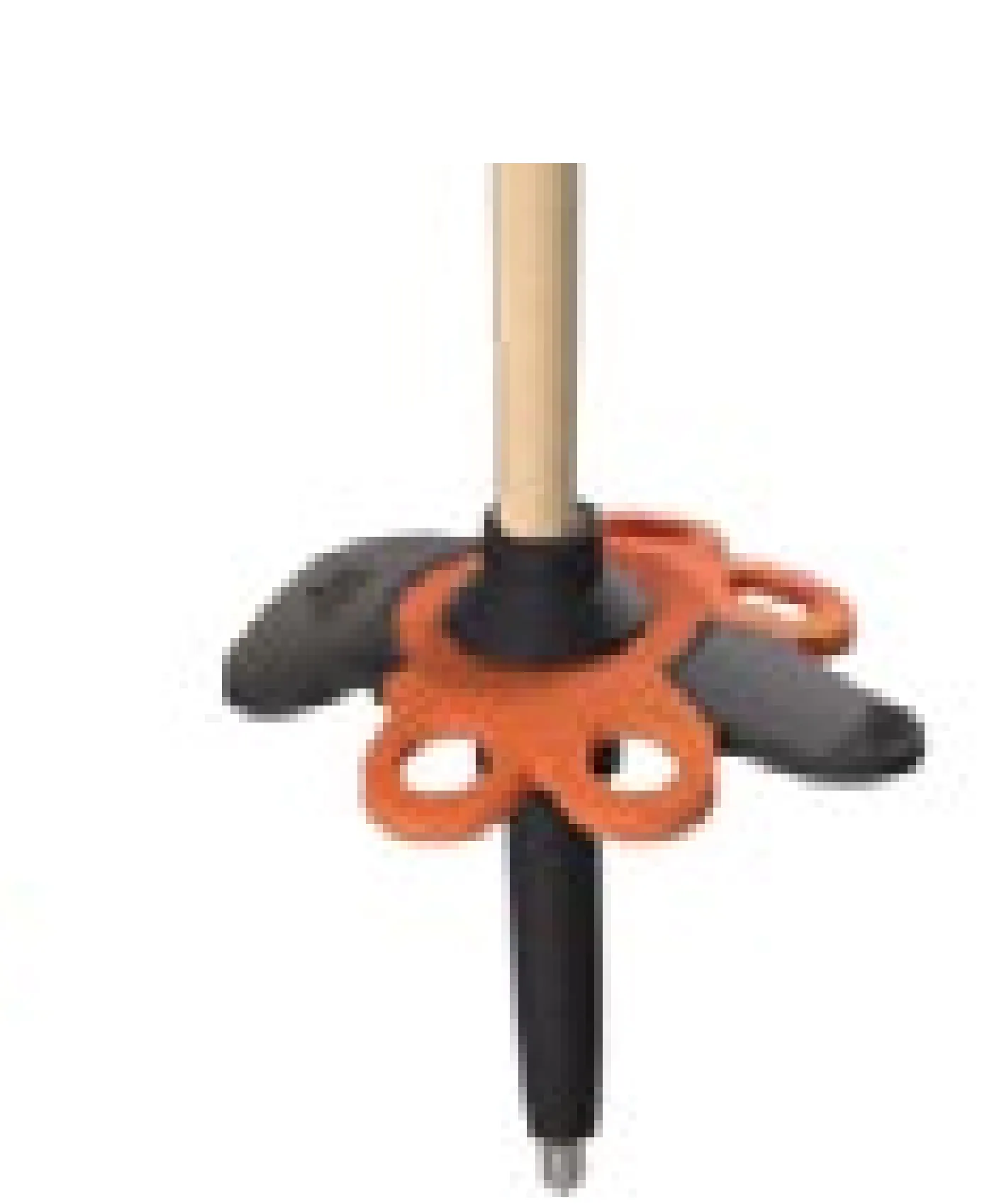
In powder, a large basket stops the pole from sinking deep and the push-off from going nowhere. On firm spring snow, a smaller basket that snags less is enough.
Just as important is how it is mounted: a flexibly mounted basket lies flat on the snow surface even on steep slopes and when planted at an angle on traverses, supporting with its full area. Rigid baskets tilt onto their edge and sink in. Basket function is a separate scoring category in the BACKLINE pole test.
In the Field: Ascent, Kick Turns, Descent, and Pack Stowing
During long, steady climbs, swing weight largely determines how smoothly and efficiently a pole moves with each stride. Both two-piece and three-piece telescopic poles allow quick length adjustments to match changing slope angles, often setting the downhill pole slightly longer than the uphill pole on sustained traverses. Steep kick turns place substantial lateral force on the shaft when planting uphill for balance and push-off: here, the rigid two-piece shaft transfers load directly, whereas multi-joint designs flex noticeably more under heavy pressure. Before the descent, telescopic poles are typically shortened so the grip and basket stay out of the way through deep compressions and pole plants, while foldable poles generally offer either a limited adjustment range or a fixed length foldable adjustment range. When skis must be strapped to the pack for steep couloirs or rocky ridges, collapsed length governs overall handling: two-piece poles extend well above the shoulder line on the outside of the pack, three-piece poles sit flush along the side, and foldable poles disappear completely inside the main compartment.
In a kick turn, the uphill pole is the anchor. It is planted firmly higher up the slope before the uphill ski is turned to the new direction. When bringing the second ski around, you lean hard on that pole to unweight the downhill ski so it swings round easily. The steeper and firmer the slope, the more a safe kick turn depends on a firmly planted pole and a lock that does not give way under load.
More than a support: the pole as a tool
On tour, the pole takes on jobs that would otherwise need a tool or force you to bend down.
Helper for bindings and skins
- De-icing the binding: scrape snow and ice out of the binding inserts with the pole tip before stepping in.
- Switching the climbing aid: flip the heel riser up and down with the grip without bending over or breaking your rhythm.
- Clearing snow clumps from skins: scrape balled-up snow off the skin surface with the pole so the skin glides again.
Pole probe: a first impression of the snowpack
Turned upside down and pushed grip-first into the snowpack, the pole gives a rough impression of how the upper layers are built. Where resistance suddenly drops, there is a softer layer or a void, for example from loose, faceted snow. This lets you notice differences along the skin track.
A pole probe covers a single spot and only the layers down to pole length at most. It says nothing about snowpack stability and replaces neither the avalanche bulletin nor avalanche training or standardised snowpack tests. An unremarkable result is never an all-clear.
Bivouac and first aid
In an emergency, a telescopic pole becomes a tent pole: a tarp or bivy bag can be pitched with one or two poles to create shelter from the wind. For fractures of an arm or leg, a well-padded pole, for example wrapped in clothing, can serve as a splint until mountain rescue arrives.
First, always call for help: 140 in Austria, 112 across Europe.
Emergency repairs on the go
A damaged pole does not have to end a tour if you are prepared. These fixes get you down to the valley; replace the damaged parts afterwards.
Broken shaft
Splint the break with a sturdy branch or a tent peg and wrap it tightly with duct tape or cable ties. Do not force a bent aluminium tube back into shape, as it may break at the kink.
Lock slips
If the lock no longer holds, a hose clamp from the hardware store fitted directly below the lock stops the tube from sliding further. Without a clamp, a thick bulge of duct tape in the same spot does the job.
Lost basket
A replacement basket can be cut from a plastic lid, for example from a tin, with a hole in the middle and fixed with tape. As a last resort, an improvised basket woven from twigs or wire helps.
OGSO YOYO in the BACKLINE test
The two-piece OGSO YOYO was assessed over several days in real terrain in the BACKLINE pole test. These values come from the test datasheet.
- Category
- Two-piece
- Material
- Aluminium 7075
- Length
- 105–140 cm
- Packed length
- 88 cm
- Weight
- 277 g
- Test year
- 2026
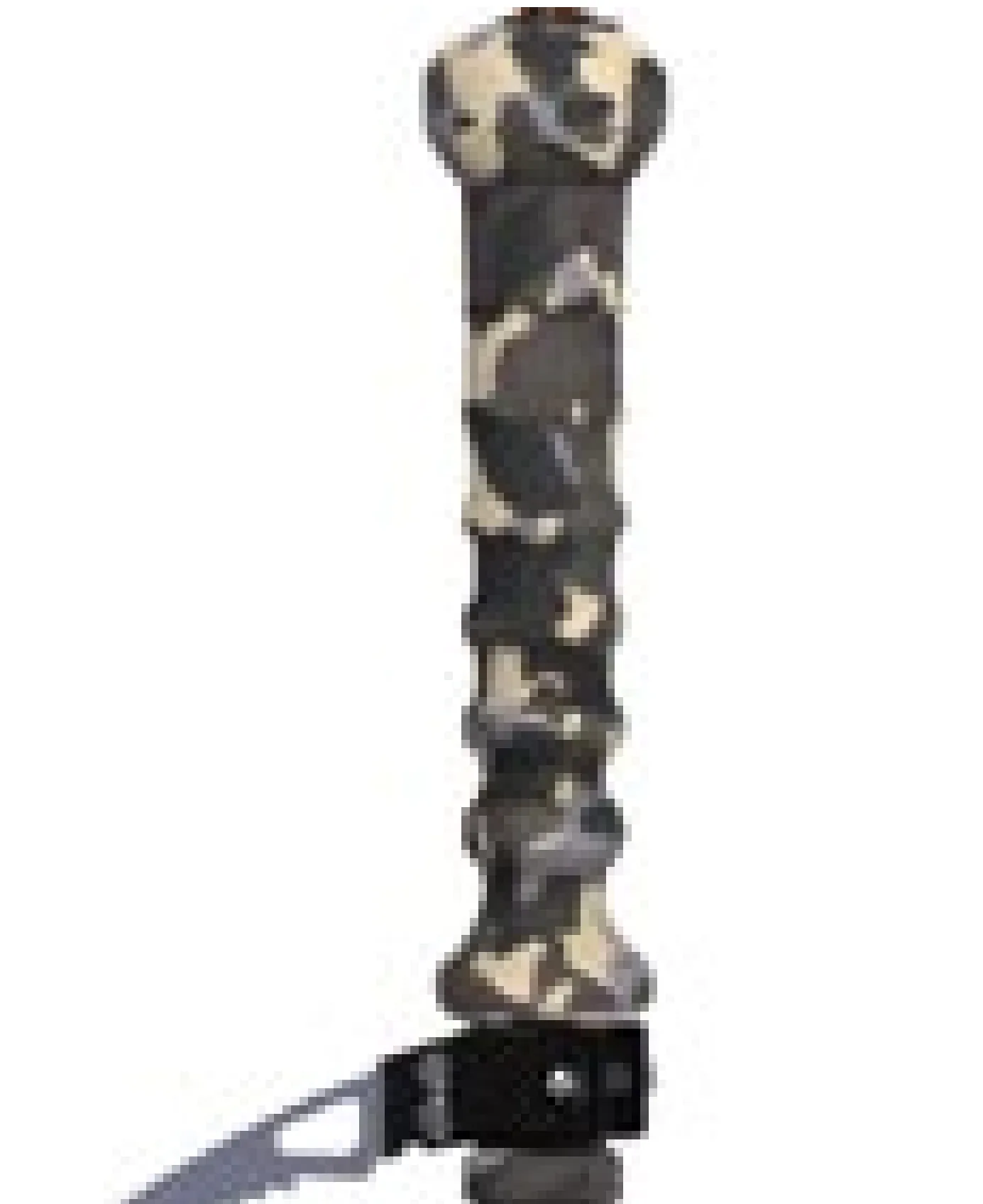
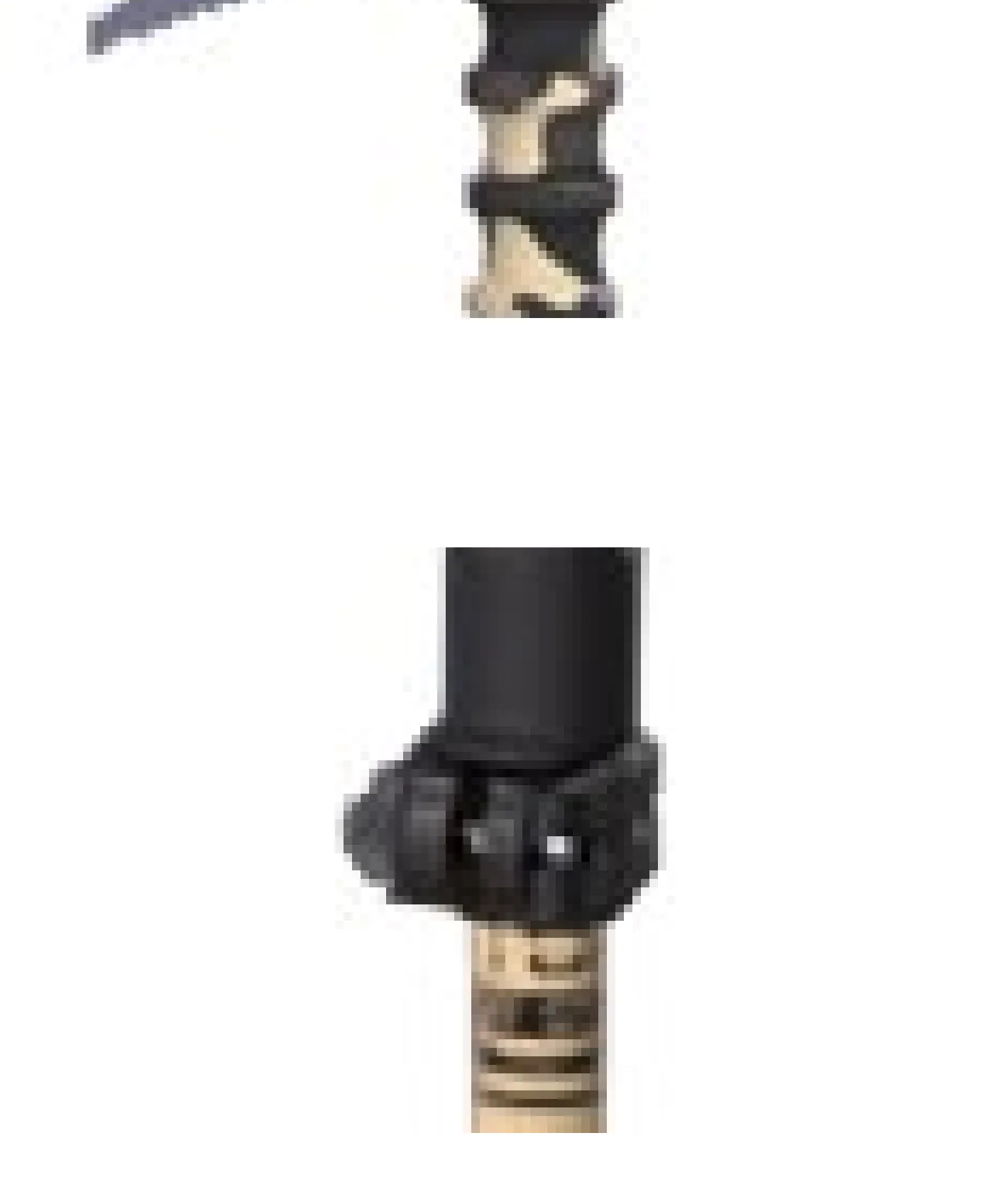
Test verdict: stiff, with good handling, especially for larger hands. An ice axe and a tripod mount can be attached to the pole; the straps are removable.
Conclusion: choose the pole to match your touring profile
- Choose by touring profile: for classic ski tours, the two-piece pole is the robust standard. If you often climb with skis on your pack, go for a three-piece pole. For splitboarding, hike & fly, and high-alpine tours with climbing sections, the foldable pole plays to its small packed size.
- Duct tape on the shaft: a few turns of duct tape around the upper shaft are always with you and, together with the fixes above, save many a tour.
- Look after the locks: after every tour, pull the sections apart and let them dry, clean the locks, and check their clamping force before setting off.
Frequently asked questions
Which pole construction suits classic ski tours spent mostly skinning on snow?
For classic ski tours spent primarily skinning, a two-piece telescopic pole is usually the most balanced choice. It provides high lateral stiffness during steep kick turns, adjusts steplessly to changing slope angles, and relies on just one locking clamp in freezing weather.
When does a three-piece telescopic pole offer an advantage over a two-piece model?
A three-piece pole becomes advantageous whenever skis are frequently strapped to the pack and protruding pole shafts would get in the way. Thanks to its dual telescoping sections, it sits flush along the side of the backpack while scrambling or using an ice axe.
When does a foldable pole make sense for ski touring?
A foldable pole makes sense on high-alpine routes with exposed ridge scrambles or climbing pitches where both hands must remain free and nothing should snag outside the pack. Its three segments collapse neatly inside the main compartment, though lateral stiffness is lower.
Why are multi-piece poles more prone to icing in cold conditions than two-piece poles?
Every extra locking clamp and ferrule joint creates an additional mechanical interface where wet snow or meltwater can collect. As temperatures drop higher on the mountain, that trapped moisture freezes and makes adjusting or collapsing the shaft segments noticeably harder.
How should ski tourers maintain locking clamps and shaft segments between tours?
After each tour, separate the individual shaft sections and let them dry completely at room temperature so no residual moisture stays inside the tubes or along an internal cord. Clean locking clamps regularly and verify their clamping tension before heading out.
Are carbon or aluminium ski touring poles better?
It depends on how you use them. Aluminium, usually the 7075 alloy, is more robust and tends to bend rather than break under overload, so the pole often still gets you down to the valley. Carbon is lighter and stiffer but sensitive to localised impacts, for example from ski edges.
Should you use pole straps when ski touring?
On the ascent in moderate terrain, straps transfer force efficiently. In steep terrain, in the trees, and on avalanche-prone slopes, take your hands out: a snagging pole can injure the thumb, and in an avalanche a strapped pole can act like an anchor.
What should you do if a pole breaks on tour?
Splint the break with a sturdy branch or a tent peg and fix it with duct tape or cable ties. A few turns of duct tape around the upper shaft mean you always have tape with you.
Read on
All drawings and the title image on this page are AI-generated illustrations and labelled as such. Product details for the OGSO YOYO come from the BACKLINE test datasheet. This page carries no advertising; OGSO and the Lechtaler Skitouren Tage link to this guide.