Norwegen · Glomfjord
Badass Bodo
Issue 2017 · Words: Anders Wingqvist · Photos: Fredrik Schenholm · 5 min read
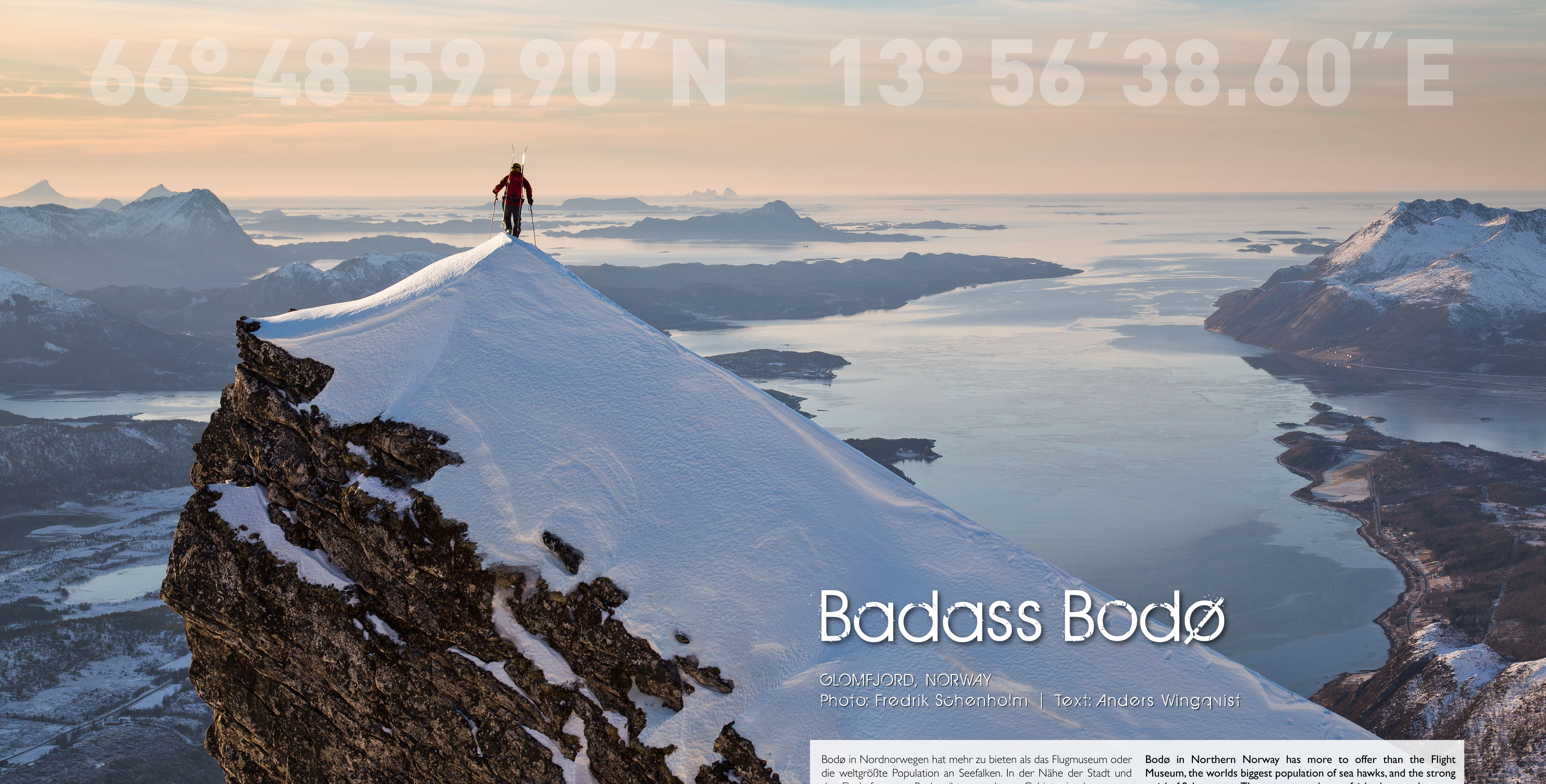
Bodø in Northern Norway has more to offer than the Flight Museum, the worlds biggest population of sea hawks, and the strong swirl of Saltstraumen. There are several areas fairly close to the town …
Bodø in Northern Norway has more to offer than the Flight Museum, the worlds biggest population of sea hawks, and the strong swirl of Saltstraumen. There are several areas fairly close to the town and airport of Bodø that boost ski touring experiences way beyond normal. Backline tried the sun set and moonlight skiing in Glomfjord. Glomfjord has the stunning northern views of the fjords and the sea, and the edgy mountains are towering a thousand meters plus straight out of the fjords. We ate "Kveite" and met local skier Øyvind who showed us around his home mountains. "Check it out, I have a peanut in my glove," says Øyvind Gjersvik. He shakes out the misplaced nut from his ski glove and throws it in his mouth.
"Perfect, I needed some energy before the last bit up to the summit," says Øyvind while firing off a smile. We all stop for a drink of water and some snacks. Øyvind, our local guide, is born and raised in the area and has spent all his life in these mountains. Apart from working as a guide and running his own company "Meløy Adventure," he also works as an industrial climber on an oil rig in the North Sea. That line of work is hard, but it also gives him a lot of time off. Every year he spends fifty-eighty days on skis. We are in the Meløy municipality located along the southern side of Glomfjorden. There are only a few hundred vertical meters left to the top of Ronsfjellet.
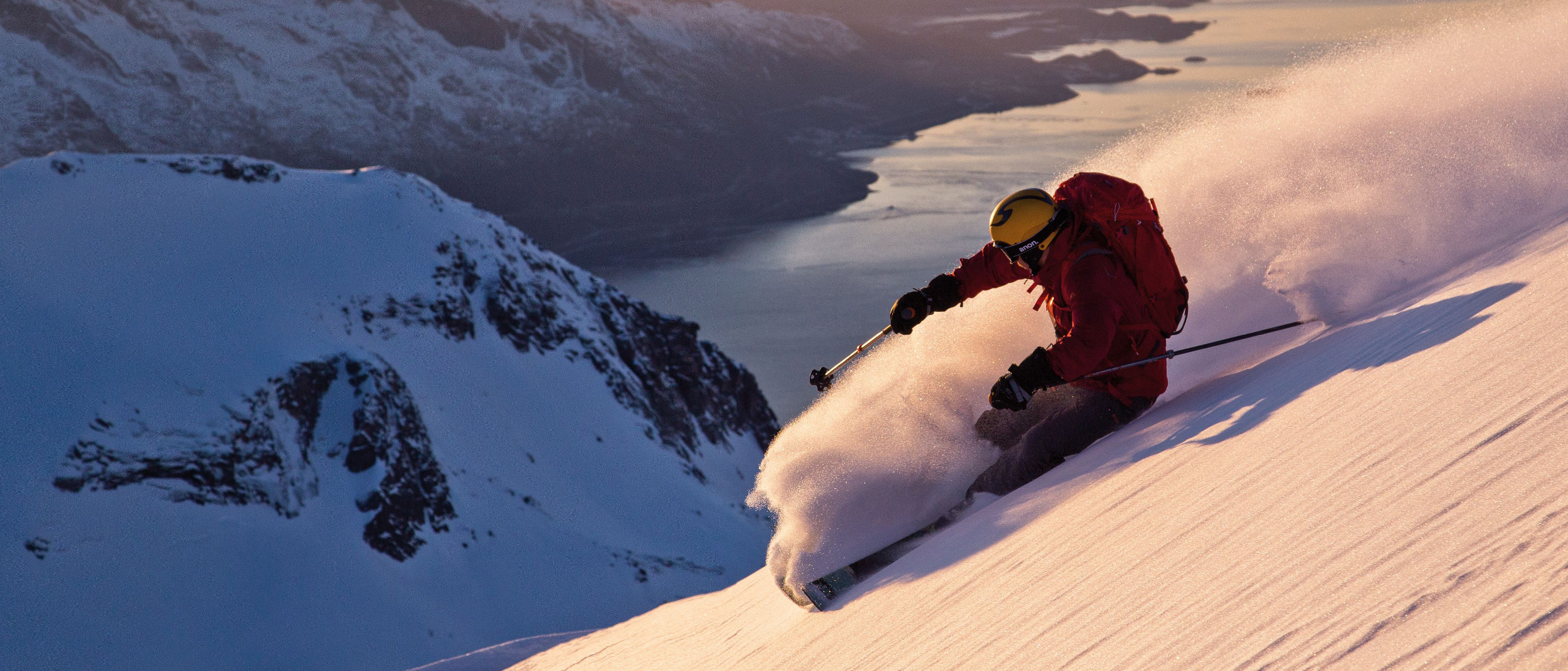
The view is mind blowing: Bjærang fjord below us and the Atlantic Ocean further out to the west. The east face of Kjeldalstinden looks massive from here. The peaks around us are barely 1,000 meters high. Several of them are skiable all the way down to the salty, cold seawater. From the fjord and town called Glomfjord, two-hours south of the city of Bodø, it's an hour drive around the fjord and through a long tunnel to Ytre Kjeldal, where we parked our rental car to start this tour. "Time to go skiing" says Øyvind Gjersvik after reaching the summit of Ronsfjellet. We chose a northwest-facing slope with an annoying crust layer, making the experience only 96% perfect.
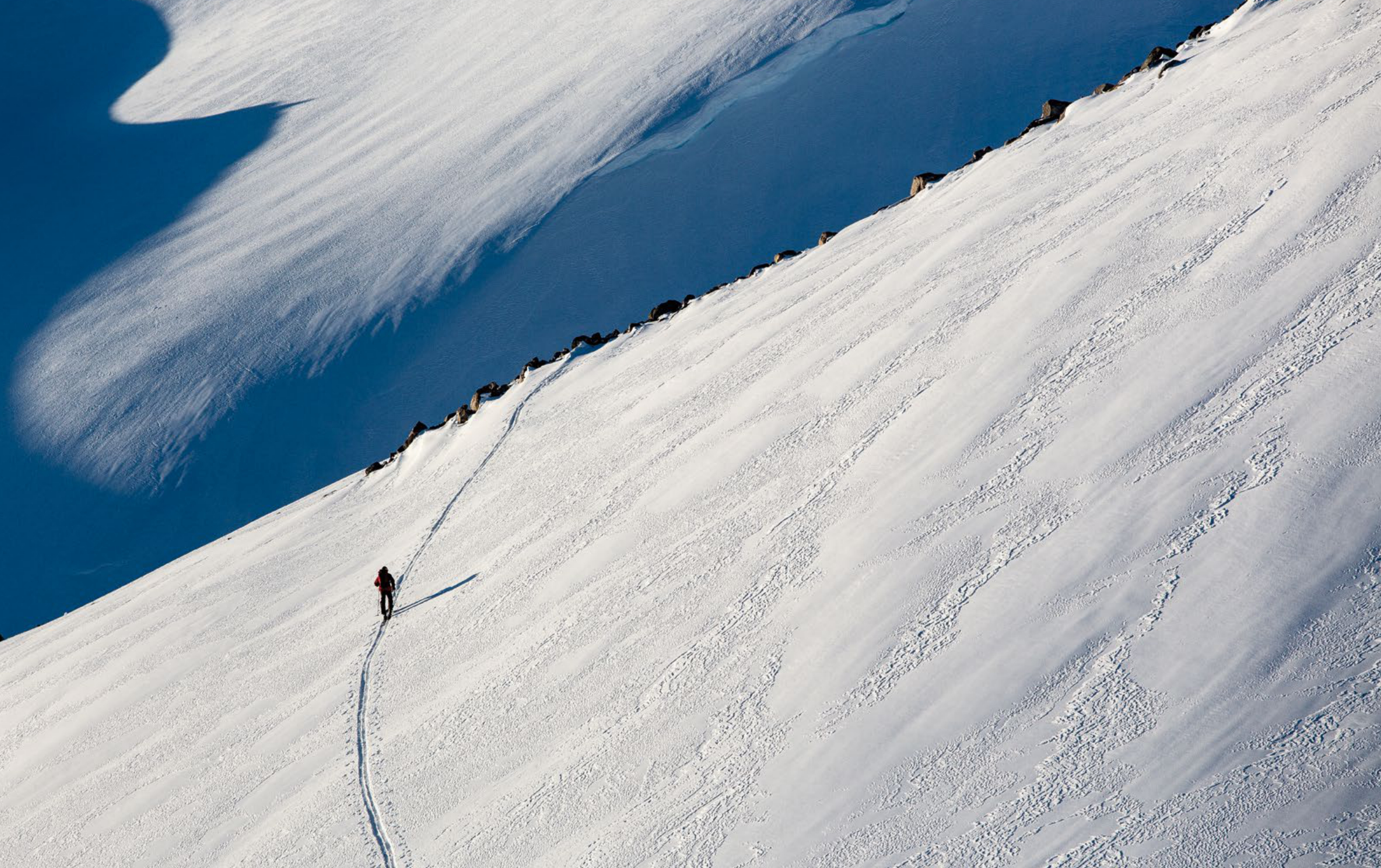
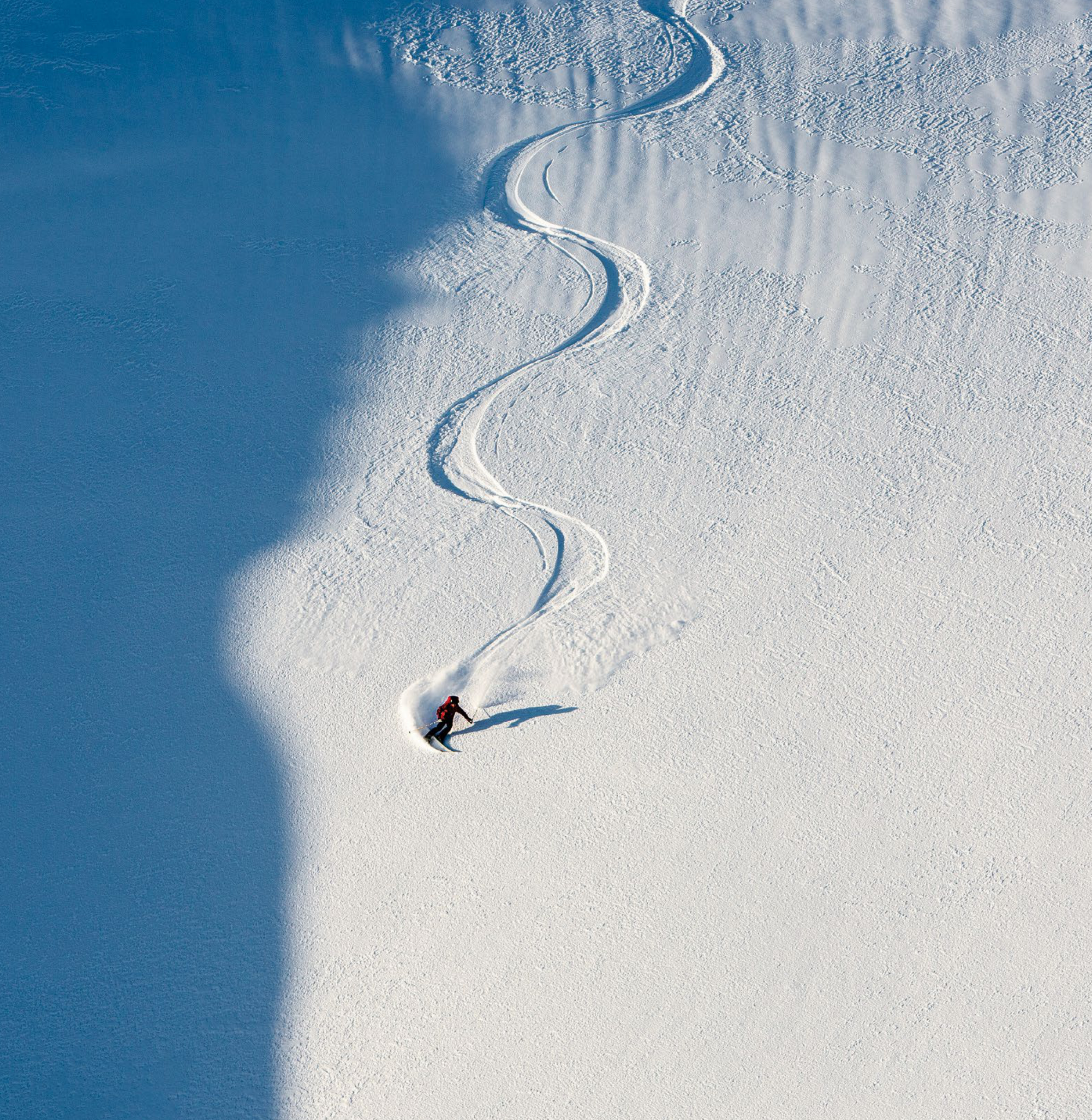
At the col between Ronsfjellet and Reindalstinden, the run changes direction, now heading northeast, down into the Reindalen and to the frozen lake of Reindalsvattnet. Ahead of us is a perfectly angled run with no tracks. Once down at the lake, it's time for some high fives. 700 vertical meters of great skiing from the summit of Ronsfjellet. But Øyvind has more in store for us. To the west of us is a steep mountainside. We attach the skis to our backpacks and hike 300 vertical meters back up. Boot packing turns into skinning, and then the summit of Reindalstiden sits right in front of us. The sun is slowly setting, the shadows are getting longer and longer, and darkness is about to drape the mountains.
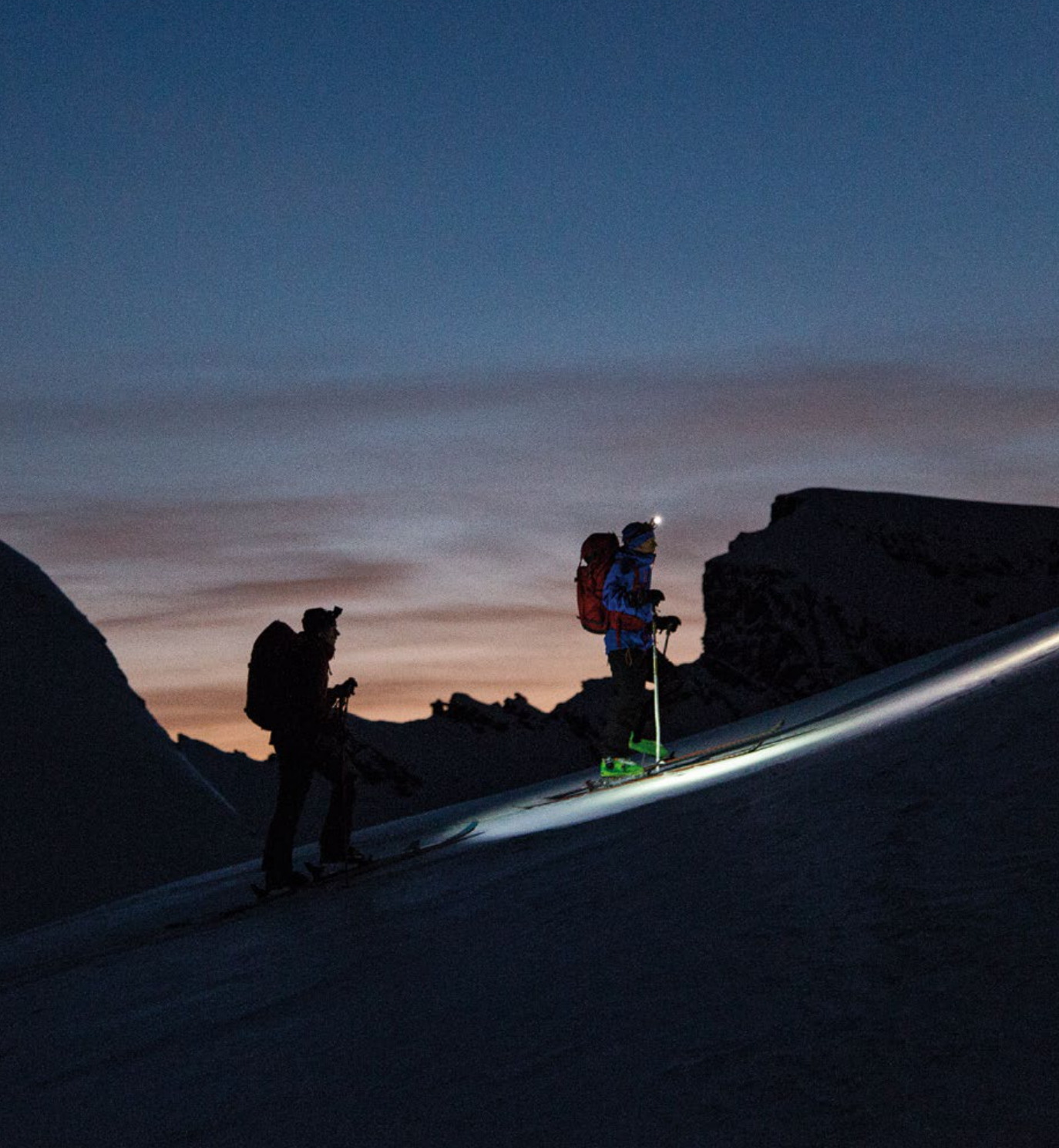
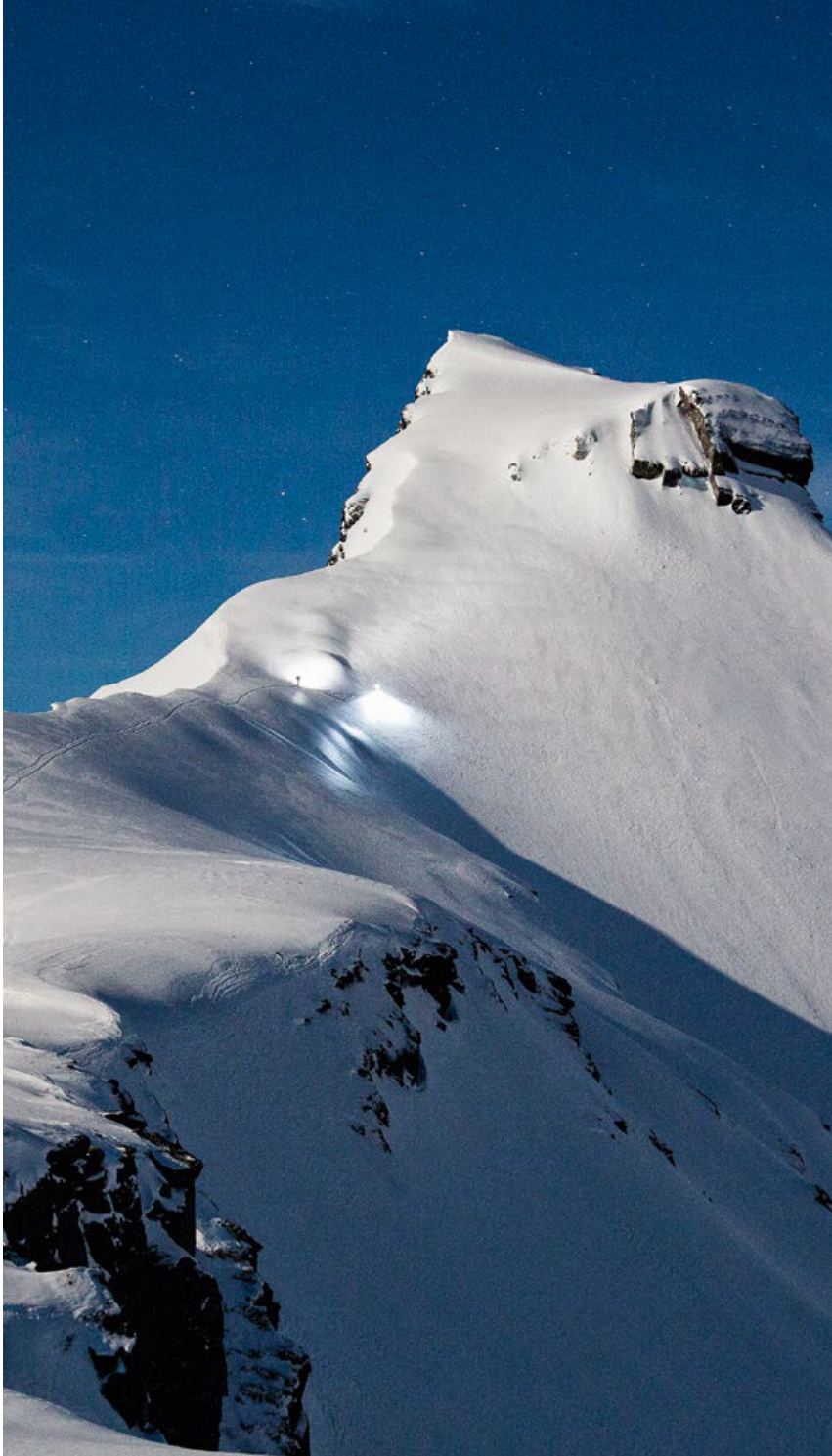
Daylight is short above the Arctic Circle in early February. Before we turn on our headlamps for the last bit to the summit, we look north toward the dark waters of Glomfjord. Along the shoreline, the small villages of Reipå in the west, Ørnes in the east and every other parish in between start to light up. Above Glomfjord, we see the slopes of a small ski resort curling down like little white snakes through the dark forest. The full moon is rising above Glomfjord, and the water reflects its light. Even during World War II, people sat up on these mountainsides and peered out into the darkness.
In September 1942, "Operation Muskedunder" began when twelve commanding troops from England, Canada, and Norway were put ashore by the French submarine Junon in Bjærangfjorden, the same fjord where our car is parked. At that time it was serious – Norway was occupied by Nazi-Germany and fought for its freedom. No one was talking about going to the top of the mountains for skiing or romantic views. The operation's goal was to sabotage Glomfjord's hydro power plant. The twelve young men crossed the mountain and carried out their task of destroying the turbine halls and pipes. The operation was successful, but only four of the twelve soldiers made it to Sweden.
One of them was stabbed during the operation; the remaining seven were captured and killed later in the concentration camp of Sachsenhausen. We head down towards the fjord in the shine of our headlamps. The snow isn't all that great at the bottom, but it is a fun and quite risk-free skiing adventure. Øyvind knows this run well, and he shows us the best and most fun way down. We arrive at an old house and are picked up by a boat. We cross the fjord, gliding through the thin layer of ice before reaching an old house. "Welcome! I have cooked halibut for you." The welcome committee includes Helena from Sweden and her dog Taiga, an Alaskan Husky.
Helena's warm house used to be an old fishing hut and still has ancient life jackets on the walls and fishing gear with buoys and nets under the roof. A wood-burning stove sits in one corner, a bar in another. "Irish coffee, anyone?", asks Helena. We eat perfectly cooked halibut caught earlier by Helena's husband. The fish is served with garlic sauce, roasted roots and a salad with fresh pomegranate dressing. Helena tells us she met her husband, who was born in Bodø, in Qatar. She worked as a lawyer, he worked as an engineer at Norska Hydro. They wanted to try something new and moved to Vassdalsvik to rent out apartments, which they built on top of the old fishing hut. It was a long ski day.
Fourteen hours after getting up we are back again now tired, happy and very satisfied. Tomorrow's plan is to climb Istinden, the signature ski tour here at Glomfjord, before heading further inland to the valley of Beiarn. Our adventure in Bodø has just begun.