Italien · Valais Alps (Signalkuppe)
Blessing and Curse
Issue 2021 · Words: Ben Tibbetts · Photos: Ben Tibbetts · 5 min read
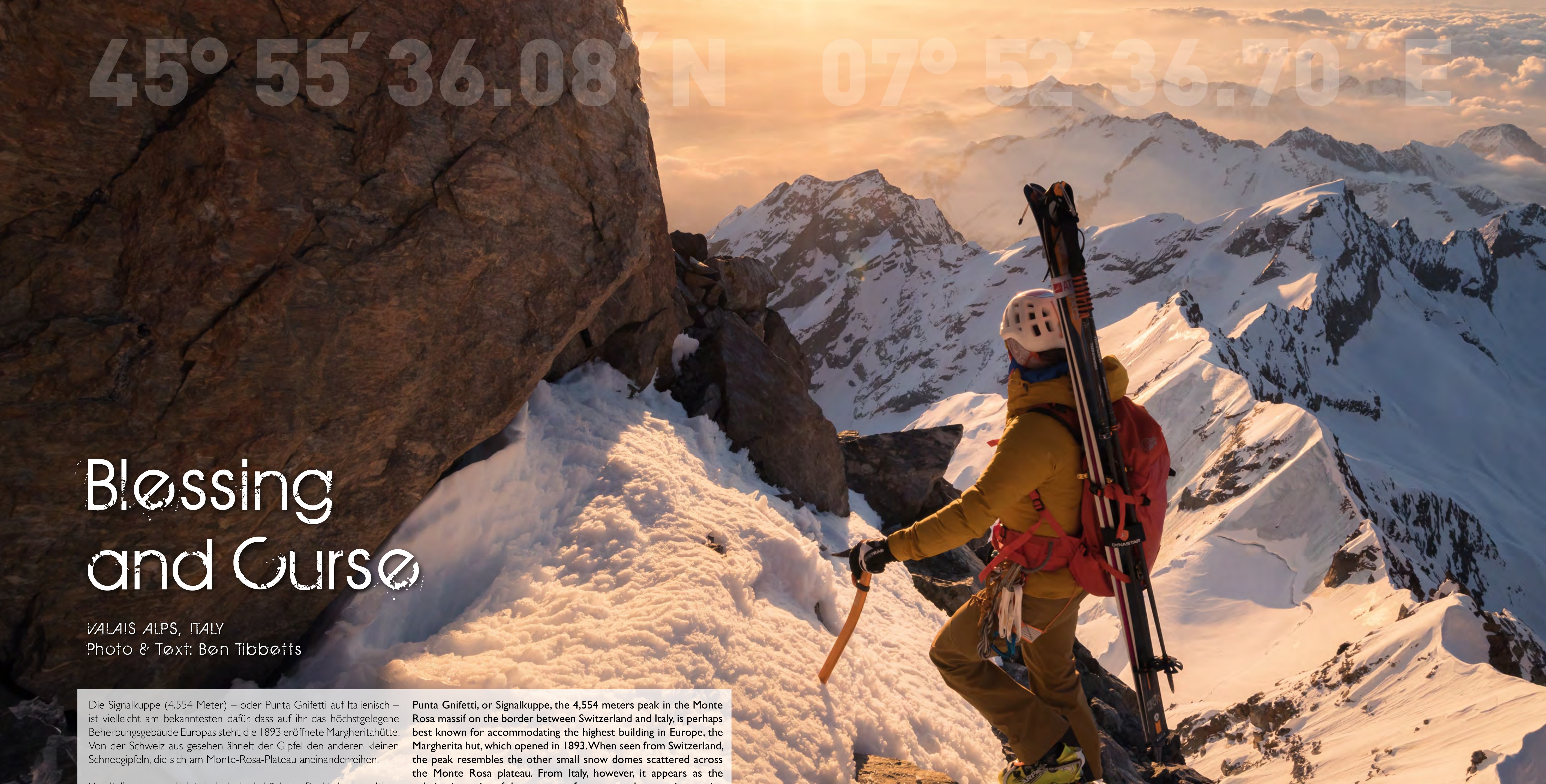
Punta Gnifetti, or Signalkuppe, the 4,554 meters peak in the Monte Rosa massif on the border between Switzerland and Italy, is perhaps best known for accommodating the highest building in Europe, the …
Punta Gnifetti, or Signalkuppe, the 4,554 meters peak in the Monte Rosa massif on the border between Switzerland and Italy, is perhaps best known for accommodating the highest building in Europe, the Margherita hut, which opened in 1893. When seen from Switzerland, the peak resembles the other small snow domes scattered across the Monte Rosa plateau. From Italy, however, it appears as the culminating point of the great east face, among the most impressive in the Alps. The Cresta Signal is the long ridge that thrusts up the center of this wall of ice and rock. It divides the wild and beautiful valleys of Anzasca and Sesia and leads directly to the summit of Signalkuppe.
There are no higher summits for over 2,000 kilometers to the east, and the views across the mountains and plains beyond give pause for thought. Valentine and I arrived in the small mountain village of Alagna late in the evening on April 25, 2018. We found a quiet car park and crawled into the back of the van. I woke with a start at three, an hour earlier than planned. Creeping outside, I was surprised at how warm it was. I woke Valentine and suggested we leave immediately in case the snow slopes on the way to the Resegotti bivouac should become dangerous. While hiking through the darkness past clusters of beautiful old houses, the rotten snow had us struggling on and off skis for over an hour.
At length, we emerged from the wooded valley and the snow became firm, but we were met by an apocalyptic scene of avalanche debris. The snow was piled high and mixed with broken trees and rocks. We skinned up with difficulty, slipping about on the icy rubble until the sun arrived after a couple of hours and finally began to soften the surface. Thirty minutes later, as we were traversing a broad slope, Valentine suddenly yelped. I turned to see a football-sized boulder dashing towards me. As I tried to skip over it, it smashed into my left boot and knocked me over. The boot protected my foot from the impact, but we were both shaken by a close call in such a benign place.
Hours later, as I took my skis off to climb the final rock band below the bivy, I discovered that the boulder had taken a massive chunk out of the edge of my ski. That evening, sitting quietly in the bivouac perched on a cliff and looking out over immense views, there was nothing to suggest the ridge above should be problematic, but I couldn't shake off that deep, gut-level tension that I have come to know so well. I also recognized that I feel like this more strongly when climbing with Valentine. Climbing as a couple is both a blessing and a curse: it melds our most powerful experiences, but our adventures are often tinged with a fear of what might happen to the other.
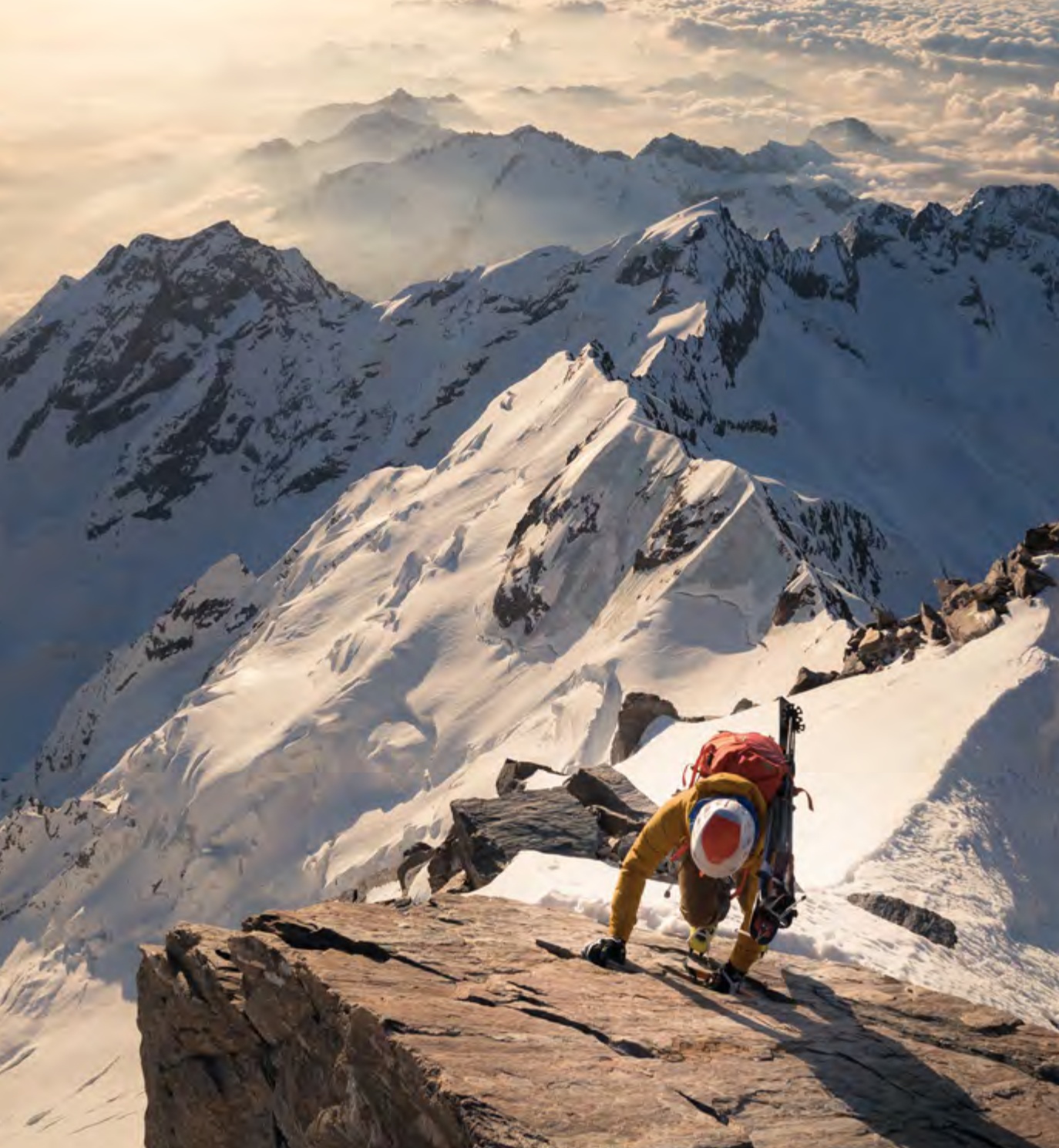
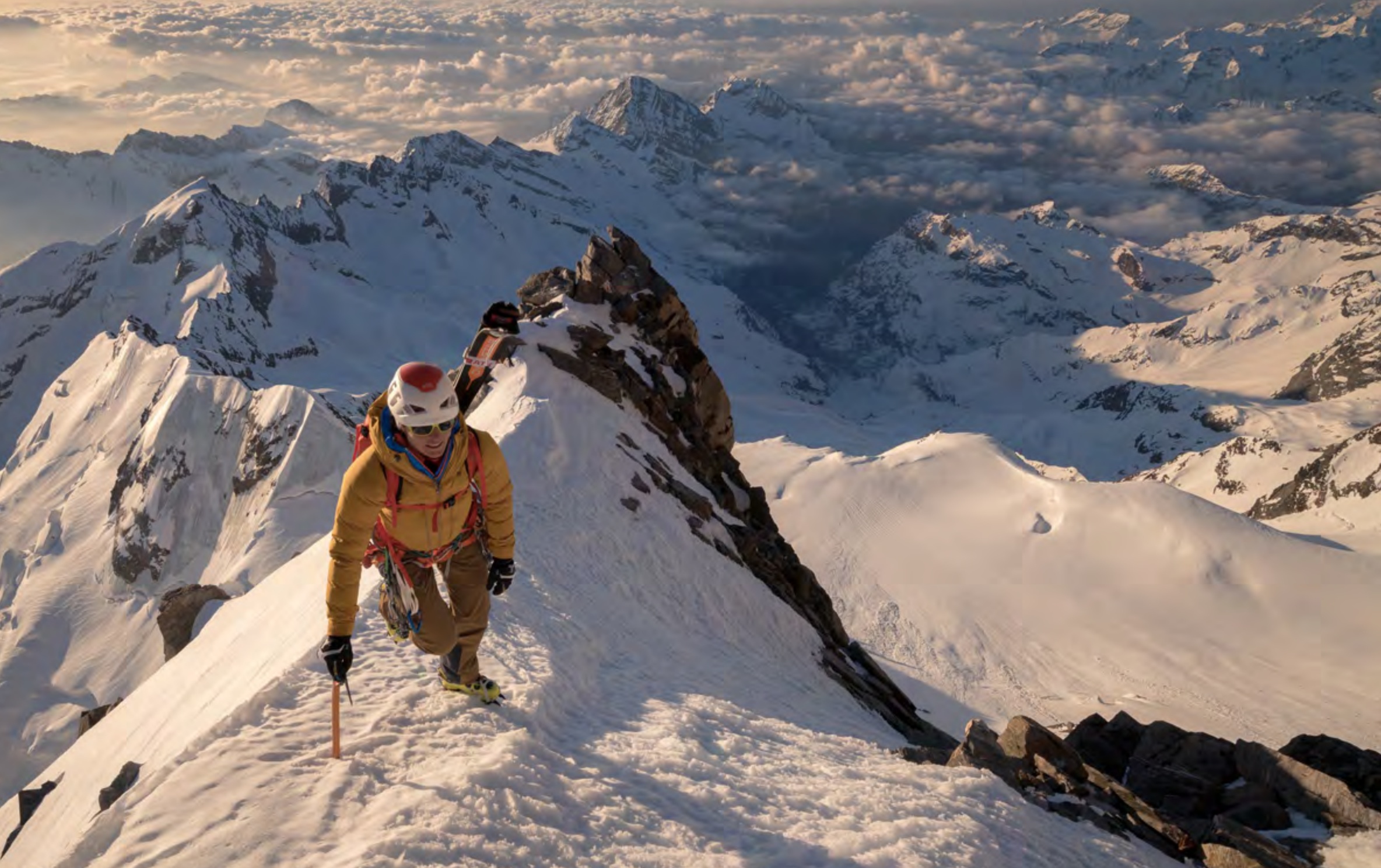
I rarely voice these fears while in the mountains because, as every climber learns, fear is contagious. We closed and jammed the warped wooden door of the hut at 3.30 am and set off up the ridge, our clawing footsteps the only sound cutting through the stillness. We were the first climbers on the route that year, but the ridge was in excellent condition. The left side, facing south, was sculpted in firm consolidated snow, while the right was cold and fluffy. As the sun finally crept down the ridge to meet us, I felt an overwhelming sense of release that sublimated all my fears. These brief but intense experiences of beauty and freedom are what keep me coming back to the mountains as if caught in some strange, masochistic ritual.
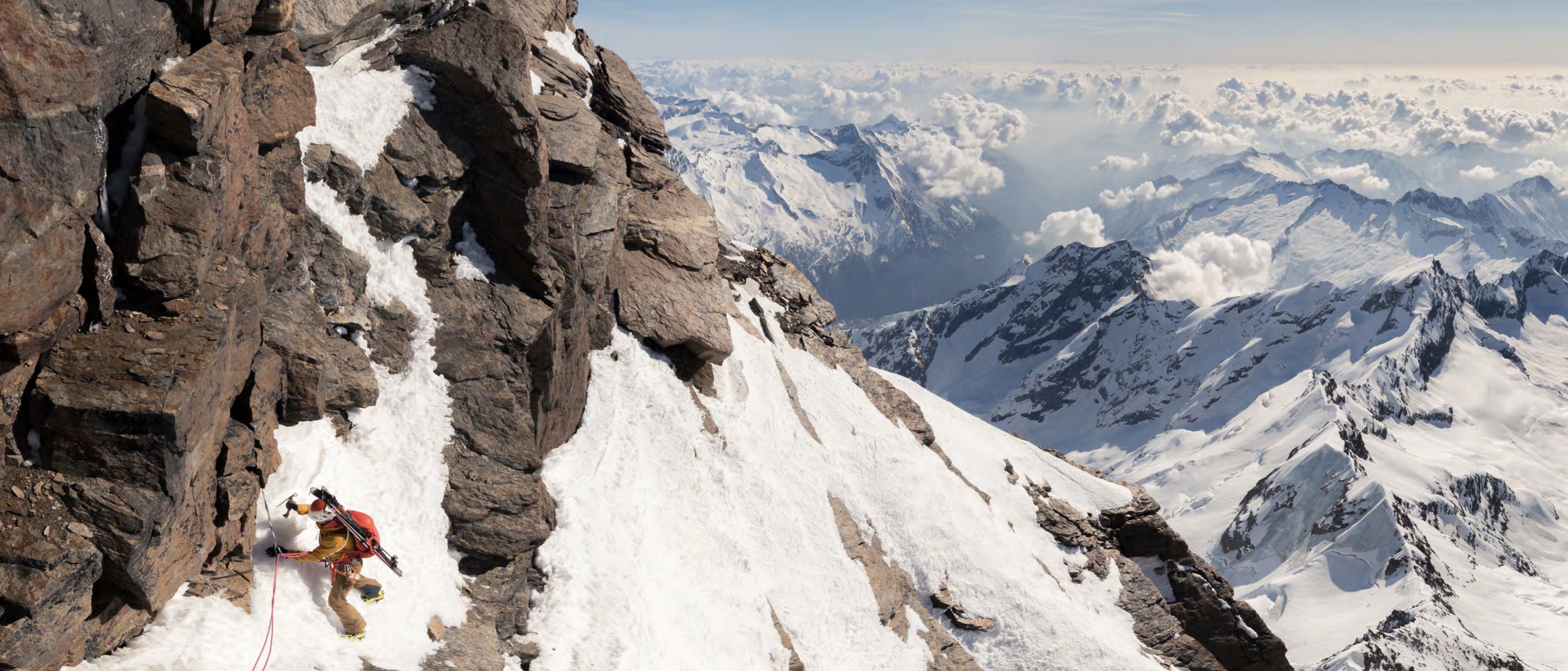
Though the hut book suggests most people climb the route in summer, it seemed better suited to springtime mixed climbing. Where there would be shelves and gullies of loose rock in summer, we scampered up the crispy snow. Passing around the left side of the first buttress, we climbed steep snow into a corner. The rock was well scratched by crampons, and although the climbing was simple, we were handicapped by our skis that protruded above our heads, catching on the rock. Regaining the crest, we followed this for a short distance to the next steep yellow wall. It looked awkward, so I belayed Valentine as she contorted her way up the chimney. Below our feet, the mountain fell away over 2,000 meters.
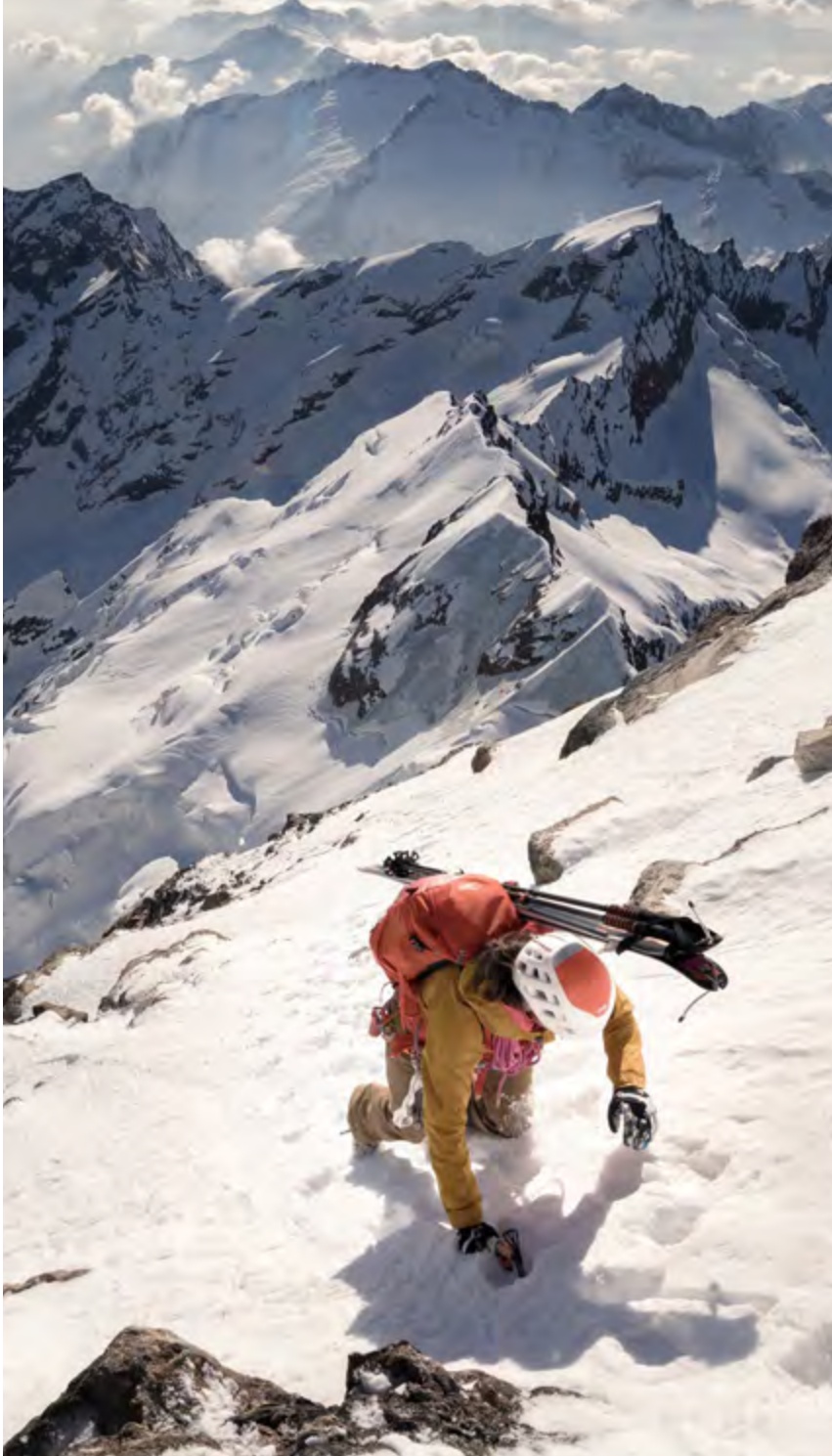
Arriving at an easy ramp of snow, we took the rope off, but the slope steepened higher up, and the snow thinned until it barely covered a layer of hard blue ice beneath. Stopping in an uncomfortable niche, we put the rope back on to make a difficult step across a gully of bare black ice. When we gained the final exposed crest, the rocks were warm to the touch, but just 50 meters above us, we could see spindrift streaming off the snowy plateau and harassing the Margherita hut. Putting on our jackets, we braced ourselves for the maelstrom above. When we emerged onto the plateau, the scene beyond was hard to reconcile with where we had just been.
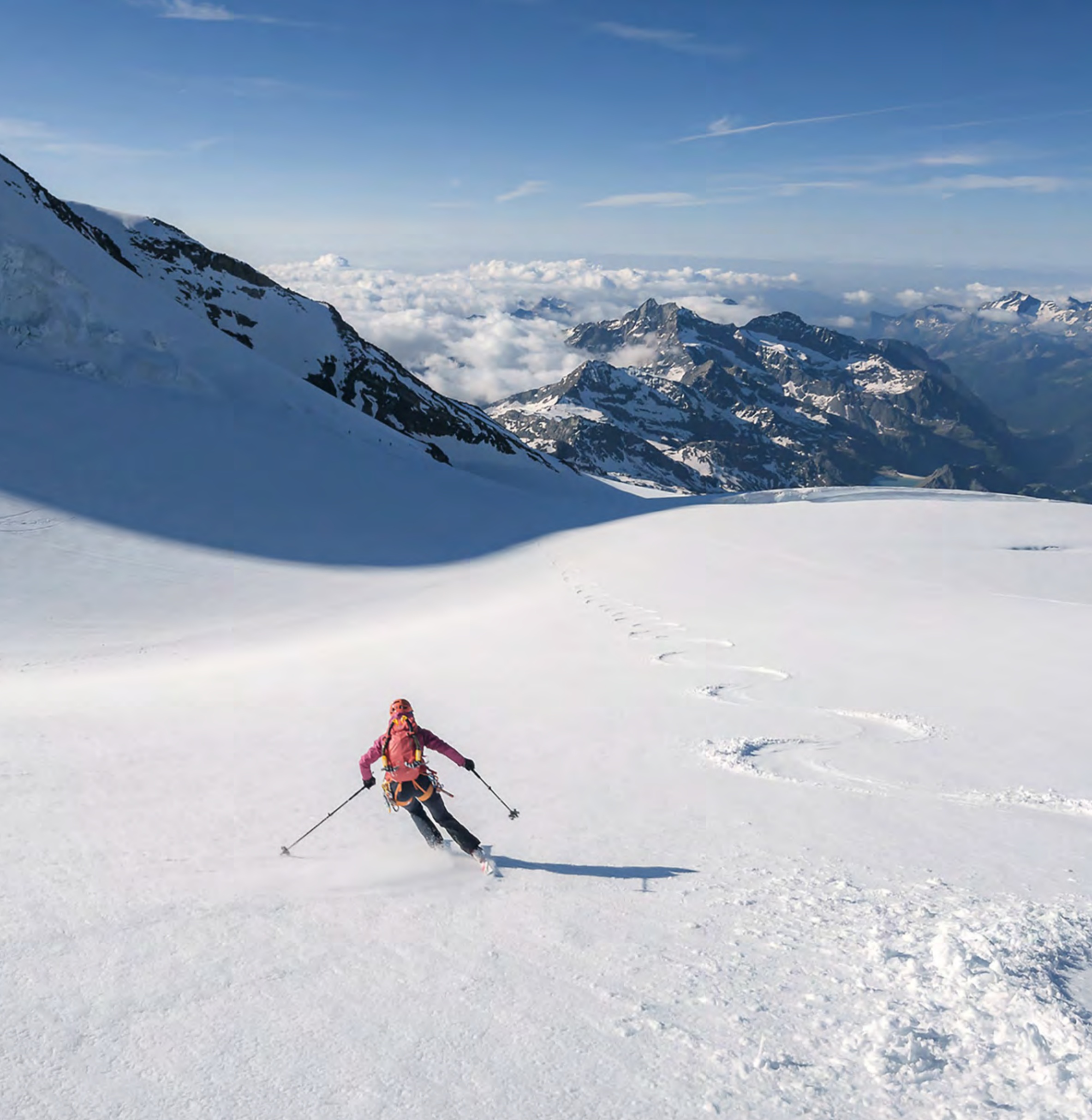
It was a national holiday in Italy, and over two hundred ski tourers dotted the wide slopes below the Signalkuppe, all heading for the Margherita hut. The hut was closed except for the battered winter room, where we stopped for a quick break. As people began to arrive in droves, we fled. Only then did I remember that one of my skis was so severely damaged that it might snap in half, so I skied one-footed as much as possible as we weaved our way down the glaciers. As the snow began to soften, we cut back east into the Sesia valley, and by the time we reached Alpe Bors, the snow was thoroughly rotten under the intense morning sun. We descended 3,000 meters in just two hours and finally took our skis off five minutes from the car.
Despite my lack of rest, I hadn't once felt tired in the ten hours it had taken to climb the route and descend. Powerful emotions had kept my senses alive, and my mind stimulated. Having climbed over ten thousand meters in four days, carrying a mass of camera equipment, I was surprised and grateful for the resilience of my body. This article is an excerpt from Ben's 2019 book "Alpenglow – The Finest Climbs on the 4000m Peaks of the Alps".