Schweiz · Urner Alps (Göschenen)
Dani Arnold
Issue 2021 · Words: Martin Fiala · Photos: Martin Fiala · 4 min read
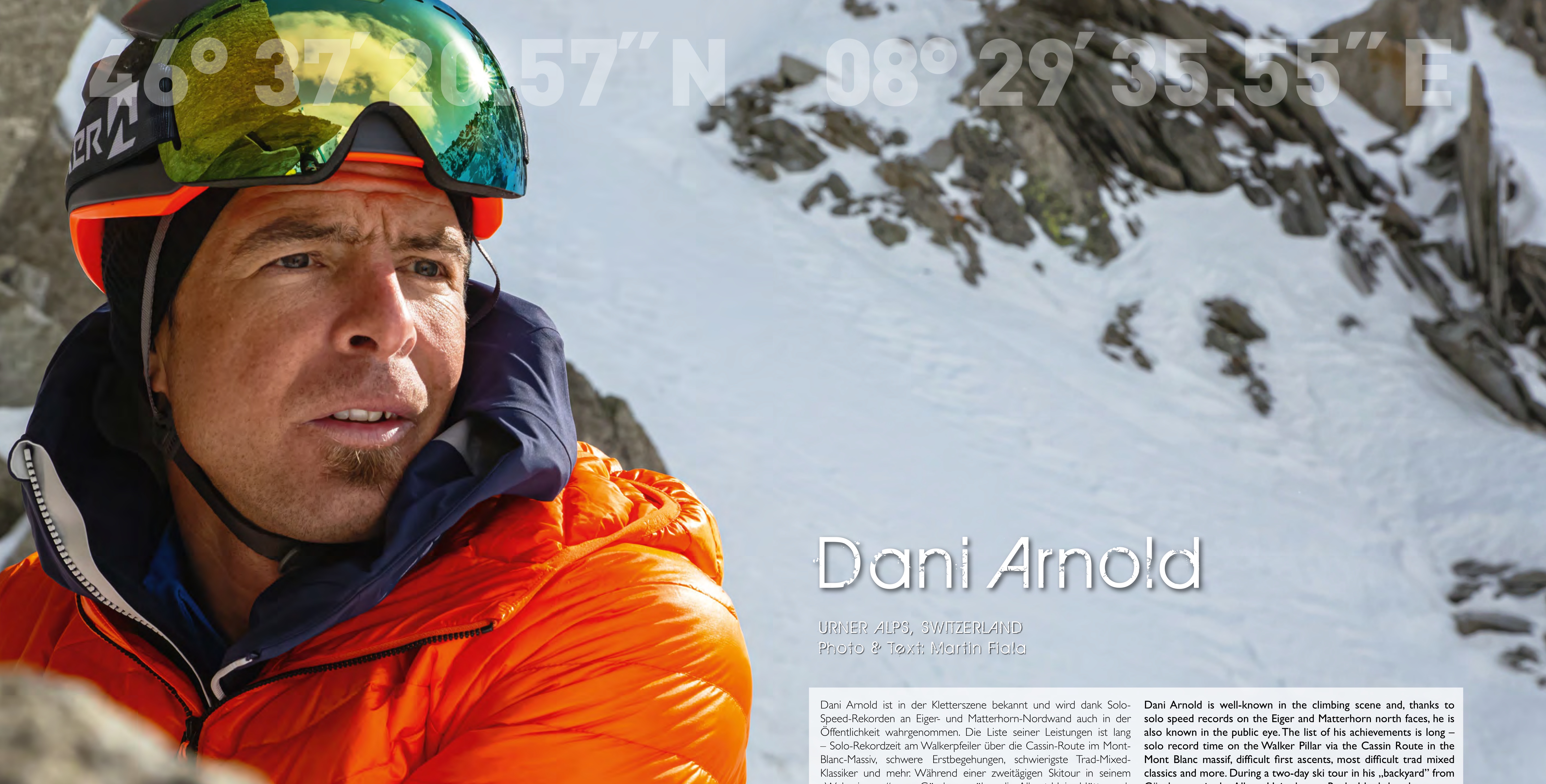
Dani Arnold is well-known in the climbing scene and, thanks to solo speed records on the Eiger and Matterhorn north faces, he is also known in the public eye. The list of his achievements is long – …
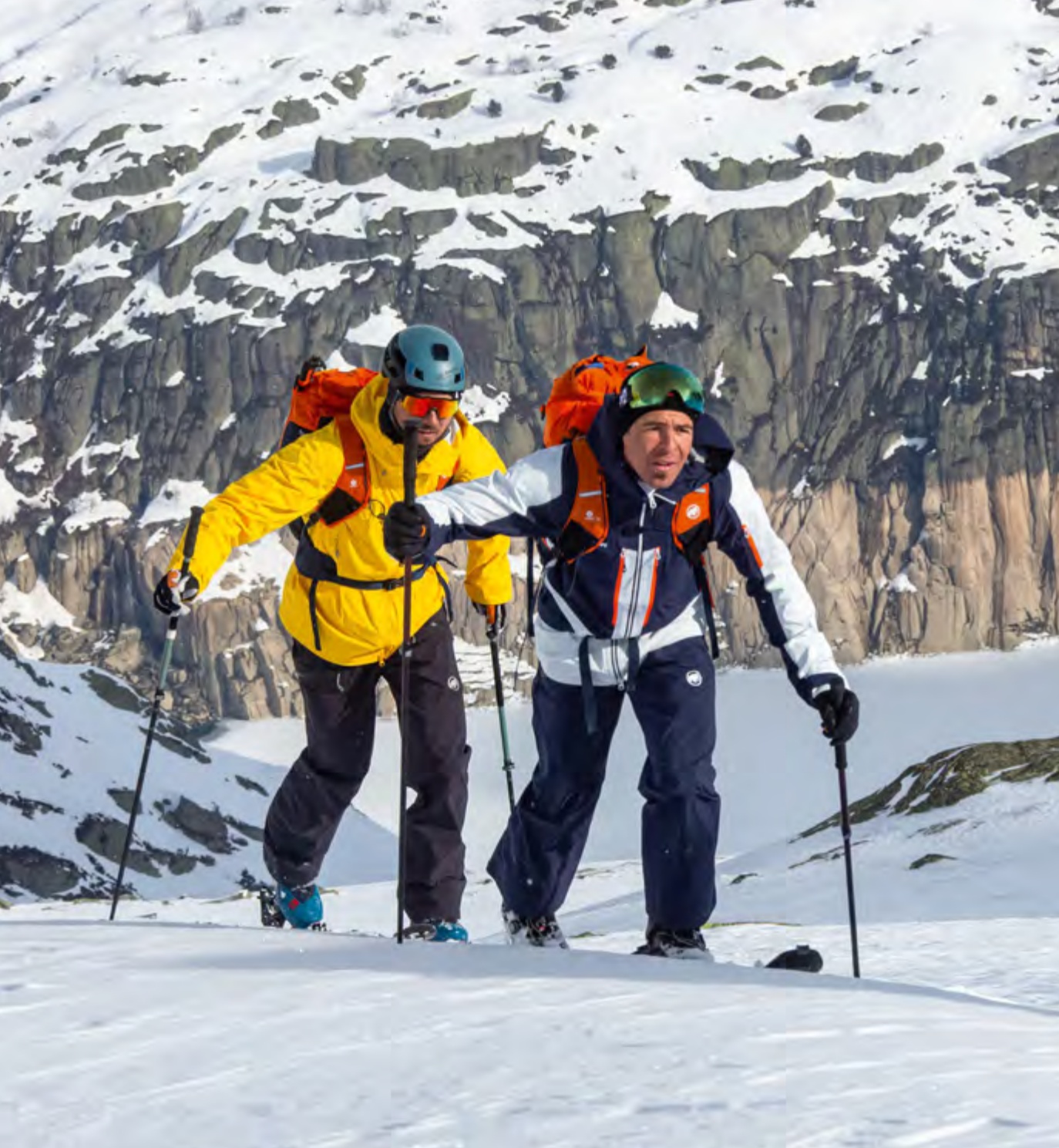
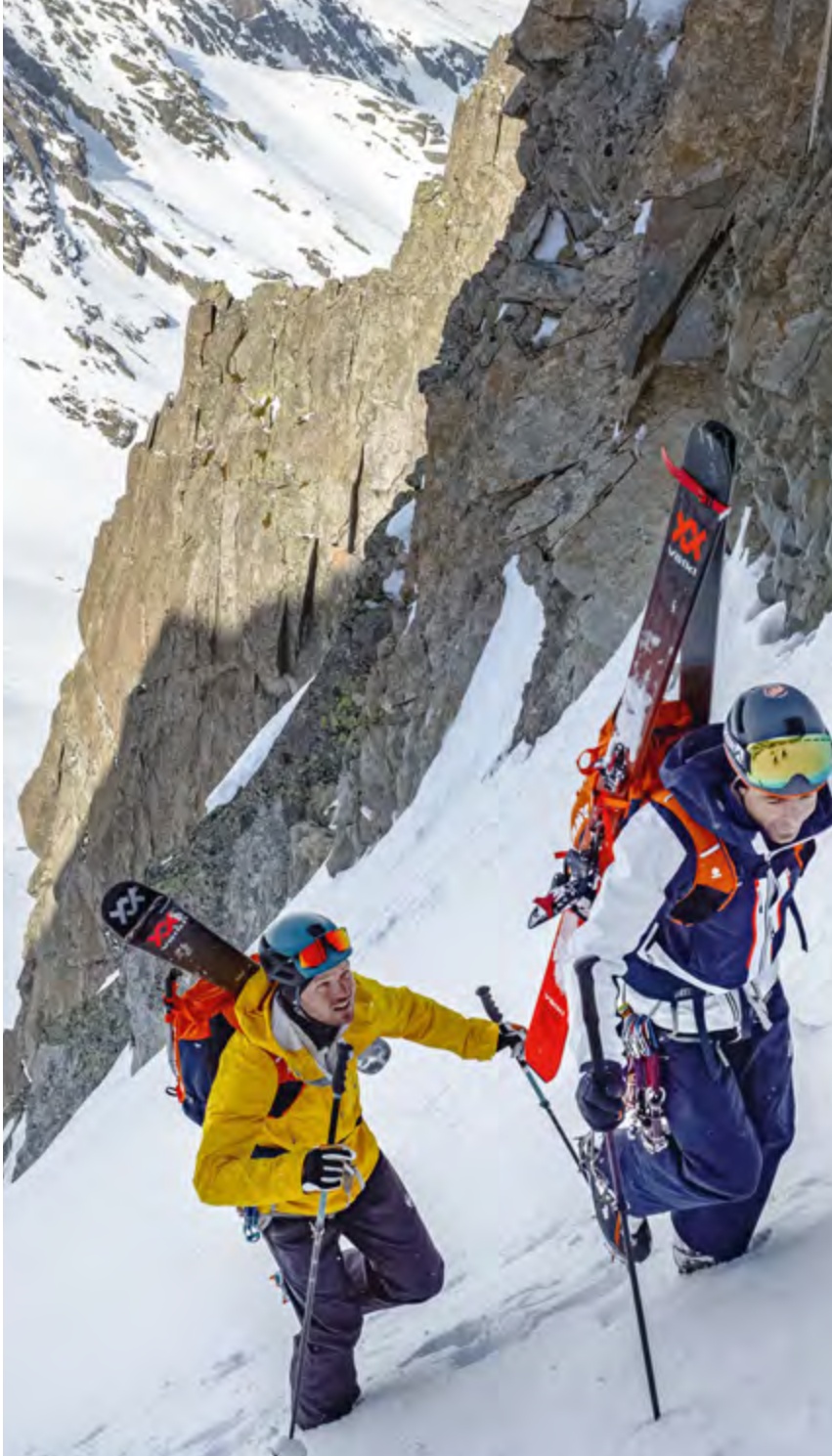
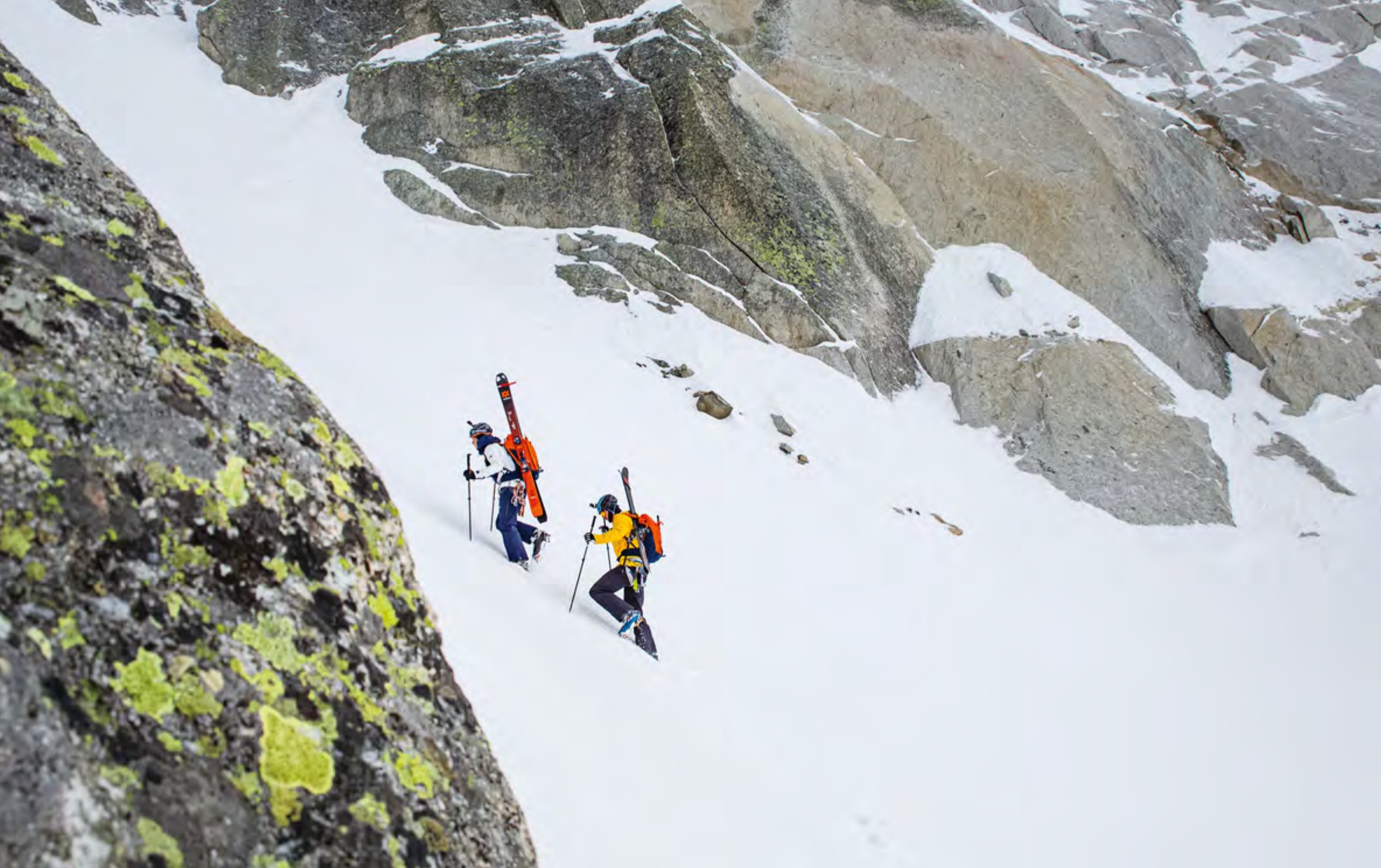
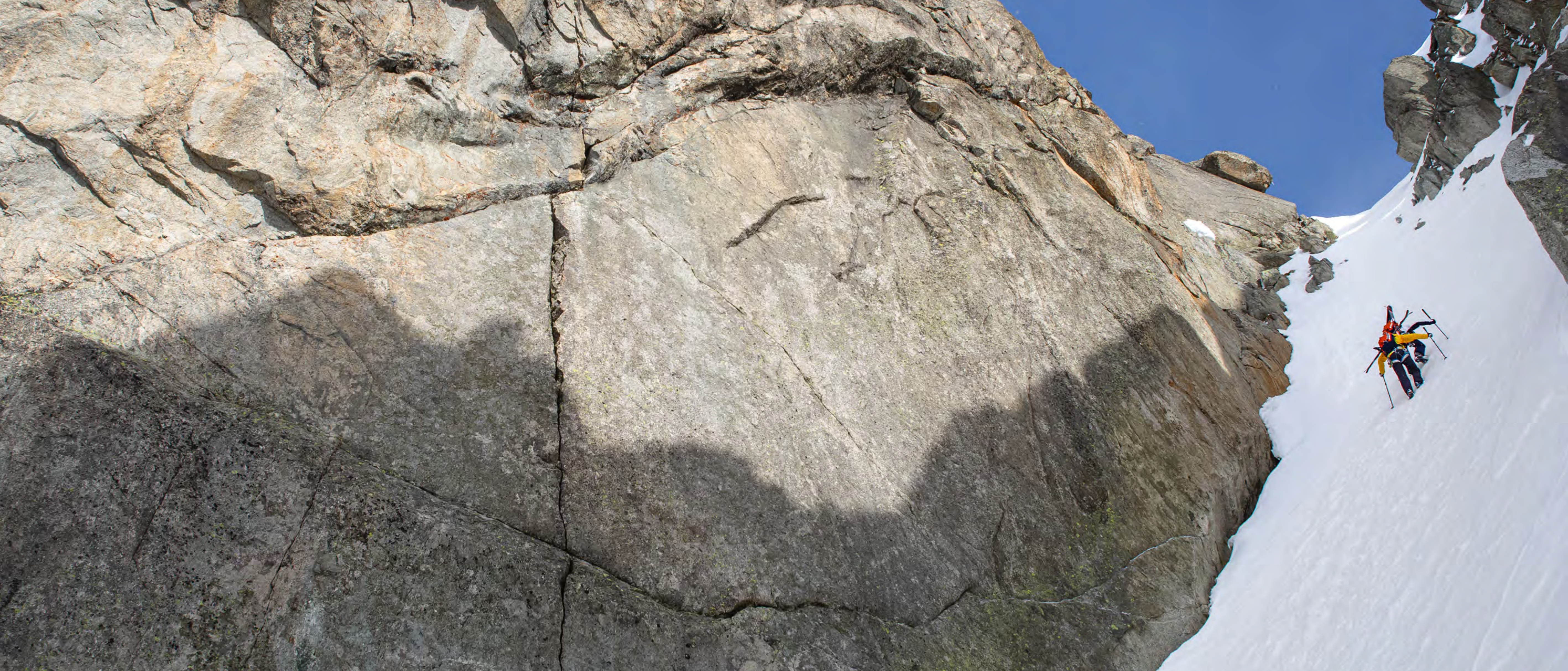
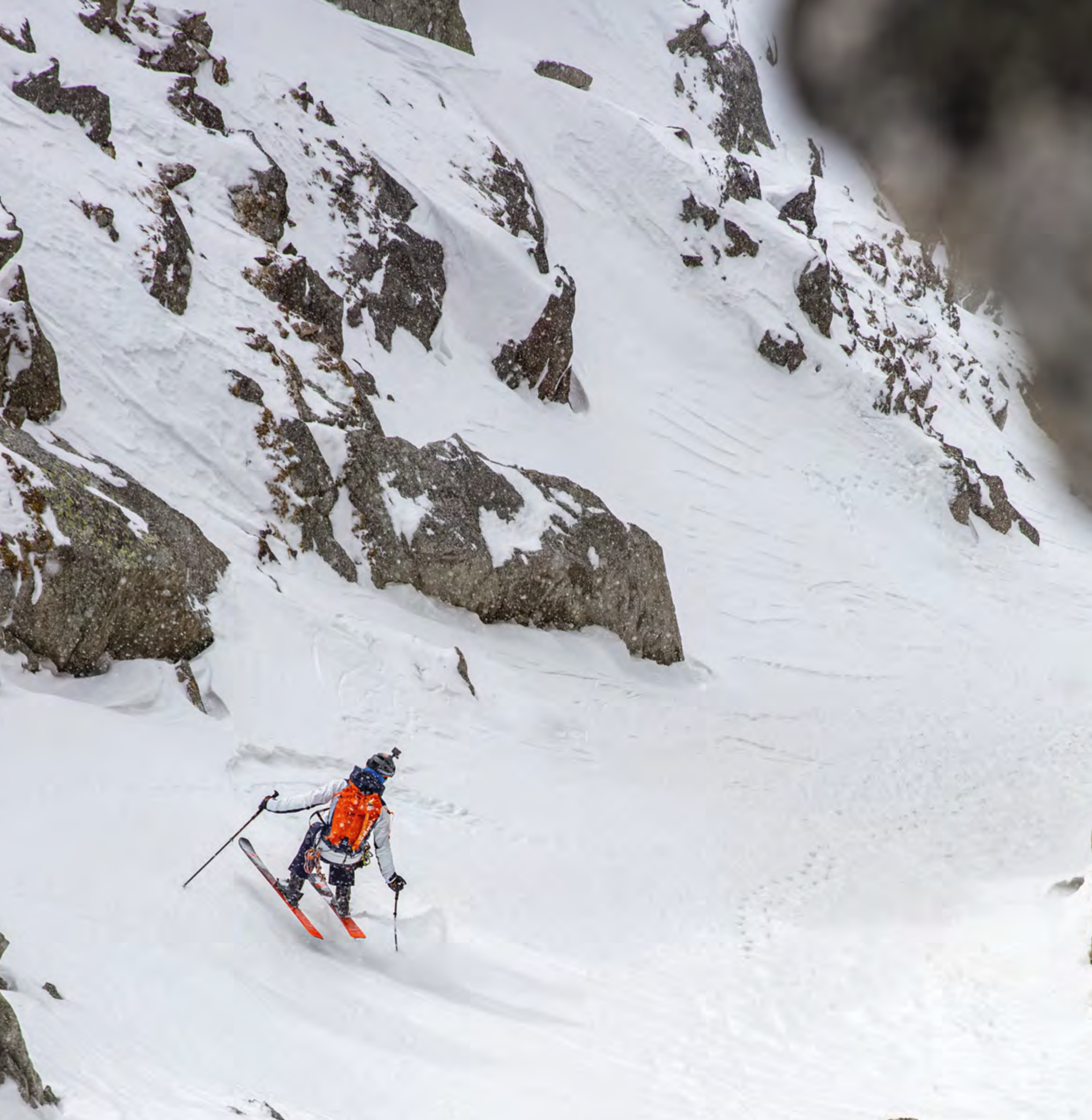
Dani Arnold is well-known in the climbing scene and, thanks to solo speed records on the Eiger and Matterhorn north faces, he is also known in the public eye. The list of his achievements is long – solo record time on the Walker Pillar via the Cassin Route in the Mont Blanc massif, difficult first ascents, most difficult trad mixed classics and more. During a two-day ski tour in his „backyard” from Göschenen via the Albert Heim hut to Realp, I had the pleasure to get to know him better. Conditions were good and the scenery was stunning. However, what remains in my memory is not so much the steep gully cutting through the granite rocks that we skied, but a person who enjoys every minute in the mountains with cordiality and joy and – albeit being a professional snowboarder – loves skiing.
Dani, you are known around the world for your fast solo ascents on the most difficult climbs. What is your personal reason for doing these spectacular tours?
First and foremost, it’s the fun. It was never a goal of mine to become famous for difficult solo ascents. It just happened, gradually. You can’t decide overnight to climb a 1,000-meter wall without a rope. Something like that takes years of planning and lots of training. When the moment arrives and everything is right, it’s something very special. It’s hard to describe the feeling of climbing difficult walls in such an uncompromising style.
Many people can’t comprehend that you expose yourself to such risks. Why do you do it?
I don’t consider the risk on a free solo to be bigger than on many normal hikes. Of course, I push myself much closer to the limits, I am aware of that. However, the effort and preparations are a lot higher than for a normal tour. Especially the mental struggle; waiting for the right conditions and the right constellation of all factors requires patience. When I finally decide to set out, I have done all my homework and left nothing to chance. When you do a „leisure tour,“ you sometimes don’t even prepare anything. You just take off. I’d be more worried that these kind of situation turned out to be risky.
Has your attitude toward “taking risks” changed over the years?
Very much so. I wouldn’t repeat a lot of the projects I’ve done in the past. Sometimes I was just lucky. I think almost everyone goes through such times of euphoria. You almost feel immortal, in the flow. It has felt great, but over time, I’ve learned that a lot of things can go wrong when you’re „walking on the edge,“ literally. But it’s also an opportunity when you try something new. Not necessarily an extreme free solo, but you can always expand your own, personal horizon.
Although you are a trained boardercrosser, you like to go out on skis. Why not a splitboard?
When I stopped snowboarding professionally in 2006, splitboards just weren’t there yet. And for the mountain guide exam, I had to be able to ski properly. I’ll eventually get around to the splitboard. You wouldn’t believe how many times I wished I had a snowboard for the descent...
How important is ski touring for you in terms of your overall alpine skills and projects?
There are countless tours - near or far - on which I ski. But this is mostly to get to the base of a wall or icefall. From a physical point of view, I think ski touring is great. But it is difficult to be the best in all disciplines. That’s why I’m concentrating on the extreme ones, which I’ve mastered quite well, I think.
When you choose your touring objectives, do the challenges of the ascent or the descent predominate?
Personally, the physical aspect is a bit more important. I am fascinated with tracking uphill through a beautiful landscape. That is very special, one of the most beautiful experiences in mountain sports. But the downhill is of course also something to look forward to!
Do you often go ski touring alone?
Yes, quite often and I enjoy being by myself for training. Those are very intense moments. Especially physically, I like to challenge myself. When I go on tour with other people, it’s more about being in the mountains together, experiencing great moments and sharing the unique winter scenery.
From your point of view, are the areas of “extreme winter alpinism” and “extreme ski alpinism” drifting apart or are they growing together?
Broadly speaking, they are growing together, because for many endeavors in winter you need to be a good level in both disciplines. At the top level, however, it is very difficult to be at the top in both disciplines. To be among the best in the world, you have to focus a little bit on one or the other and follow that path.
Which ski mountaineering achievements have impressed you in recent years?
Jérémie Heitz, in particular, has impressed me. The speed the lad skis extremely steep lines with is unbelievable. I also watched Andrzej Bagiel’s ascent at K2 and subsequent first descent with great admiration. This is a very, very cool project, where many aspects and disciplines of mountain sports come together. To step into your ski binding up there is truly a bit bold.