Norwegen · Narvik Range
Endless Backcountry
Issue 2018 · Words: Mattias Fredriksson · Photos: Mattias Fredriksson · 5 min read
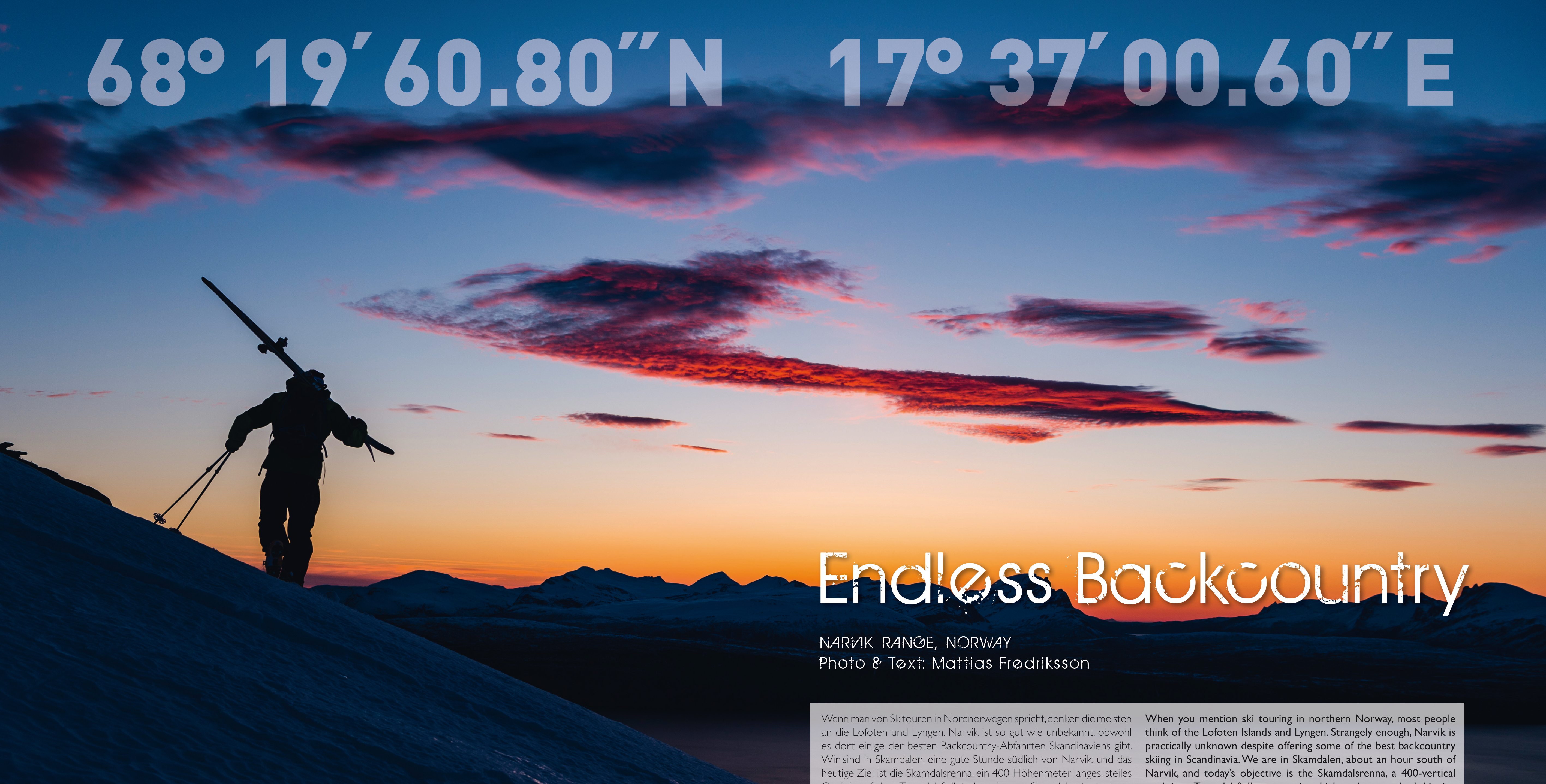
When you mention ski touring in northern Norway, most people think of the Lofoten Islands and Lyngen. Strangely enough, Narvik is practically unknown despite offering some of the best backcountry …
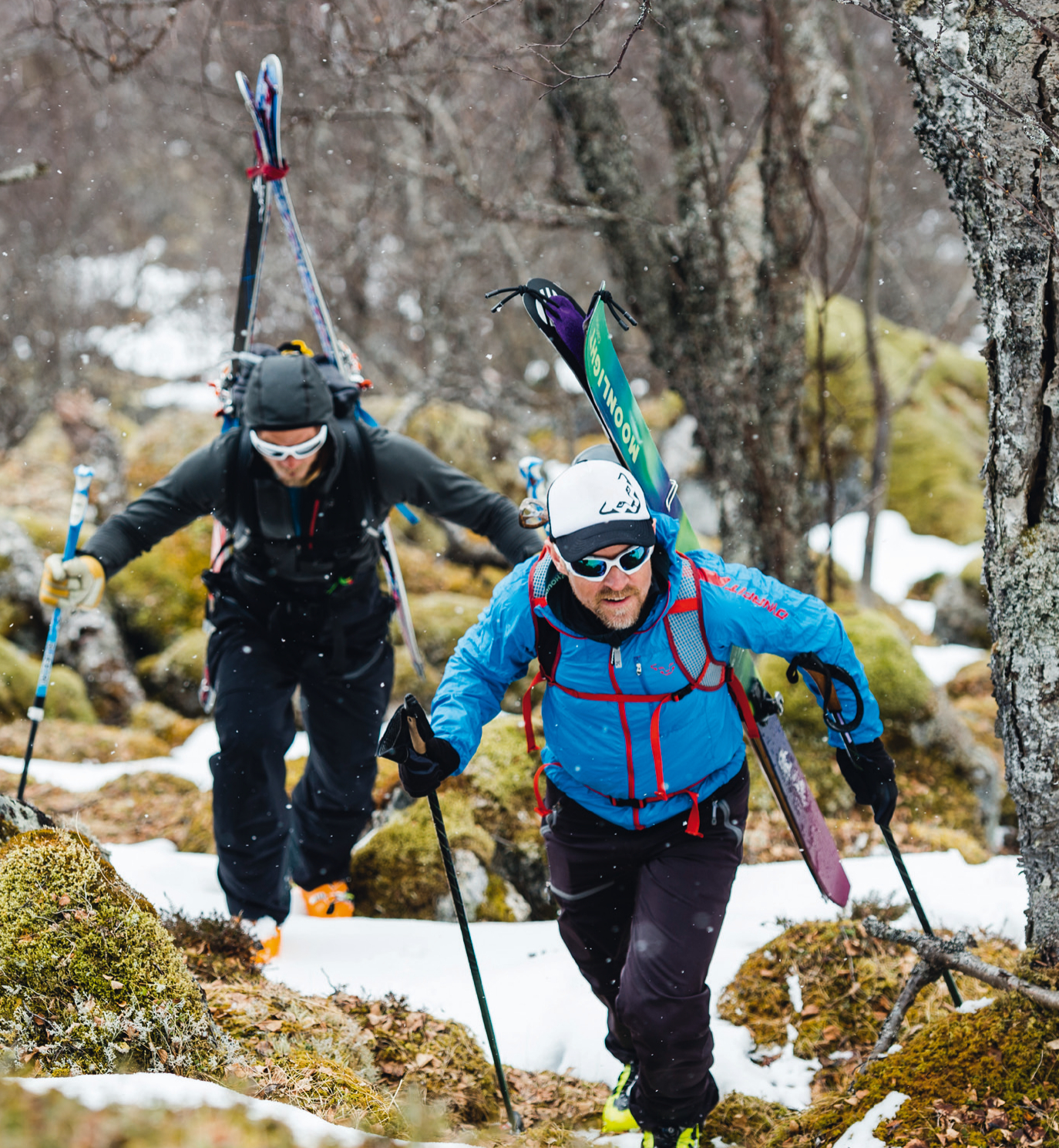
When you mention ski touring in northern Norway, most people think of the Lofoten Islands and Lyngen. Strangely enough, Narvik is practically unknown despite offering some of the best backcountry skiing in Scandinavia. We are in Skamdalen, about an hour south of Narvik, and today's objective is the Skamdalsrenna, a 400-vertical couloir on Tverrdalsfjellet mountain, which we have reached skinning and hiking from Skamdalsvatnet, a beautiful lake nestled 900 vertical meters further down between tall mountains. My friend Micke af Ekenstam, a Narvik local for the past twenty years, leads the way and pushes the last bit towards the top. We have been in the shade since we started climbing and for a while it even snowed, but now the sun is coming out.
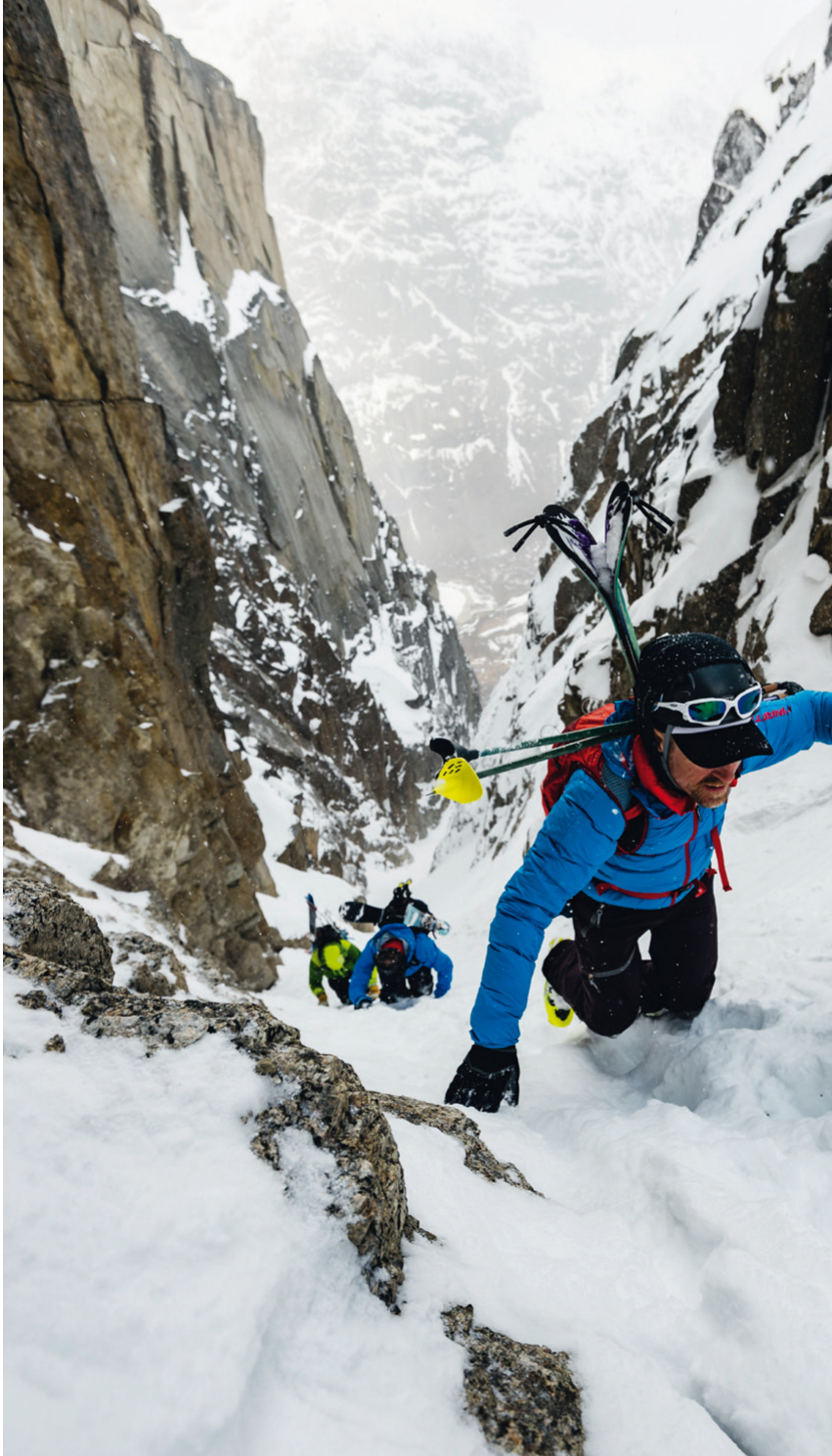
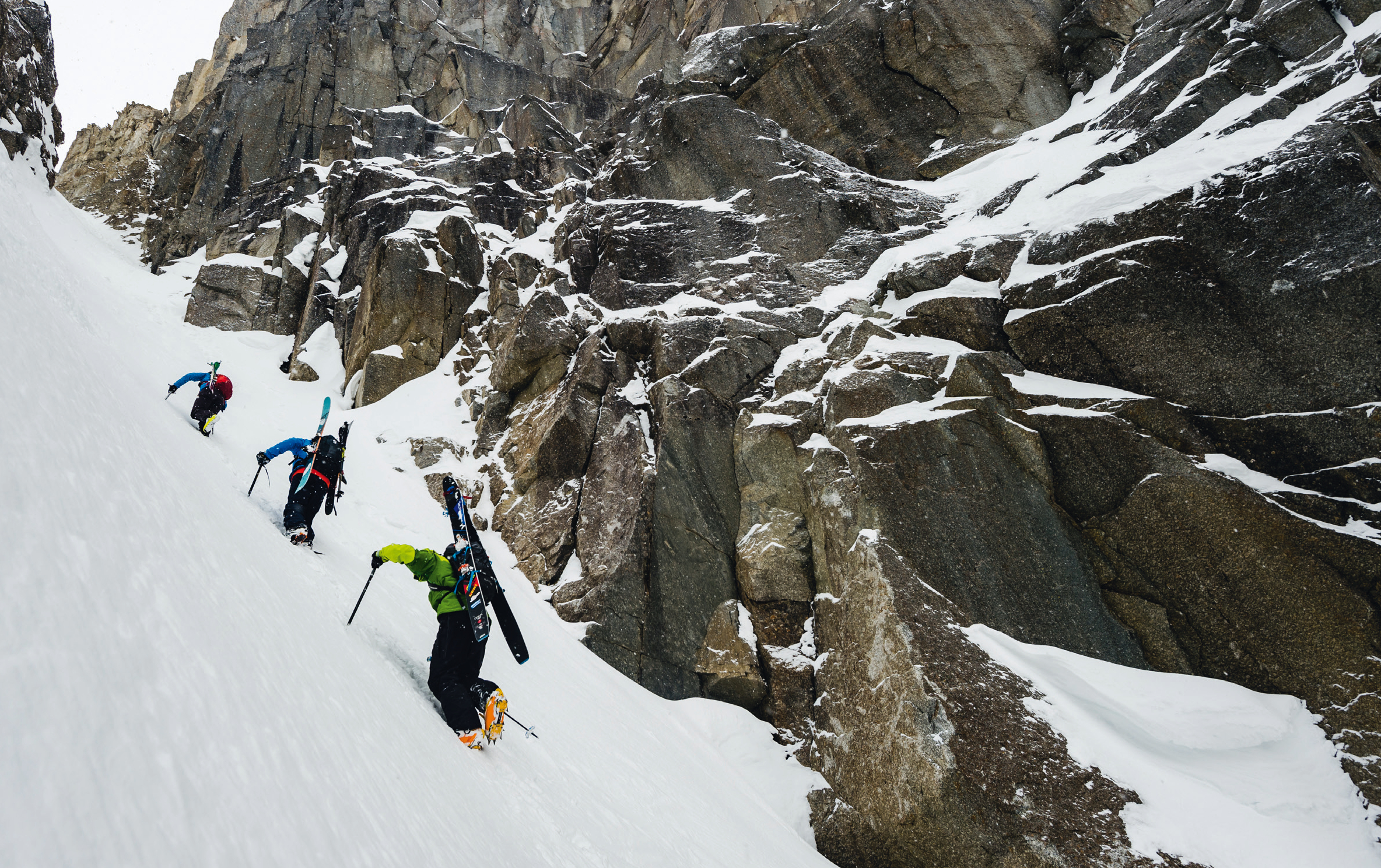
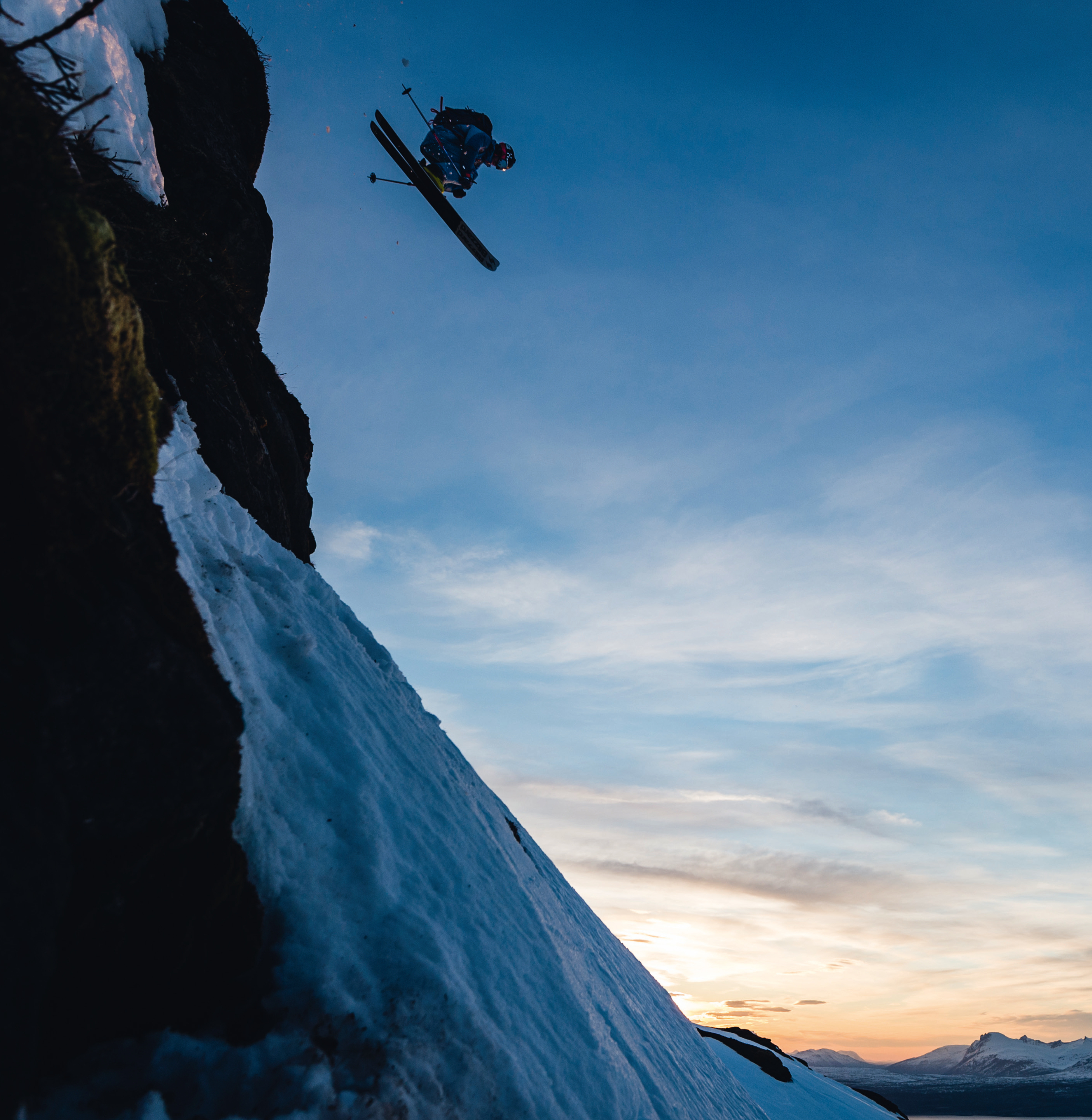
Typical Scandinavian spring weather! After climbing an hour and a half with crampons and ice ax, we are in the steepest and narrowest part of the couloir, very close to the top: 40 degrees, no wider than two ski lengths and the walls left and right stand 100 meters tall. I feel tiny, and there's a constant threat of falling rock. We reach the top unharmed, and after a well-deserved "fika", Scandinavian expression for a snack with coffee or tea, we prepare to drop in. During the day, the wind shifted the fresh snow. All tracks are gone, and the skiing should be great. 46-year-old Micke is a great skier. His style is smooth, powerful and stylish. He is as energetic as in the late 1990s when he was a semi-pro freeskier.
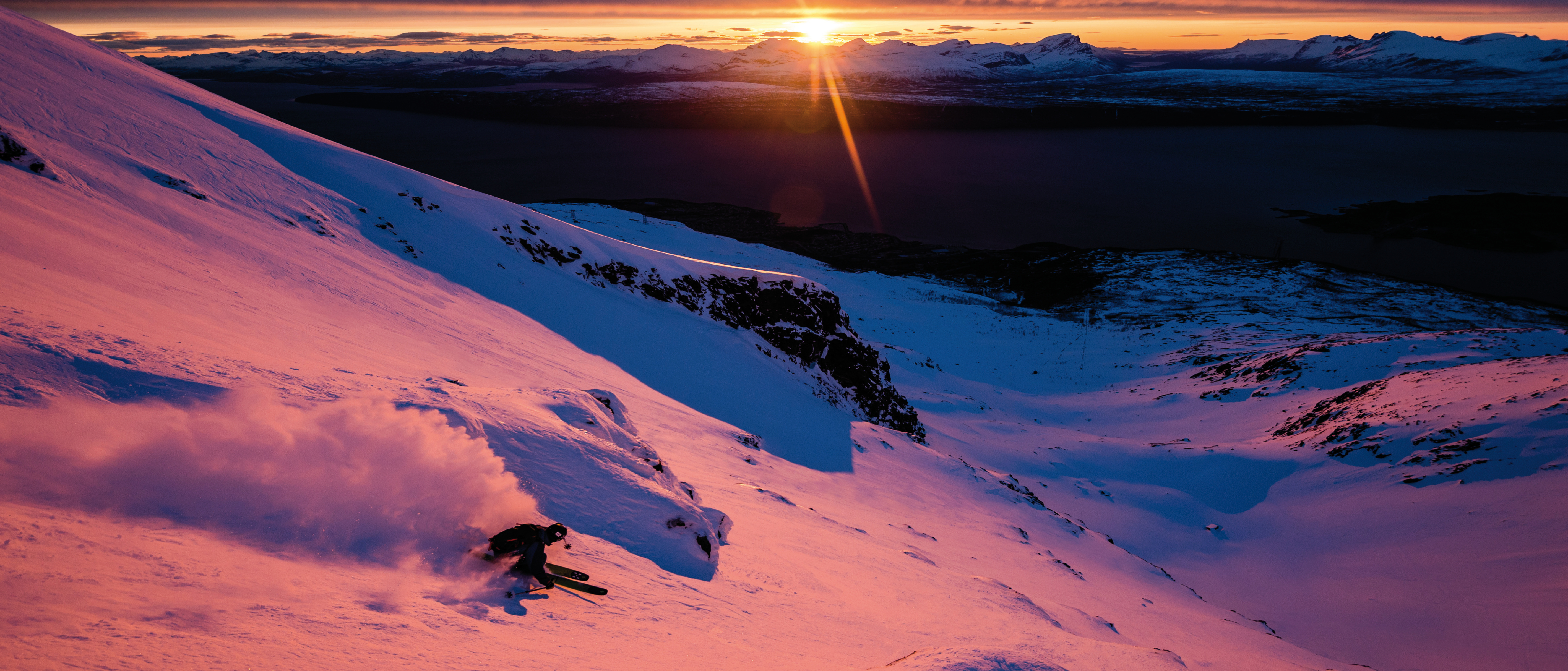
It's a treat to watch him dance through the couloir in controlled turns. I drop in next, unfortunately not as stylish. After a few jump turns in the tight, steep entrance, I quickly pick up speed. It may not look perfect, but it feels great. The conditions are perfect. We ski it in one go, just to play it safe. Back down by the lake, we watch the sun paint the mountains orange and pink before it slowly disappears. We salute another great day in the mountains with a beer and some reindeer meat. For many years, Micke was a ski bum and an ambassador for some ski companies. He starred in ski flicks and traveled all over the Alps and Scandinavia.
Micke was considered one of Scandinavia's best freeskiers; he did well in competitions and tested products for his sponsors. At the same time, he studied environmental science, taking double courses in fall to be able to ski more in winter. His passion for skiing, climbing, trail running and mountain biking was, and is, deeply rooted in his day-to-day life. Micke grew up in Hemavan, a small mountain town in Swedish Lapland. He started skiing at age three; when he was twelve, he got into mogul skiing. Eventually he realized that powder was more fun. Once he tried ski touring, he was hooked. When he moved to Narvik in 2004, nobody but the locals were ski touring in the mountains near town.
Narvik is located on the shores of the emerald-colored Ofotfjorden, surrounded by rugged mountains and forested hills. On a sunny winter day, the place feels like Arctic paradise. Much of Narvik's history is owed to the massive iron mine in Kiruna in Swedish Lapland and the Ofotbanen. At the beginning of the 1900s, Narvik was just a cluster of farms. In 1902, the Ofotbanen railway started transporting ore from Kiruna to Narvik's port – a huge turning point for the community. Even today, twelve freight trains with thousands of tons of iron ore come through the mountains every day. The mineral is shipped globally from Narvik. The railway is the world's most northern electric train and one of the oldest still transporting iron ore.
Narvik is also known for its World War II history. In the mid-1940s, many battles took place in the surrounding fjords and in town. Most of the city was burnt down but the Norwegian resistance movement – with the help of the British, Polish and French – saved the town and Hitler and his men had to retreat. Micke is a passionate ski mountaineer but also a family man with a regular job. He often wakes up before 6 am to summit a peak by 7:30 am. He skis down, returns home for a shower and breakfast. Next, he cycles to work and gets there at 9 am. It's his regular morning routine, and he logs in about 30,000 vertical meters of uphill each season. If you come to Narvik today, you won't take long to realize that it's a real outdoor mecca.
Most people on the streets look very outdoorsy. Directly above the city center, there is a small ski area with great off-piste skiing. The terrain is so good that Narvik is often described as the best ski town in Scandinavia; a city ski area on steroids with more than 1,000 vertical meters and big mountain terrain. If you add all the backcountry with its endless possibilities, this place is world class. In mid-April, the days are very long, and we make use of the sunny evenings. In the beginning, we explore the great terrain near the ski area. We start with a lift ride, but end up in a completely different valley. This is very efficient and we collect plenty of vertical in a short time.
The day after the couloir in Skamdalen, we go for a classic tour that starts at the top of the ski area and ends in a village close to the Swedish border. First, we skin up to Tredjetoppen. From there, we ski parts of Mørkholla, a steep bowl also known as Scandinavia's most challenging backcountry run. Instead of skiing the whole thing, we follow the north ridge down to Forsnesvatnet lake. From there, we skin straight up to the plateau below Beisfjordtøtta. Our reward is a long downhill run via the Straumsnes couloir to Isvatnet and further towards the Rombakkfjord where the sun sets in the fjord as we approach the upper part of Straumsnes village at 10 pm. We did not see any other skier, but we know that things are slowly changing. The hardcore skiers have started to appreciate Narvik's qualities. I certainly have.