Kanada · Canadian Rockies
Great Divide Traverse
Issue 2011 · Words: Carsten Moldenhauer · Photos: Carsten Moldenhauer · 6 min read
I wake up. My pitch-black surroundings are damp from my own breath. Cold penetrates from below. It takes a few seconds to realize where I am: in my sleeping bag on a glacier camp in the Canadian …
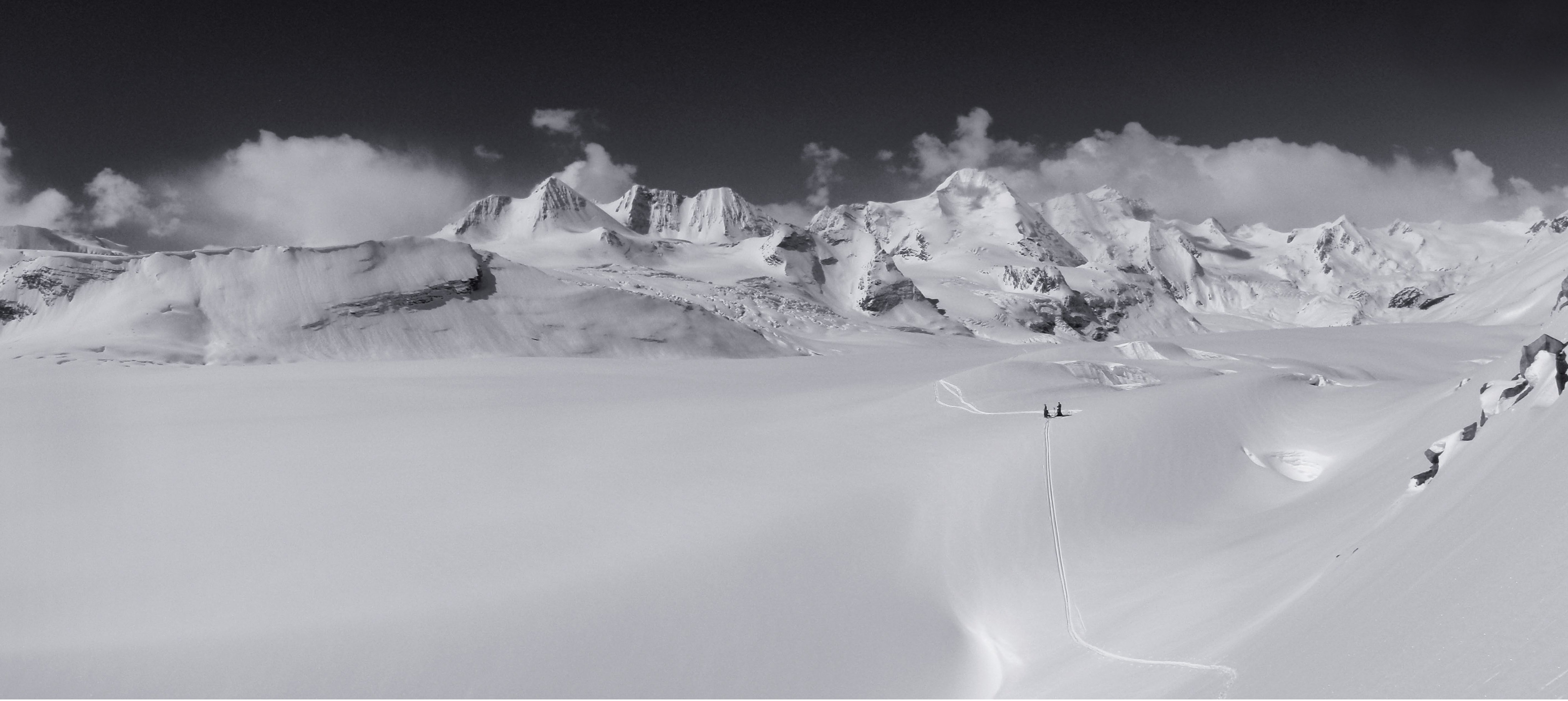
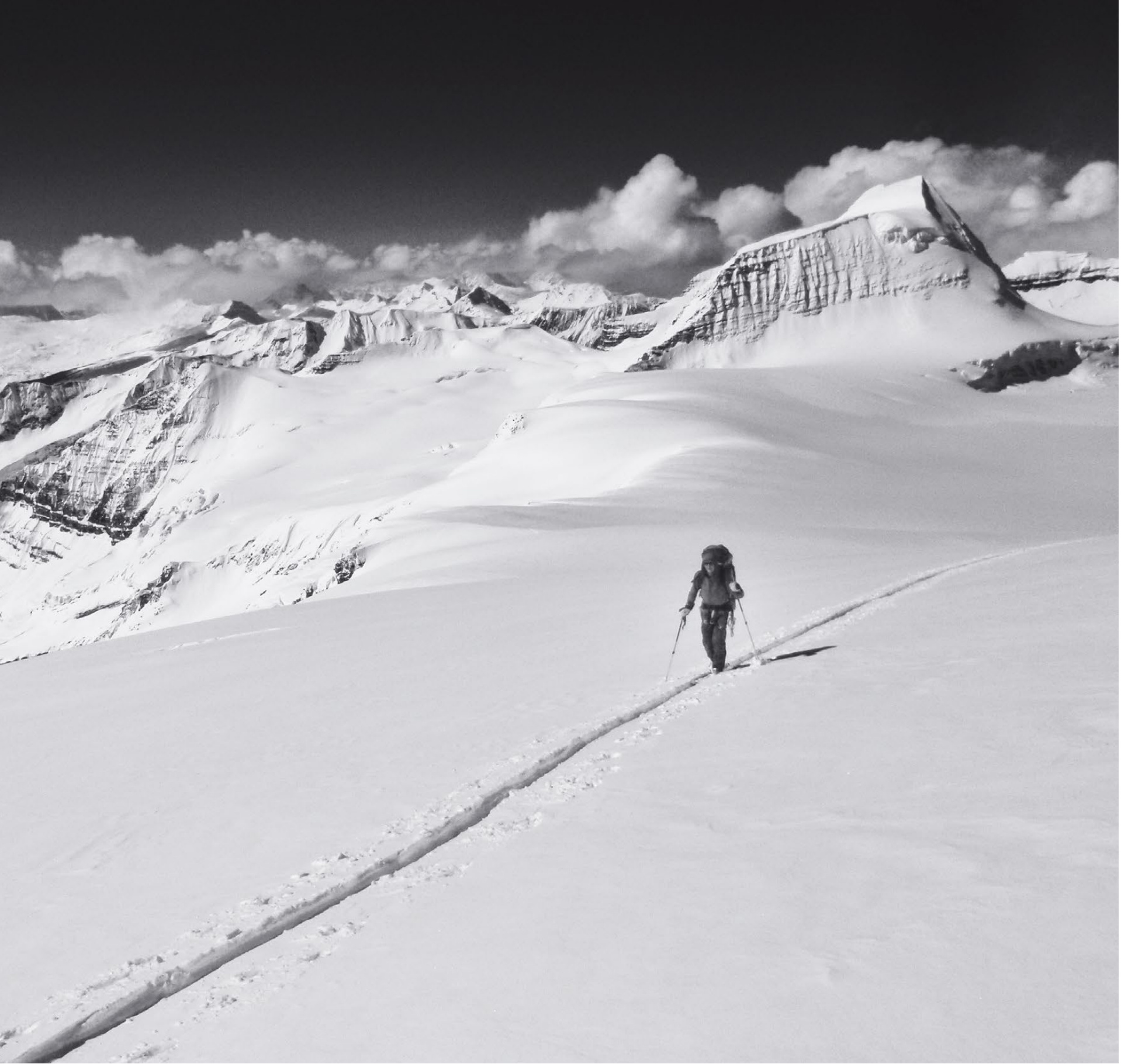
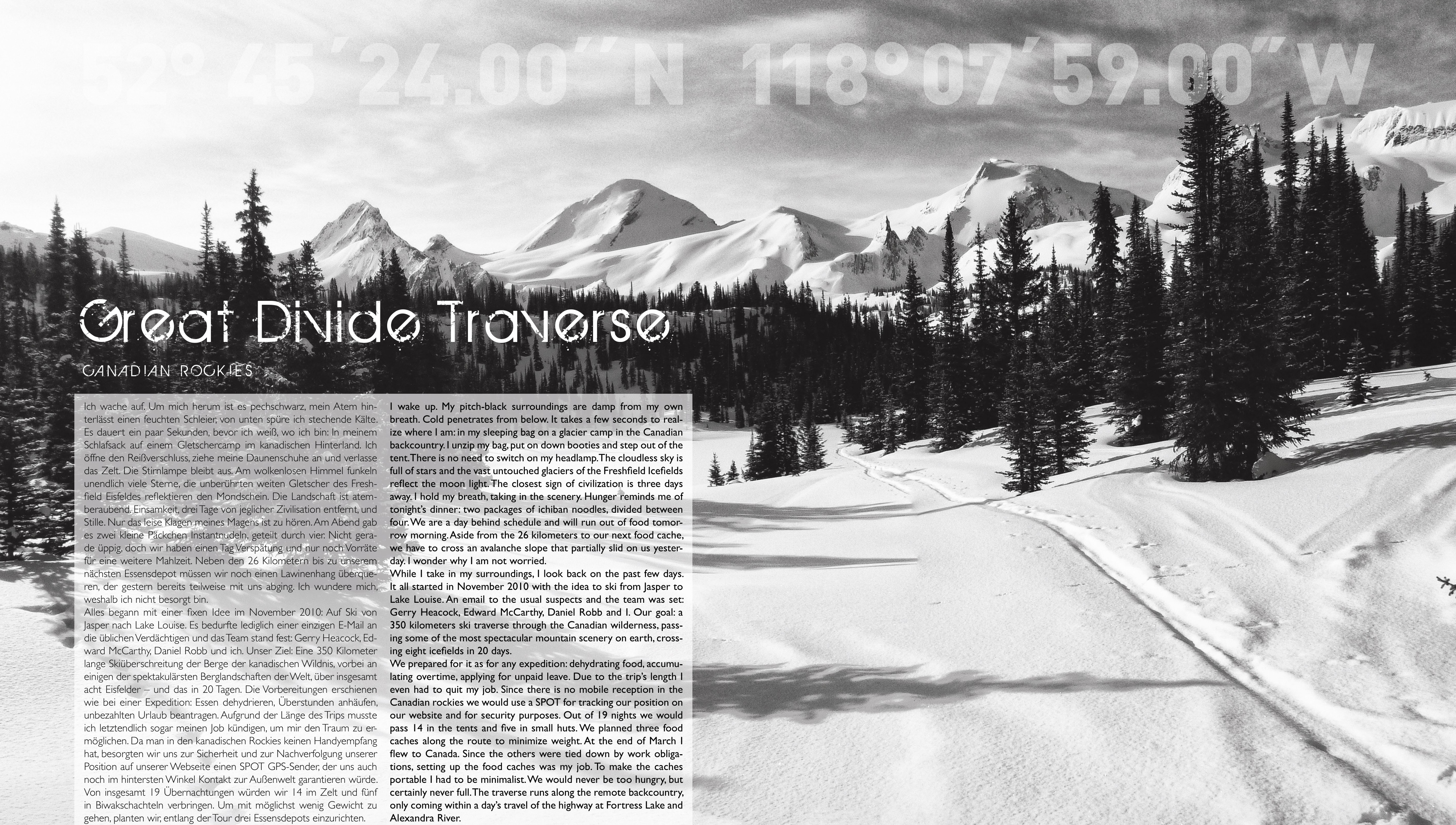
I wake up. My pitch-black surroundings are damp from my own breath. Cold penetrates from below. It takes a few seconds to realize where I am: in my sleeping bag on a glacier camp in the Canadian backcountry. I unzip my bag, put on down booties and step out of the tent. There is no need to switch on my headlamp. The cloudless sky is full of stars and the vast untouched glaciers of the Freshfield Icefields reflect the moon light. The closest sign of civilization is three days away. I hold my breath, taking in the scenery. Hunger reminds me of tonight's dinner: two packages of ichiban noodles, divided between four. We are a day behind schedule and will run out of food tomorrow morning.
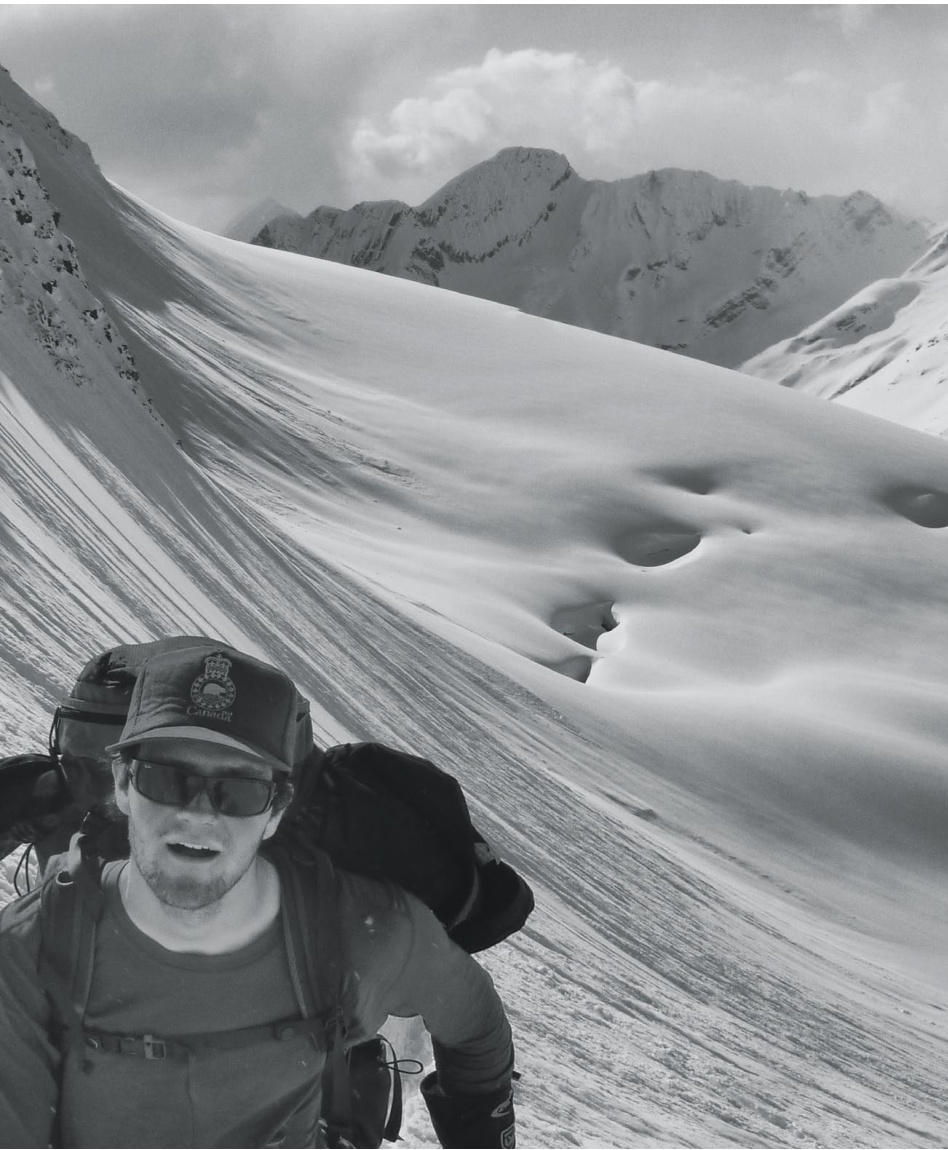
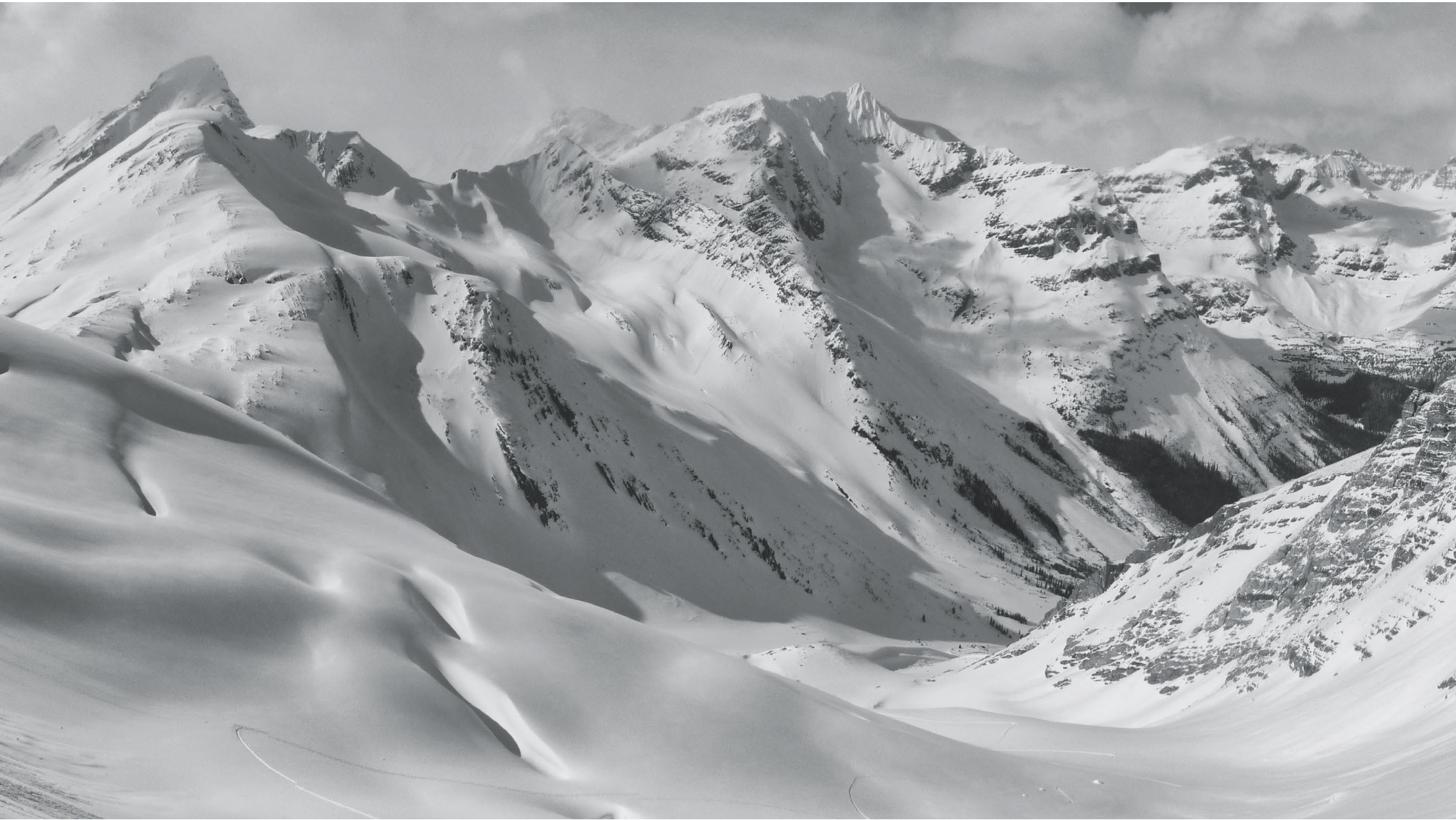
Aside from the 26 kilometers to our next food cache, we have to cross an avalanche slope that partially slid on us yesterday. I wonder why I am not worried. While I take in my surroundings, I look back on the past few days. It all started in November 2010 with the idea to ski from Jasper to Lake Louise. An email to the usual suspects and the team was set: Gerry Heacock, Edward McCarthy, Daniel Robb and I. Our goal: a 350 kilometers ski traverse through the Canadian wilderness, passing some of the most spectacular mountain scenery on earth, crossing eight icefields in 20 days. We prepared for it as for any expedition: dehydrating food, accumulating overtime, applying for unpaid leave. Due to the trip's length I even had to quit my job.
Since there is no mobile reception in the Canadian rockies we would use a SPOT for tracking our position on our website and for security purposes. Out of 19 nights we would pass 14 in the tents and five in small huts. We planned three food caches along the route to minimize weight. At the end of March I flew to Canada. Since the others were tied down by work obligations, setting up the food caches was my job. To make the caches portable I had to be minimalist. We would never be too hungry, but certainly never full. The traverse runs along the remote backcountry, only coming within a day's travel of the highway at Fortress Lake and Alexandra River.
I decided to install caches at those locations, and the third cache was flown to Mistaya Lodge via helicopter. In early April, Dan, Ed and Gerry arrived in Canmore. After packing late into the night we started the next day, skiing from the Tonquin Valley trailhead to Wates Gibson hut. We celebrated the debut of our trip with steak and cheese fondue. It would be the last time in two weeks that we would see other people. We encountered our first difficulties on the second day. A snow bridge over a river collapsed under Ed, threatening to swallow him and his pack. Miraculously, he managed to balance his body a few inches above the stream. Later, we discovered a broken pole joint in one of our two light, three season tents.
Two wood sticks and lots of duct tape made a fine splint. We intentionally planned our trip in spring to encounter longer days, warmer temperatures and less deep snow for trail breaking. However, an all-time record year of snow foiled us. We did not even have to take off our skis in the low valleys. Instead, particularly on the glaciers, we routinely broke trail knee deep. Furthermore, our first glacier camp on the Hooker Icefields was a lot colder than anticipated. After a sunny day of 20 degrees Celsius, the temperature plummeted below a bitter minus 20 degrees Celsius after sunset. After a few days, everybody on the team had his role. Upon arrival at camp, Dan, Ed and I dug out a large area 50 centimeters deep for both tents.
Gerry excavated the kitchen and started both stoves. Once the tents were up we proceeded to our soup course. While rehydrating the main dish, everybody changed into warmer clothes and exchanged ski boots for down booties. If there was wood around, we had a campfire after dinner; otherwise we fled to our sleeping bags. After one week we reached the Chaba Icefields. Bad weather gave us an excuse for our first, and urgently needed, rest day. Despite Gerrys' birthday, and a snow storm, decreasing food supplies forced us onward the next day. We did celebrate in the evening, however, with whisky and Lindt chocolate, in the only wind-protected place on the entire Columbia Icefields – the edge of a crevasse large enough for both our tents.
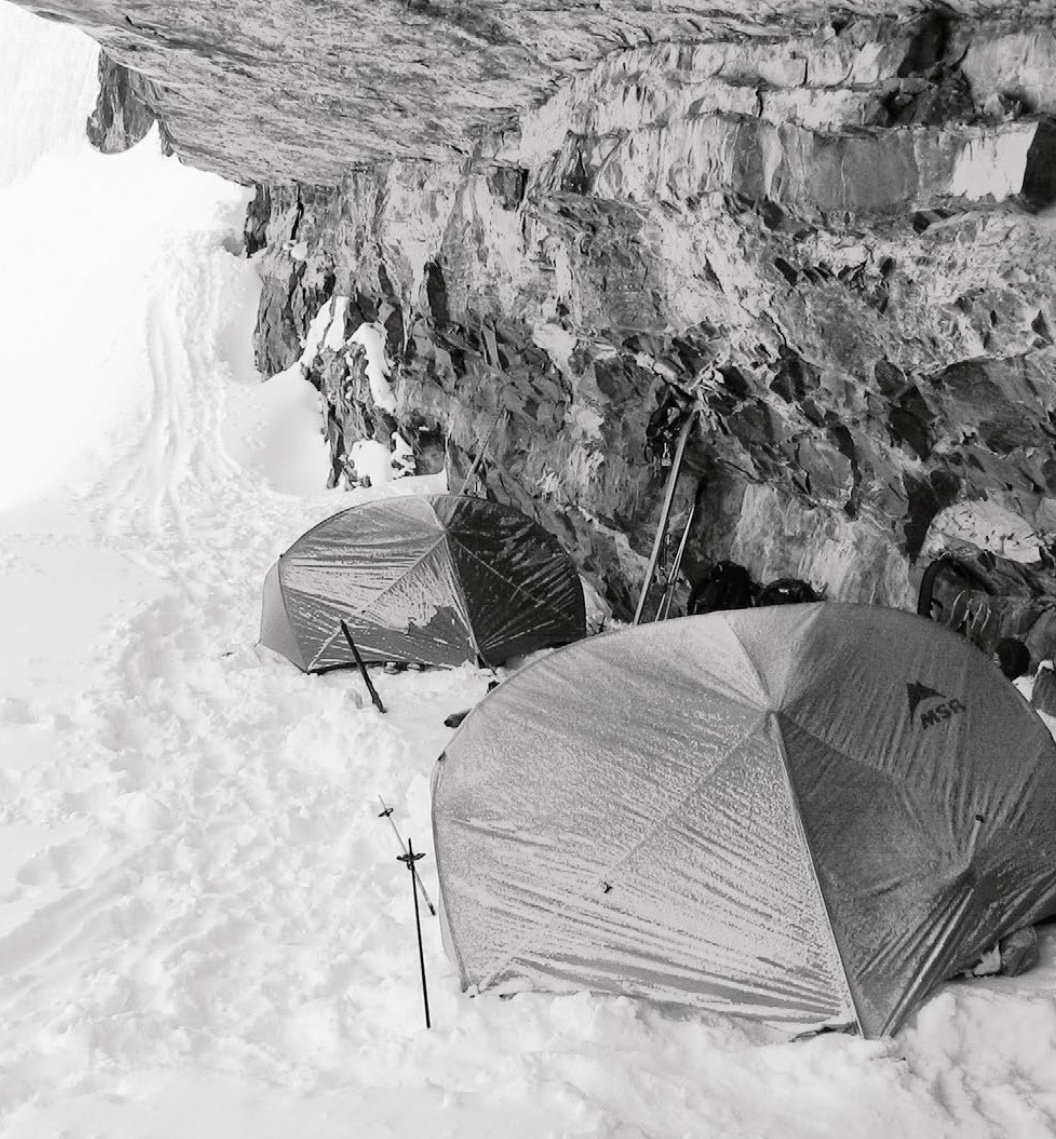
After ten days, we were just short of our second food cache when we suddenly saw ski tracks and a phrase written into the snow: "Edward and Kellen were here, Wednesday 3:00pm". Gerrys' father Edward and our friend Kellen had made the trek to our food depot to visit us for one night. We glanced at the watch: Wednesday 3:19pm. The chase was on, and later we were rewarded with fresh grapes and grapefruits. Their visit was one of the highlights of our trip. The next morning, fog emerged. Just before noon it started snowing, and the problem of route finding stopped us. We managed to find a sheltered campsite under a five meters overhang, but our motivation was gone.
Everybody in the team had one bad day, and this would be mine: I could not stop thinking of a burger and a real bed. Fortunately, the others helped console me. After half a day of rest we were back at it again. "Only" 1,900 meters elevation gain, up the Alexandra Glacier and through complex terrain in low visibility, lay between us and a small hut on the Lyell Icefield. The highlight of the day was discovering four kilograms of spaghetti in the left over food box. Three servings of pasta followed, and we added the rest to our morning oatmeal chocolate mix. We made slow progress in the second part of our trip. Yesterday – day 16 – we were already half a day behind schedule and did not reach the south slopes of Mt. Lambe before noon.
To ascend the sun baked slope seemed risky. But concern over our shrinking food supplies beat out good judgement, and the inevitable happened: Dan rode a 20 meters wide slab for 70 meters down the slope. Fortunately, he did not get injured. Once again I turn to Mt. Lambe. Past this mountain, our third food cache awaits us. As it turns out, we will take another rest day at the cache due to complete exhaustion before we traverse the Wapta and Waputik ice fields that lead to Lake Louise. While crawling back into the tent I wonder why I am not worried about our return. Is it just my confidence in our great team? Before I close my eyes a last thought comes to my mind: maybe this calm comes from not wanting to be anywhere else but here right now...
After this night and our rest day, we traversed the Wapta and Waputik ice fields, and in two days met other people again. We arrived at Lake Louise on a great sunny day, warmly welcomed by our relatives bearing champagne and grapes. Afterwards, we continued to celebrate our success with multiple burgers in Canmore.