Deutschland · Allgäuer Alpen (Nebelhorn / Schochen)
Kings of the Allgaeu Alps
Issue 2015 · Words: Ronja Morell · Photos: Bastian Morell · 5 min read
The Allgaeu Alps and their breathtaking flowery and grassy mountains are a widely known and very popular hiking destination for summer. But the winters are also well visited due to the many …
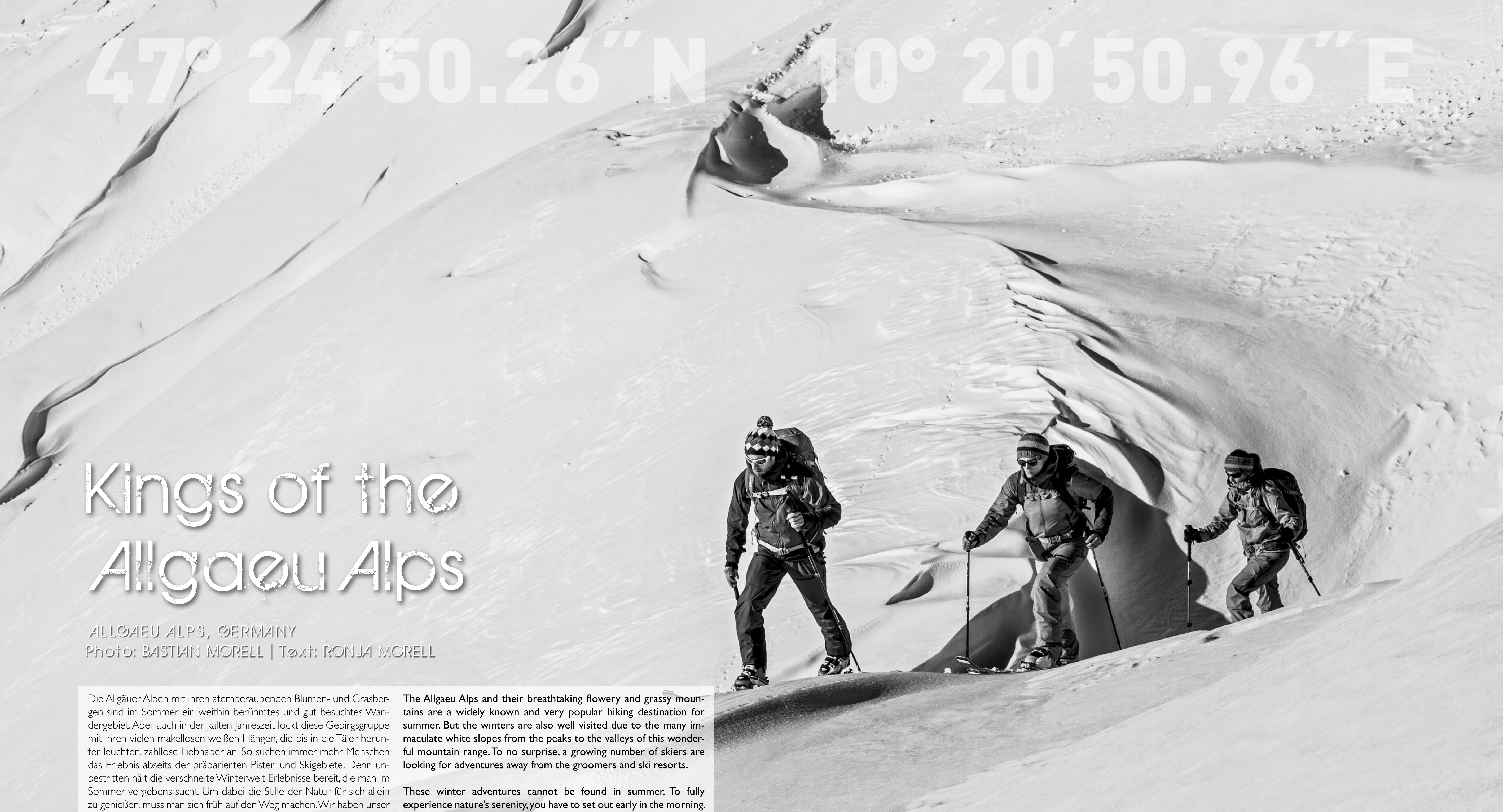
The Allgaeu Alps and their breathtaking flowery and grassy mountains are a widely known and very popular hiking destination for summer. But the winters are also well visited due to the many immaculate white slopes from the peaks to the valleys of this wonderful mountain range. To no surprise, a growing number of skiers are looking for adventures away from the groomers and ski resorts. These winter adventures cannot be found in summer. To fully experience nature's serenity, you have to set out early in the morning. We tried our luck beyond the resort borders of Nebelhorn near Oberstdorf and had a chance to rediscover a completely new and pristine side of the snowy landscapes of the Allgaeu Alps.
Temperatures are icy, skies are blue, and the first rays of the sun are already showing up behind Nebelhorn's summit. We take the first gondola to the top, passing steep and snow-covered rock walls. With a bit of luck, you can see mountain goats skillfully scrambling across the steep terrain. Our lift ride ends at the Höfatsblick station. We start hiking the freshly groomed winter trail heading towards Zeigersattel and leave the ski resort behind us. The wind is bitter cold, and we hide our faces underneath the high collars of our jackets. After a short and easy ascent, we reach the col between Zeiger and Großer Seekopf. This spot offers a first glimpse at the fantastic landscape of the snow-covered majestic Allgaeu Alps.
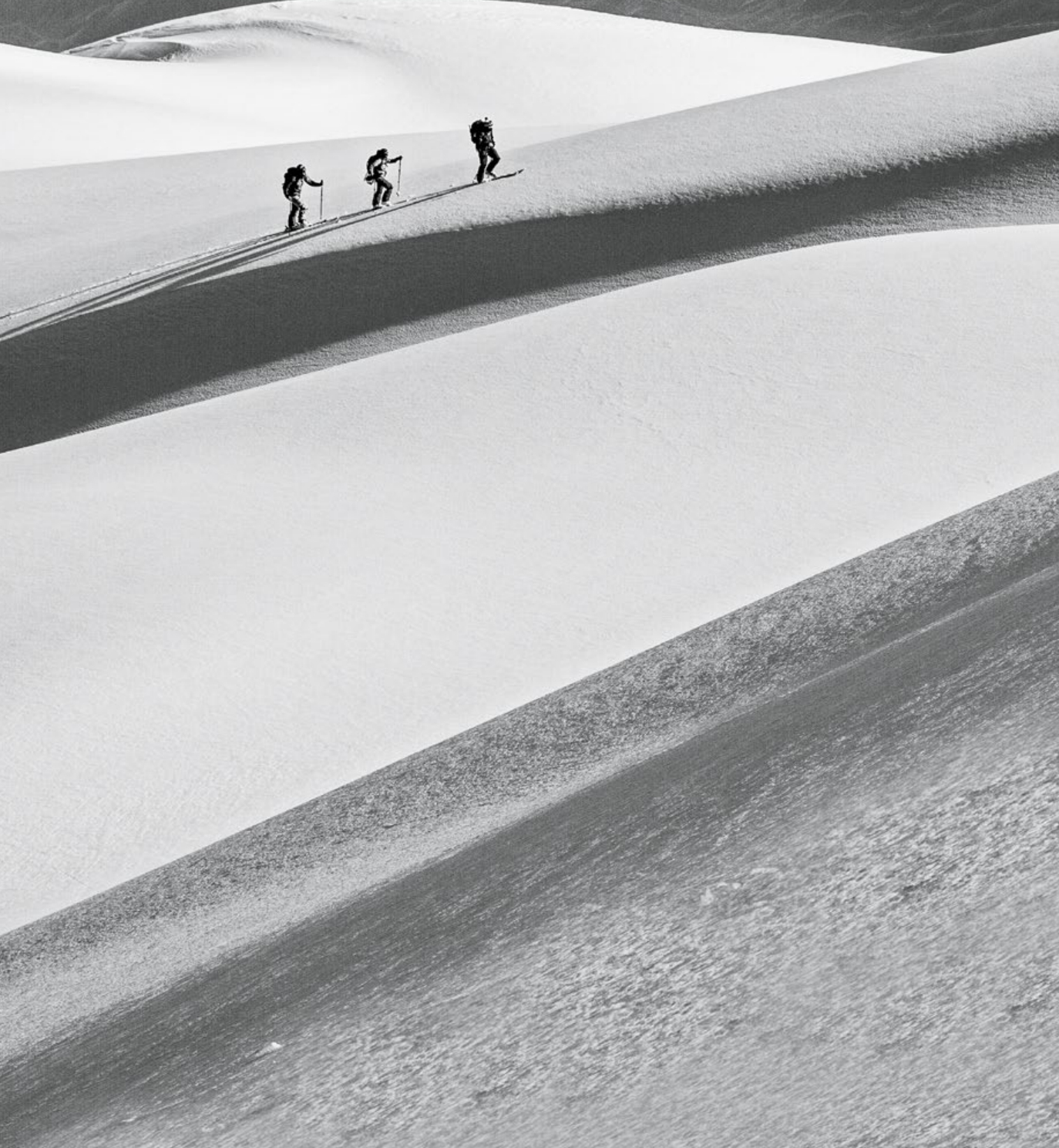
A first short run takes us to the east. We pass the northern cliffs of Großer Seekopf and reach the northeastern ridge at roughly 1,750 meters. From here, we follow the ridge to the south. We continue slightly downwards to Kuhplatten meadow. This is the actual start of our hike through magic winter wonderland to Schochen. The sun is shining from the deep blue sky, tiny snow crystals dance in the air, and the snow crunches under our feet. We push our skis gradually uphill, taking us closer to the vast white slopes and the summit overhead. The wind has left its traces in the snow, and the sun throws lights and shadows across the mountains, creating a unique natural spectacle, a natural work of art.
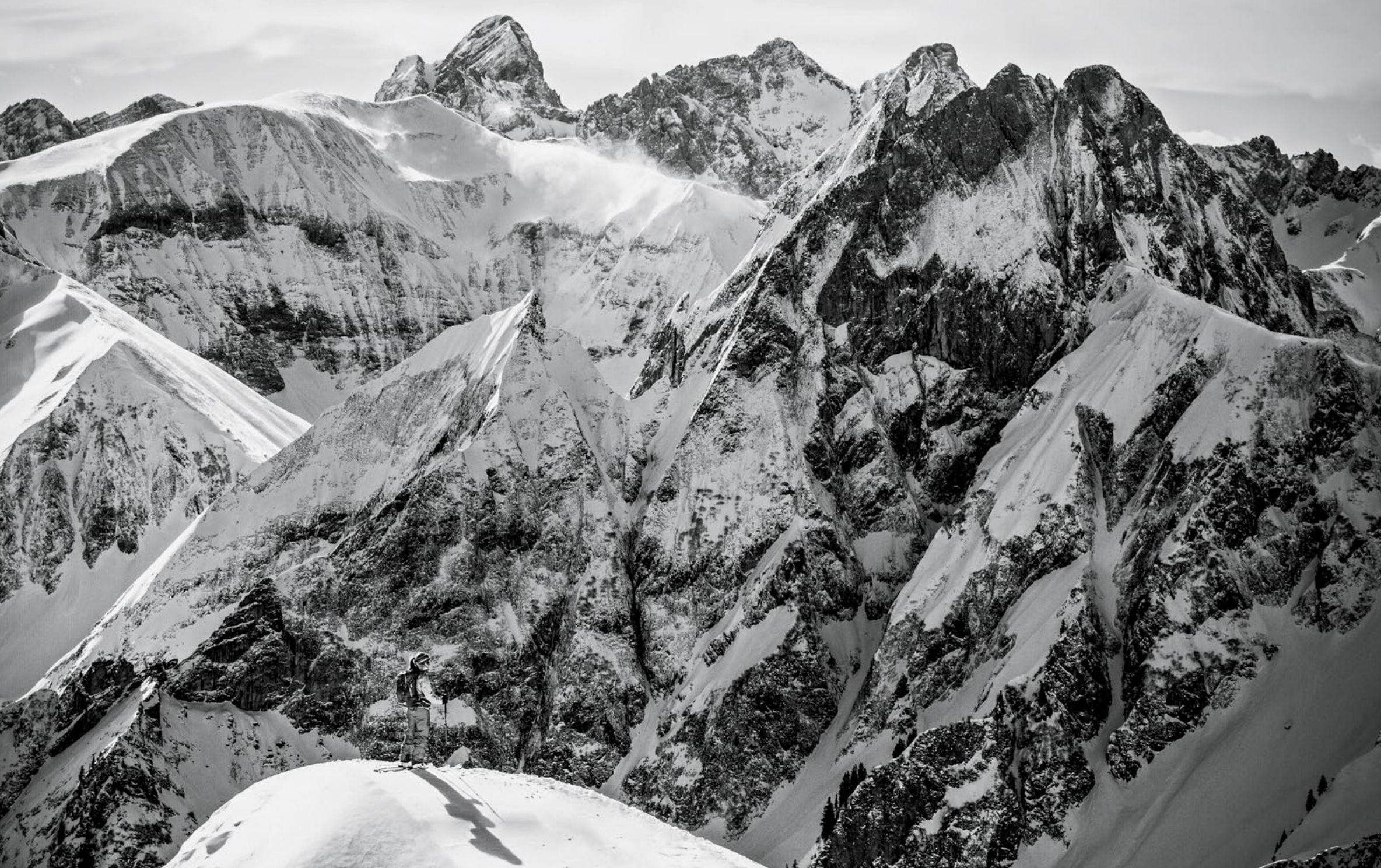
Reaching the summit of Schochen, it seems like we could touch the neighboring peaks. With every turn of our heads, we discover new summits and rock formations. One of the most distinctive peaks is 2,259-meter Höfats with her four summits, also called the "Queen of the Allgaeu Alps." Her characteristic grassy slopes are difficult to climb from any direction. One of the most popular and most beautiful tours is the traverse of all four Höfats summits, first achieved and recorded in 1892. It's a quite popular undertaking in summer; in winter, only a few alpinists dare crossing this narrow, super exposed ridge with its treacherous cornices.
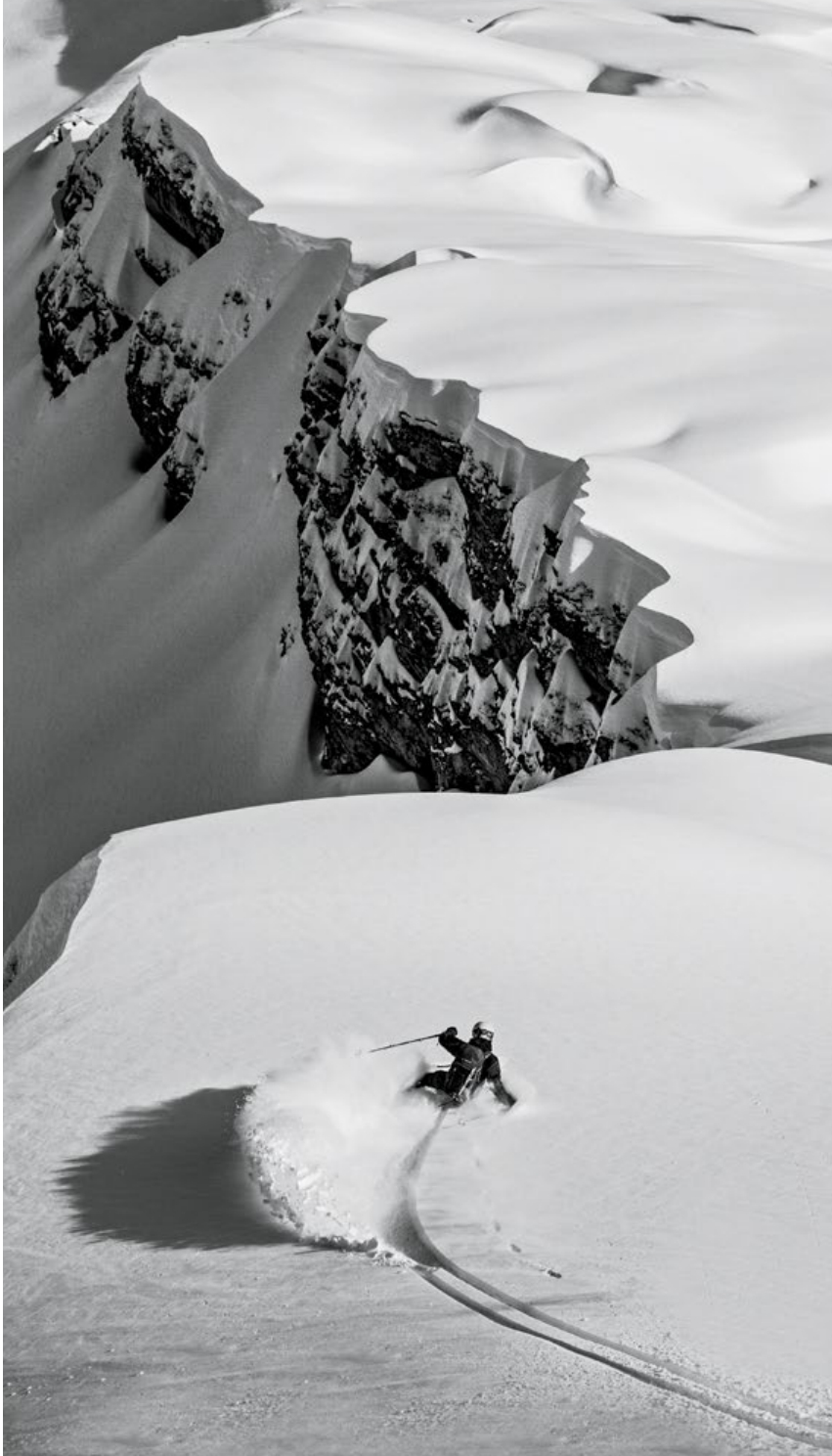
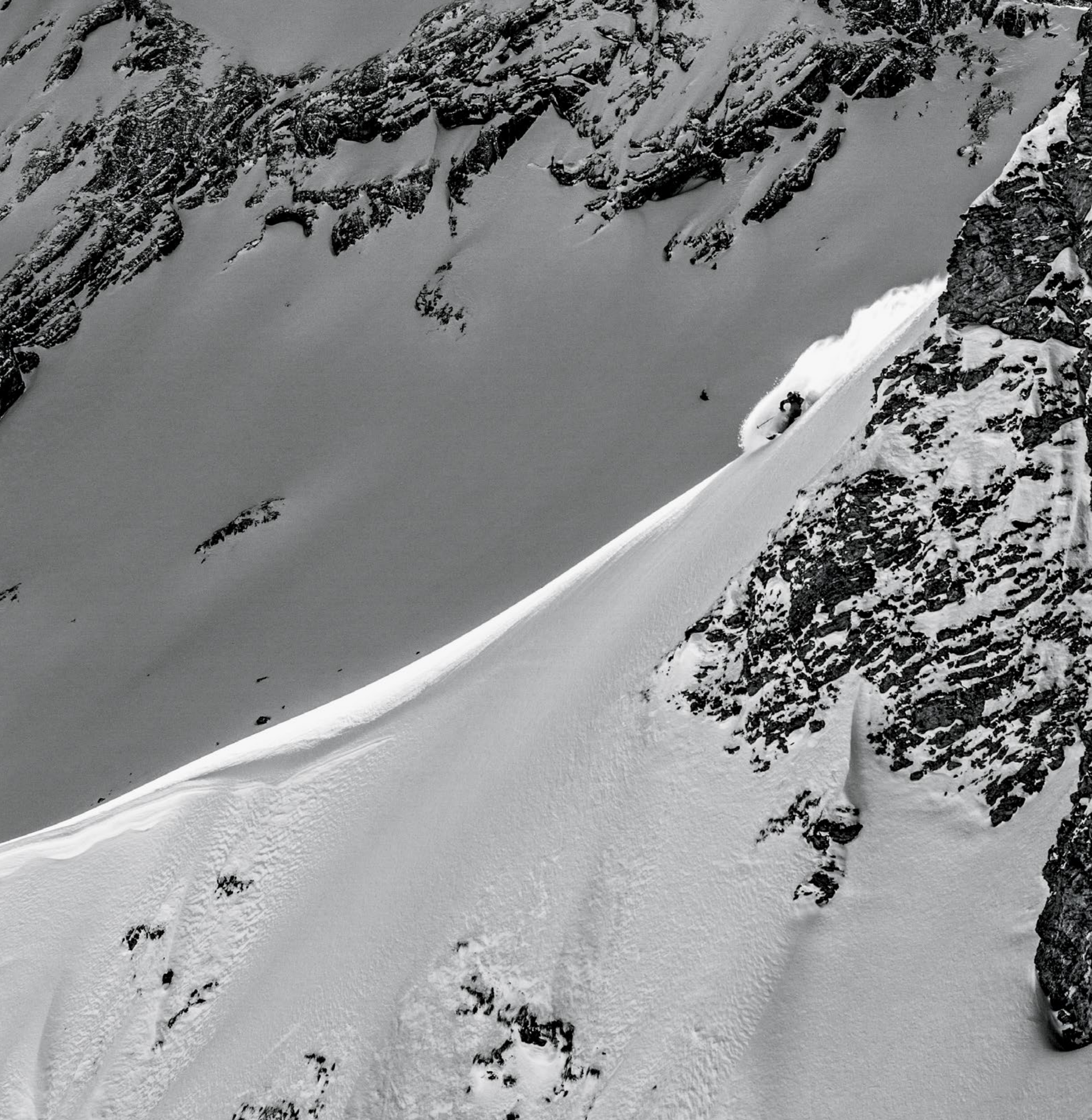
We can't get enough of the panoramic views, but we slowly notice that our fingers are getting too cold to stay any longer. Not even a hot cup of tea can change this. We remove the climbing skins from our skis and get ready for the descent. The run is almost untracked; only our own ascent traces disturb its virginity. Usually, the eastern slopes of Schochen provide pristine powder until late spring. The western face, on the other hand, is usually affected by the wind and less attractive. Diving into the soft and flurry fresh is the highest reward after a sharp and exhausting hike. On the way down, powder spray engulfs our bodies, lifting us back up weightlessly before taking the next turn that is part of a line so perfect in harmony and rhythm.
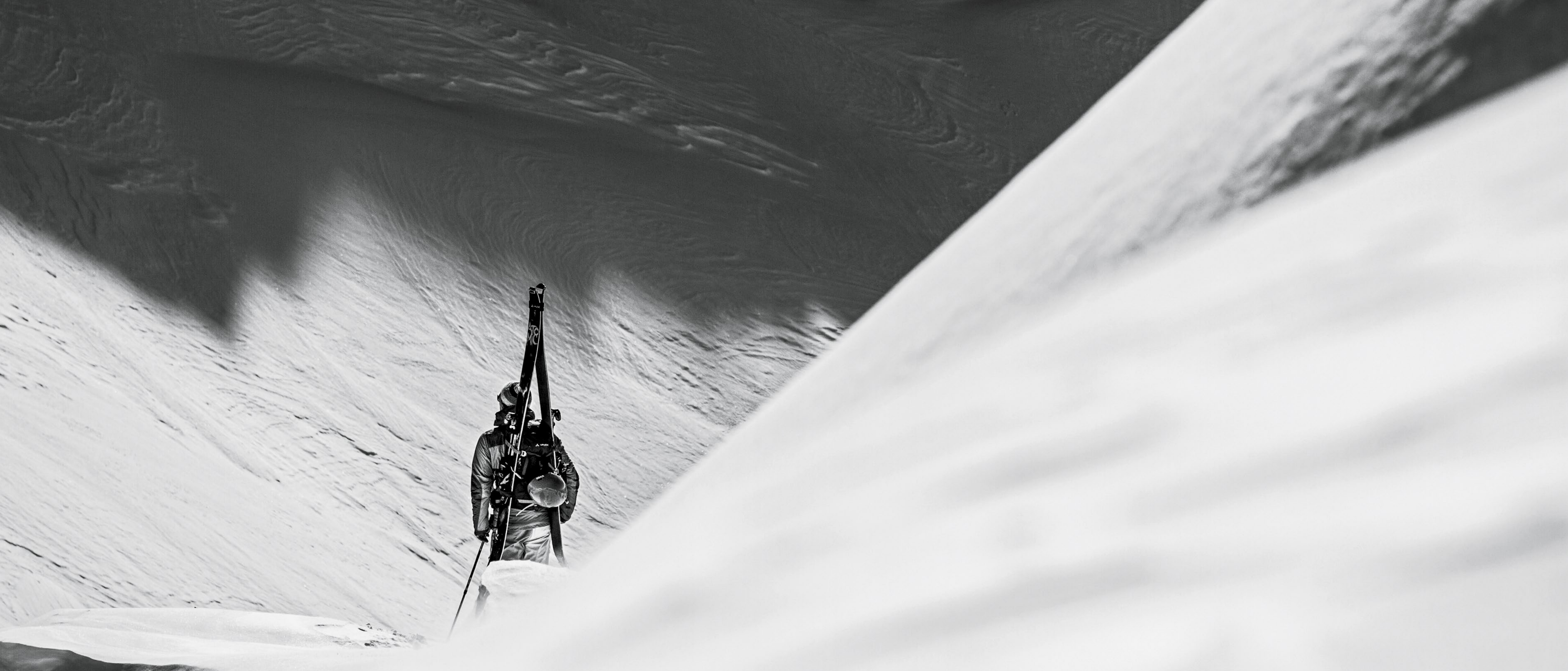
Nothing can beat a virgin powder run! Our first descent ends at Kuhplatten meadow before we are setting out again for more vertical, now hiking towards Lacherscharte. Reaching the col, we set foot on the windswept, grassy western ridge, prompting us to take off our skis only to replace them with crampons. The ridge to Laufbacher Eck is in parts exceptionally steep. If you are easily affected by vertigo, you should skip this part: the ridge breaks off ruggedly on both sides – to the right is the Oy valley, to the left the Obertal valley. In spite of the intimidation, this traverse offers more incredible and unforgettable views. Once at Laufbacher Eck, the second most striking mountain of the Allgaeu Alps, 2,269-meter Schneck is within direct reach.
Similar to the Höfats, she is a typical Allgaeu grass mountain with extremely steep slopes and a daunting northeastern face. Especially during the winter months, this summit is reserved to experienced mountaineers. We savor the freedom and the infinite isolation of this uninhabited spot. We could sit here forever, but anticipating the following descent, we start to get anxious. We need to move. We investigate the massive cornice on top of the summit ridge, which we need to traverse to reach the steep, 35-degree gutter facing east. From there, we ski down to the Bärgündle valley. The untracked powder shimmers in the sun and magnetizes us. The first turns. We are knee-deep in soft and light snow.
Soon we cannot feel the movements of our bodies, we are floating weightlessly through the powder. Fine crystal dust surrounds us on the way down, cold and refreshing at the same time. We keep to the right and pass Zwerchwand – another prominent rock formation – on her left to get to the valley floor. Finally, we wait for the bus connecting Giebelhaus and Hinterstein, the final destination of our tour. Everything was simply perfect: The terrain, the weather, the summits, and the incredible runs down these untracked mountains. We found happiness – in the Allgaeu Alps.