Kirgisistan · Tien-Shan Mountains (Kumtor)
Kumtor’s White Gold
Issue 2017 · Words: Michael Trojer · Photos: Julia Brunner · 5 min read
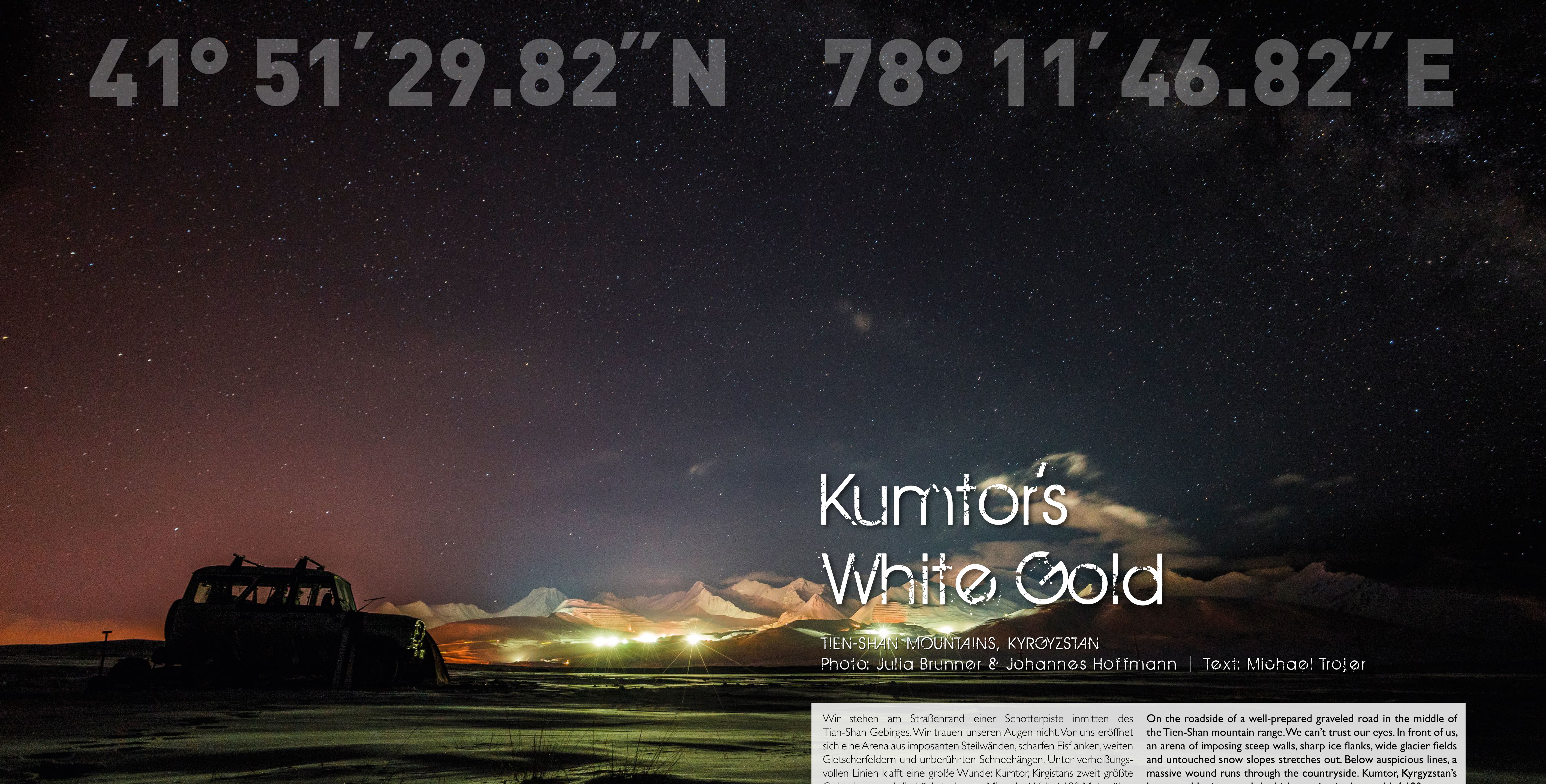
On the roadside of a well-prepared graveled road in the middle of the Tien-Shan mountain range. We can't trust our eyes. In front of us, an arena of imposing steep walls, sharp ice flanks, wide …
On the roadside of a well-prepared graveled road in the middle of the Tien-Shan mountain range. We can't trust our eyes. In front of us, an arena of imposing steep walls, sharp ice flanks, wide glacier fields and untouched snow slopes stretches out. Below auspicious lines, a massive wound runs through the countryside. Kumtor, Kyrgyzstan's largest gold mine and the highest mine in the world, 4,100 meters above sea level. Massive white corridors are drawn through rock and ice and drilled like a spiral into the depths. Beneath the snow-covered terrain impressive dump trucks and bizarre piles of debris. And the dikes of the large poison lake, where the gold production's chemical waste is deposited.
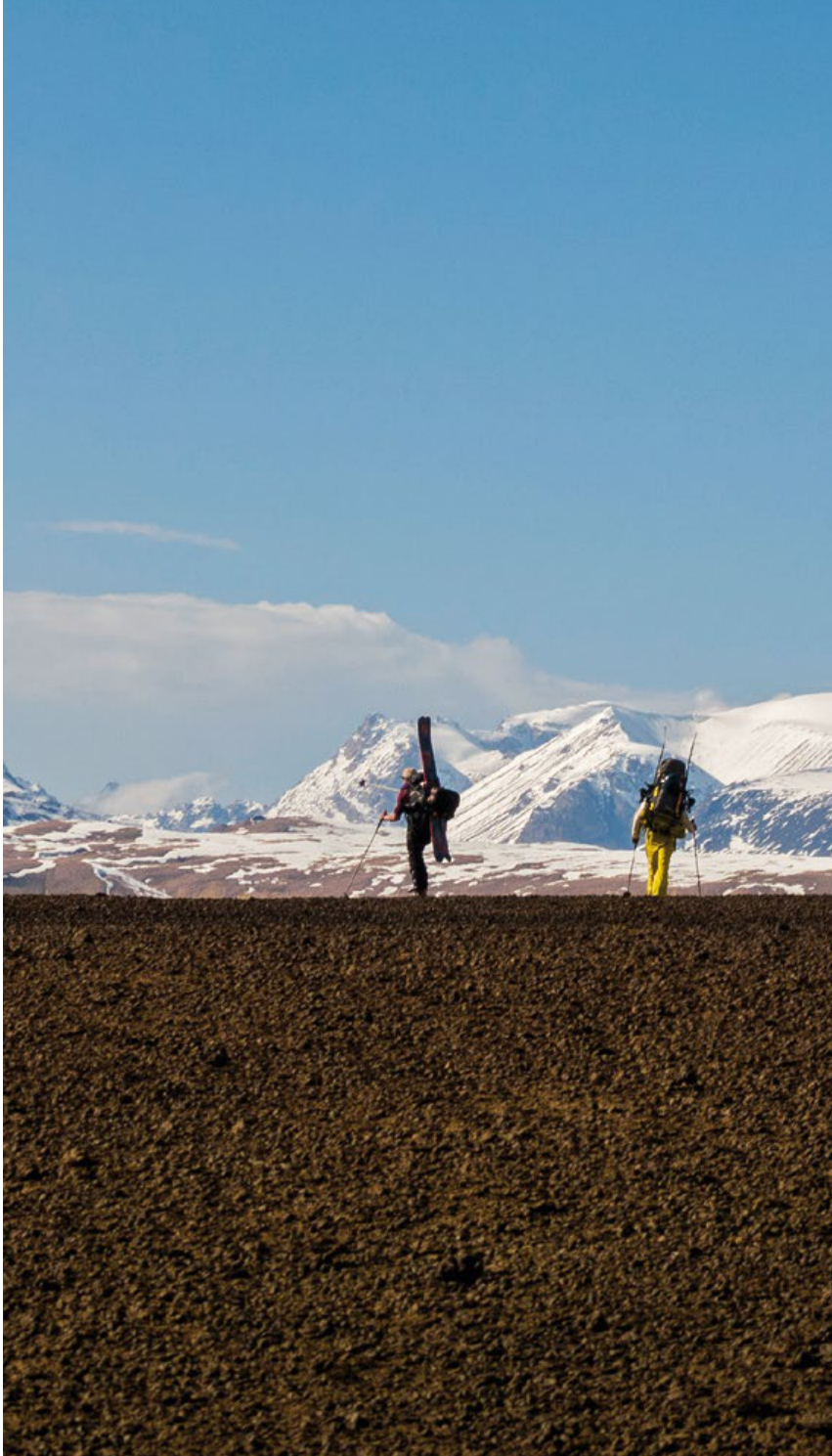
Environmentalists describe the lake as a "ticking time bomb." The mine captivates our imagination. We perceive the positive but also the negative consequences of the mining for humans and nature. We are impressed by the infrastructure that allows us to advance into this remote region. Our efforts to get permission to enter this fascinating area end up abruptly at the entrance to the mine. The white gold of Kumtor will remain untouched. Instead, we drive south on a remote road until we reach a deserted bridge. We pick up our skins. For two hours, we march through the desolate mountain landscape. In front of us, enormous rock walls hulk up. We reach the end of the valley, which is divided by two moraines, and pitch our tents.
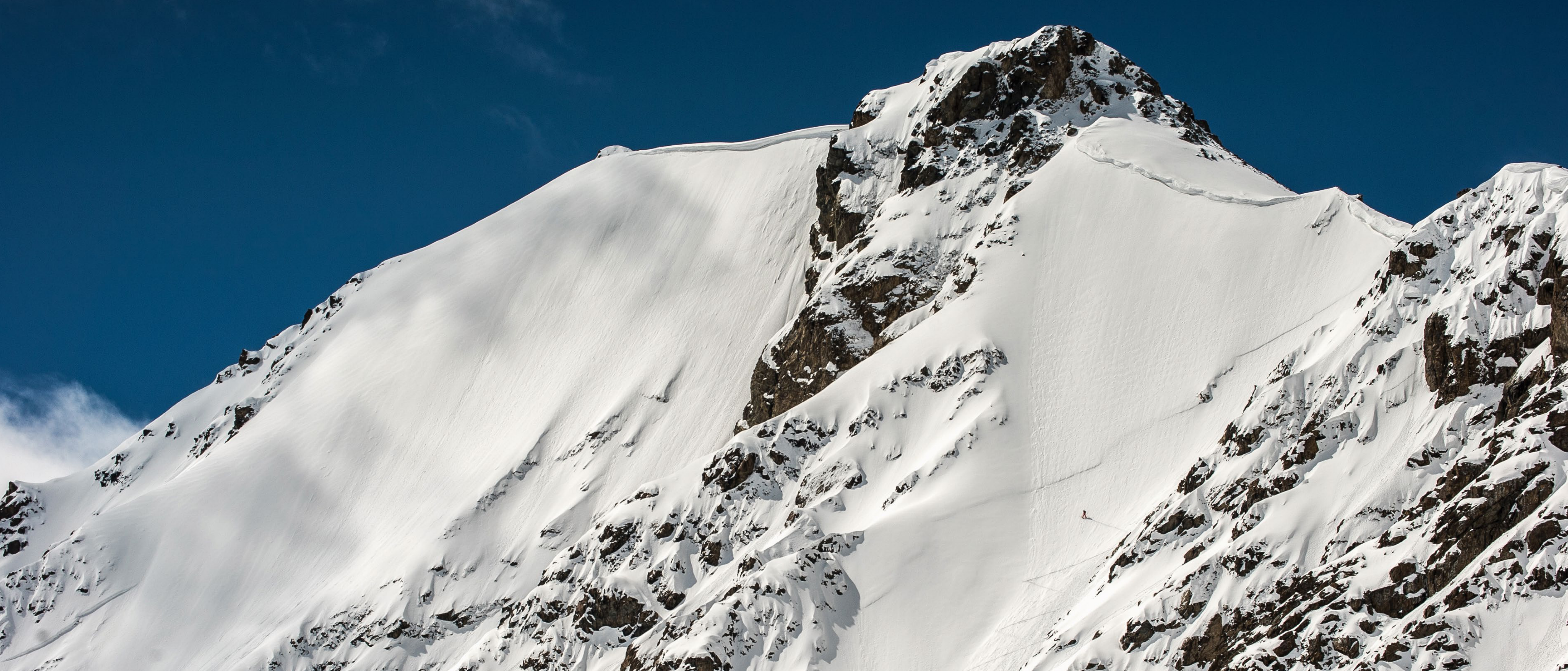
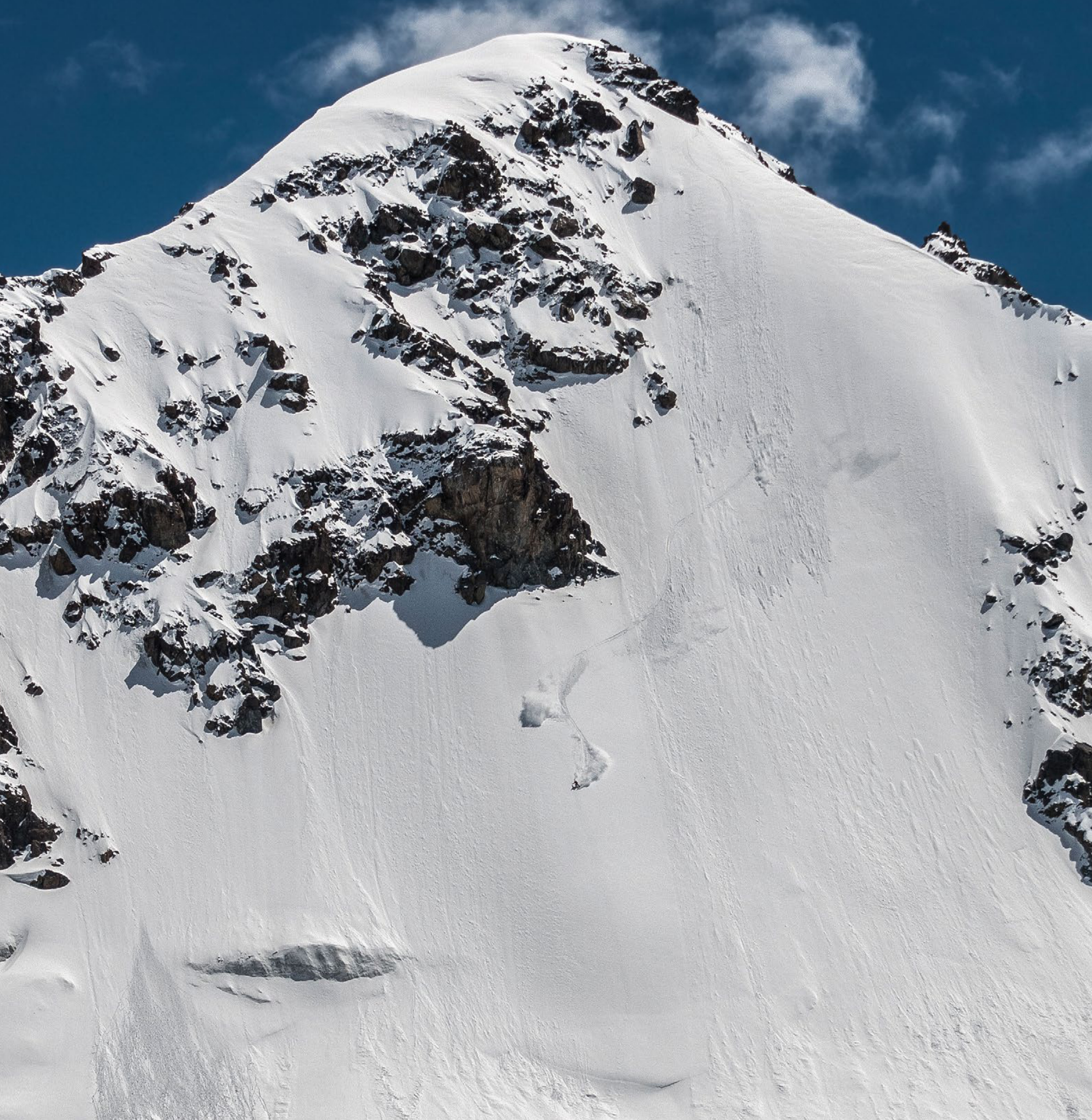
Glad to leave the frightful mine behind us, an explosive sound suddenly jolts us out of the sheltered nature. The eerie mine is still present. But the view over the Kumtor plateau endows us with a peaceful sunset. An impressive north wall in one of the valleys gets our full attention. In the middle of a shallow glacier, the wall rises to 400 meters – like a partition between the adjacent glacier basins. On the east and north sides, we observe self-releases of huge snow slabs. We walk around the wall and take a first glance at the snowpack. Our guesses are confirmed. 30 centimeters of fresh has spread like a veil on the fragile layers of hard crusts and embedded loose crystals. A dangerous, 60-centimeter snow layer covers the glacier ice.
A further approach confirms our suspicion. Even though the steeper passages seem safer, a residual risk in the foothills and flats remains. We walk back to camp, disillusioned and looking for alternative plans. A new day, a new attempt. South of the camp, a long crest divides the adjacent valley from the high plateau. We dare to ski the flatter slopes to test the stability of the snow cover. Fabi skies a gully that winds through the rocks like an S. The snow cover behaves. Joi dares to drop into a steep ice flank that looks like a large funnel. To escape the sluff, he stops in front of the steep, narrow section. Loose snow rushes past him. No more, no less. We start skinning further into the valley.
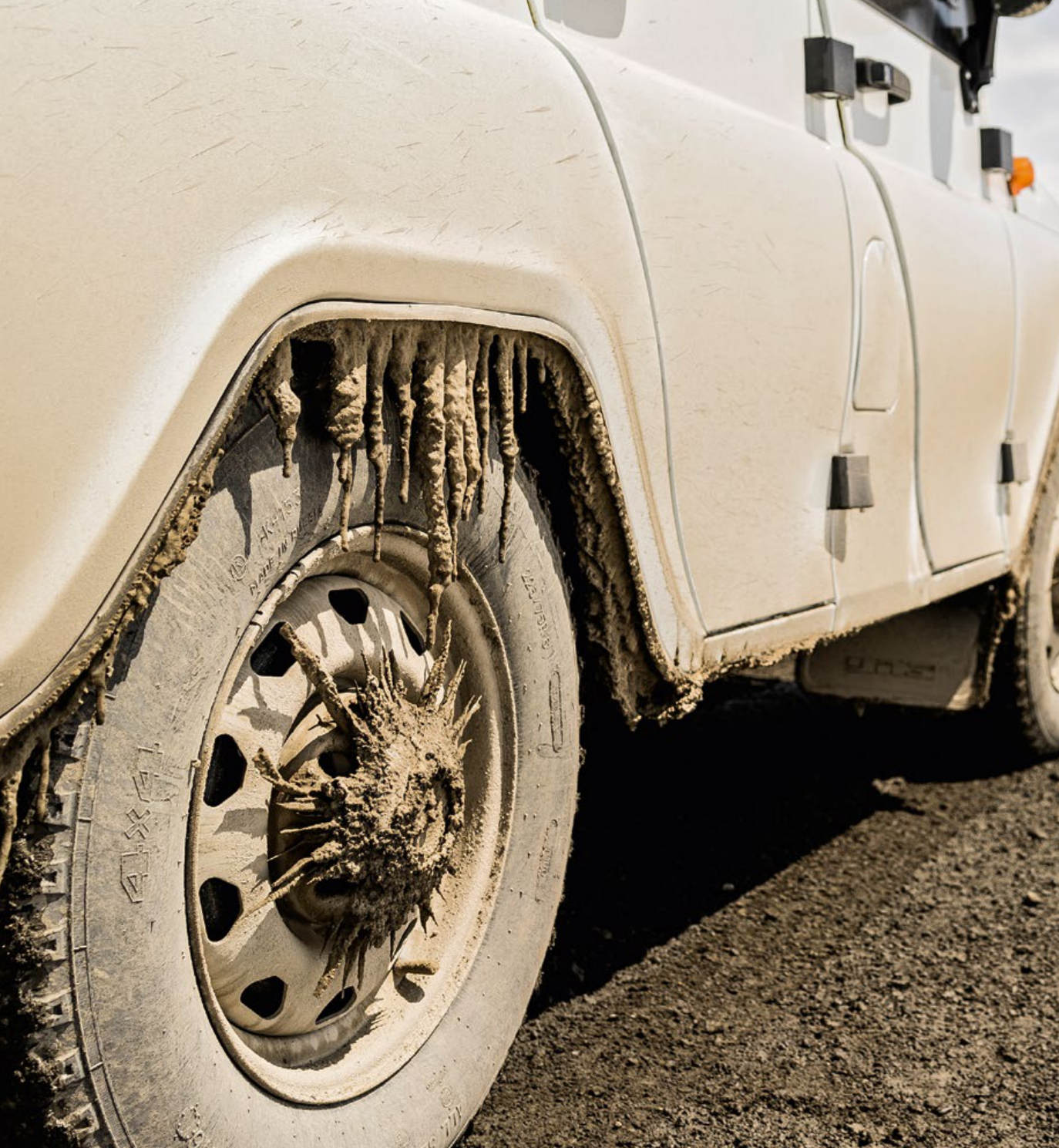
As the western slopes invade the high plateau, steep and challenging lines move east towards the glacier basin. Mitch skis through a steep channel onto an icy ridge, making powerful turns before finally skiing down the ice wall. Astonished faces followed by relief. What a line. What a ride. What an experience! The following day, we cancel another attempt in this sector due to an approaching thunderstorm. We decide to return to Lake Issykul for two days to relax. On the way back, we tamper with our gas supply. Our car, a Russian UAZ Hunter, is a relatively new model but has substantial defects, one is a broken fuel gauge. The search for the next gas station becomes nerve-wracking.
But we can trust in the important skills of the car: robustness, accessibility, and reliability. Back at camp two days later, we notice that the temperature has risen significantly. We focus on the lines that haven't been skied yet. Again, our main goal is the challenging north face. Fabi and Mitch climb on a shoulder to the west. Fabi crosses the steepest part of the wall with a huge drift turn, then briefly controls the speed in the softer snow and shoots down to the foot of the wall with high speed. Unintentionally, Mitch surpasses Fabi's performance with even fewer turns. After his third turn, however, he loses grip and falls two-thirds of the wall.
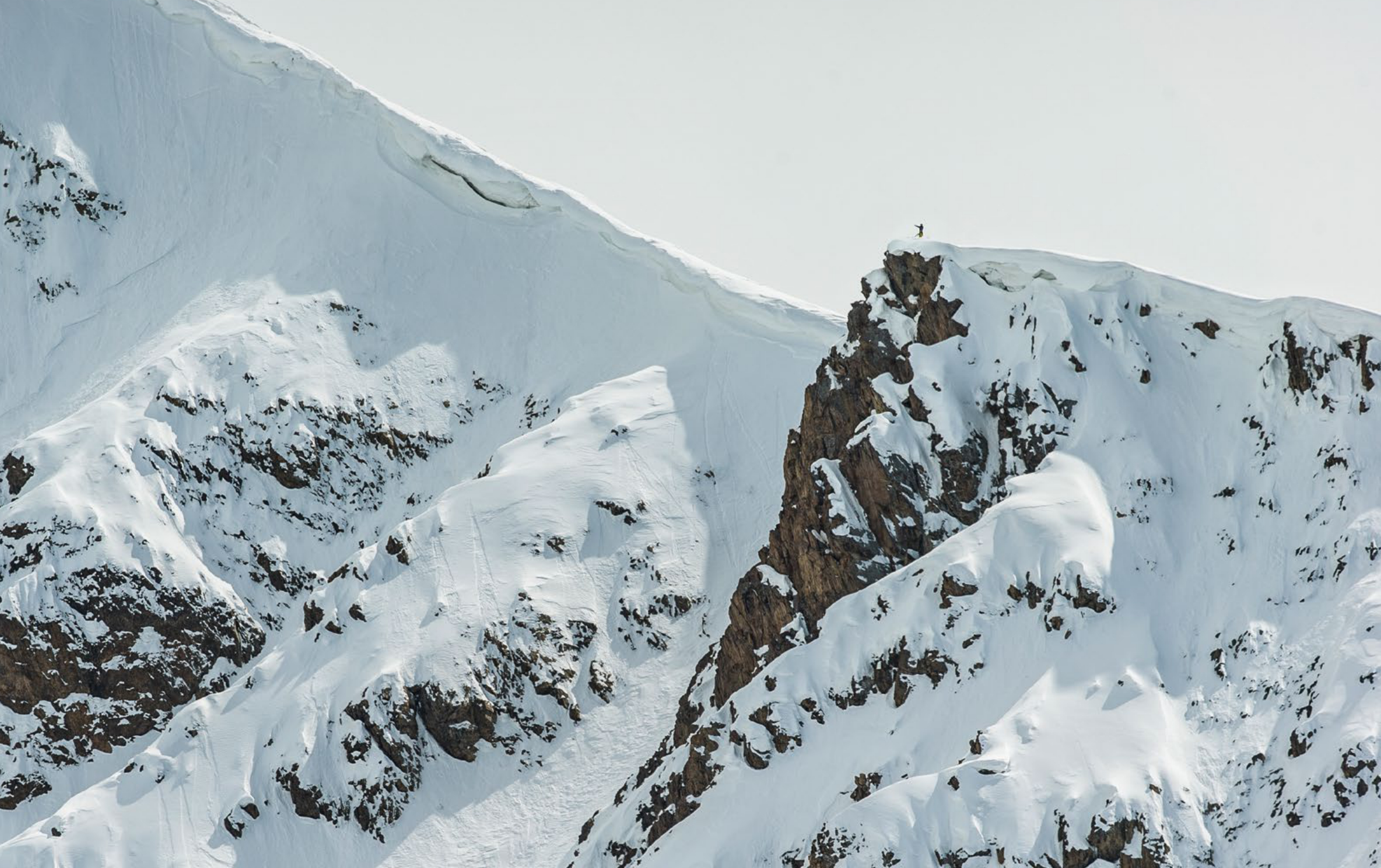
Luckily, he manages to stabilize himself again in the softer part and finishes the line confidently. We spend the remaining ski days on the long backside of the mountain. Fabi rappels over a cornice into a steep slope and climbs the last 40 meters below the cornice to the entrance. He skis a powerful and smooth line. Realizing that his actual exit is not accessible, he changes his plan and traverses across a rocky trail to a small ramp. Due to the high differences in temperature within the snowpack, the snow starts to stick to his skis. He loses balance and tumbles over the rocks. Fortunately, the snow underneath catches him softly. We return to camp relieved and full of joy. However, the most difficult part is still ahead of us.
How would we get our UAZ Hunter back on the road? The rivers have swollen, the meadows are soaked, and the ice cover has lost its stability. But somehow we make our way back. After two hours, we finally reach the road to the gold mine. Exhausted but happy we take a last look back to the great, terribly fascinating wound in the alpine plateau, the Kumtor mine.