Italien · Central Apennines
Mountains in Motion
Issue 2019 · Words: Vince Shuley · Photos: Vince Shuley · 5 min read
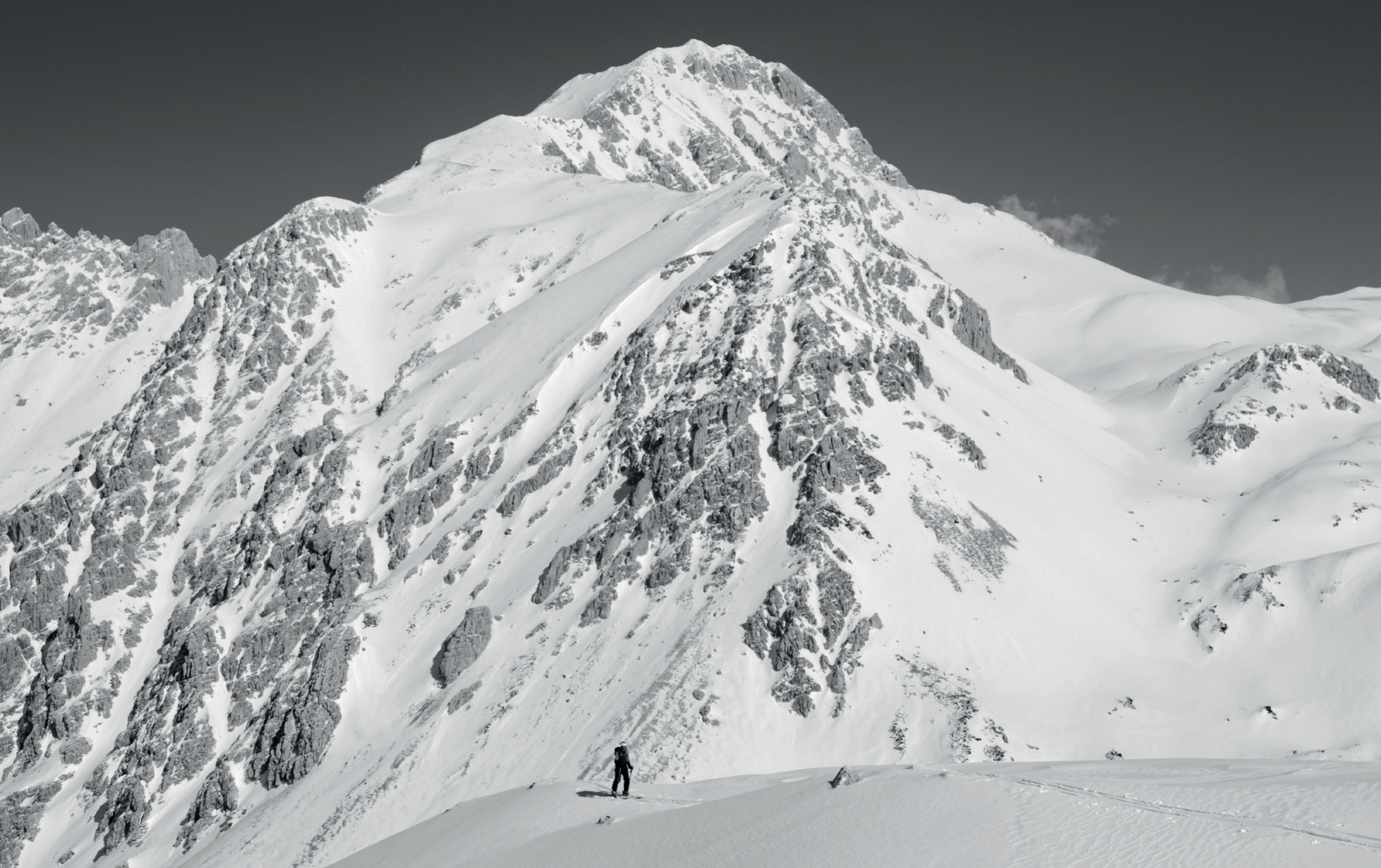
A cool breeze licks my skin as I dig my boots into the firm snow on the ridgeline. Spring has come early in Italy, but enough snow remains to harvest some turns in the Central Apennines. "A week ago …
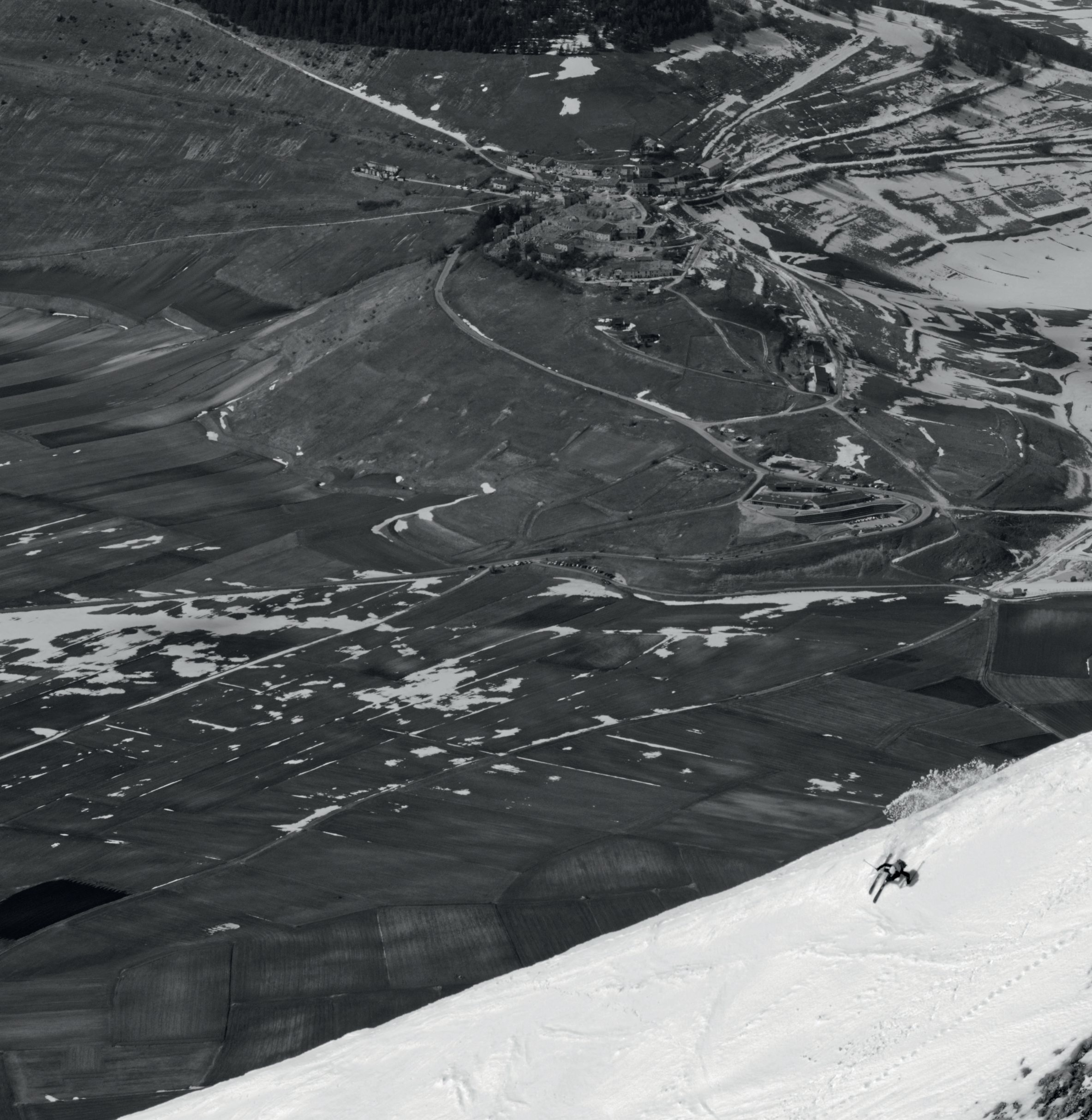
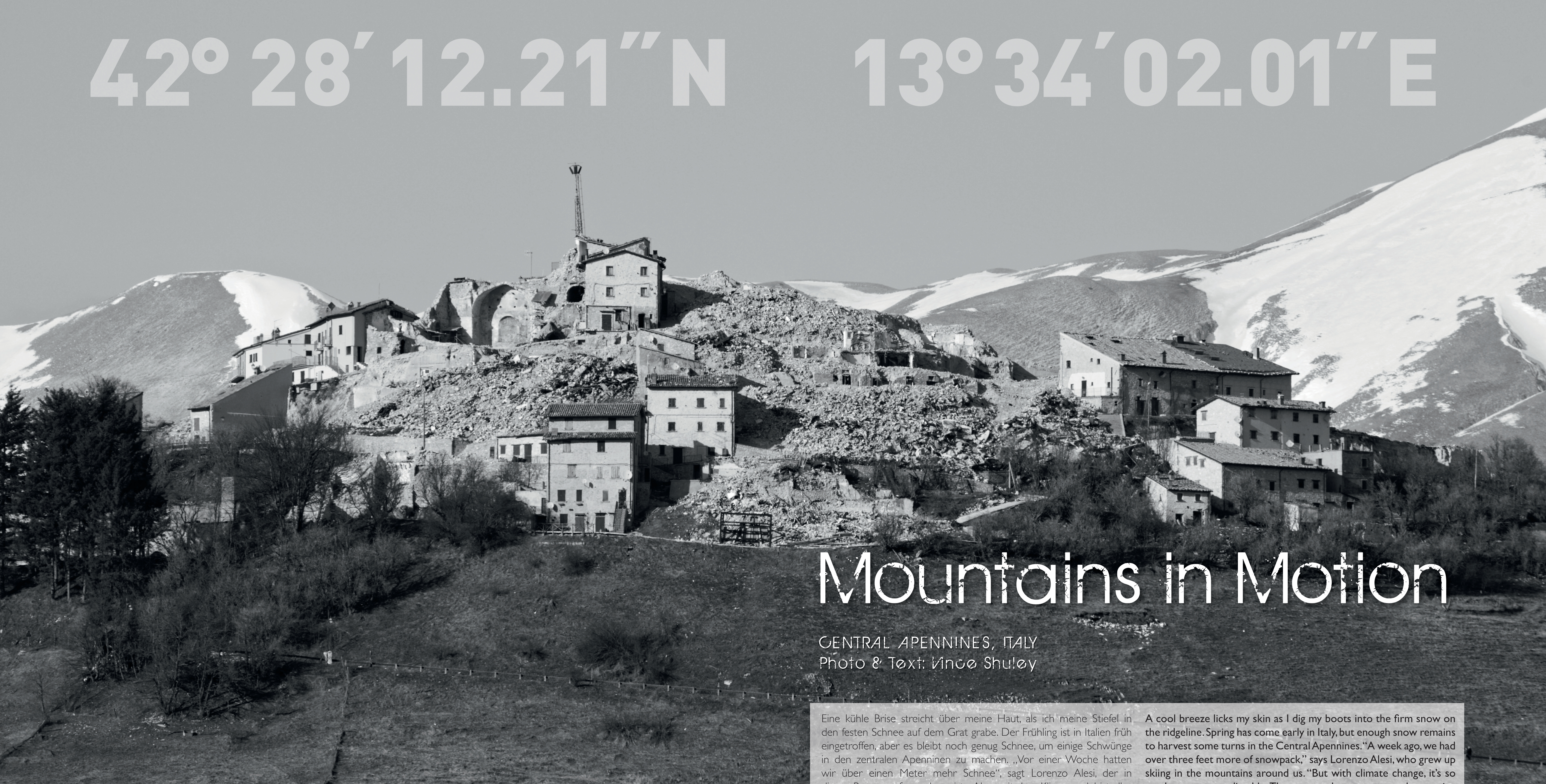
A cool breeze licks my skin as I dig my boots into the firm snow on the ridgeline. Spring has come early in Italy, but enough snow remains to harvest some turns in the Central Apennines. "A week ago, we had over three feet more of snowpack," says Lorenzo Alesi, who grew up skiing in the mountains around us. "But with climate change, it's so much more unpredictable. The season always seems to be starting or finishing." Atop the ridge of Monte Vettore, the now-snowless Piano Grande plain stretches to the southwest. At its northern edge lies the village of Castelluccio, the highest settlement in all the Apennines.
From a distance, I can see the leveled buildings and piles of rubble, the lingering aftermath from a series of earthquakes that devastated the communities of Central Italy in 2016. With the roads now sufficiently repaired and open to traffic, Castelluccio is a bustling scene despite the mounds of debris that cover most of the town. Cafe owners continue their generations-old professions in temporary demountable buildings serving delicious local meats and cheeses. I devour another panini while enjoying local beer brewed with lentils – a specialty of local farmers in Castelluccio as Lorenzo gently asks the owner of the establishment a few of my prepared interview questions in Italian.
"The people there are frustrated," says Lorenzo of the Castelluccio residents as we drive back across Piano Grande. "They have been waiting for three years to begin to rebuild their homes and their lives. But you can't build new structures until the old, ruined ones are torn down and cleared. It has been a painfully slow process for all the villages damaged by the earthquakes. They are worried these temporary solutions will become permanent." The drive back to Lorenzo's home takes us through several other small communities, all that resembles a deserted war zone. "We're in the middle of the Apennine mountains, right over the fault line," explains Lorenzo. "The town of L'Aquila has had to rebuild almost 20 times over the last millennium.
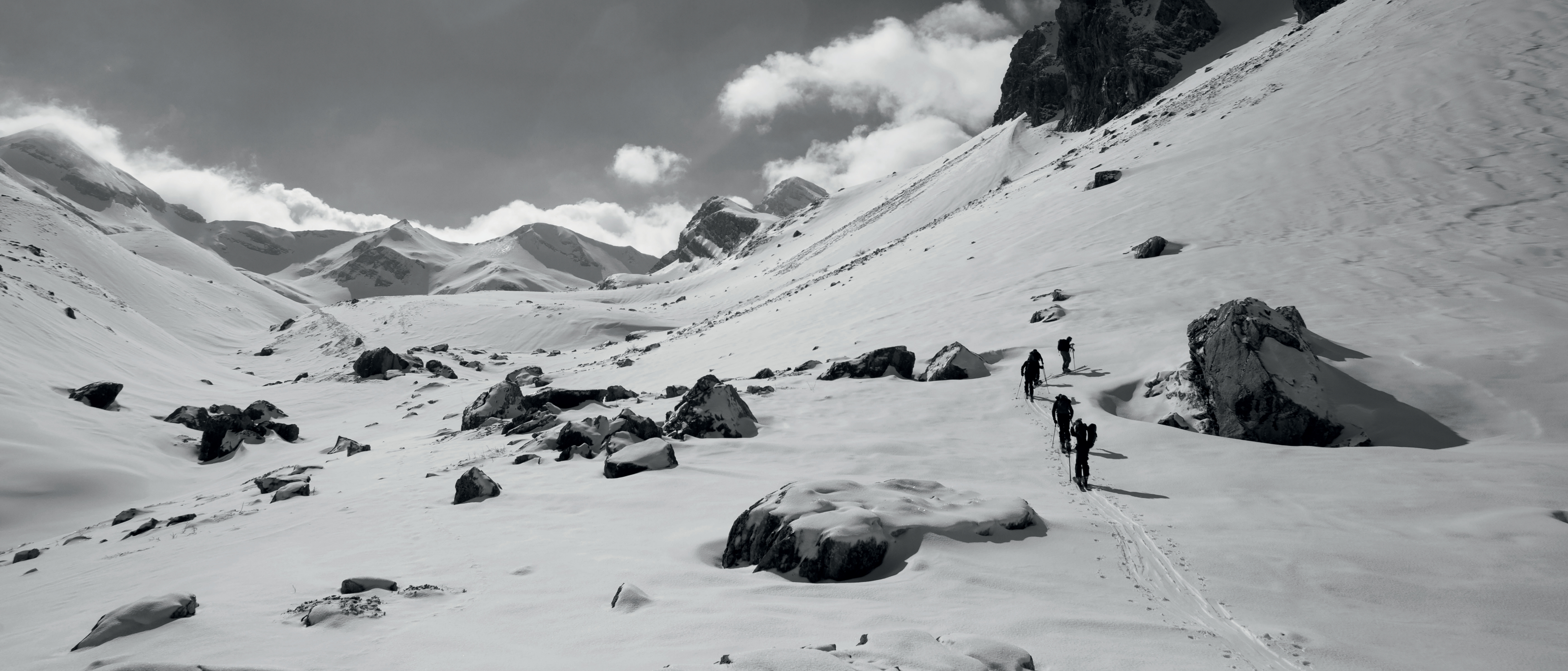
It's a part of life here." Our group convenes at the base of Prati di Tivo ski resort, the gateway to the highest peak in the Apennines, Corno Grande (2,912 meters). Our mountain guide Gino Perrino stares at the clouds enveloping the peak for a moment before he calls off our summit mission, assuring me that we'll find plenty of good skiing if we bypass the lifts and ascend the adjoining Maone Valley. After around two hours of touring, our group breaks for lunch at the valley's terminus when the sun decides to make an afternoon appearance. Skiable lines surround us in every direction, and we spot a couple of different groups, making their way down the bowls.
After finding a few lines of our own and kicking up a surprising amount of spring powder over our ski tips, our jubilant crew returns to Prati di Tivo for a round of Sardinian craft beers and prosciutto-topped pasta appetizers. I thank Gino for his expert guiding before retiring to my lodging in Pietracamela. The name Pietracamela literally means "stone camel," named for the large rock outcropping from which the town seems to sprout. The 2009 earthquakes didn't completely destroy the centuries-old buildings in Pietracamela, but many are now cracked and structurally unsound. As a result, almost half of the population had to move away. The damage took its toll on tourism as well, since there is little left in the way of suitable accommodation.
The 2016 earthquakes further damaged the town and delayed the rebuild, but it was a massive snowstorm – and resulting avalanches caused by seismic tremors that struck this region in early 2017. Prati di Tivo narrowly escaped any fatalities, but an enormous avalanche hit the luxury resort Hotel Rigopiano at the far end of the Gran Sasso mountain chain after four and a half meters of wet snow fell in four days. Of the 28 guests and twelve employees gathered in the lobby, 29 people died. On our final day of skiing, Lorenzo drives me up to Monti Della Laga for a roadside ski tour above Camposto Lake. On the skin track, he describes the effect the earthquakes have had on the ski industry in the Central Apennines.
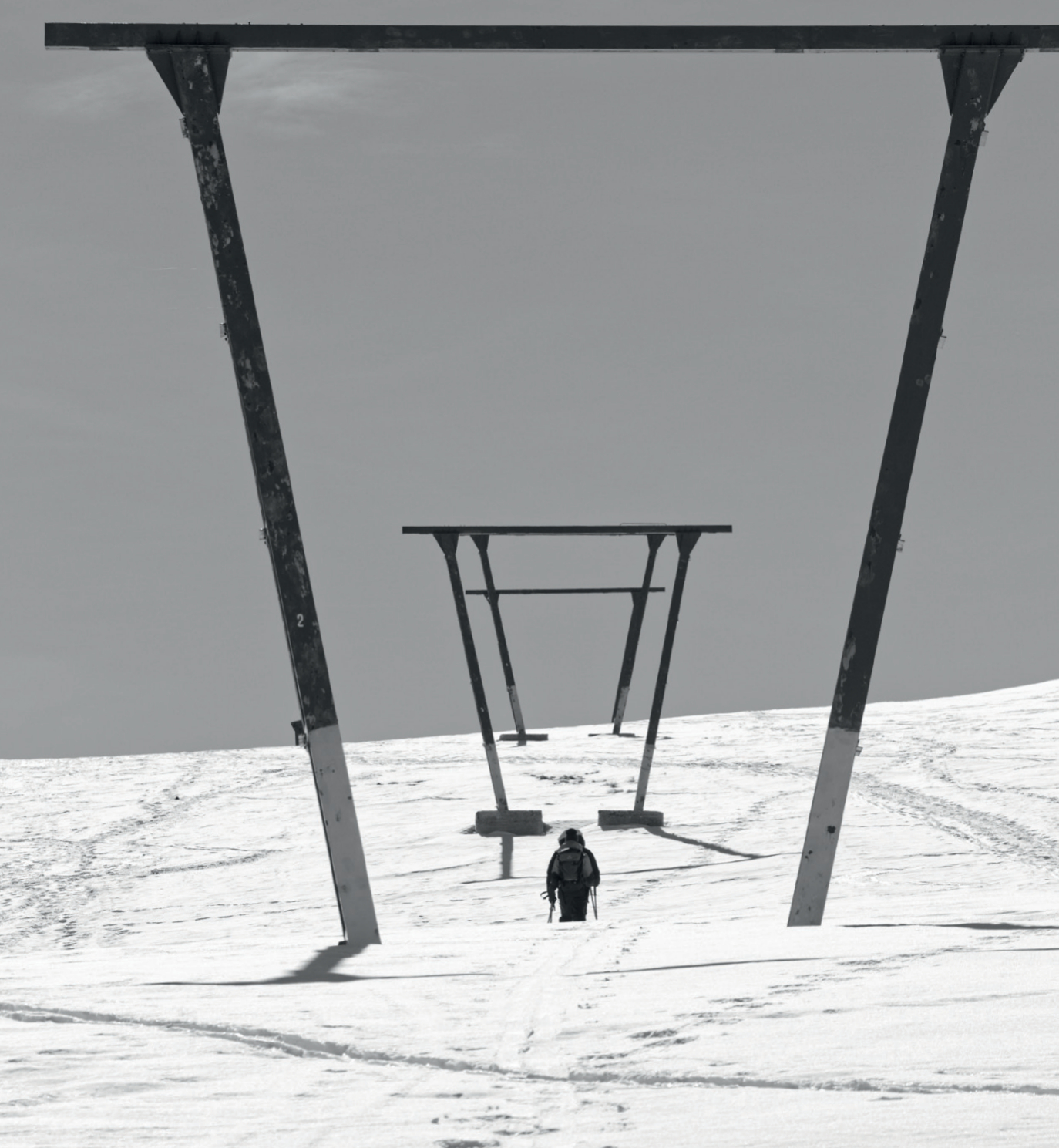
"We had eight ski areas operating in Central Italy ten years ago. Now we have three. Our largest ski resort, Ussita Frontignano, had a new chairlift installed 2009 but after the 2016 quake, it just sits there, rusting. These resorts need millions of Euros invested before they can operate again, but this is not a priority for the government." Topping out on Colle del Vento, we take in a full view over Lake Campotosto and Gran Sasso in the distance to the southwest. The spring snow has grown patchy during my week in the Apennines, but I'm unable to wipe the smile off my face as I arc turns down the slope in Lorenzo's wake. There's one more place in the Central Apennines that Lorenzo wants to show me before I return to Canada.
We drive half an hour to Amatrice the birthplace of the staple Italian restaurant dish pasta amatriciana for a well-deserved meal. Driving through the town, I realize the other reason Lorenzo wanted to bring me here. There is nothing left save a few husks of buildings held up with bracing and awaiting demolition. The town's 13th-century clock tower still stands and can hopefully remain as a memory to the 23 people that died in Amatrice and the total of 299 victims in the region. A few of the local restaurants are open for business in new timber buildings on the outskirts of the town, and we sit down to enjoy the best pasta I've ever eaten.
Around the restaurant, I notice local families and residents enjoy the simple act of dining together, sharing bottles of wine and laughing. The sight gives me confidence that while their homes, businesses, and churches have been all but shaken to the ground and the remains were torn down, the culture of these people in the Central Apennines will endure through any tragedy.