Italien · Ortler-Alpen
Ortler Storming
Issue 2025 · Words: Ben Tibbetts · Photos: Ben Tibbetts · 4 min read
Spring was advancing rapidly in the eastern Alps. Arriving late morning at the Forni trailhead, we found the winter snow already melted far up the hillside. Stu, Misha and I set off on foot, rambling up the summer path to reach the snowline. A bearded vulture soared overhead on the southerly …
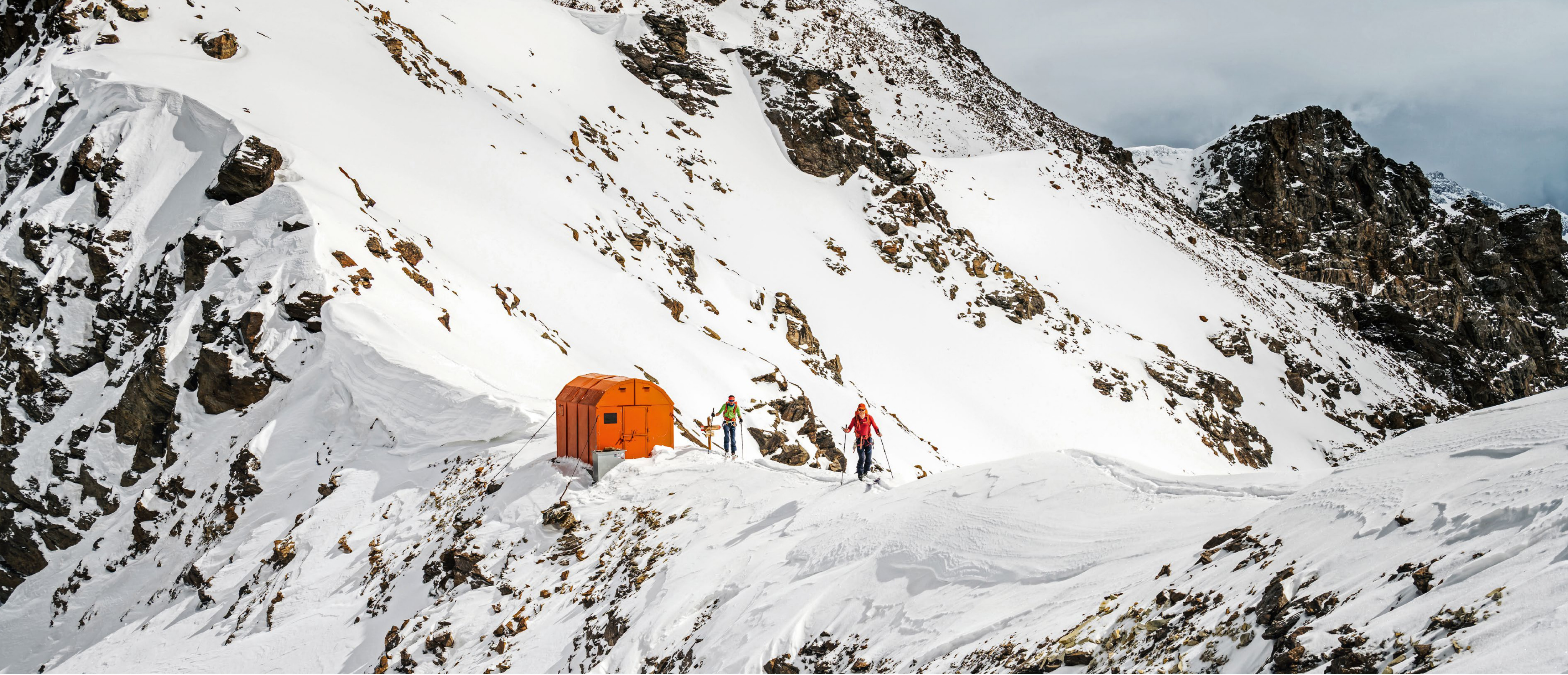
Spring was advancing rapidly in the eastern Alps. Arriving late morning at the Forni trailhead, we found the winter snow already melted far up the hillside. Stu, Misha and I set off on foot, rambling up the summer path to reach the snowline. A bearded vulture soared overhead on the southerly breeze, scouring the hillside, eyeing a herd of chamois for the faintest promise of carrion. Under the warmth of the midday sun, we picked our way toward Bivacco Giampaolo del Piero, perched on the ridge between Monte Confinale and Cima della Manzina. Just 300 feet from the saddle, we triggered a weak layer in the snow. Feeling the alarming wave propagate like a freight train across several hundred feet of snowfield, we froze, adrenaline surging.
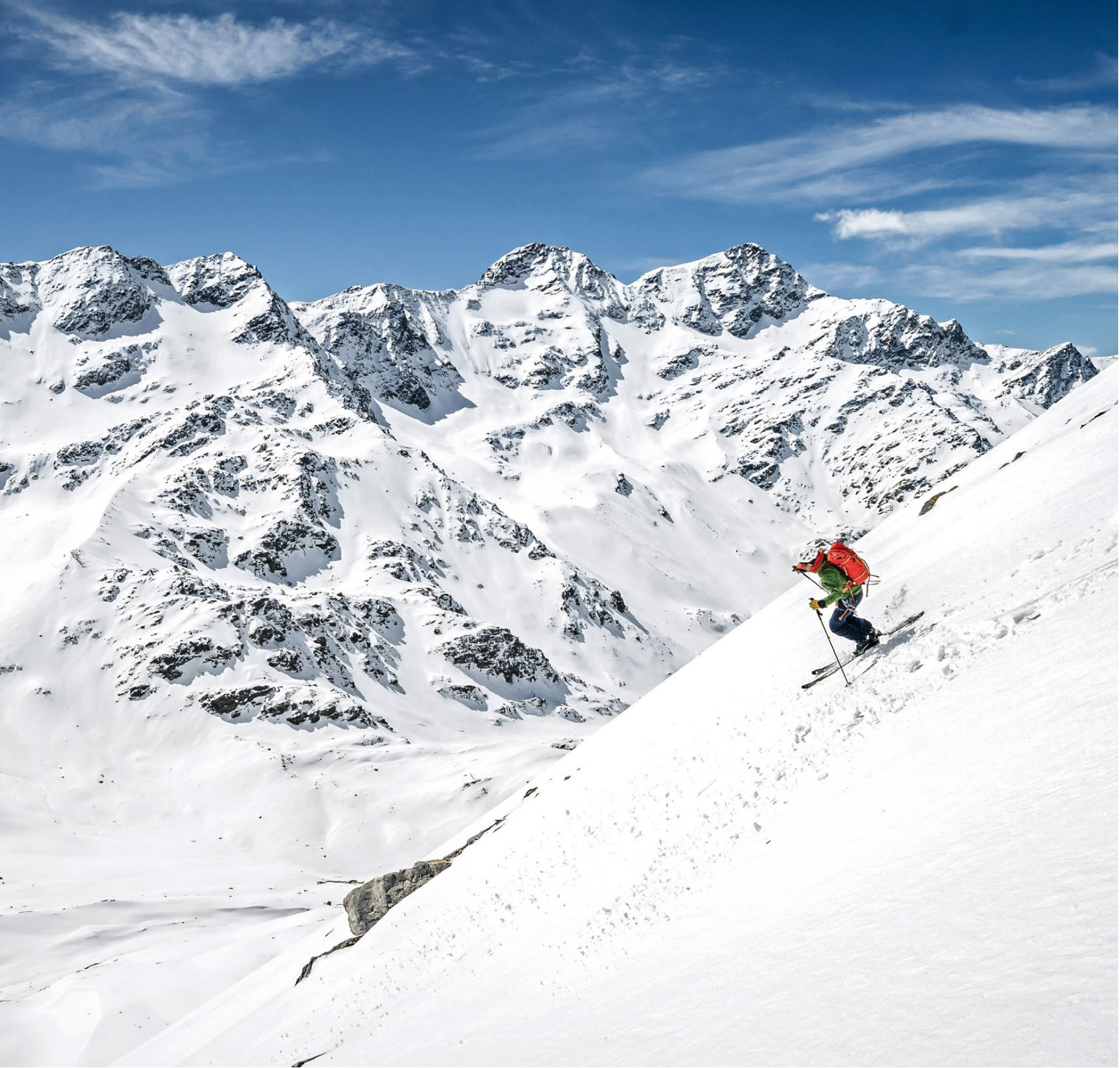
As the slope was just under 30º, the critical angle at which avalanches most often release, nothing moved. Still, it was warning enough to rethink our approach. We scrambled over loose rocks to gain the crest and reach the bivouac, thankful for a pause to take stock and have a late lunch. Despite the beautiful location overlooking Val Zebrù, we were lured onward by the promise of greater comfort at the shiny new Bivacco Città di Cantù, far beyond and hidden behind Monte Zebrù. Recovered from our scare, we altered our route and descended north on cold powder, making cautious turns and avoiding steep terrain.
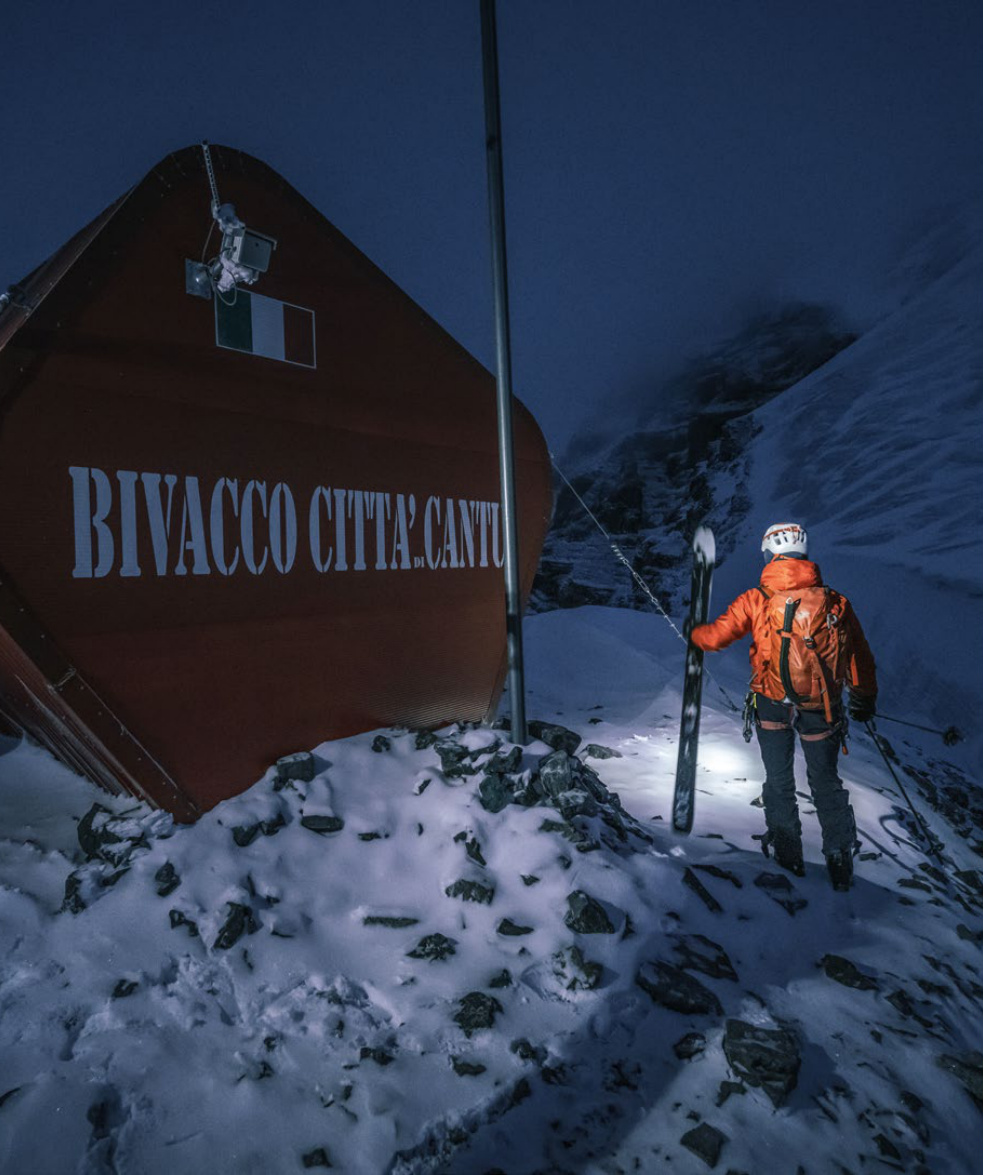
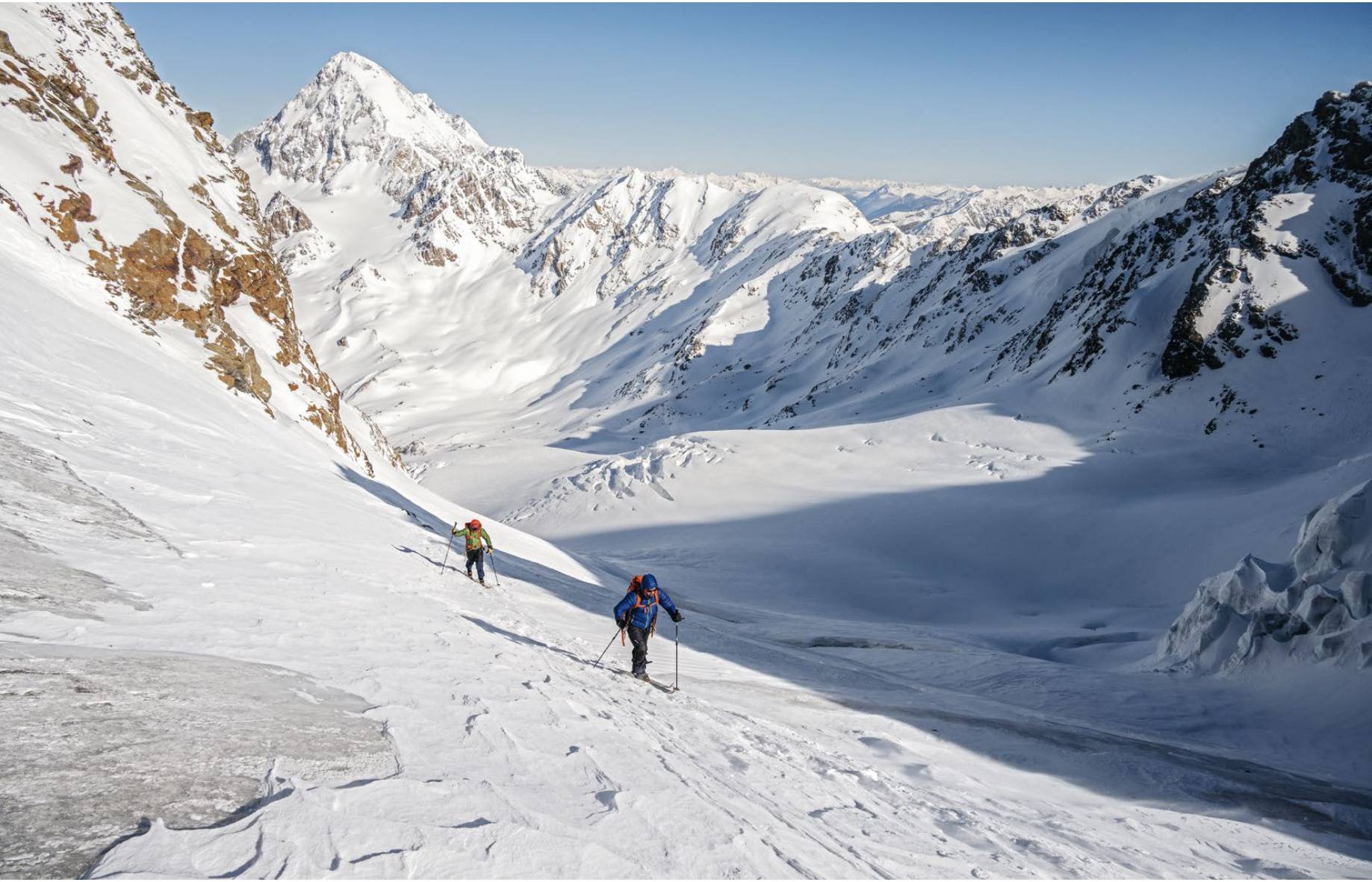
Traversing right, we ascended over a shoulder into the next valley to the east, reaching Torrente Zebrù at an easy crossing of an otherwise precipitous gorge. Passing Rifugio V Alpini, the cloud base lowered as the weather worsened. Gusting winds and swirling spindrift on the glacier above suggested the journey was about to become far more challenging than forecast. At 10,800 feet on the Vedretta dello Zebrù, we gathered to discuss options as conditions turned serious. Assuming we could always retreat to the refuge we’d just passed, we pushed into blowing snow and poor visibility, roping up to cross a maze of crevasses. I led on a tight rope, probing carefully across wide bridges. With the light failing, we finally reached the crest by headlamp, questing through mist and stumbling on the red pentagonal pod at the last moment.
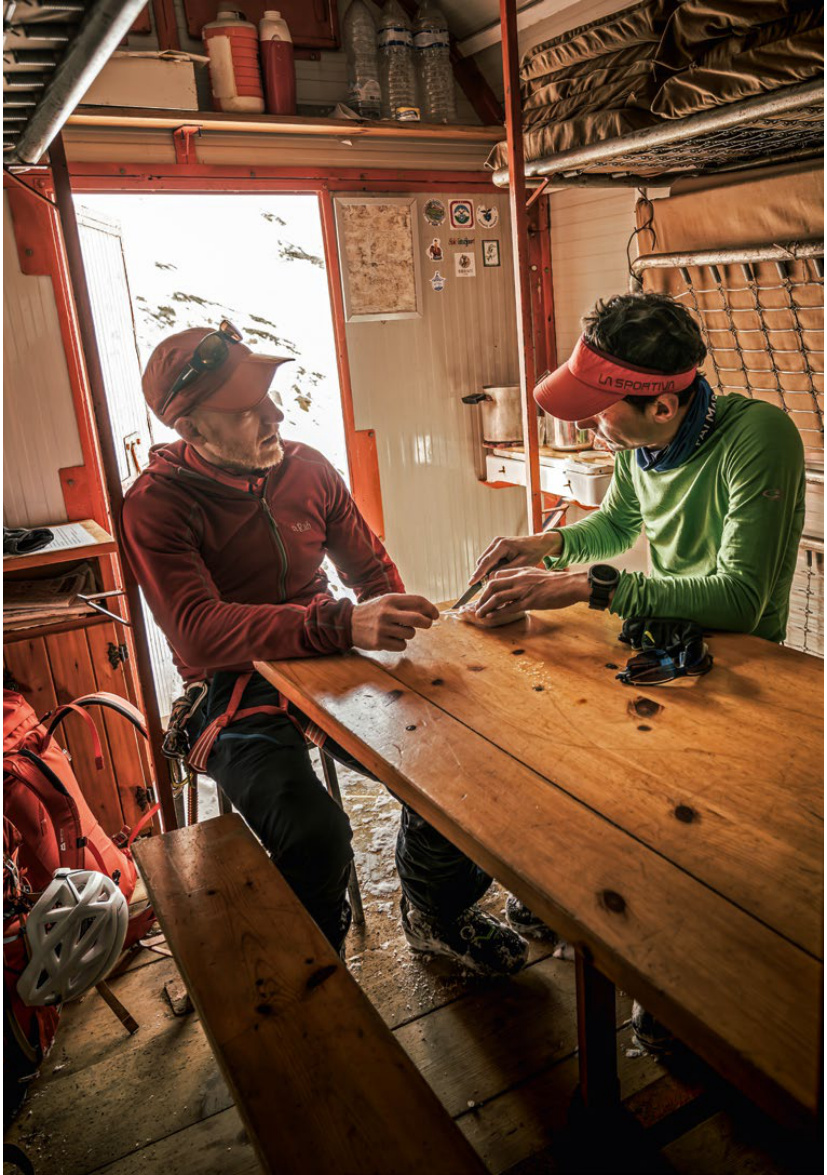
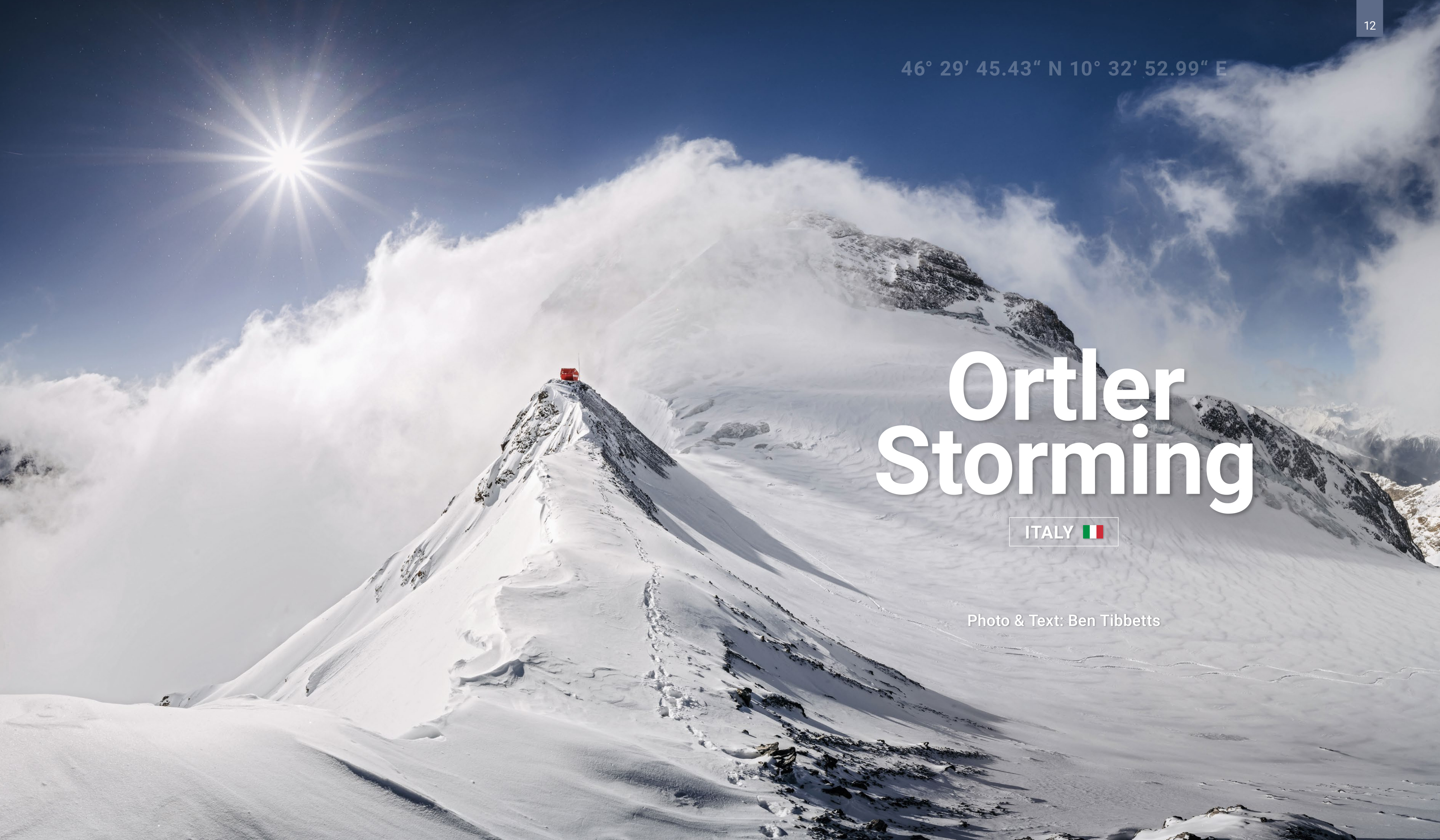
The compact hut clings to a narrow platform on a crumbling ridge. I could see why they hadn’t made it larger; there was barely space to walk around the metal box to reach the door. with modern construction, a thick layer of insulation would shield us from the cold. But on arrival, it was 7°F outside and, given the howling gale, barely warmer inside. The Bivacco Città di Cantù, erected in 1971, was itself built on the site of the Hochjoch Hütte (11,654 feet) dating from 1901. At the start of the First World War, Italian V° Alpini troops destroyed that refuge to keep it from serving as an Austrian base. We settled in, trying to get comfortable despite the bitter cold. The gas stove struggled, and it took over three hours to melt enough snow for dinner.
Despite the burner’s heat and our three bodies, the tiny space never warmed. I had been overly optimistic in assuming insulation would suffice in a metal heatsink perched on an exposed ridge. Stu and Misha stayed in good spirits despite the temperatures, and we endured the long night wearing every layer, fighting to keep warm under a few blankets each. Next morning, we rose early, hoping for sunrise, but clouds clung stubbornly to our ridge, enveloping us in crimson vapor. The wind was relentless, and with clothing barely adequate,
we abandoned any attempt on Monte Zebrù. Instead, we roped again and descended the glacier, strung between crevasses, finding no trace of our tracks from the night before. We passed Rifugio V Alpini once more, this time ascending the southerly branch of the glacier to reach the shoulder below Cima della Miniera. The once-easy passage east over this peak to Ghiacciaio della Miniera had become an exposed, unpleasant scramble as the glacier recedes. We considered alternatives and adjusted the plan, skiing a steep slope on the west face before heading south to cross Torrente Zebrù again. Climbing over Passo Zebrù, we scanned the horizon, hoping for a change in the weather.