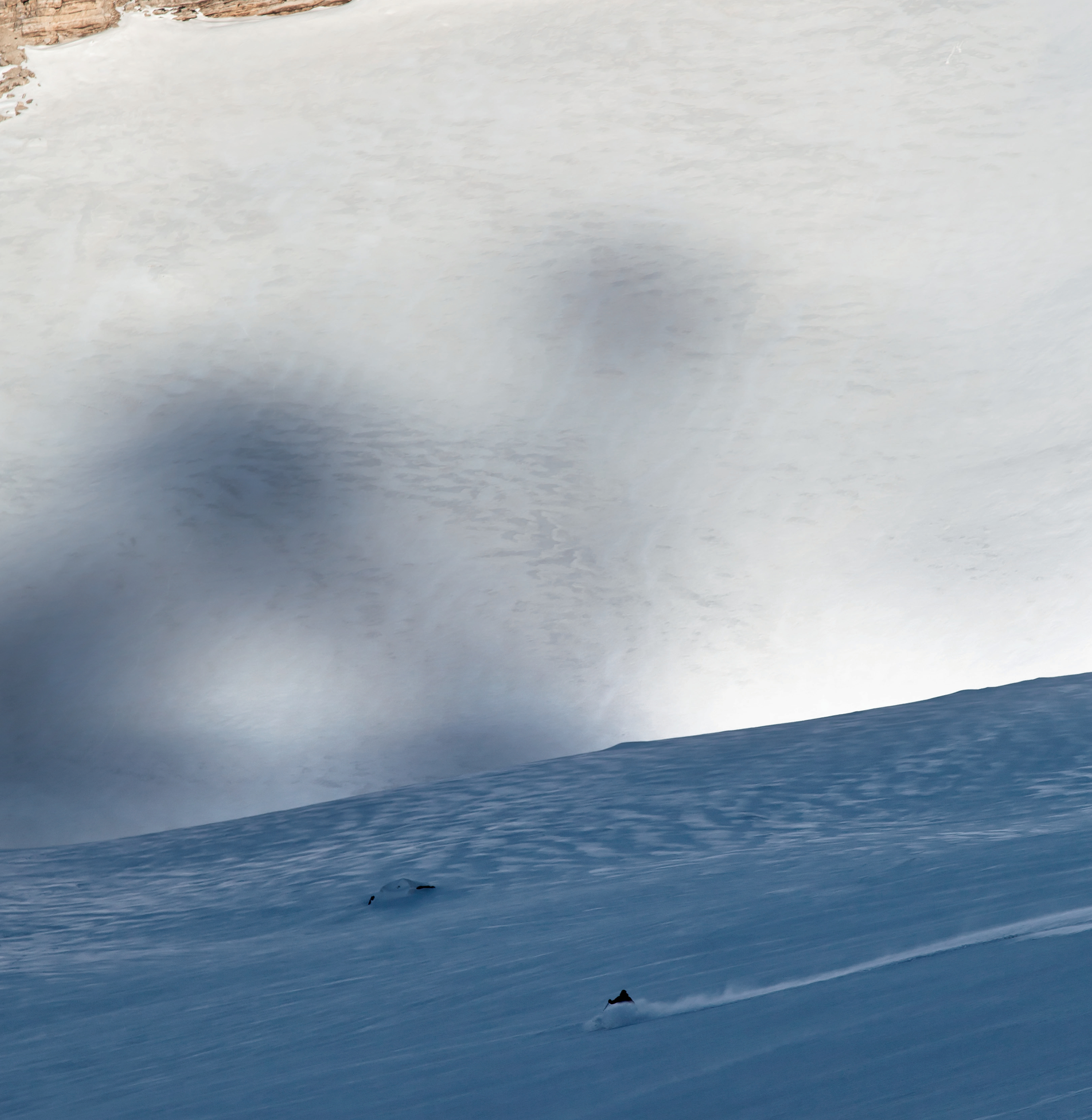
Iran · Zagros Mountains (Chelgerd)
Riding on the Wings of my Skis
Issue 2019 · Words: Mohammad Hajabolfath · Photos: Anton Brey · 5 min read
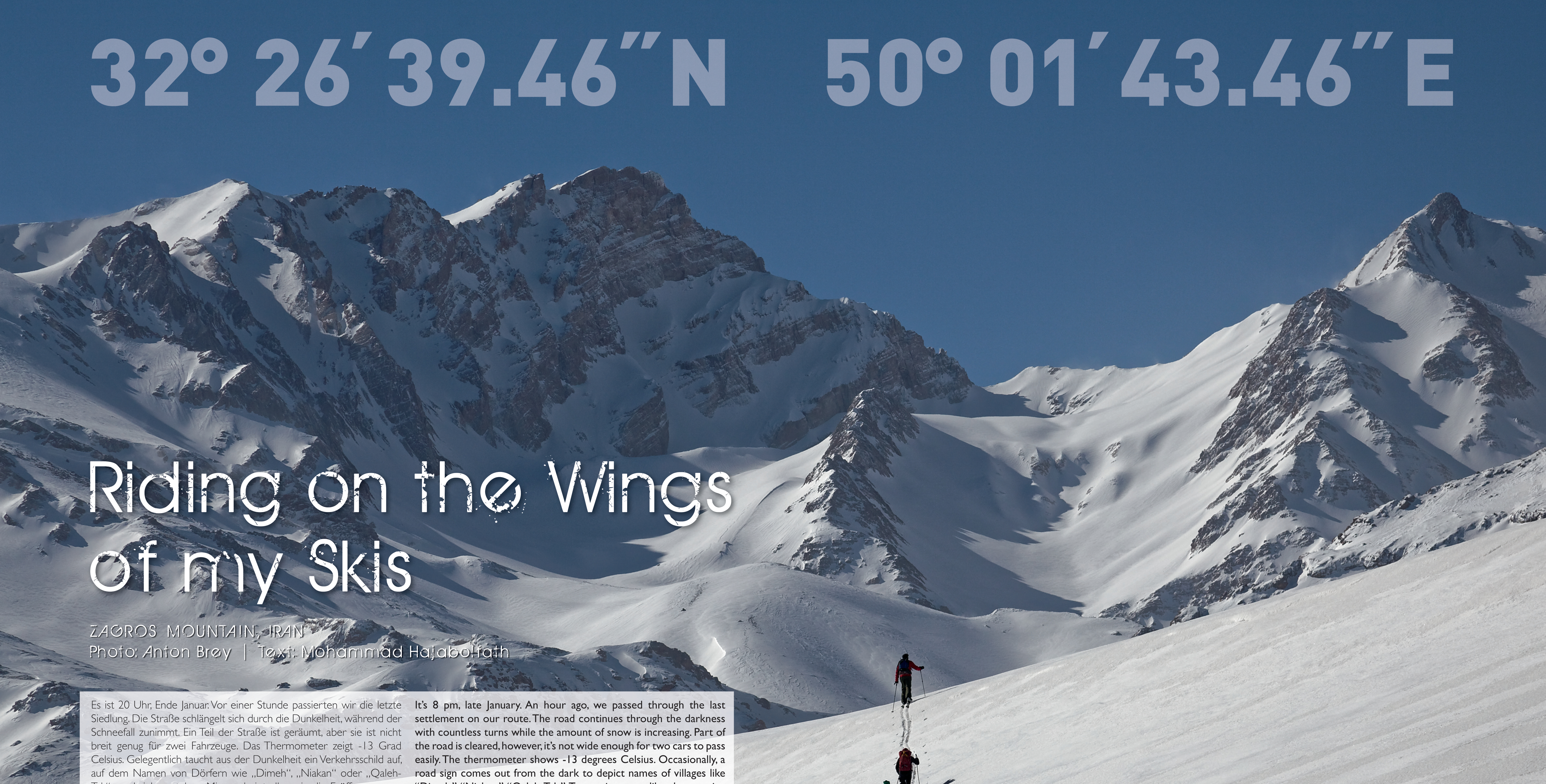
It's 8 pm, late January. An hour ago, we passed through the last settlement on our route. The road continues through the darkness with countless turns while the amount of snow is increasing. Part of …
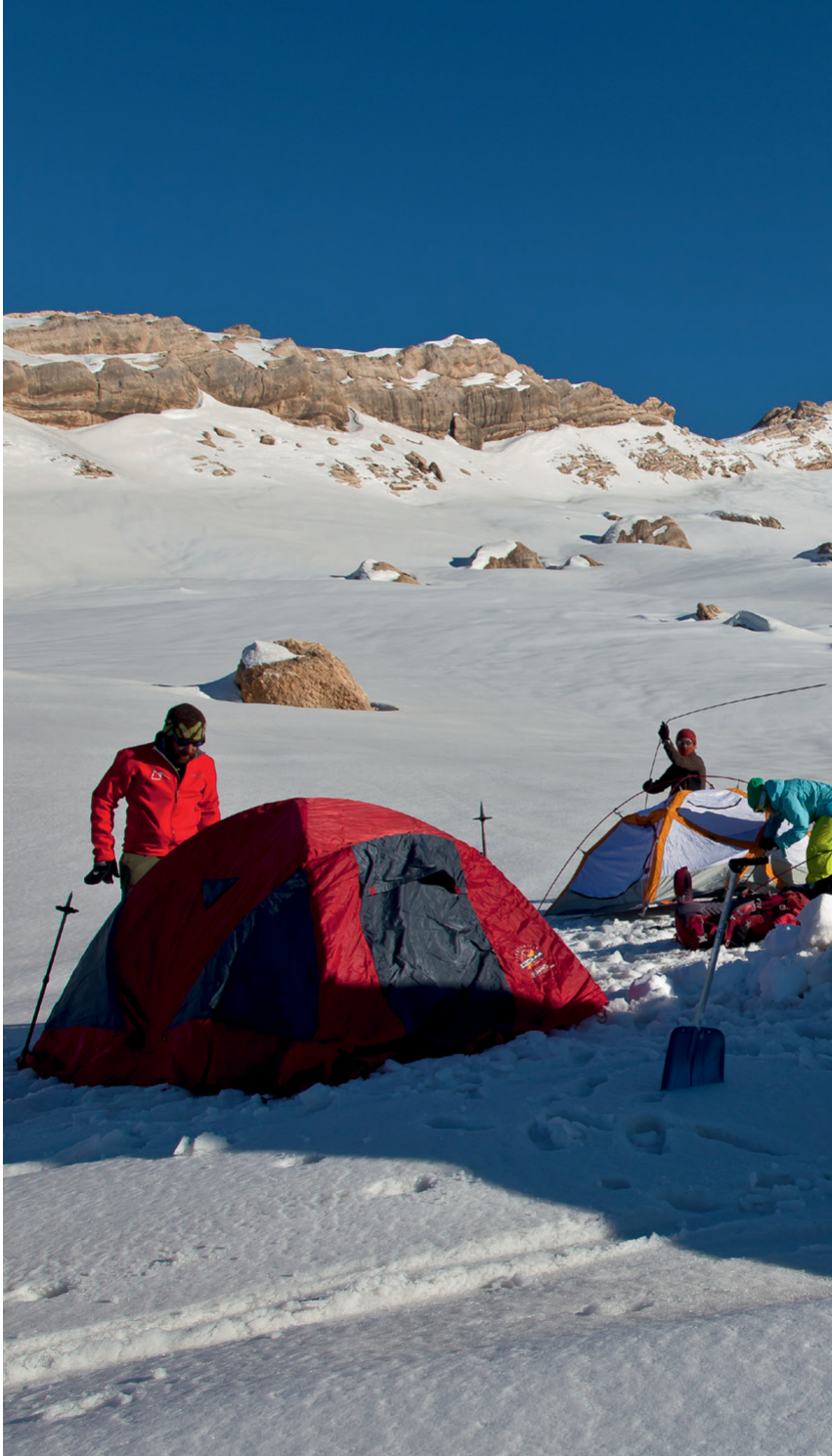
It's 8 pm, late January. An hour ago, we passed through the last settlement on our route. The road continues through the darkness with countless turns while the amount of snow is increasing. Part of the road is cleared, however, it's not wide enough for two cars to pass easily. The thermometer shows -13 degrees Celsius. Occasionally, a road sign comes out from the dark to depict names of villages like "Dimeh," "Niakan," "Qaleh-Tak." To me, it seems like the opening scene of a movie. After a long drive, we finally reach our destination. The next morning, I crawl out of my sleeping bag. The sky is blue, white mountains all around, first sunrays touching the summits.
I am in Chelgerd, a small town 2,000 meters above sea level at the foot of the Zardkuh massif in the Zagros mountains. I am in western Iran! As a ski touring guide, I often get asked, "are there any skiable mountains in Persia?" Immediately, people want to know more about the geography of Iran, which has been known for its caravans through the deserts along the ancient silk road. It's to no surprise that the general knowledge about the country's geography is poor because most media are focusing more on the political topics of this Islamic republic in Middle East. Subjects like revolution, war, violation of human rights, sanctions, nuclear energy, or economic crisis are simply more appealing for general media than skiing or the mountains.
Admittedly, Iran has experienced all of the above in the last decades, but this beautiful country has so much more to offer! The Iran spans an area of 1.6 million square kilometers, which makes it three times bigger than France, or five times larger than Germany. More than 50% of the land is covered by mountains. The Alborz mountains in the north and Zagros range in the west feature major highlands, with some other sub-ranges and massifs encircling the two big Persian deserts. Besides the Damavand volcano that rises above 5,000 meters, there are plenty of 4,000-meter and 3,000-meter peaks in the Zagros and Alborz ranges, and most of them receive snow in the winter. No need to mention that many of them have never been skied.
A great excuse to grab your skis, buy a ticket, and fly to Iran to explore the mountains. In the meantime, you need to be prepared to answer the questions of your friends and family members, who may or may not understand why you are traveling there. Iran is a country with great cultural diversity. Prepare to see it without filter and discover it without prejudice. There is a great chance that some of the people who were questioning your choice of trip before will join you on your second journey. You just need to show them your pictures and share your experiences. This has happened to many of my friends. If you read what places you should visit in Persia, you will definitely come across the city of Isfahan.
From here you head toward the west, and after a three-hour drive, a mountain range will rise on the horizon. This is Zardkuh, literally translated to "Yellow Mountain." It's one of the highest and most significant subranges of the central Zagros range. There are a couple of peaks above 4,000 meter in the main range of Zardkuh that receive plenty of snowfall every year. Two major rivers running through the center and southwest of Iran, the Zayandehrud and the Karun, originate in these mountains. Zardkuh lies in the Chahar Mahal-e Bakhtiari province, home to the famous Bakhtiari tribe. They are incredibly hospitable and proud of their culture, living a partially nomadic style.
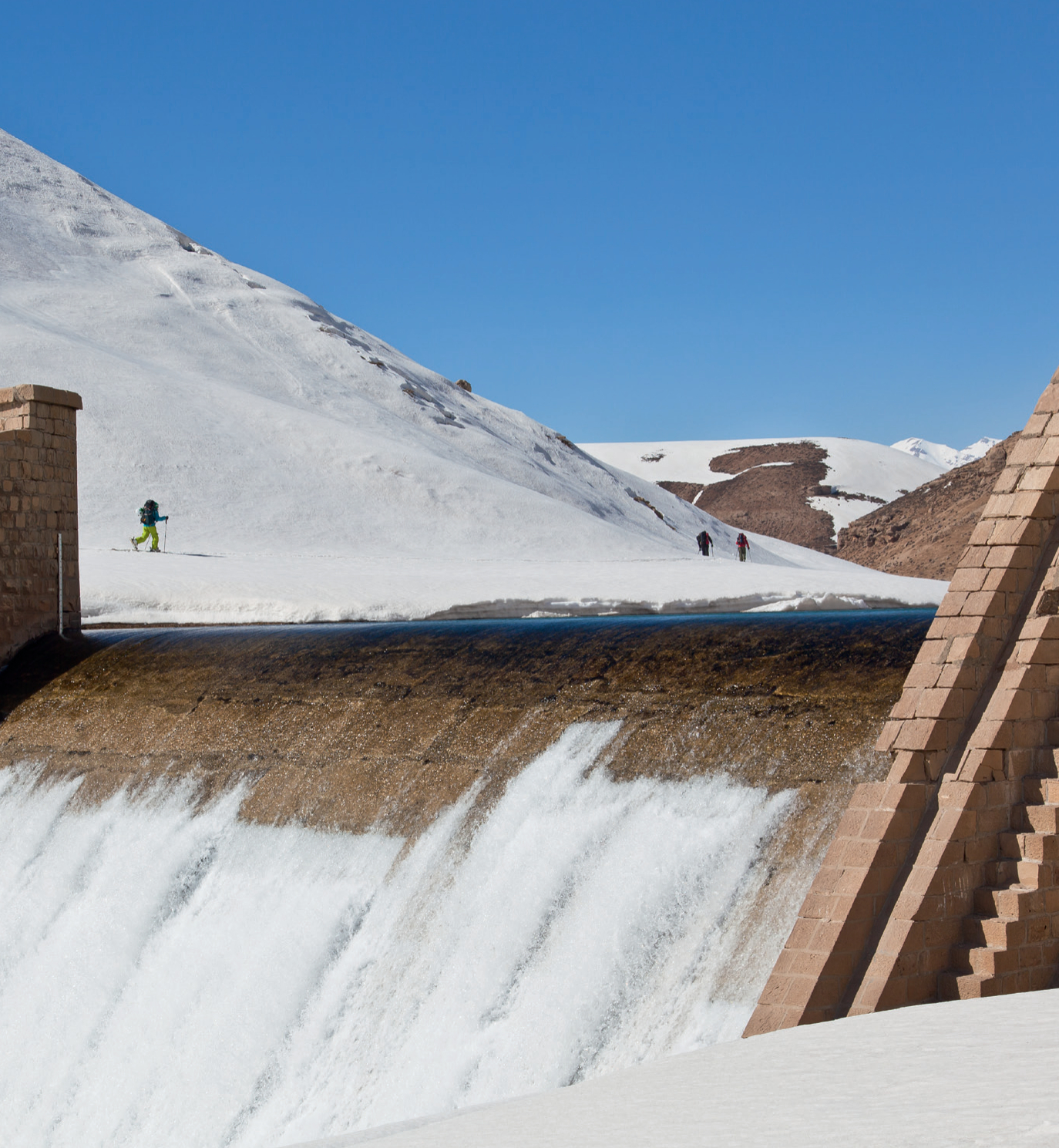
They still move from their winter quarters on the southern slopes of the Zagros mountains to their summer quarters on the northern slopes. As a result, Chelgerd is not populated in winter. Even though there is a ski resort, tourism doesn't do too well as the lifts are old and infrastructure is not the best. The night we arrive in Chelgerd, there is no sign of other foreign visitors. We didn't expect anything else. The next morning, we start to skin to the top of a small peak above the ski slopes. Half an hour later, we reach the top and enjoy a magnificent panoramic view of the whole range. Countless peaks and couloirs are waiting to be explored. We ski down the backside of the mountain and cross a river next to a reservoir.
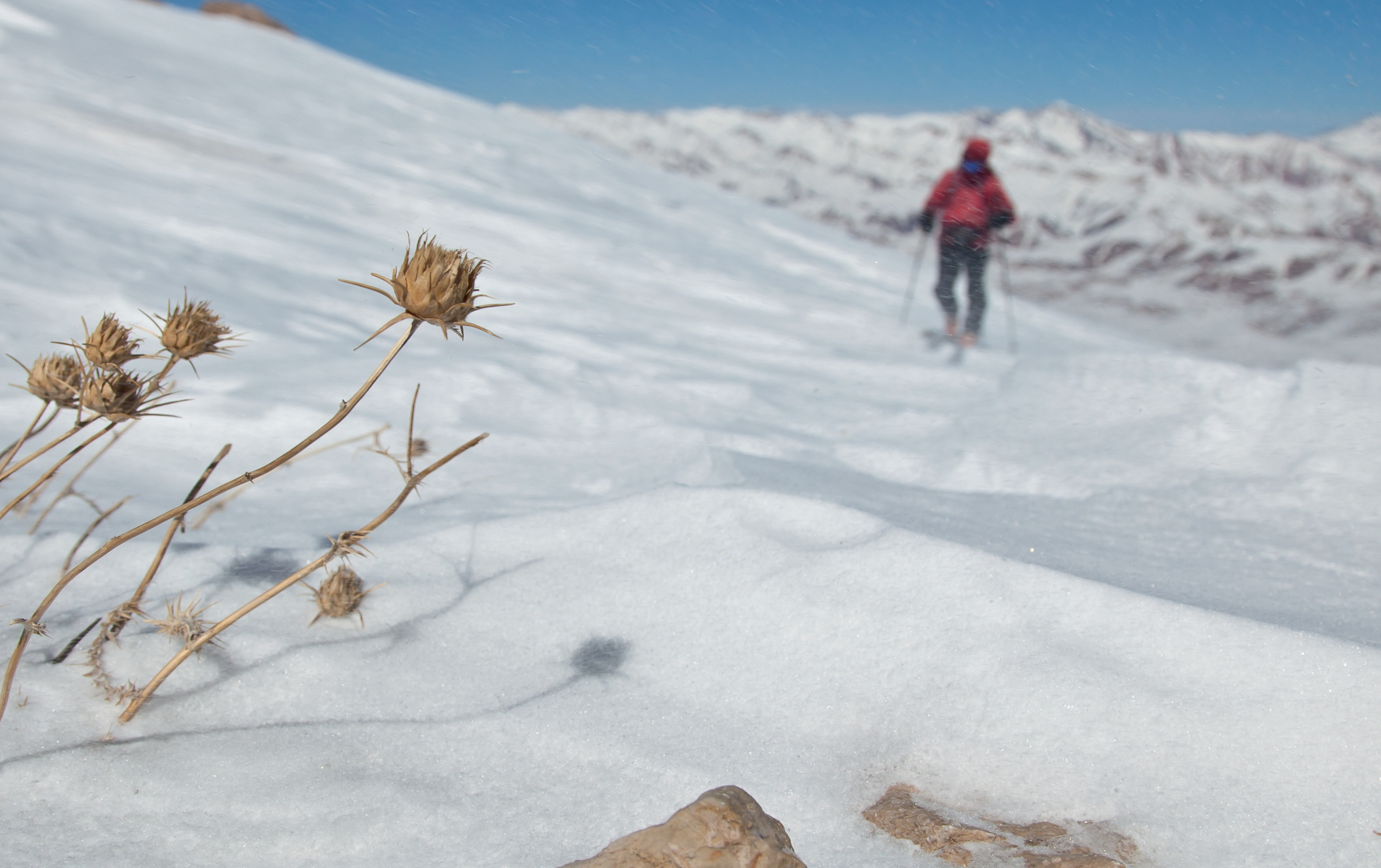
On the other side, we start skinning up again to reach one of the main ridge's higher summits. Three hours later, at the end of a steep and long slope, we see a small orange hut sitting at the edge of a small plateau. Despite broken windows, it offers us some shelter from the cold wind. After some hot tea, we set out again. As we get higher, the wind intensifies and our pace slows down. The snow becomes icy and we decide to use our ski crampons to move more easily. At around 3,800 meters, we reach our first major summit. The scenery is amazing. We can see most of of the Zardkuh range and its 4,000-meter peaks. From the beautiful pyramid called Haft-Tanan in the north to the summit of Kolunchi, which is not far from us in the south.
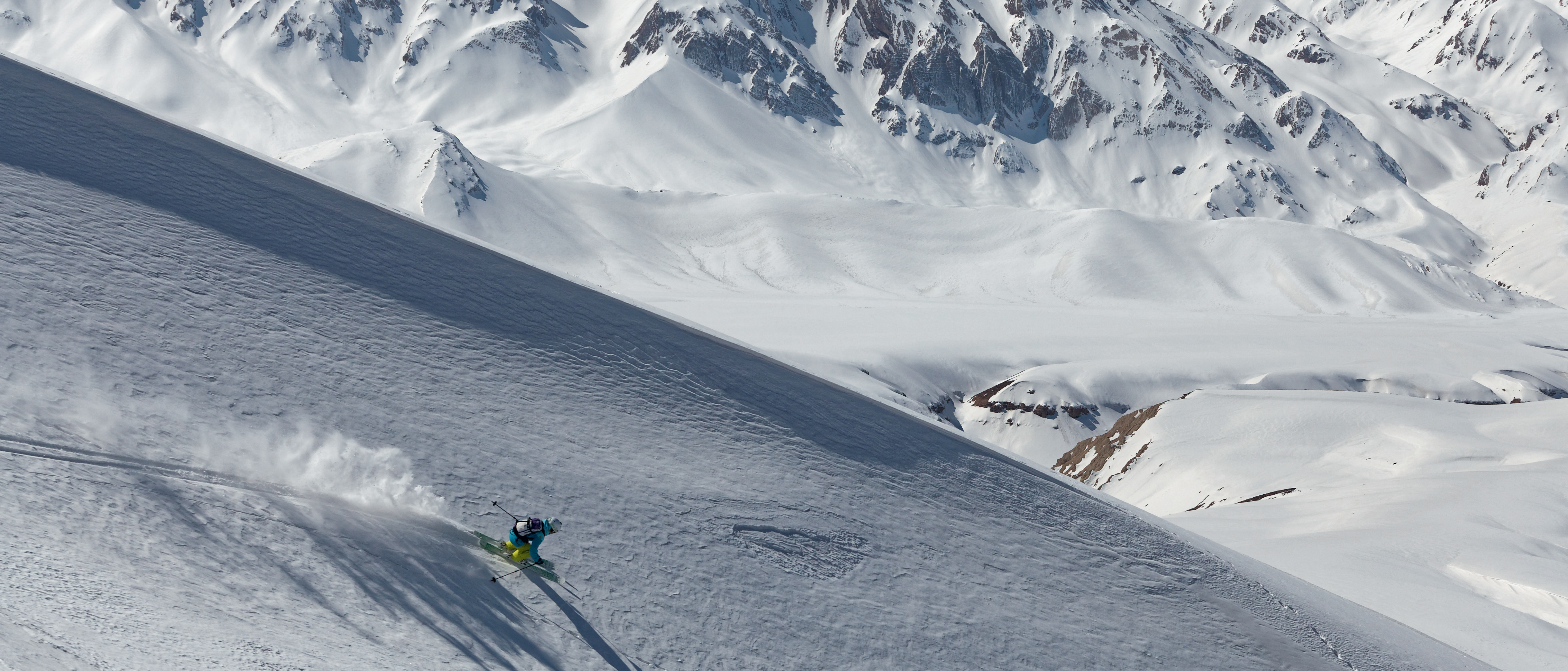
We are all by ourselves; there is no trace of any other skiers. The bitter cold forces us to quickly switch to downhill mode. It's time to have some fun skiing in the Zagros mountains. The afternoon light intensifies the contrasts as we ski into the valley. A feeling of happiness flows through my veins and overwhelms every cell of my body. Adrenalin rushes through me and warms my cheeks, which were frozen by the cold wind only half an hour ago. As we approach the bottom of the slope, I feel fresh and light. A few minutes later, we come to a stop and I look back up the mountain. My body may be down here, but I left my soul up at the summit.