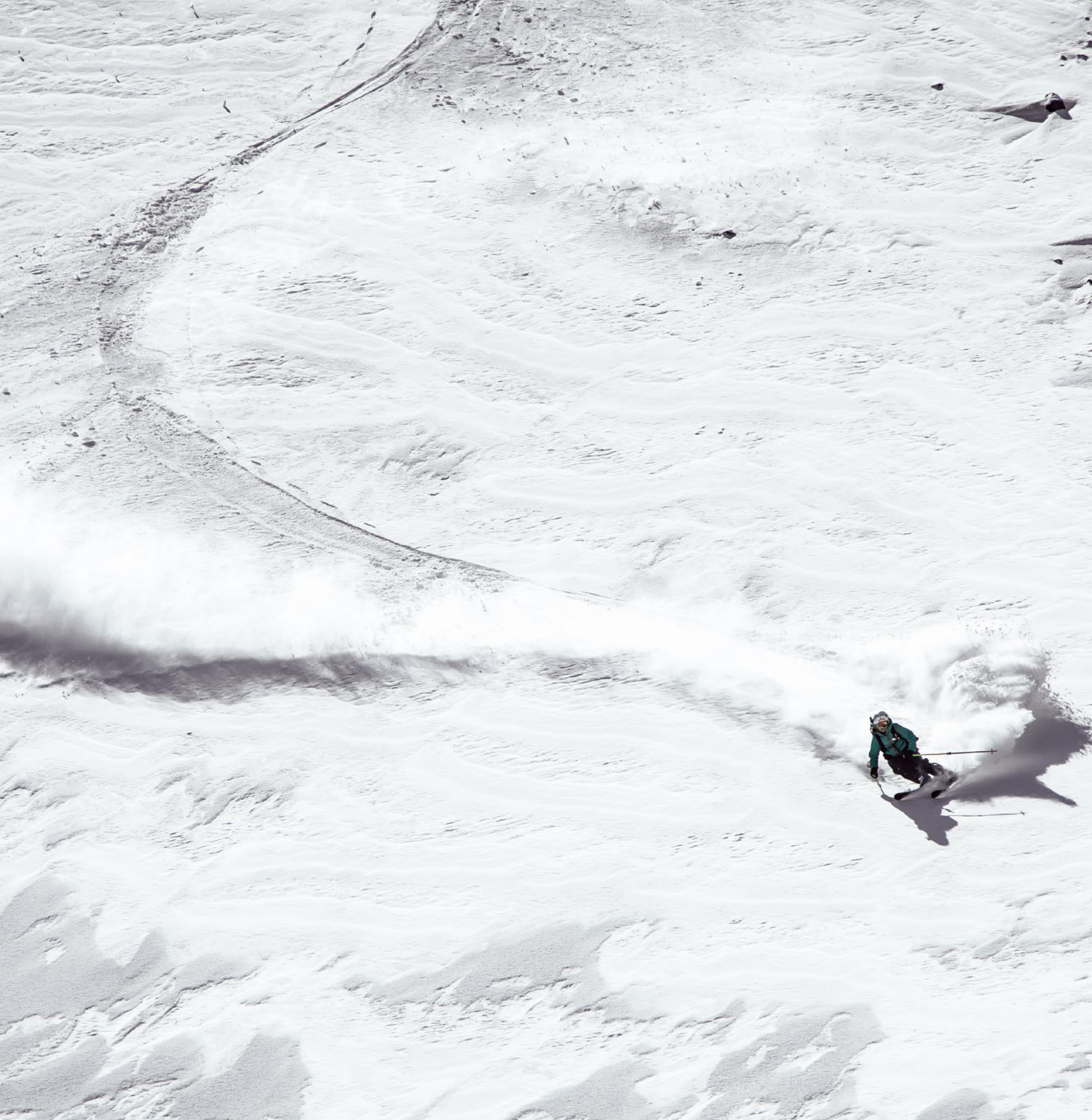
Marokko · High Atlas (Jebel Toubkal)
Shukran Morocco
Issue 2012 · Words: Sandra Lahnsteiner · Photos: André Schönherr · 5 min read
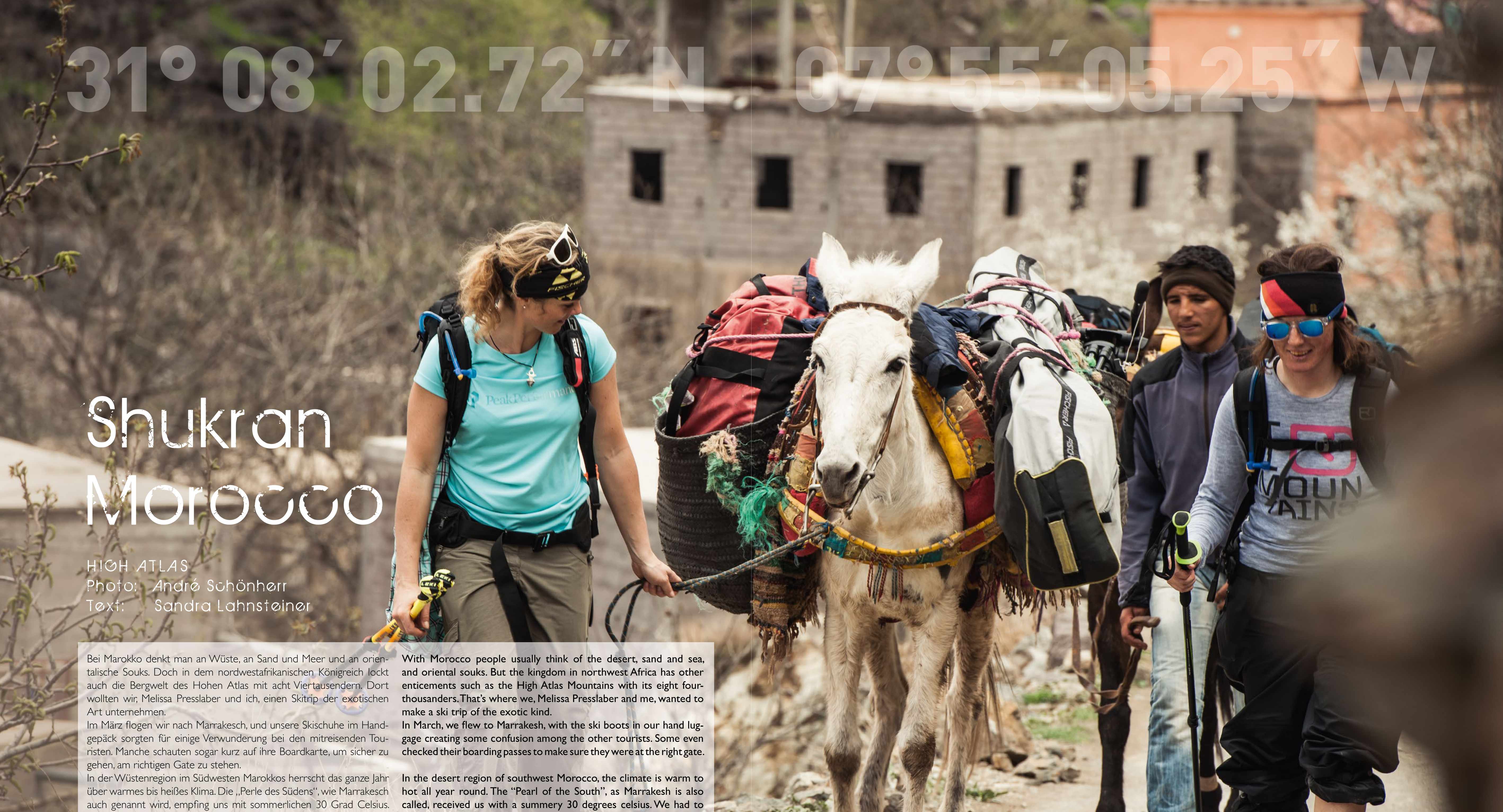
With Morocco people usually think of the desert, sand and sea, and oriental souks. But the kingdom in northwest Africa has other enticements such as the High Atlas Mountains with its eight …
With Morocco people usually think of the desert, sand and sea, and oriental souks. But the kingdom in northwest Africa has other enticements such as the High Atlas Mountains with its eight four-thousanders. That's where we, Melissa Presslaber and me, wanted to make a ski trip of the exotic kind. In March, we flew to Marrakesh, with the ski boots in our hand luggage creating some confusion among the other tourists. Some even checked their boarding passes to make sure they were at the right gate. In the desert region of southwest Morocco, the climate is warm to hot all year round. The "Pearl of the South", as Marrakesh is also called, received us with a summery 30 degrees celsius.
We had to cope with a difference in temperature of more than 40 degrees celsius and soon packed away our warm beanies. The tough, snowy European winter lay behind us. It had been almost impossible to get up-to-date information about the snow and weather conditions in the Atlas Mountains from the internet. Only Anas, a young Moroccan student and mountain fanatic who we had met via Facebook confirmed that the winter in Toubkal National Park was good and there would be a blanket of snow from about 3,000 meters upwards. We trusted this information. The little mountaineering village of Imlil, 70 kilometers south of Marrakesh and about 1,700 meters high, is a starting point for many trekking tours in Toubkal National Park.
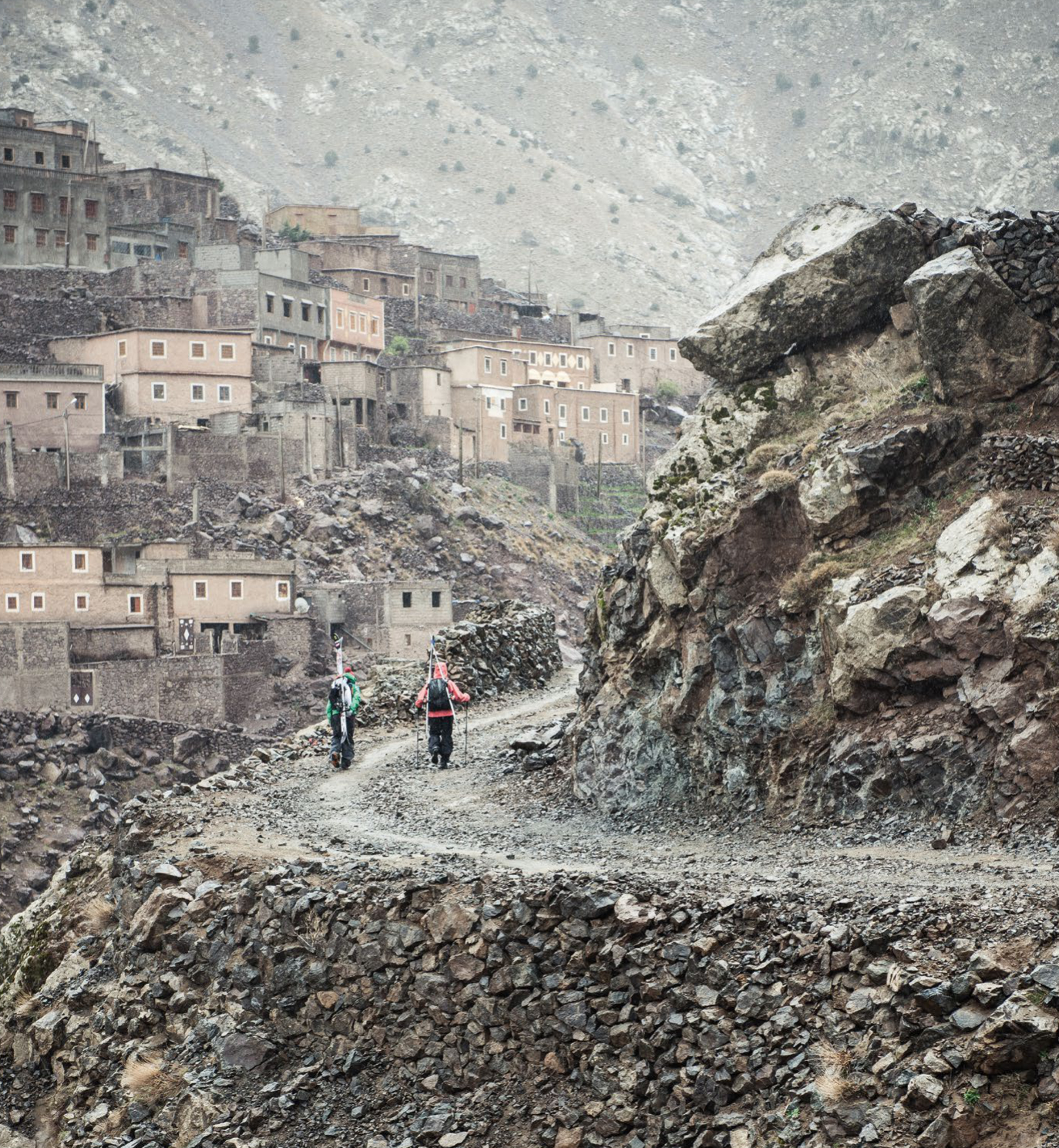
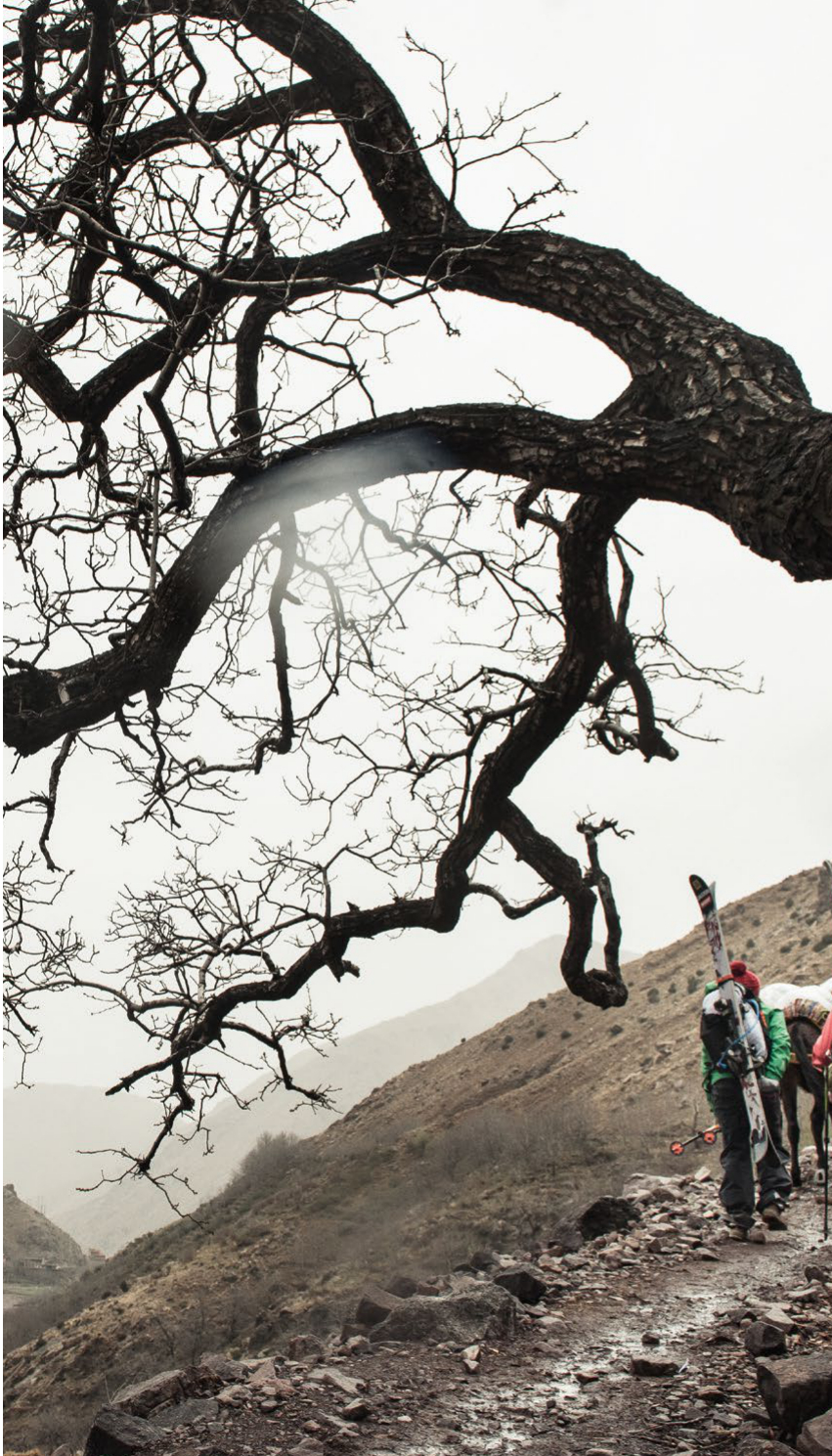
It was also where we began our trek to the Refuge Les Mouflons at 3,107 meters, the starting point for our freeride tours. Despite the continuous rain, we enjoyed the ascent on the narrow mule paths through the Mizane Valley, which gets narrower towards the ravine. Children from small Berber villages curiously ventured closer, while we absorbed every detail of the hike, impressed by the lonely mountains. After a good two hours, we reached the pilgrimage site of Sidi Chamharouch at 2,300 meters, the highest settlement in the valley. About 15 Berbers live in this remote and tranquil village, and they all hurried to greet us Europeans, to examine our "weirdly wide" skis, and to sell us souvenirs.
Strengthened by the Moroccan "national drink", very sweet mint tea prepared in a loving ritual, we moved on. Just as our Facebook friend had predicted, the snow line was at about 3,000 meters. We had left Marrakesh at 30 degrees celsius and had come to deepest winter. An emerging snow storm impeded our progress so that the last hour took its toll. After almost five hours of ascending, we were glad to be at the refuge, where the Berbers showed us a lot of hospitality. We had bad weather during the night and the next day. Showers of sleet, storms, and short but fierce thunder storms took turns to visit us. The weather only calmed down at noon. We quickly took our skis and made use of the time by exploring the area a little bit.
We hiked up two steep couloirs and enjoyed our first lines in African snow before another thunderstorm urged us back to the refuge. During the rest of the day, we studied maps of Toubkal National Park and treated ourselves to the wonderful cuisine. Jebel Toubkal with its 4,167 meters is the highest summit in the Atlas Mountains and was our target for the next day. It had snowed about 15 centimeters during the night and according to Abdol, the manager of the refuge, the weather was meant to get better at around lunch time. We started at dawn, and at first it wasn't easy to find our way in the dark and fog. About 200 meters above the cabin we crossed ditches already filled with melting water.
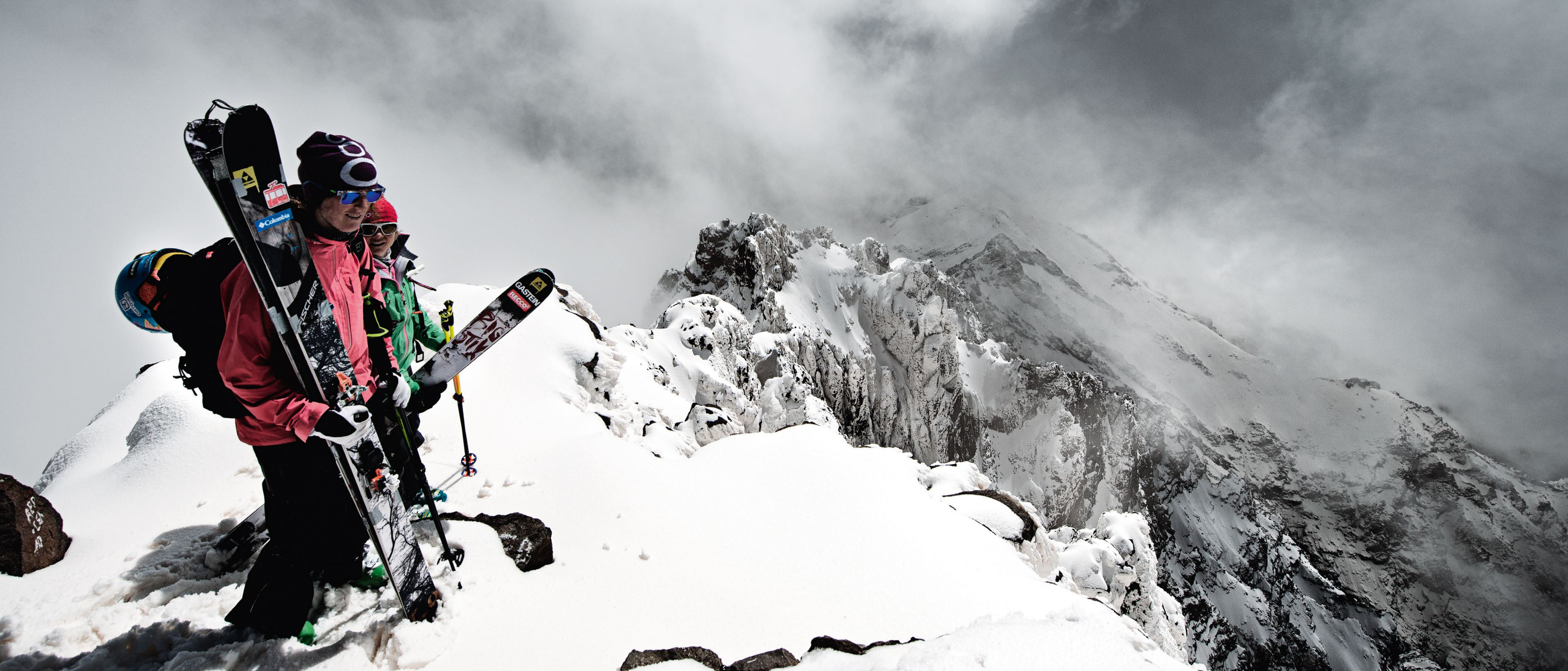
Thanks to the new snow we could ascend the steep northeast flank without ski crampons. We continued through a steep, but widening cirque above an icy waterfall. It gradually became lighter and the sun sometimes shone through the clouds. Then, thick fog surrounded us again and created a complete whiteout. At about 3,600 meters, we caught sight of the summit of Toubkal for the first time, and reached the Tizi Toubkal col at 3,940 meters after a steep, wide ascent. We took turns in sprinting further onto the summit via the southwest ridge. Toubkal is not a technically difficult four-thousander, but just below the summit we had to lay our tracks carefully because of the fresh wind slab.
Everything went well and we reached the "Mountain of Mountains", as the highest point of North Africa is called in the Berber language. As forecast, the sun came out more and more, and we could enjoy an amazing view from the summit, which was marked with a four-legged steel pedestal – no cross in the land of the Muslims. In the very south we could even recognize the Sahara. Snow conditions in the 40 degrees steep northeast couloir were almost perfect, new snow had already settled a little bit due to the bright sunlight. At the end of the main couloirs, we found a north face interspersed with rocks – and about a 1,000 meter stretch of descent in the finest African powder. Back at the refuge, a strong and tasty omelet and a surprise waited for us.
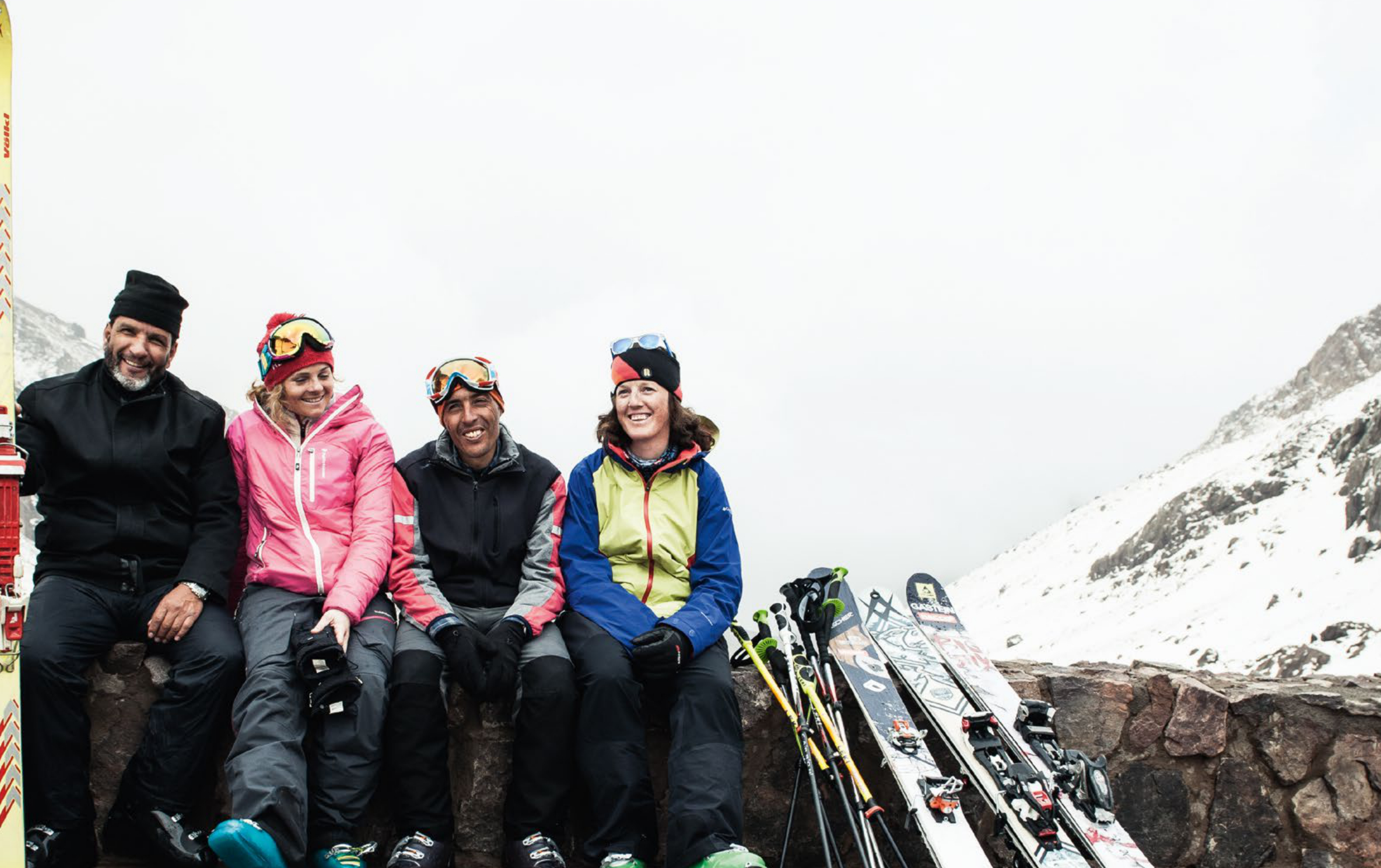
Anas, our Facebook friend, had travelled here from Casablanca to get to know us personally. On the next day, we could ski down more interesting couloirs in the sunshine, before descending again the day after. Within this short time, the landscape had changed a lot. Melted water was flowing down in strong streams, the path was partly blocked by boulders. The valley was gleaming in intensive colors like a picture-postcard. Fascinated by the impressions of the High Atlas, we started out to Essaouira. The small harbor town on the Moroccan Atlantic coast concluded our exotic ski trip. Morocco is worth a journey also for freeriders: "Shukran Morocco!"