Norwegen · Rondane
The Last Days of Winter
Issue 2026 · Words: Fredrik Schenholm · Photos: Fredrik Schenholm · 4 min read
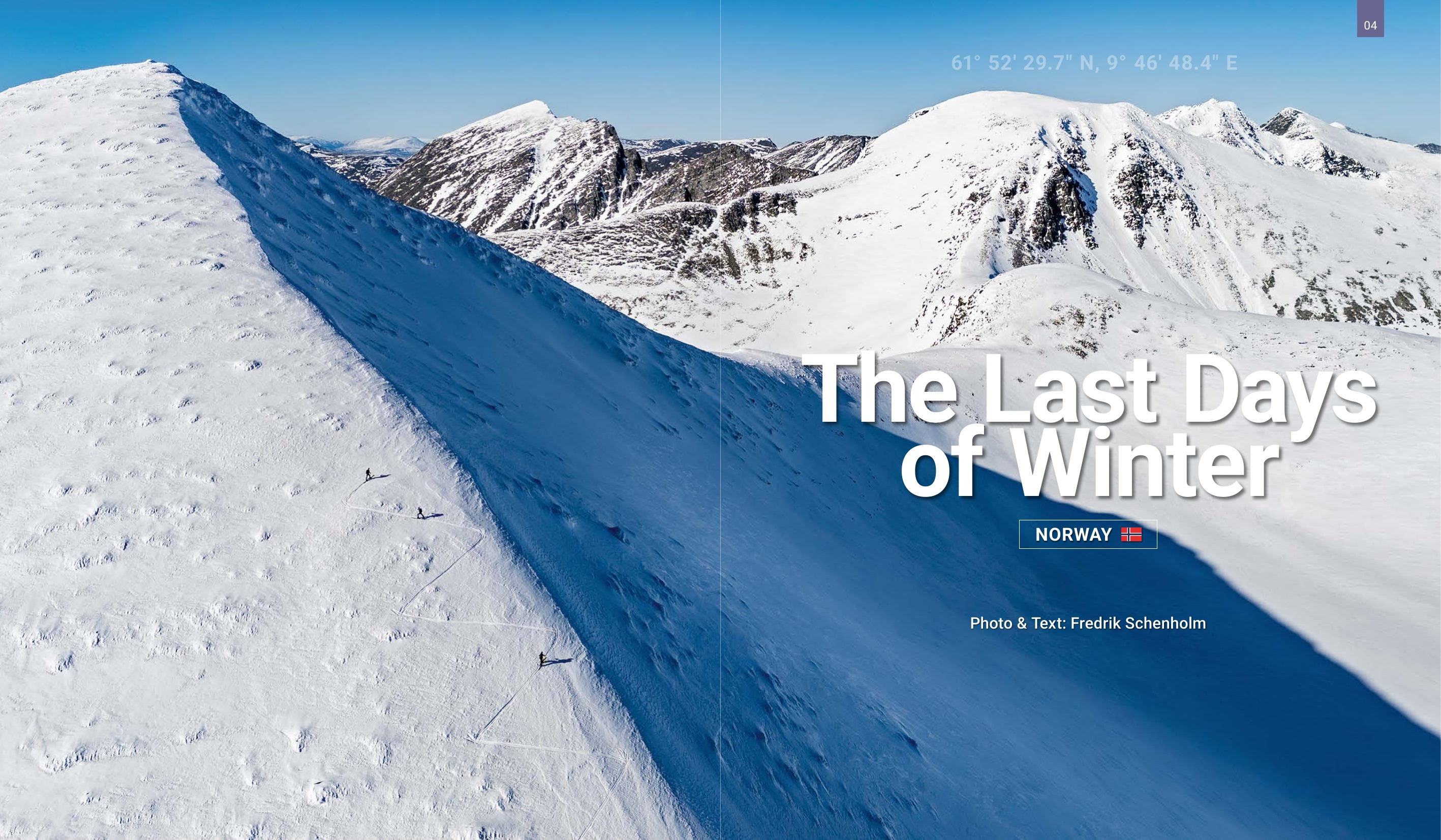
Norway’s oldest national park is a place where the mountains still set the rhythm of life. Established in 1962, Rondane National Park protects a vast alpine wilderness with ten peaks over 6,500 feet, making it one of the country’s most iconic landscapes. In early May, Rondane is in a transitional …
Norway’s oldest national park is a place where the mountains still set the rhythm of life. Established in 1962, Rondane National Park protects a vast alpine wilderness with ten peaks over 6,500 feet, making it one of the country’s most iconic landscapes. In early May, Rondane is in a transitional period between the seasons. While the valleys turn green and the rivers swell with meltwater, the high plateau remains snow-covered – ideal conditions for a spring ski touring adventure. Many have heard of Rondane, but few have explored it on skis.
Just 186 miles north of Oslo, our journey begins with a fourhour drive to the mountain village of Mysusæter. From there, a 6.2-mile approach leads past scattered cabins and onto the open plateau, where the staffed DNT lodge Rondvassbu welcomes visitors until Easter. After the season, only the self-service winter room remains open. We chose a different kind of accommodation. Carrying tents meant heavier packs, but also complete freedom. With no fixed itinerary, we could follow the weather, choose our campsites and move at the quiet rhythm of the mountains.
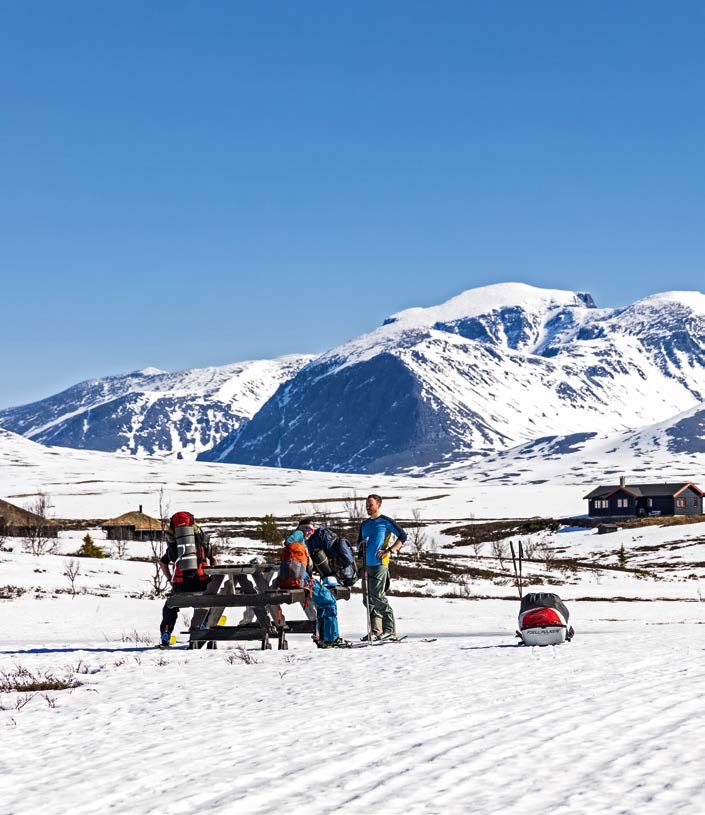
The final road to Mysusæter winds through tight bends. In little more than 20 minutes, green fields give way to snow-covered slopes – a reminder of how quickly spring changes character in the mountains. We park beside the winter road closure and unload our gear. At last, we are ready for Rondane, a place we have dreamed of skiing for years. There are four of us: Fredrik, Henrik, Johan and me. Living in different parts of Sweden has made planning complicated, but as we sort our equipment, everything falls into place. Soon we are pulling our sled, carrying heavy backpacks along the snow-covered road. After half an hour, we stop at a bench overlooking the national park. The first view reminds us why we came.
Our plan is to continue towards Rondvassbu, leave the pulks there, switch to lighter packs and climb the 7,014-foot Stortinden. With little information about ski mountaineering in Rondane online, most of our planning has been done with the map on ut.no/kart. One concern remains: Stortinden faces west, directly into the prevailing winds. “That must be Stortinden, right?” Henrik asks, screwing the lid onto his water bottle. Peak after peak rises across the horizon. “Yes,” Johan replies, looking up from the map. “And it doesn’t look promising.” Snow has been stripped from the eastern ridges, exposing dark rock. Johan studies the map again. “What about that one instead?”
We turn towards the western side of the valley, where the mountains hold far more snow. “We could camp halfway to Rondvassbu and climb Ljosåbelgen instead,” he says, pointing towards the elegant, pyramid-shaped 6,391-foot peak. The new plan brings broad smiles. The mountain looks more inviting, and we save at least an hour and a half of hauling heavy packs.
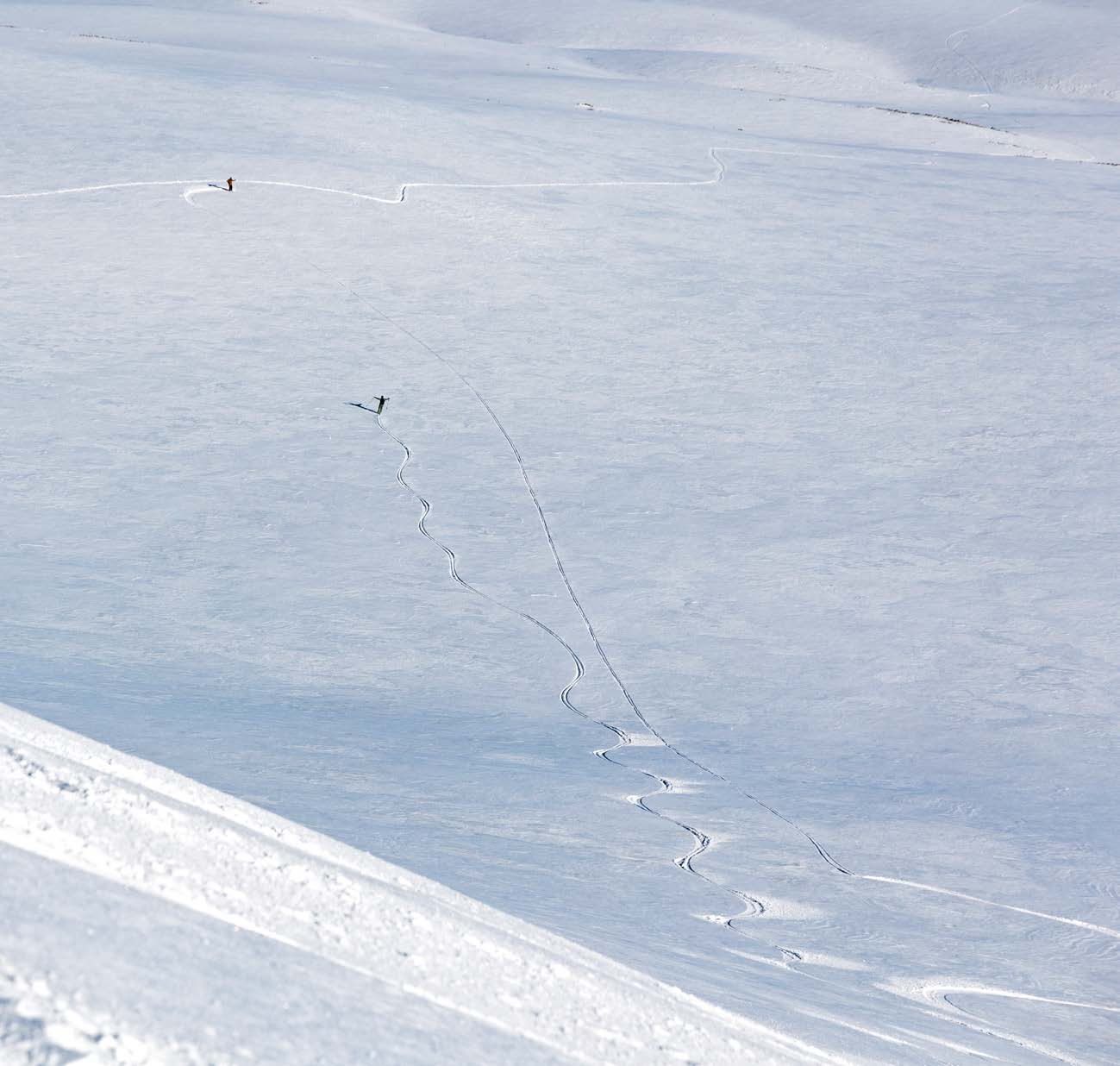
Most visitors explore Rondane on Nordic skis. A network of mountain huts allows multi-day journeys through valleys and across the high plateau, while the classic Troll Trail crosses the area on its 106-mile route to Lillehammer. For ski mountaineers, however, Rondane is rarely an obvious destination. Strong winds, modest snowfall and long approaches make it demanding. Yet those challenges are part of its appeal. Even on a perfect spring weekend, solitude is remarkably easy to find.
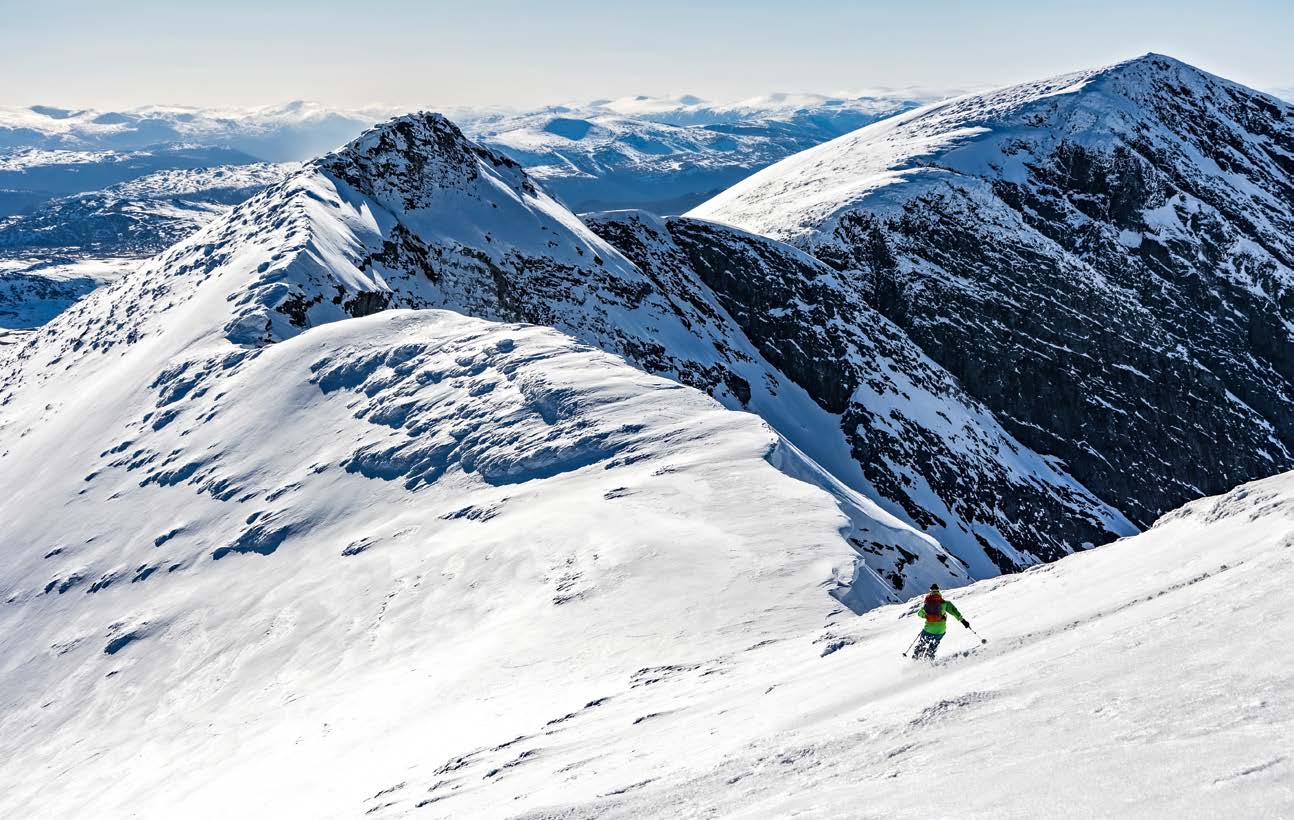
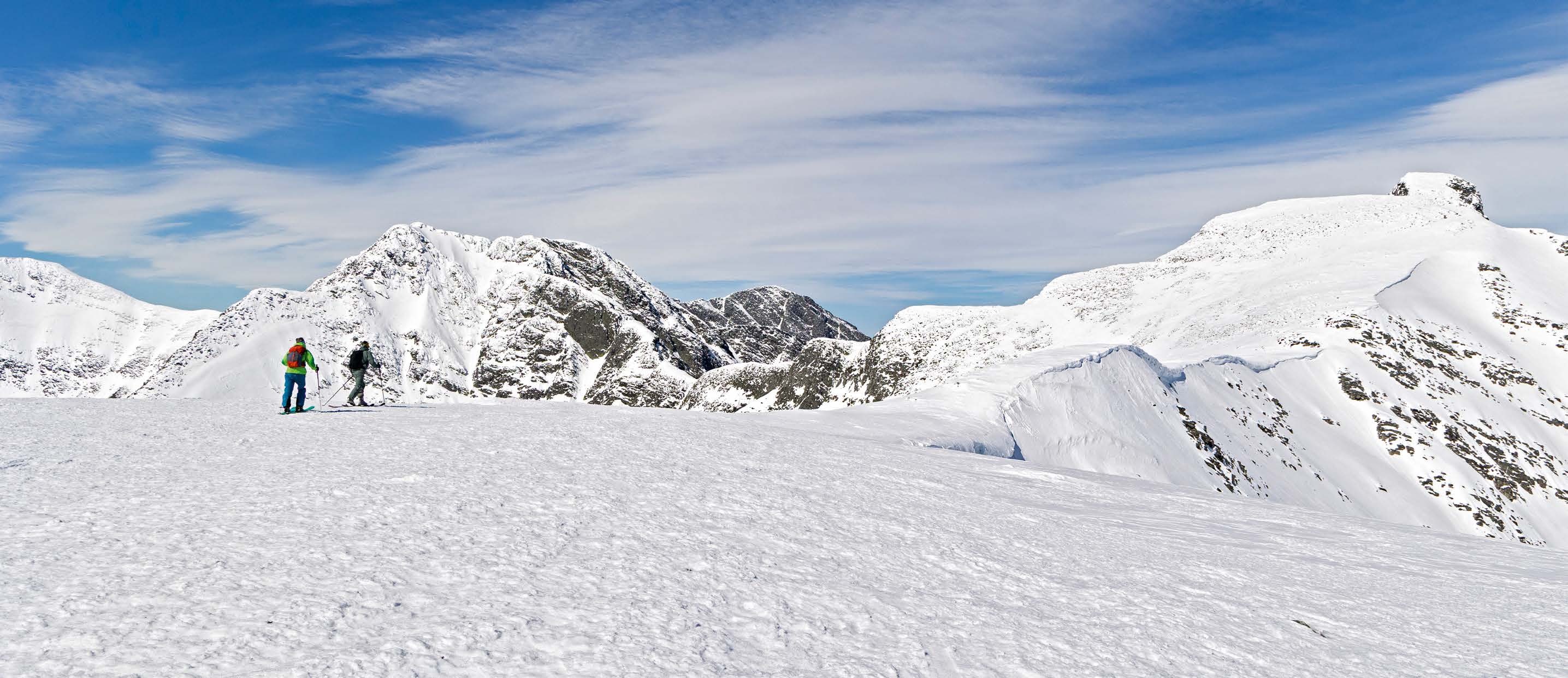
Dropping a heavy pack at camp always brings relief. Once the tents are pitched and lunch is done, we point our skis northwest towards Ljosåbelgen. Two hours later, we stand on the summit, almost 3,300 vertical feet above camp. Rondane’s highest peaks surround us, while far to the west the snow-covered summits of Jotunheimen rise above the horizon. To the south, broad valleys and white plateaus stretch towards the forests below. The descent begins with 1,640 vertical feet of superb spring snow. A soft, sun-warmed surface rests on a firm base, creating conditions many skiers would happily choose over powder. Lower down, the afternoon sun has softened the slopes too much, making one thing clear: this ski mountaineering season doesn’t have many days left.
After dinner – and two medium-sized glasses of whisky – we spread out the map again. Tomorrow’s objective is the 6,611-foot summit of Veslesmeden. Just before sunset, three skiers appear in the distance, gliding steadily towards Rondvassbu. They remain on the valley floor, leaving tomorrow’s summits to us.