USA · Sierra Nevada (Mt. Williamson)
The Sierra Giant
Issue 2017 · Words: Christian Pondella · Photos: Christian Pondella · 5 min read
The Sierra Nevada Mountains in California are home to some of the biggest ski descents in the continental United States. And Mount Whitney, standing the tallest at 4,421 meters, is – without a doubt …
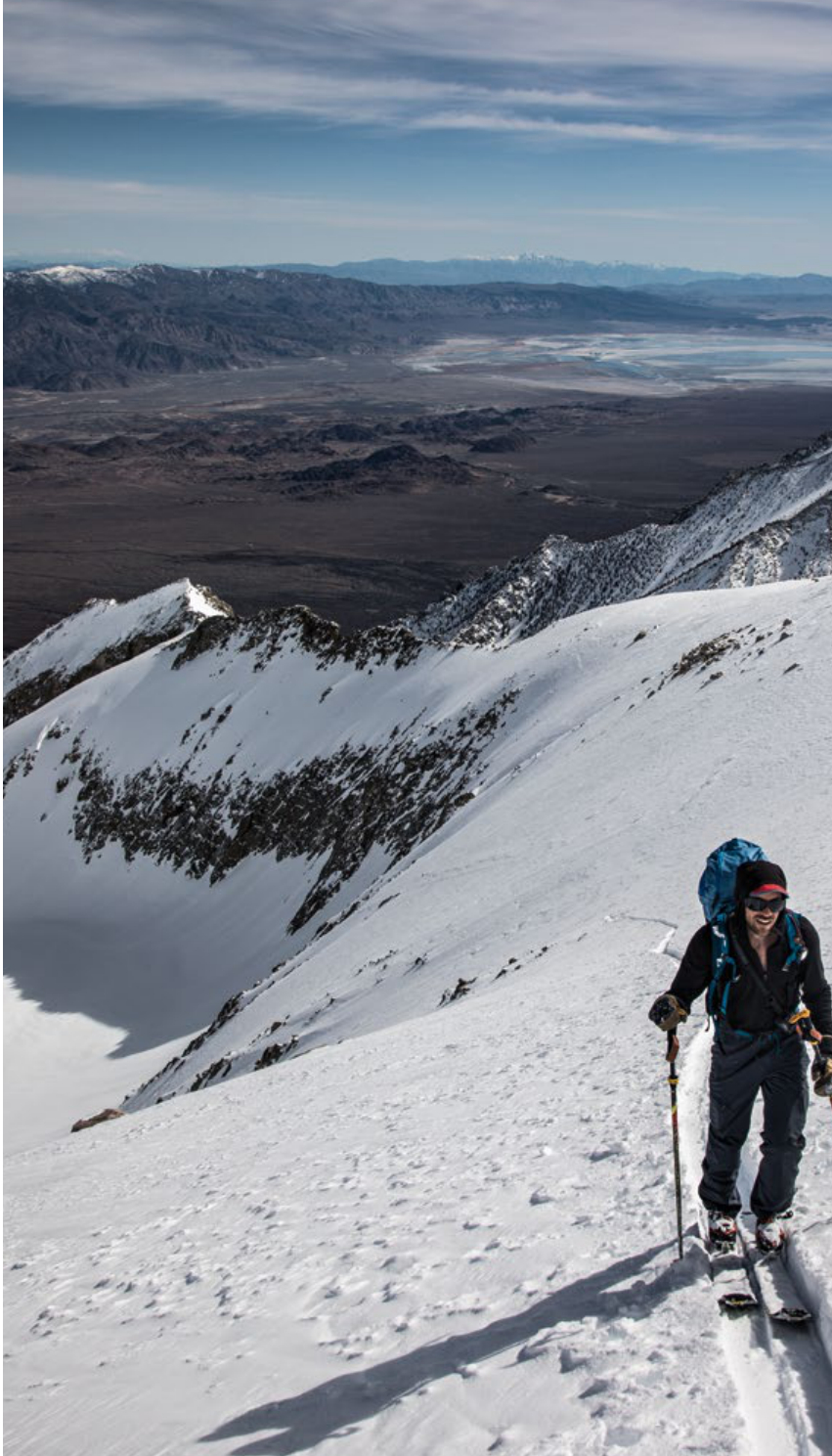
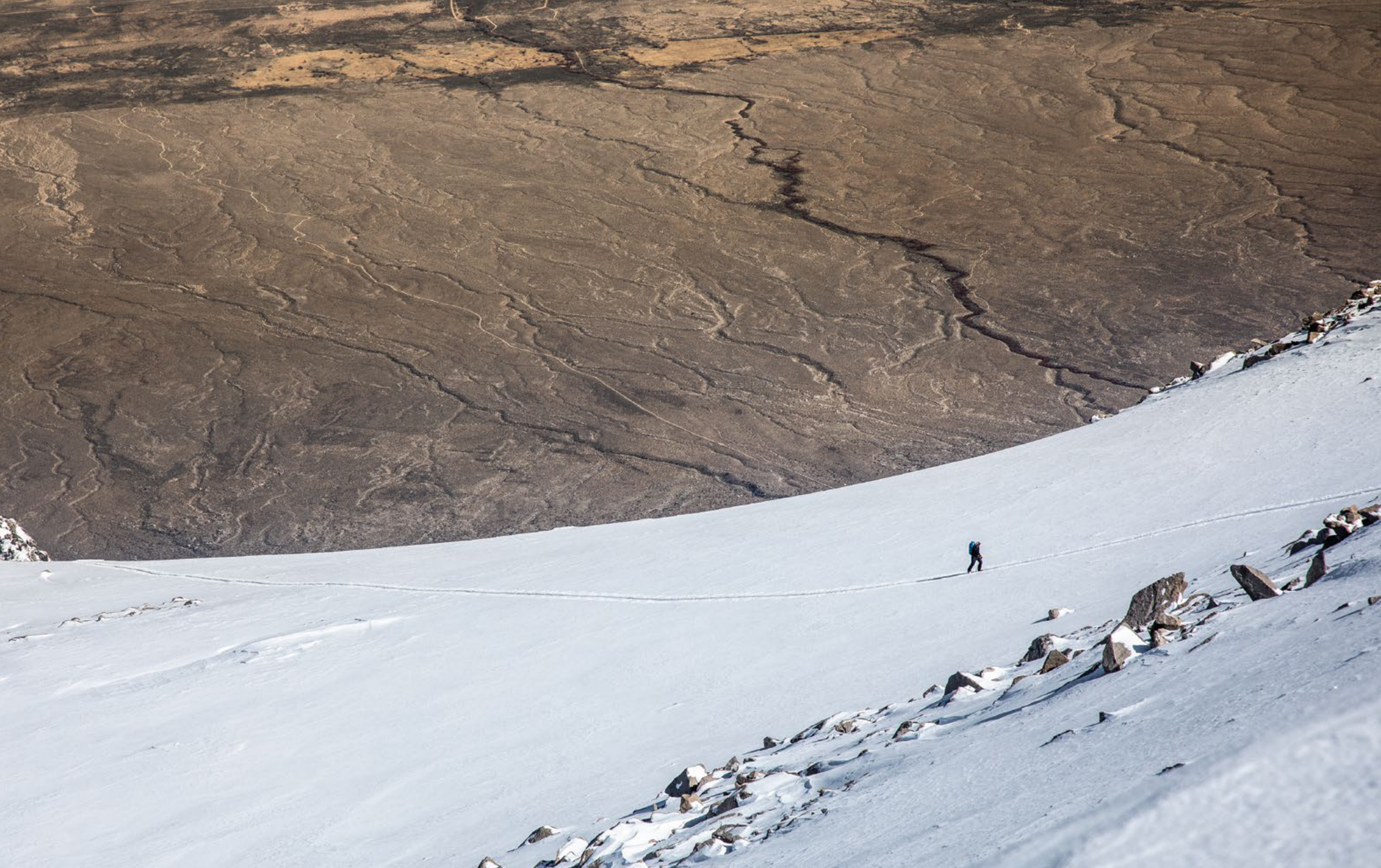
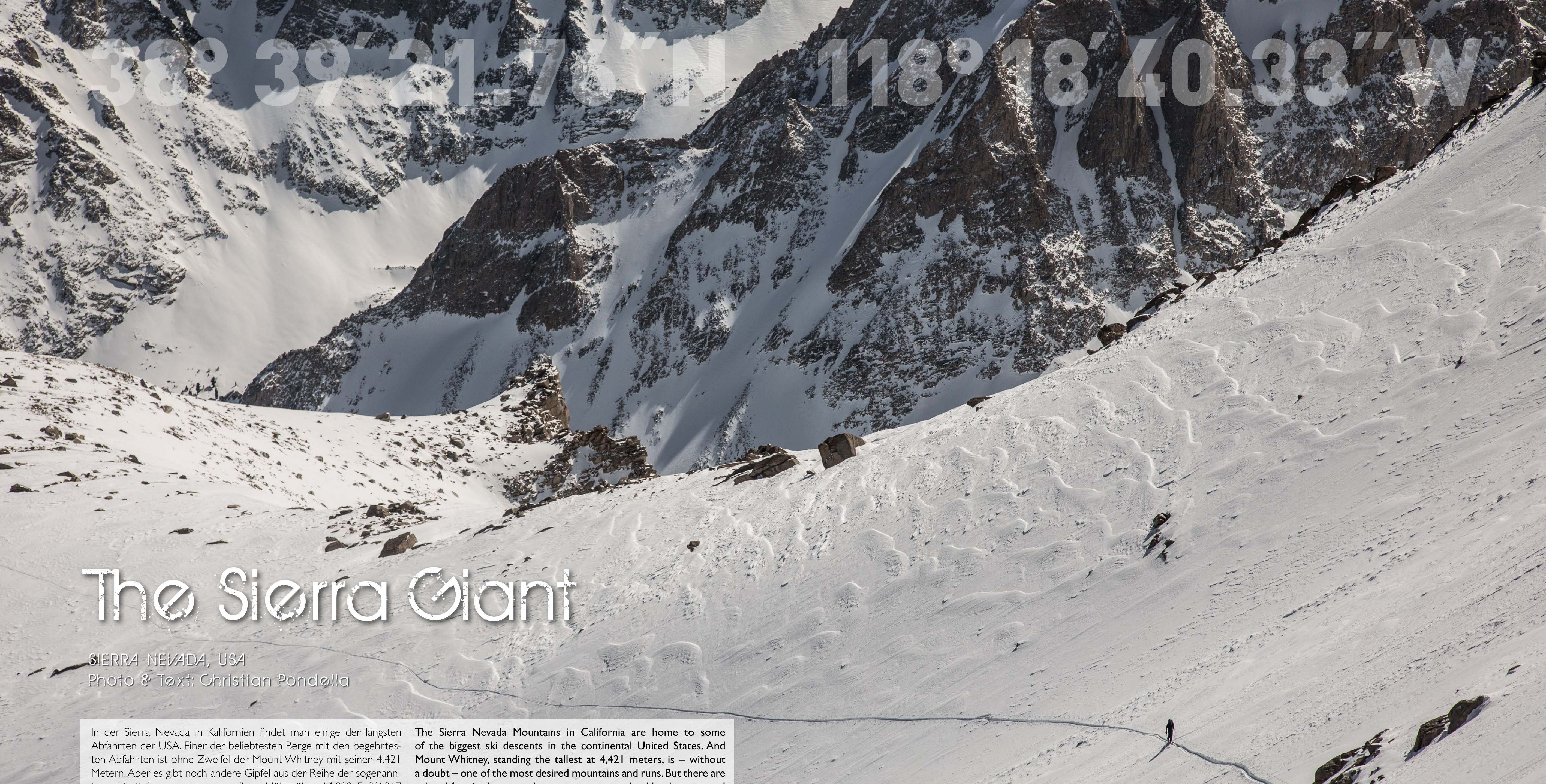
The Sierra Nevada Mountains in California are home to some of the biggest ski descents in the continental United States. And Mount Whitney, standing the tallest at 4,421 meters, is – without a doubt – one of the most desired mountains and runs. But there are other 14ers in the range that are even more valued by the seasoned ski mountaineer. Mount Williamson and its rarely skied north face with the Giant Steps couloir is one of the stars of the Sierra. At 4,267 meters (14,380 feet), this is the only 14er in the range that is not guarded by other mountains, taking you right into the desert of the Owens Valley some 4,383 meters below.
Until the recent 2017 winter, which saw one of the largest snowfalls ever recorded, the Giant Steps most likely logged less than a dozen descents. Ideal conditions require a deeper-than-average snowpack to access the mountain as there are no proper trails or roads that give easy access. The mountain is shielded by big desert canyons, which typically do not receive much snow. The result is a very strenuous approach involving bushwhacking and dozens of creek crossings. For a clean descent, deep snowpack is needed to cover up rocks and cliff bands on the north face. Backcountry skiing has a long history in the Sierra Nevada, but it seems to be less documented than in other mountain ranges throughout the USA.
Two of the pioneering forefathers of the Sierra were Norman Clyde and John Muir, and it's likely to see their names gracing peaks and wilderness zones on the map. Many of the first descents happened unnoticed, and hence they were named after historical figures. One example would be the Clyde Couloir on Norman Clyde Peak, the North Couloir of Mount Emerson. But many peaks have no name at all. Dave Braun is the first known person to have skied the Giant Steps in 1998. He had several failed attempts before finally piecing the puzzle together and finding his way to the entrance of the couloir. He even took photos to prove his incredible feat.
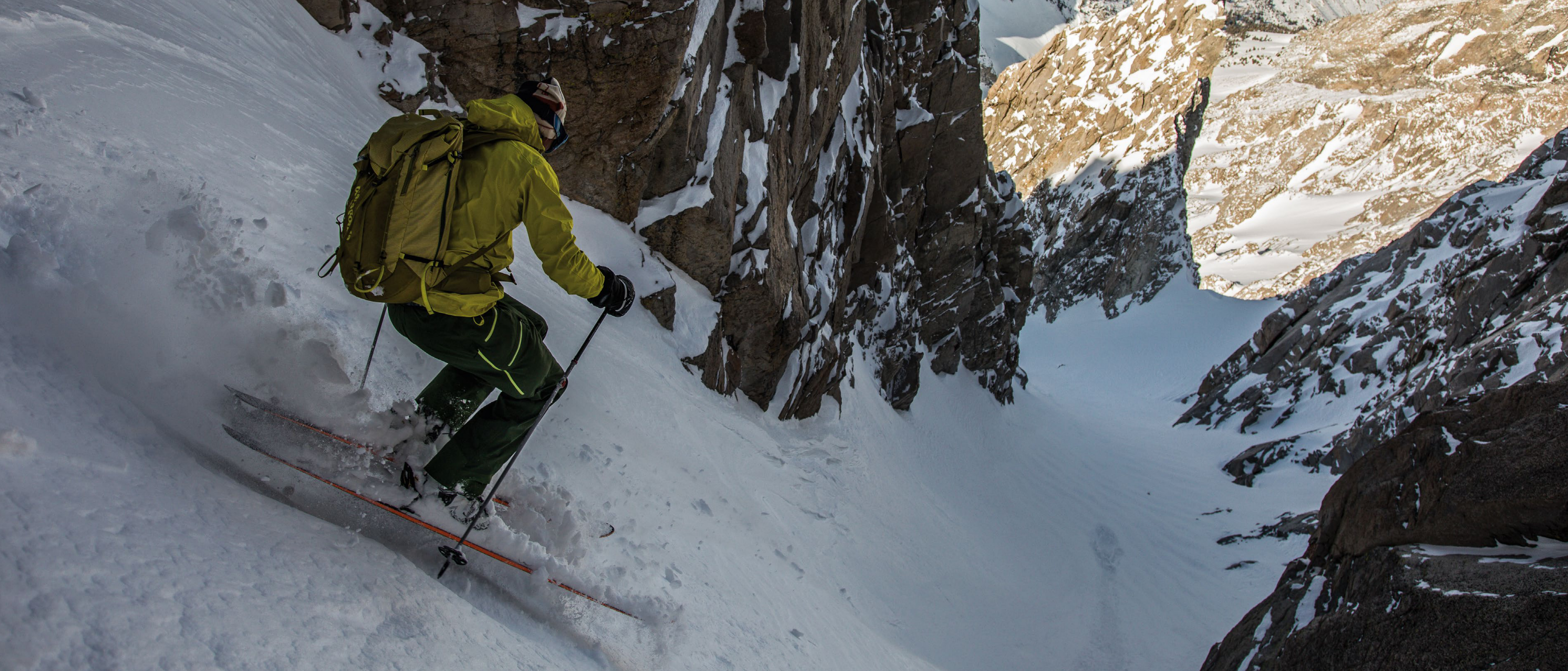
However, it's possible that some guy in the 1970s or 1980s under the influence of LSD may have skied it on a pair of 215-centimeter skinny skis with three-pin bindings and leather boots, his achievement then disappearing into oblivion. The Giant Steps is a couloir with a highly visible syringe-like peak above it. It leads through the granite corridors of Mount Williamson's North Face. The run is separated by huge notches, hence the name "Giant Steps." It was Braun's determination that allowed him to find his way to the entrance of the couloir. By trial and error and after several days of failed attempts, he finally managed to stand on top of the Giant Steps.
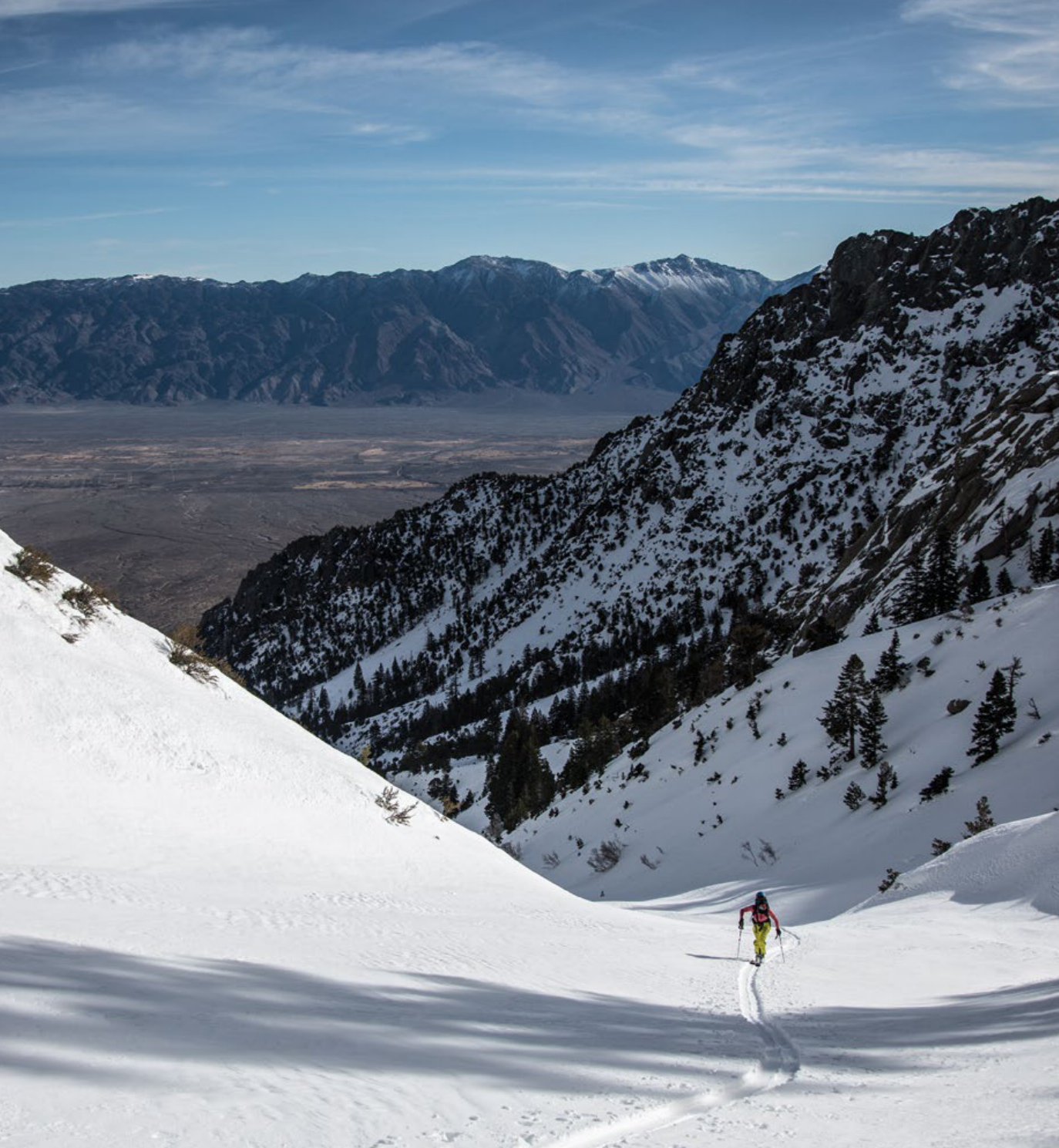
Today, with better knowledge of the routes as well as lighter and more advanced touring gear, this beast of a mountain can be skied in a day. During huge winters the snow reaches the desert, and massive avalanches will help fill the canyons and cover up the shrubs. With proper route selection, you can put on your skis at the base, travel light and fast and stand on the summit after less than six hours. Back in 2005, when the Sierra got pounded by snow during January and February, myself and several friends were fortunate enough to ski the Giant Steps. Before the days of social media and a wealth of information at your fingertips, our only intel came from a friend who had flown over the range taking a photo of the mountain.
We realized that the best approach was not a grueling overnight mission, but a light and fast strike from the south side to the summit, then skiing the north side, basically circumnavigating most of the mountain. With a second car parked at the other side, we avoided the hassle of walking four to five miles across the desert back to our starting point. Typical for the Sierra, the conditions were quite inconsistent. The latest storm had left a perfect blanket of heavy wet snow that covered all the willows, bushes, and shrubs, making things a little bit easier. Creek crossings became a lot easier, and we were able to ski all the way to our truck.
I documented the day with a roll of film, which was lucky enough to make it down the mountain – and so was I. Above the second step, the zone with the biggest exposure still below us, my camera strap broke, and my camera started tumbling towards the abyss. With cherished images already captured on that film and my camera heading for certain death, I decided to race after it like a superhero. After the first failed miss of catching my camera, I had one more chance before running out of real estate. Fortunately, I was finally able to grab it and come to a halt while I still had snow underneath my skis. Eventually, a few of the images were published in magazines the following winter.
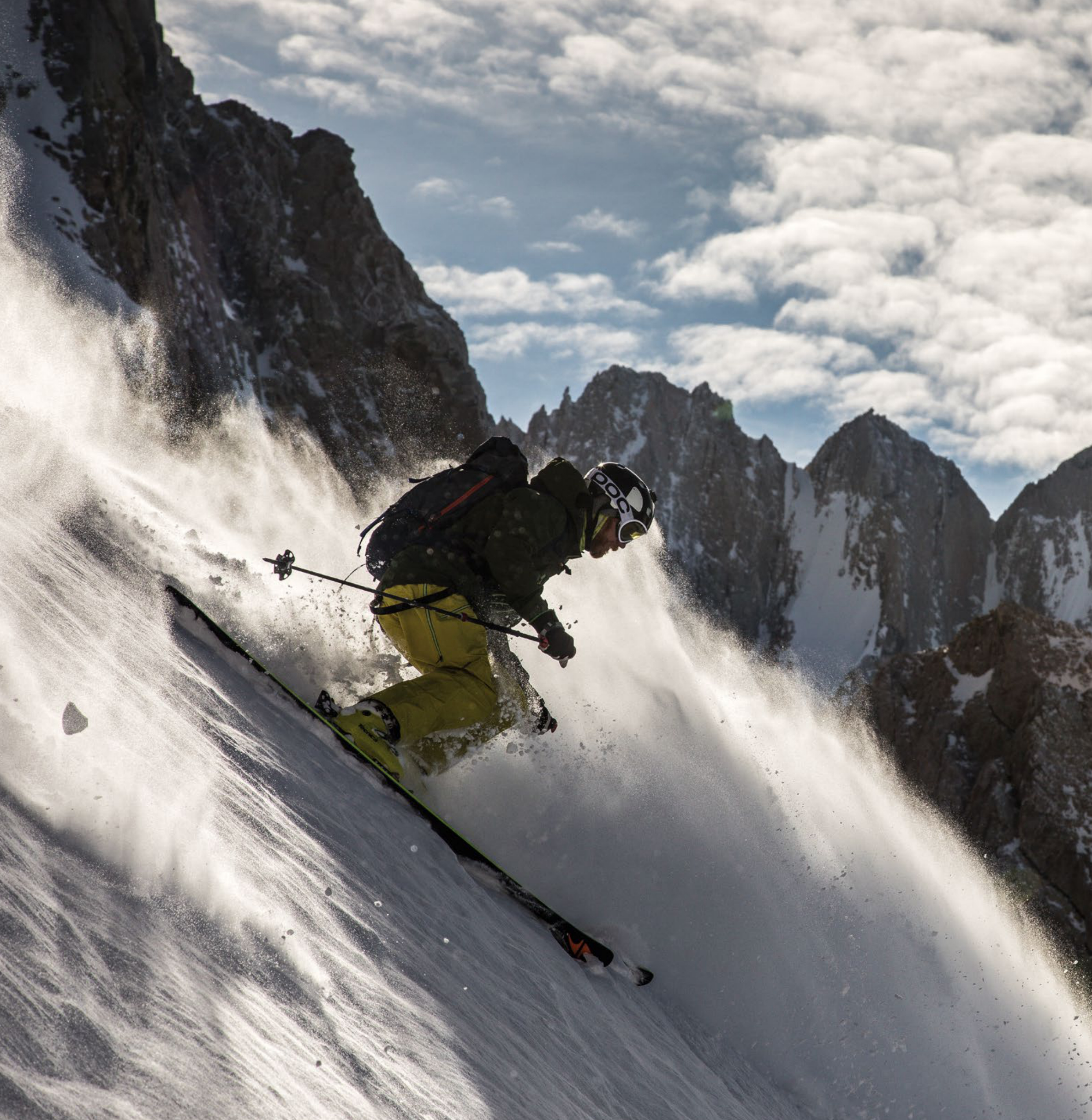
Fast forward twelve years to the modern days of social media, webcams, blogs and Internet forums with up-to-date information and live snow reports. The Sierra had just received record snowfalls in January, and it didn't stop pounding in February. The first high pressure was forecasted after the latest storms had already piled up some 6 to 9 meters. It was time to hit the big mountains. We knew we didn't have a lot of time before others would lay some tracks. Conditions were at an all-time high in the Sierra, with a fresh blanket of pow and no wind to scar the slopes. On this day in February of 2017, myself and four great friends found ourselves standing right there, at the top of the Giant Steps.
The snow was pristine, pretty much what you see on the covers of magazines. We had already earned our turns, now looking straight down into the couloir. One by one, we dropped in, and 2,750 vertical meters later, we found ourselves drinking cold beer in the desert.