USA · Olympic National Park (Mt. Olympus)
Tour of the Gods
Issue 2018 · Words: Jason Hummel · Photos: Jason Hummel · 5 min read
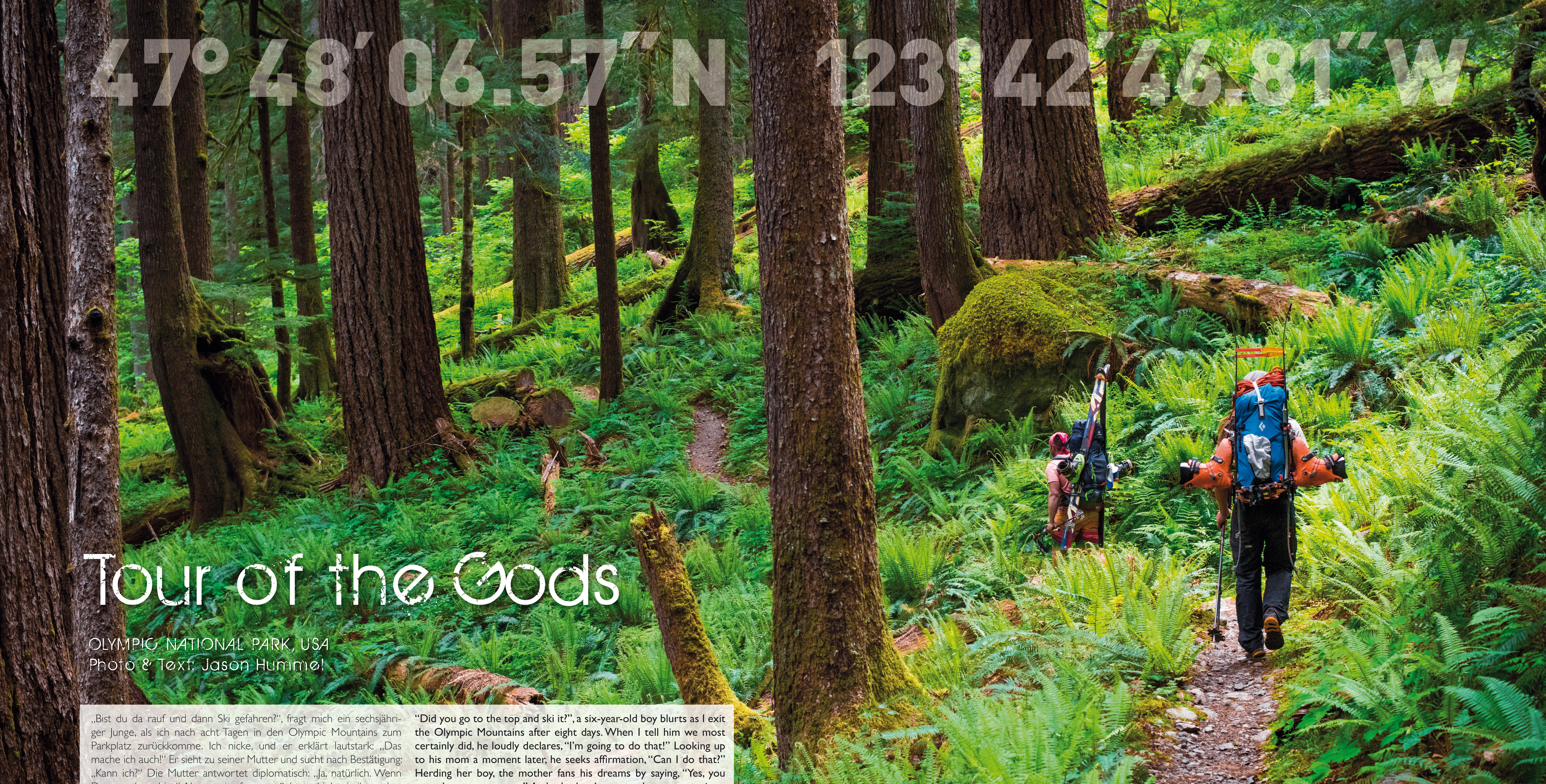
"Did you go to the top and ski it?", a six-year-old boy blurts as I exit the Olympic Mountains after eight days. When I tell him we most certainly did, he loudly declares, "I'm going to do that!" …
"Did you go to the top and ski it?", a six-year-old boy blurts as I exit the Olympic Mountains after eight days. When I tell him we most certainly did, he loudly declares, "I'm going to do that!" Looking up to his mom a moment later, he seeks affirmation, "Can I do that?" Herding her boy, the mother fans his dreams by saying, "Yes, you can when you grow up." As he looks about to ask more questions, she shoes him off. "Now leave the skiers alone." As the kid disappears into the forest with family, my memories join him, reversing back through days of sweat and shoulder-crushing packs, as heavy as a bear and twice as mean, to relive an adventure of a lifetime.
Fortunately, recollection is like an LP record that skips past suffering and focuses purely on the best soul-soothing summits and descents. According to "Gods and Goblins: a field guide to Place Names of Olympic National Park", the name Mount Olympus comes from John Meares, an English captain who viewed the peak from the deck of his ship, the Felice Adventurer, in 1778. Alternatively, to the Quileute Indians, the Olympic Mountains were known as O-Sky, but unlike Olympus, the meaning of that word has been lost, as so much native culture, to the ravages of time and White Man's conquest of the Americas. Modern day exploration of Mount Olympus by climbers took another century to begin.
The first parties to attempt a summit failed to surmount the highest point and, presumably, mistook sub-summits as their ultimate destination. Only in 1907 did a team of eleven Seattle mountaineers summit the West Peak, the tallest point on the massif, and become the first to stand atop Mount Olympus. For skiers, another half century passed before IGY (International Geophysical Year) scientists built a research station near the Blue Glacier in 1957. In the 1959 Mountaineer's Journal is an entry that reads, "During the winter months the heavy snowfall required the use of skis as several trips were made each month to the [Blue Glacier] cirque to survey movement stakes in the accumulation area."
This was the first time skiing on the peak is known to have occurred. Decades more would pass before skiers approached the peak again with skiing for recreation in mind. The earliest mention comes from Lowell Skoog's ski history website, alpenglow.org, where he lists a July 1979 ski trip via the Hoh River. Subsequent skiers in years to come rarely deviated from this route. Lowell himself was likely the first to come to Olympus from somewhere other than the Hoh Valley with skis. His route extended the Bailey Traverse from Bear Pass to Blizzard Pass via the Humes Glacier and Camp Pan to Olympus in 1989.
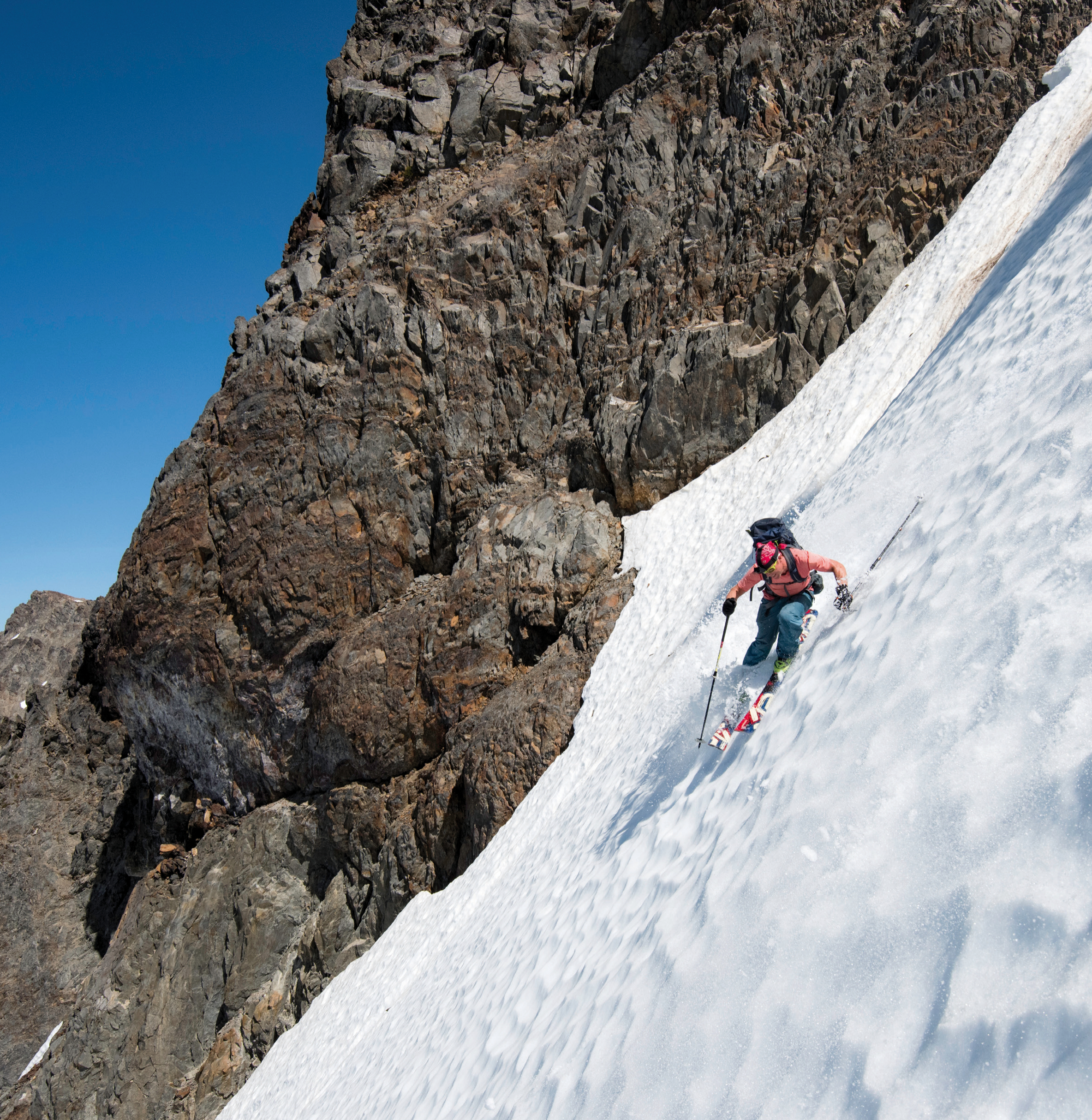
I retraced his journey from the Bailey's in 2011 but included the Olympus Traverse (a 1938 climber's route that tags all three summits of Olympus) and descent of the East Peak of Olympus. Much of the terrain of that adventure retraced what I'd visited two years earlier. At that time, in the spring of 2009, I spent seven days camping atop the Snow Dome, during which I skied the North Face of Athena, North Face of the Middle Peak, SW Face of the West Peak, and West Face of Hugin, located in the mythical Valhallas. Between these adventures on skis, I was content never to carry boards to Olympus again, but my Washington Glacier Ski Project rekindled my interest. Pretty soon, I discovered more about the peak than I'd known before.
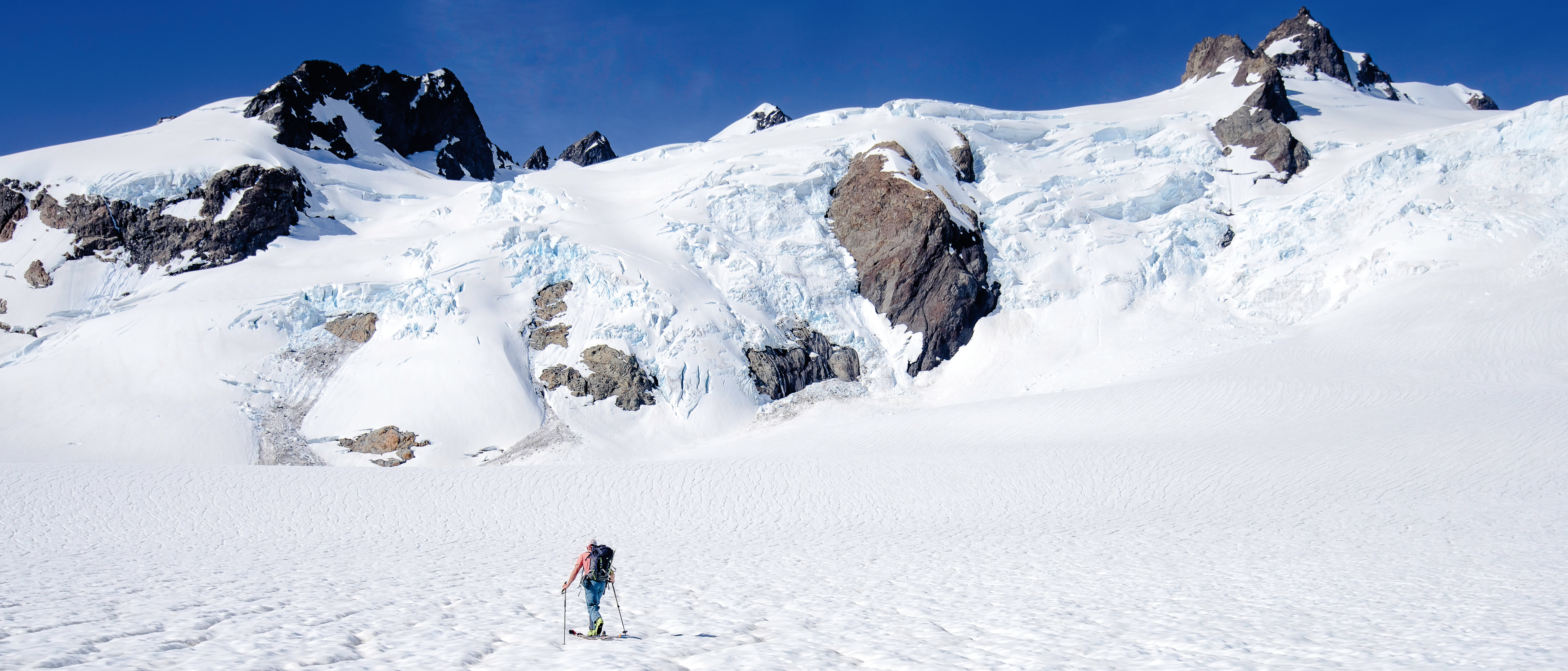
For example, its 2,420 meters stature could be considered short, but in the U.S., it's the 26th most prominent peak in the country. Even more surprising is the fact that it's also the third most glaciated peak beside Mount Rainier and Baker outside Alaska! This was meaningful to me as I'd set a goal of 20 new glaciers visited a year, with a hoped-for project completion date of 2020. Given that there are around 250 glaciers on my list, I'm beginning to run out of locations where I can tag more than a few glaciers per excursion. Olympus was an exception to the rule. Even with my previous trips there, I'd missed six glaciers! Upon closer inspection, I discovered that tagging all six in one go wasn't going to be easy.
Convoluted terrain, large bergschrunds and conditions were only the obvious difficulties. No matter how I cut it, inclement weather was the biggest determiner of success. Per year, over 500 centimeters of moisture accumulates on Olympus, mostly as snow. If measurements were taken, it'd likely rank as the snowiest place on Earth. All things being equal, my goal on this adventure was to nibble at the corners, to ply away at the glaciers that nestle between cliff and icefall, waterfall and jungle. It was to go to the farthest place out there, and ski off the backside.
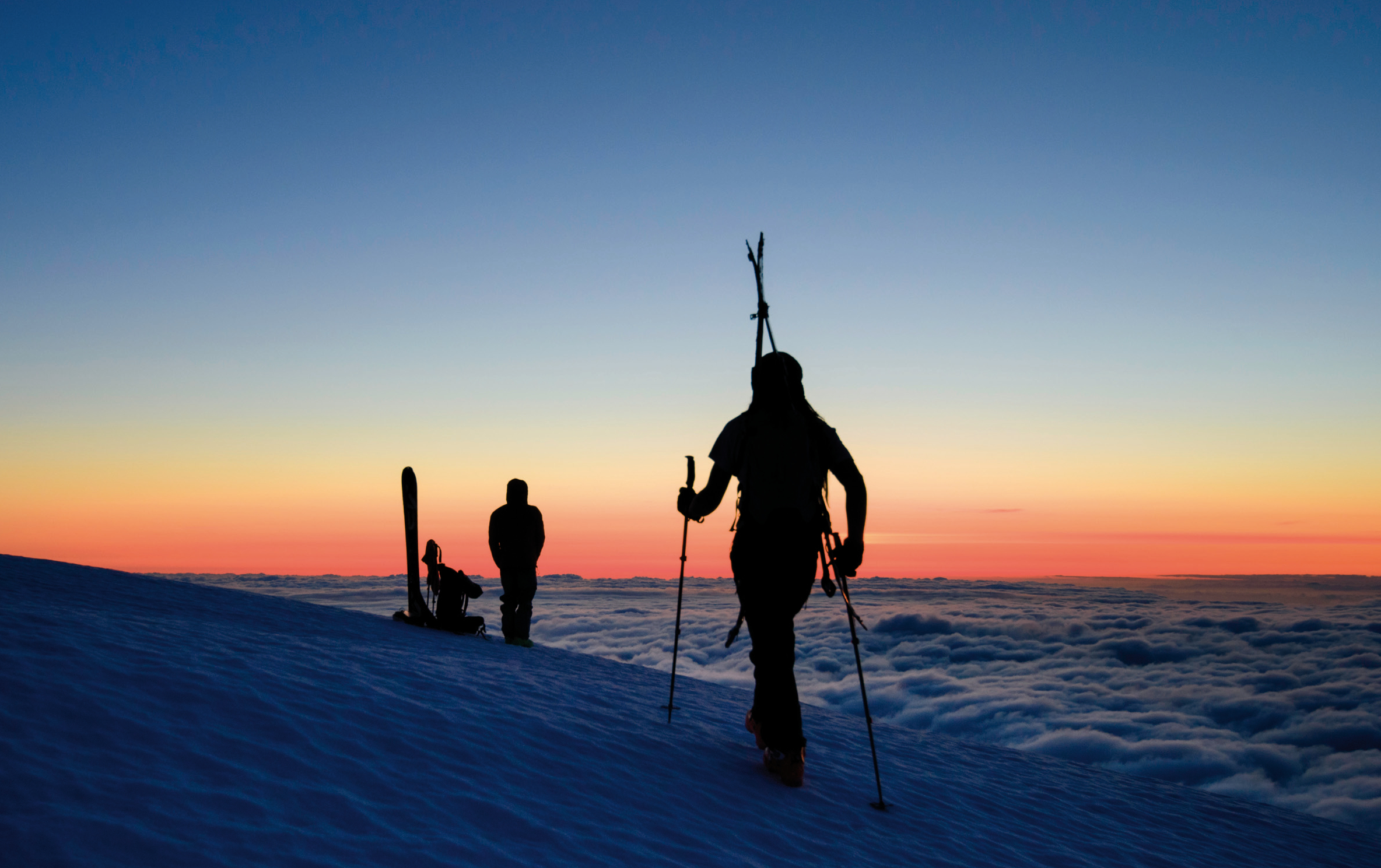
In the forthcoming eight days, Carl Simpson, Jake Chartier and I would do just that – completing two pioneering descents down Mercury Peak and Athena II, and the first circumnavigation of Mount Olympus. Most importantly, I'd ski on all six glaciers I'd aspired to reach: Black, White, Ice River, Jeffers, University and Hubert. Between those adventures, it's likely that we skied more of the Mount Olympus massif than anyone had before us. Coming full circle after 35 kilometers hiking back to our cars, bedraggled and worn from 3,000-meter days that rose before dawn and ended after dusk, we were prepared to drop our packs with a sigh of relief.
This was when the bright-eyed kid at the beginning of this story asked, "Hey, did you go to the top of a mountain and ski it?" If you'll remember, he was excited to know if he could ski mountains. After confirming his suspicions, I silently hoped that someday he would. And that eventually he'd retrace our steps and those that came before us, and draw his own tracks above the jungles of the great and mighty Olympic Mountains.