Pakistan · Nanga Parbat / Spantik
Where the Adventure is Real
Issue 2021 · Words: Tiphaine Duperier · Photos: Boris Langenstein · 5 min read
When does an adventure begin? When you first talk about an idea? At the airport check-in desk? When you catch a first glimpse of the mountains? The road to the high mountains of the Karakoram …
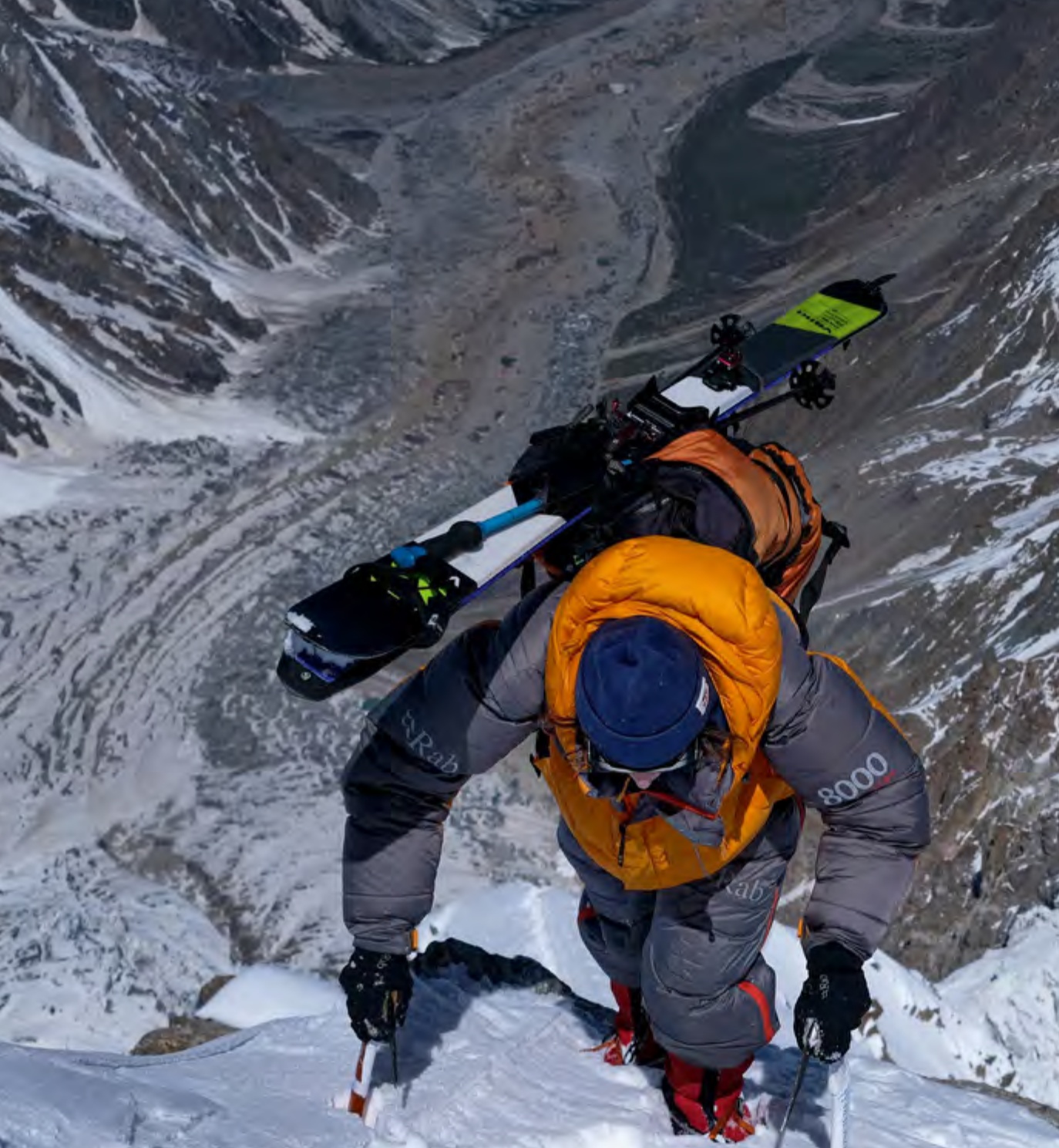
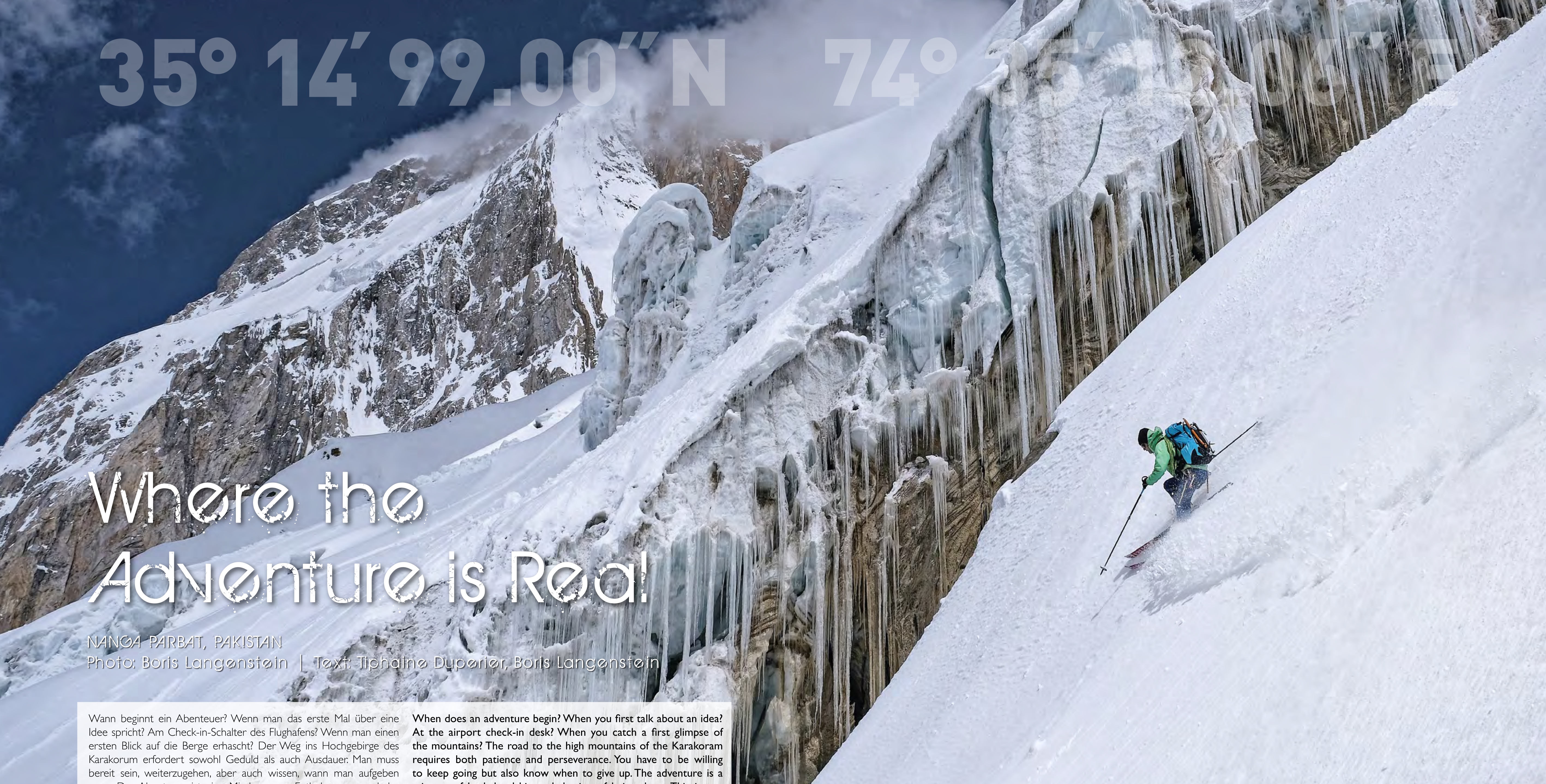
When does an adventure begin? When you first talk about an idea? At the airport check-in desk? When you catch a first glimpse of the mountains? The road to the high mountains of the Karakoram requires both patience and perseverance. You have to be willing to keep going but also know when to give up. The adventure is a mixture of both hardship and the joy of being there. This is our second trip to Pakistan, and we cannot wait to see these peaks with their magnificent lines. This is the story of two old friends who love to spend their vacations on expeditions, preferably on skis. That's how, in 2019, we find ourselves skiing the slopes of the Spantik (7,027 meters) and the Nanga Parbat (8,126 meters). It's the middle of May.
After the logistics are settled, the permits are issued, and the jeep is loaded, the first part of our expedition can begin. In our pink 1970s Land Cruiser, it looks more like we are coming from a summer camp. In the back seat, Nuawas, Muaz and Nazir are smiling and singing to the driver's playlist. They take care of our logistics and especially our kitchen at base camp. After the weighing ritual, max. 25 kilogram per person, we start the trek towards the Spantik base camp with 25 porters from the nearby village. In the evening, the tent is filled with laughter and singing. Shortly after, Nawas, Muaz, Nazir, Tiphaine and I are left alone at camp. The place is beautiful, with mountains all around.
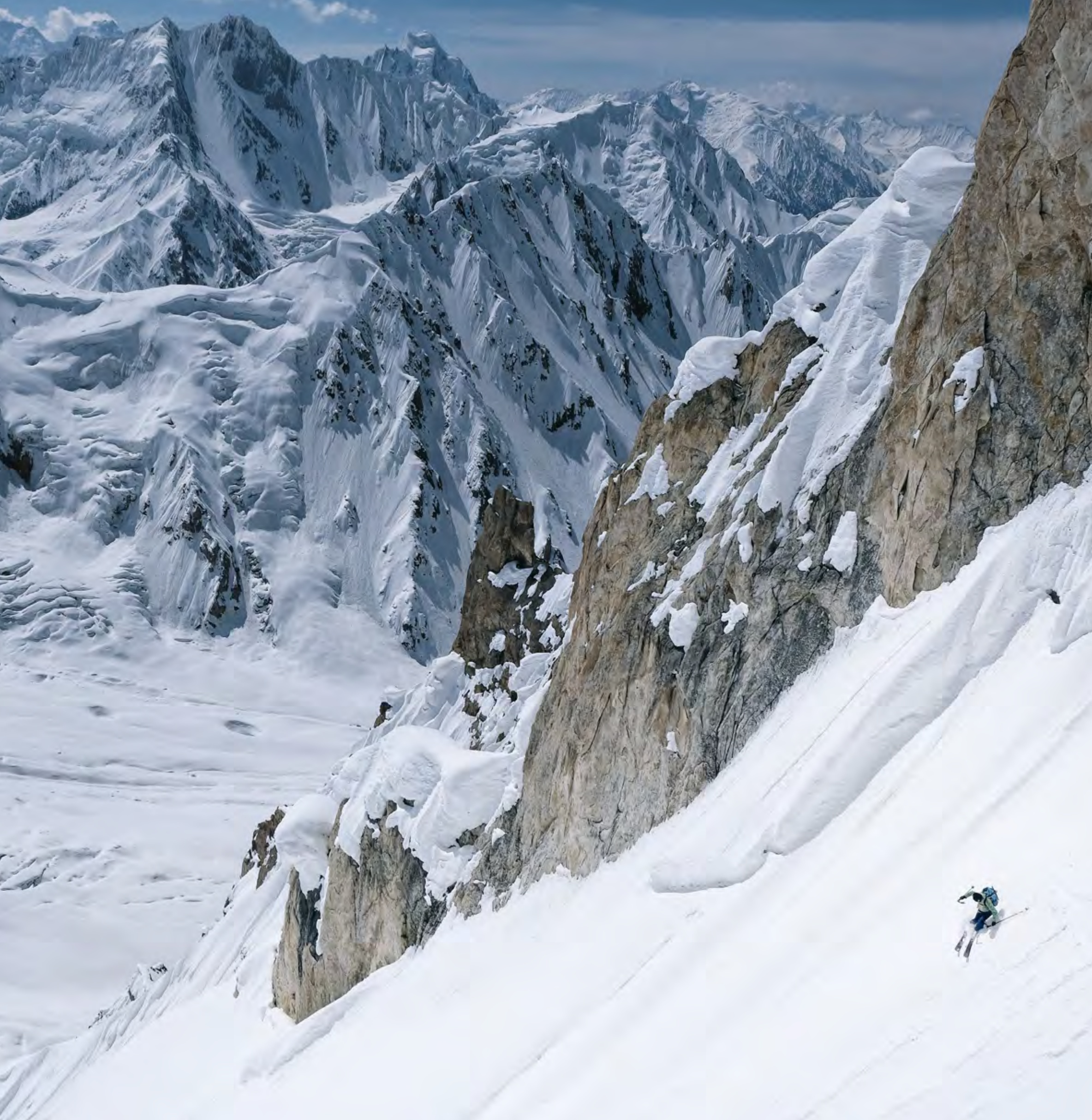
After skiing for three days at 5,000 and 6,000 meters, triggering a few avalanches, collapsing a cornice the size of a small house and climbing two peaks, we return to base camp. Our feelings are mixed. The snow is unstable in all exposures and prone to slab avalanches. When five days of good weather are forecasted, we decide to hike up the mountain. After two nerve-wracking days, we reach Camp Two. Although the trail isn't exposed, the ascent is stressful: on the left is a cornice that can slide off at any time, on the right an avalanche-prone slope. On the third day, the snow is more stable but far from ideal. After a day of constant risk management, we reach Camp Three. We are tired. May 30, "summit day."
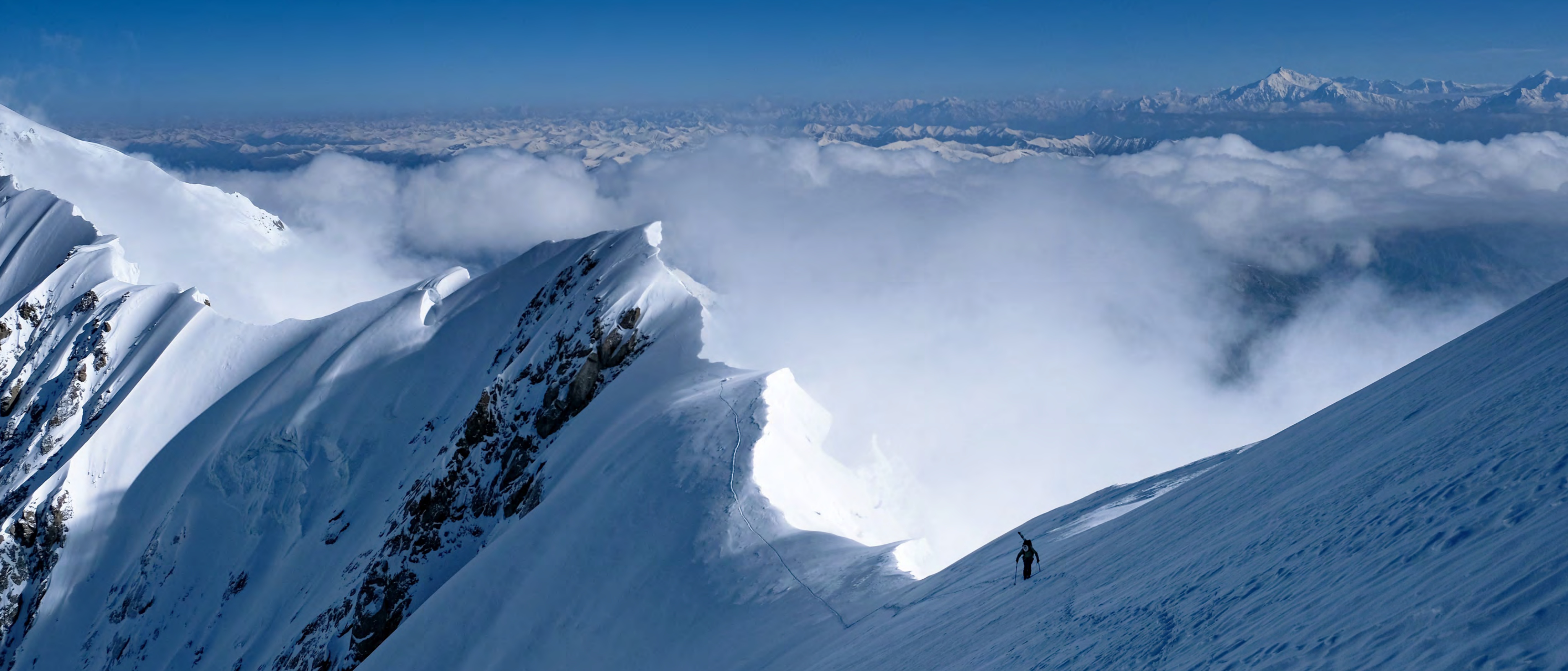
After a poor night's sleep at altitude, we set out at 5 am and head to a large plateau for the last push. It's 1 pm, the sun is shining, no wind, and we have reached the top of Spantik. Tired but happy we enjoy the summit and the mountains that stretch to the horizon. On the descent we choose a direct line straight through the seracs. Skiing countless, fun short turns we return to base camp. Coca-Cola, French fries, cake, songs and dances. We skied the Spantik! June 1st to 9th; the objective: Nanga Parbat. Change of valley, change of scenery. After two days, accompanied by a policeman, we reach the base camp. The place is magical. There are already two teams in the camp.
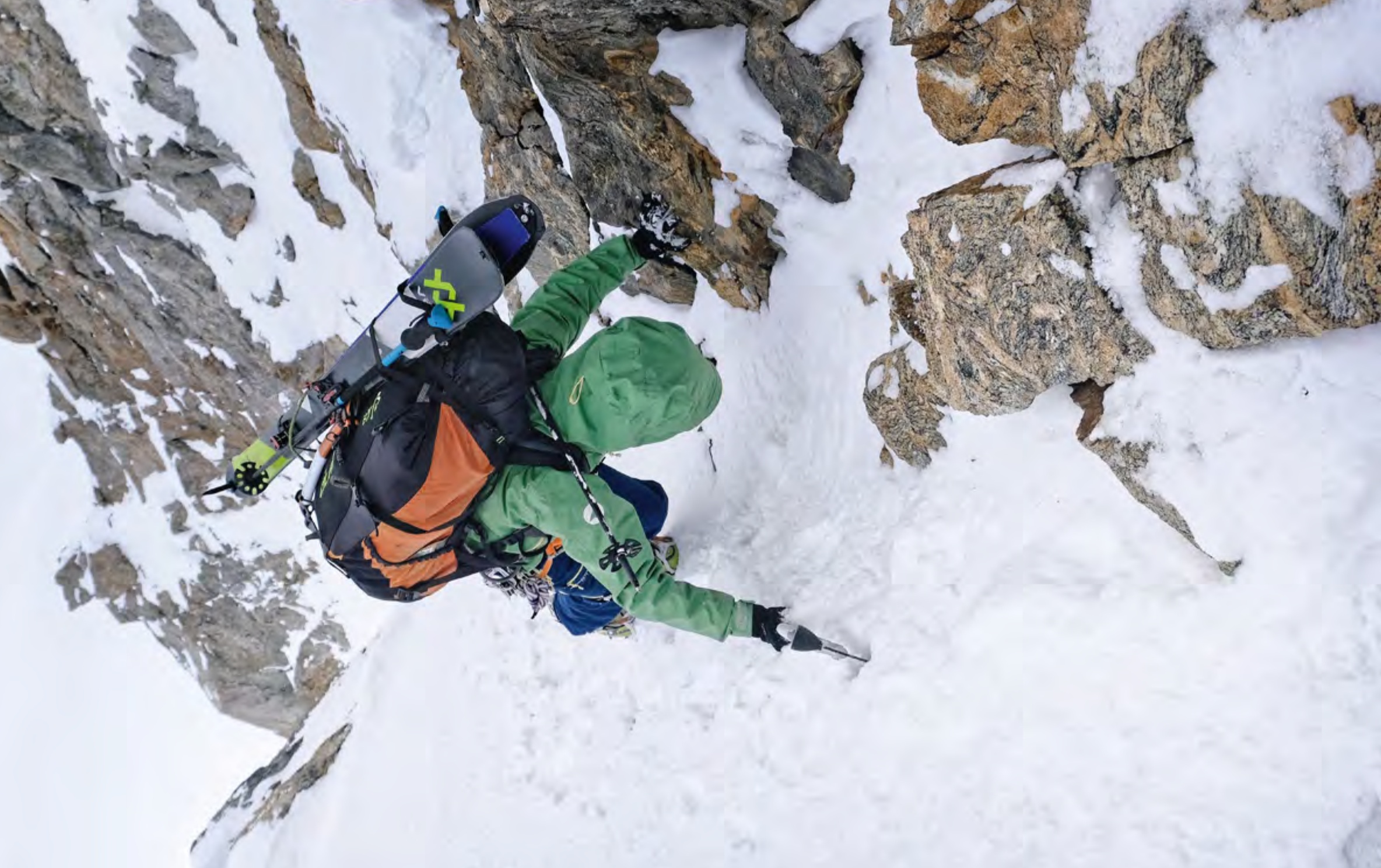
On our first day, we continue to Camp Two to examine the famous Kinshofer Wall, a 150-meter vertical wall, the most technical passage of the climb. Then, for five days, a real battle begins; unfortunately, Pakistan has finally taken grip of my stomach. In the meantime, a snowstorm has dumped more than 80 centimeters of fresh snow at base camp. The face of Nanga Parbat has been swept clean by the wind and is now shiny with an icy surface. To complete acclimatization, we head to the remote side of Diama at about 7,000 meters. The snow conditions are reassuring. After acclimatizing, we wait for the next weather window for our summit attempt, which is supposed to reach us around the 29th.
We take advantage of it, even though it's not perfect, and after three days, we reach Camp Four, after an ascent in changing conditions, with steep slopes and deep snow. We are at 7,250 meters. It's 7 pm. The following day, we leave camp at 5 am, and with less than 100 meters of altitude per hour everything seems way too far away. Around 6 pm we reach 8,000 meters, exhausted. I hike a bit further; my phone indicates 8,040 meters. Visually, the summit seems unreachable. Tiphaine quit a bit sooner. It's late; the weather is mediocre; I also give up. As we descend it's already dark. Using our smartphones as makeshift headlamps we lie sideways on the snow and slide down the ascent track on our skis.
At Camp Four we are already thinking about the next attempt. We need to set out earlier. July 1st; summit attempt number two. We have to re-track, our pace is depressing, and Tiphaine and I take turns in the front, tracking. We are at 7,800 meters. I distance myself from Tiphaine as she tells me she will stop and wait for me. I ask her to return to camp, but she insists on waiting for me in a pit behind a rock. My somewhat foggy brain doesn't object. I am above 8,000 meters. The brittle and deep snow has given way to a hard base; the top seems accessible. At about 8,080 meters, I reach a small pass to the left of the summit where I leave my skis and follow a rocky ridge. It's 5:27 pm. The wind blows hard. I have reached the summit of Nanga Parbat.
Without Tiphaine, the emotions are less intense. A selfie, then I descend back to my skis. On the way down, I pick up Tiphaine, huddled up in her hole. We hug, happy to be back together. Even though our legs are no longer responding properly, the descent is amazing. The sun is shining, the sky on fire, the light magical. At 7 pm, we reach Camp Four again. The next day, we begin our descent. Four nights at 7,250 meters have exhausted our last energy. Below Camp Three, the ice is only covered by a thin layer of snow. We decide to grab hold of the fixed ropes to overcome the critical 100 meters. To bypass the Kinshofer wall we use a variant to its right which Luis Stitzinger skied in 2007. After this passage it all becomes much easier.
We savor our last turns and reach the lower part of the glacier. Muaz and a refreshing Coca-Cola are waiting for us. We have skied Nanga Parbat!