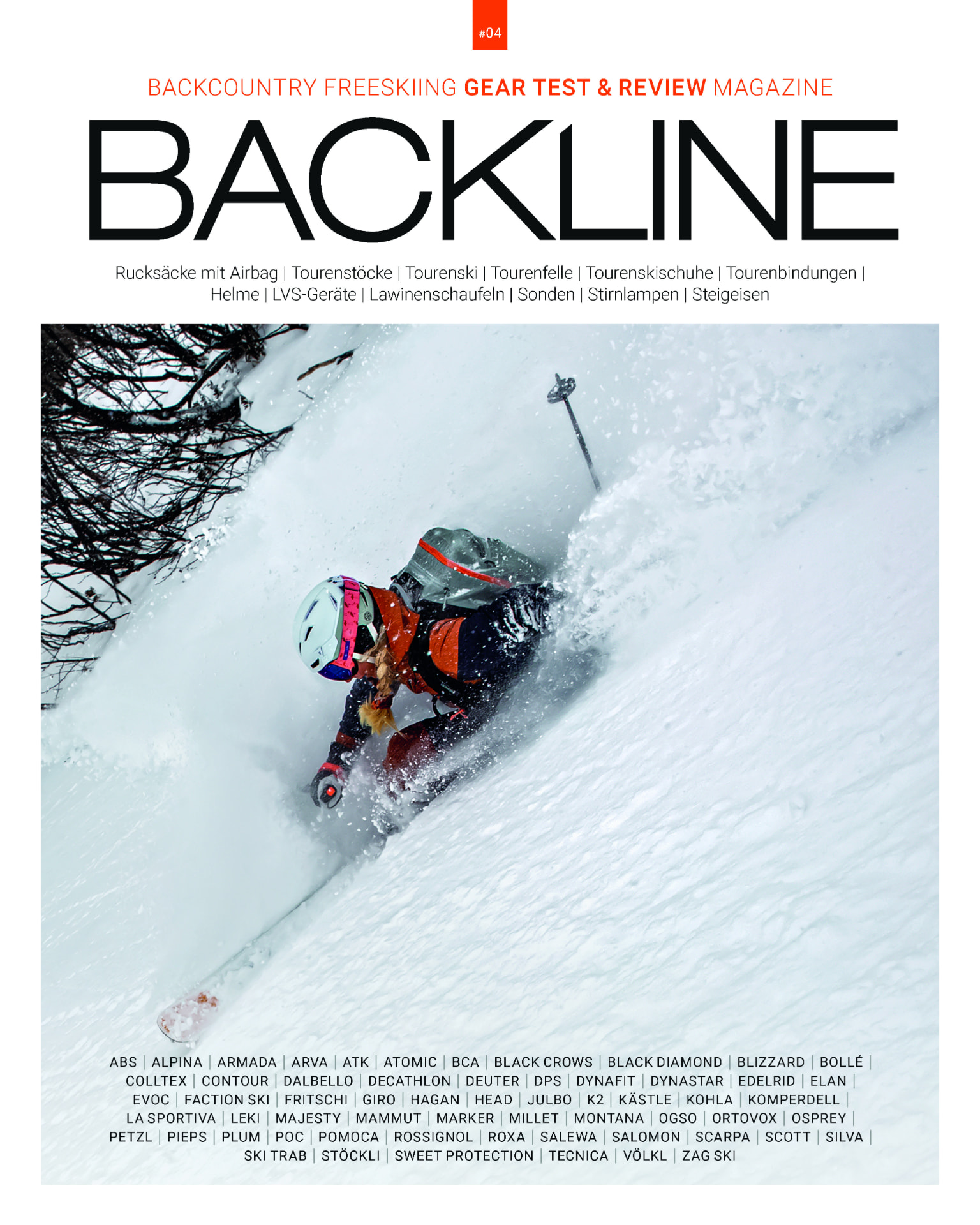
Ski touring skins · Test magazine 2022
Tech talk with Michael Hankl, DYNAFIT / POMOCA
Marketing Manager Germany/Austria · Print page 77
Who is Michael Hankl? Marketing Manager at DYNAFIT and POMOCA
Michael Hankl is introduced in the BACKLINE 2022 test magazine as Marketing Manager for Germany and Austria at DYNAFIT and POMOCA. He has been part of the ski touring specialists’ team since 2017 and also spends much of his winter leisure time ski touring in the mountains. In the interview, he explains how to select, trim and care for touring skins, and discusses their durability.
According to Hankl, experience level and intended use are decisive when buying skins. POMOCA distinguishes between RACE, CLIMB and FREE. He names the Climb 2.0 for ascent-focused touring on gentle terrain, the Climb Pro S-Glide for long alpine tours and the Climb Pro Mohair for very cold snow. For freeriders, he describes the Free 2.0 as an all-rounder and the Free Pro 2.0 as a lightweight, compact option for long tours.
Hankl stresses accurate alignment with ski edges when trimming. He recommends regular adhesive checks, drying skins unfolded at room temperature for 24 hours before storage, and then keeping them somewhere cool and dry. He suggests around 200,000 vertical metres as a possible lifespan, not a universal figure: snow conditions, skin composition and skier weight affect wear.
Which ski skin is suitable for whom, and what questions should be asked and answered before buying new skins?
Our well-conceived range of climbing skins offers the right model for every ski tourer. Pomoca develops skins for ambitious ski mountaineering world champions as well as for beginners. We also offer various climbing skins for freeriders, which have established themselves with athletes like Jérémie Heitz, Eric “Hoji” Hjorleifson, Eva Walkner, and Jackie Paaso. But back to buying and what to consider. The first question to ask yourself is whether you are a beginner or advanced. The second important criterion is the exact area of use. We differentiate between RACE, CLIMB, and FREE and offer climbing skins specifically developed for these three categories. Specifically, for an ascent-oriented touring area with gentle terrain, the Pomoca Climb 2.0 is the best choice because it offers excellent all-round properties at a low weight. Those who want to go higher and plan long tours in alpine conditions are well advised with the Climb Pro S-Glide, as it offers excellent glide and very effectively prevents icing. For very cold snow, e.g., in Canada, we have developed the Climb Pro Mohair. For descent-oriented tourers and freeriders, the Free 2.0 skin is the all-rounder that always performs reliably. For freeriders who are on long and frequent tours, we recommend the Free Pro 2.0; it packs very small and is lightweight.
What should be considered when trimming the skins?
The most important thing when trimming is that the cut precisely matches the ski edges. A cutter is included with our climbing skins. When used correctly, you get the perfect cut.
How should skins be cared for?
The be-all and end-all for climbing skins is the adhesive. You should regularly check if the adhesive is still holding strong. After the ascent, fold the Pomoca skins in the middle, adhesive side to adhesive side. If another ascent is planned, pack the skins under your jacket and keep them close to your body. For storage, let the climbing skins dry open for 24 hours at normal room temperature, then store them in a cool, dry place. You should also ensure that no part of the adhesive is exposed to the air to prevent dust from accumulating on it. With good care, climbing skins will last several years.
On average, how many vertical meters / ski tours can a well-maintained skin withstand before it likely needs to be retired?
There is no blanket answer to this question. It depends on several factors. For example, snow conditions, ice, and artificial snow stress a skin significantly more than fresh snow. In good conditions, the lifespan is much longer. I would say a skin should be able to withstand around 200,000 vertical meters. The composition of the skin also plays a significant role. A nylon skin lasts almost forever, while a race skin is replaced after a few uses. The tourer's body weight also affects the durability of the skins. Heavier skiers wear out skins faster.