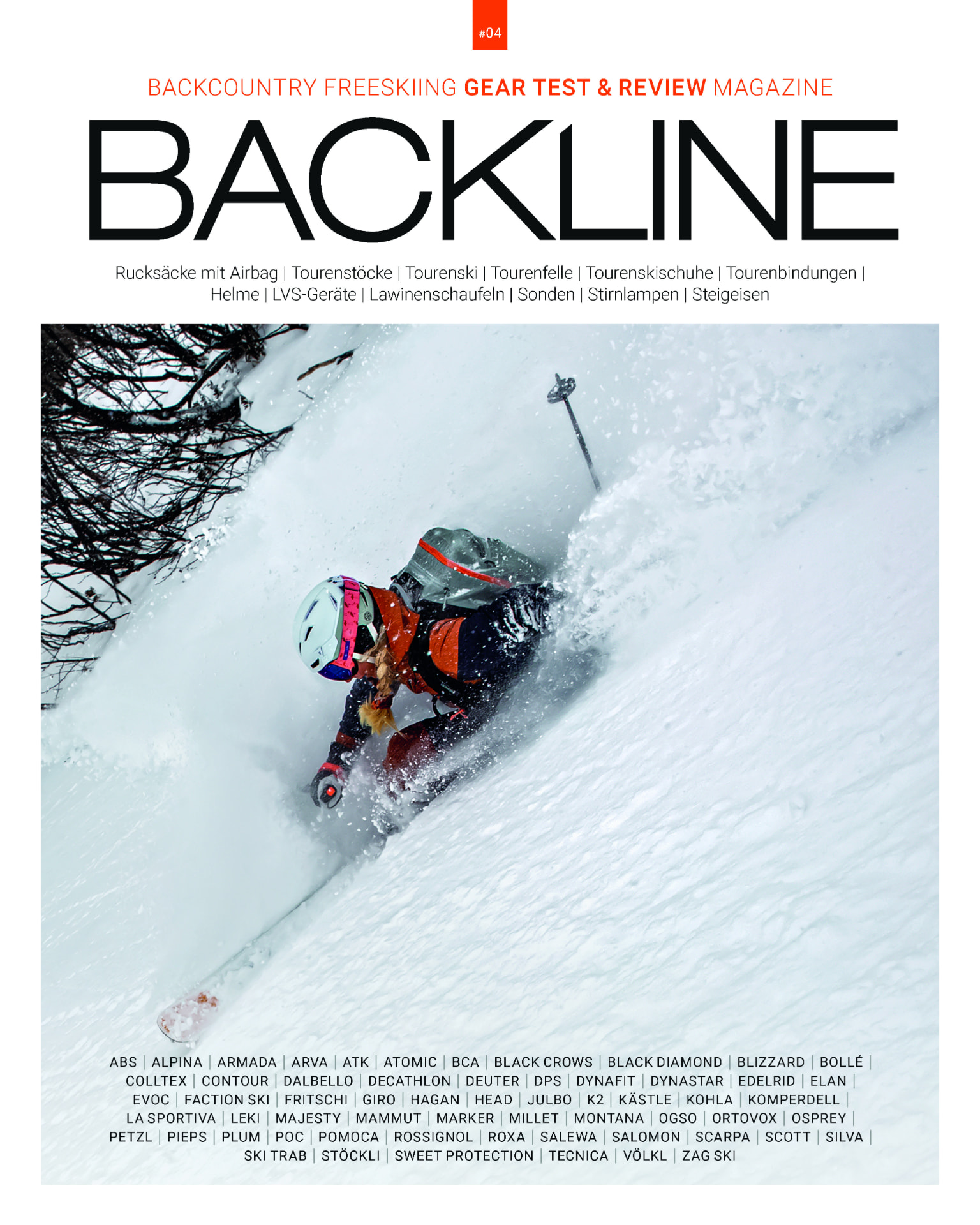
Ski touring bindings · Test magazine 2022
Tech talk with Thomas Debray, PLUM
Marketing Manager · Print page 95
Who is Thomas Debray? Marketing Manager at PLUM
Thomas Debray is Marketing Manager at PLUM and a passionate ski tourer. After studying business administration in Strasbourg and spending around a year and a half in Germany, he moved to Haute-Savoie to be able to ski in winter. In summer, he is a trail runner. He favours ski mountaineering with ultralight equipment and names competing in the Pierra Menta as his racing dream.
In his interview for the BACKLINE 2022 gear test magazine, Debray explains how touring bindings should match the intended use, ski width and boot. He distinguishes between freeride touring, classic ski touring and racing. Low weight is his personal equipment priority. He describes PLUM’s development process from CAD design through milled prototypes and laboratory testing to field tests with mountain guides and athletes. Production takes place in Thyez, France; reaching shops can take up to two years from the initial design.
Debray advocates durable, repairable equipment rather than a growing flood of products. PLUM retains spare parts for many years to support this. Mature LowTech technology, simple designs and environmental compatibility are central themes in his comments. In his view, further weight savings must not compromise reliability.
What should be considered before buying a touring binding?
First, the boots and skis are important because you need to ask yourself: Do I want to do freetouring, regular touring, ski fitness, or competition? This determines the choice of ski width and boot type. Then, you choose the binding to create a set that works and is durable. In short: Wide skis (>100mm) and stiff boots with a stiff flex (>110) belong with freetouring bindings with wide mounting patterns and high climbing aids like Plum Summit, Guide, or Pika. A regular ski (75-100mm) and touring boots with a softer flex should be complemented by lightweight touring bindings like Plum Oazo with a lower climbing aid. Narrow skis (<75mm) and light touring boots with a very soft flex and high range of motion belong with a racing binding with a climbing aid.
Does your touring binding have a stopper and why?
I prioritize weight more than anything else. Ski stoppers are useful when skiing/training on groomed slopes, but less so in other terrain like powder or very steep couloirs. However, I will equip my R120 race binding with Plum stoppers, as this will be mandatory for Skimo competitions starting in winter 23/24.
What steps do your touring bindings go through?
We produce everything locally in Thyez (France). The steps are: 1. Do we need something new, or are dealers or customers requesting improvements? 2. Engineers begin with Computer-Aided Design. Weight and resistance can already be simulated here. 3. With the 3D design, parts are milled from an aluminum block. 4. First prototype and lab tests. 5. If successful, then initial field tests with mountain guides and athletes. This can take an entire winter. 6. If all tests are positive, engineers can work on industrialization. Up to 2 years after the initial CAD design, the bindings are then in stores.
Is the material from old Plum touring bindings recycled?
Yes, aluminum and steel can be recycled infinitely – and our bindings have the highest aluminum content on the market. We not only want to recycle old bindings but also ensure they can be serviced or repaired for many years after purchase. For this reason, we produce and collect spare parts for many years.
What innovations and trends do you expect?
This may be surprising, but I wish for few new trends in the future, as I believe in durable equipment and minimalism. As a brand, we play a crucial role in curbing the flood of products. I'm glad that ski tourers are slowly understanding that simplicity is more important than useless options, and that more and more are relying on light pin bindings for demanding skiing. Low-tech technology is very mature today. Therefore, I hope that people will generally pay attention to durability and environmental sustainability when choosing their equipment from now on. Of course, we are constantly innovating to save weight in our bindings, as that is in our DNA, but this will never come at the expense of reliability.