Anton Brey
Issue 2014 · Words: Wolfgang Greiner · Photos: Anton Brey · 5 min read
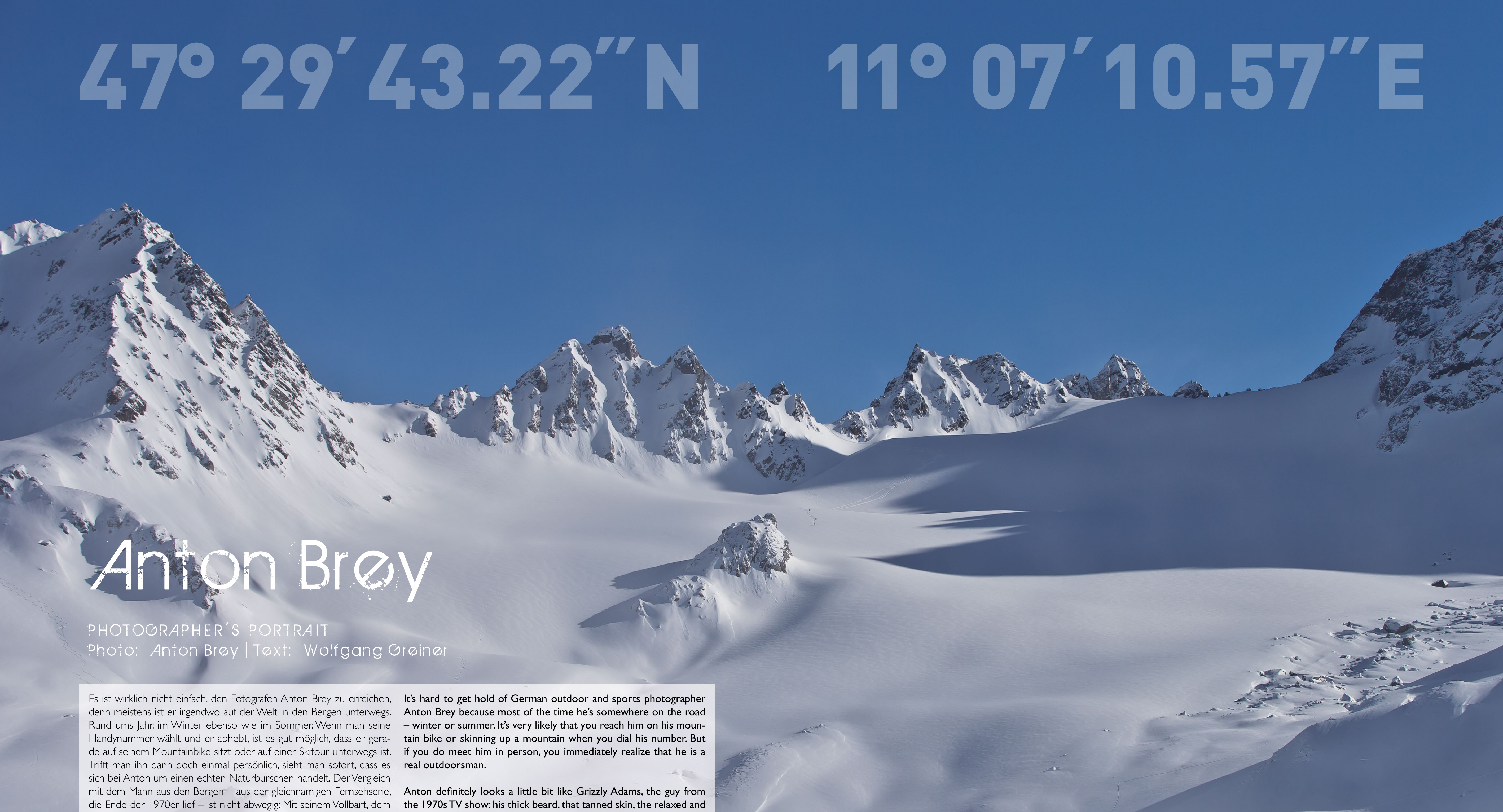
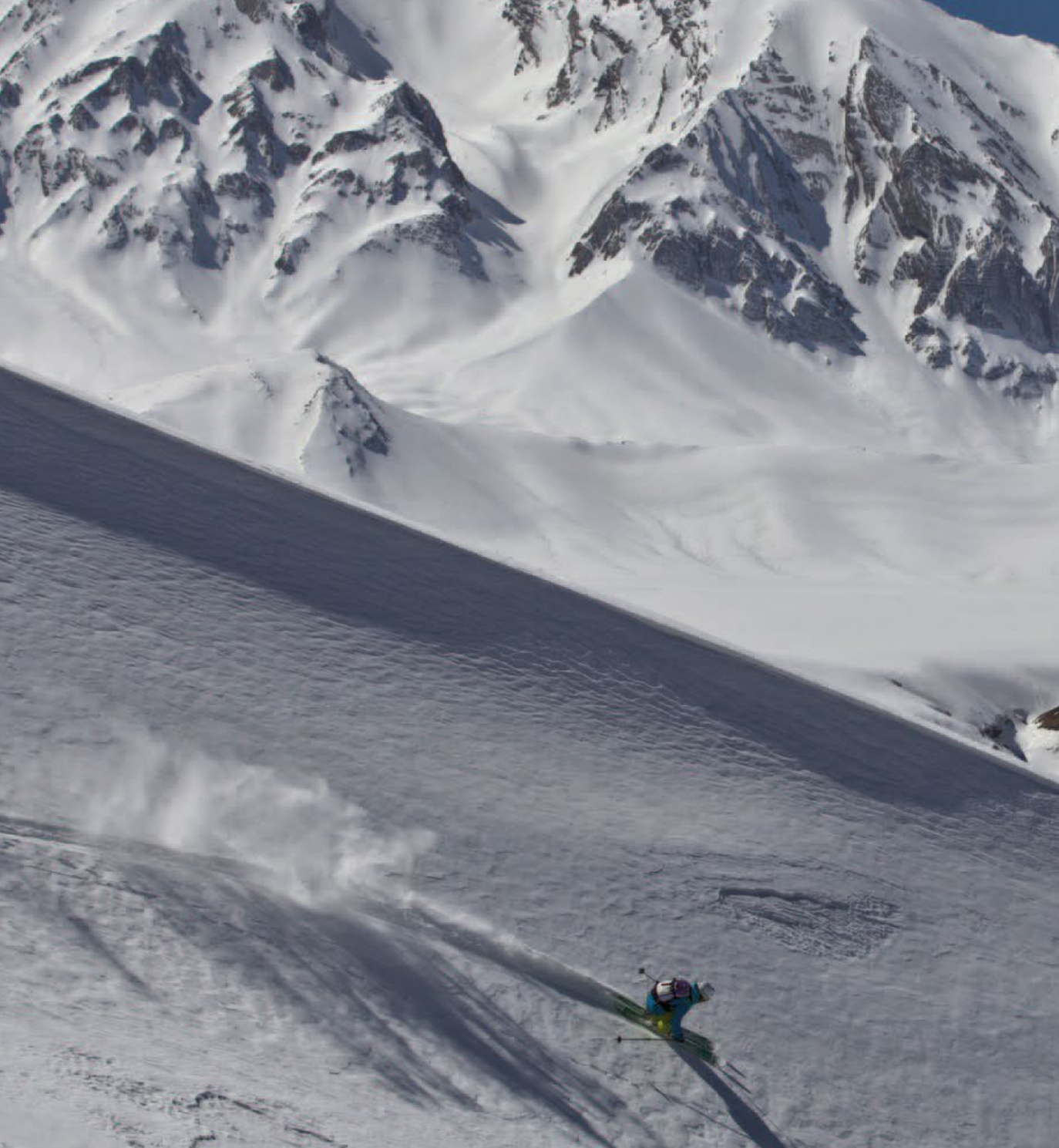
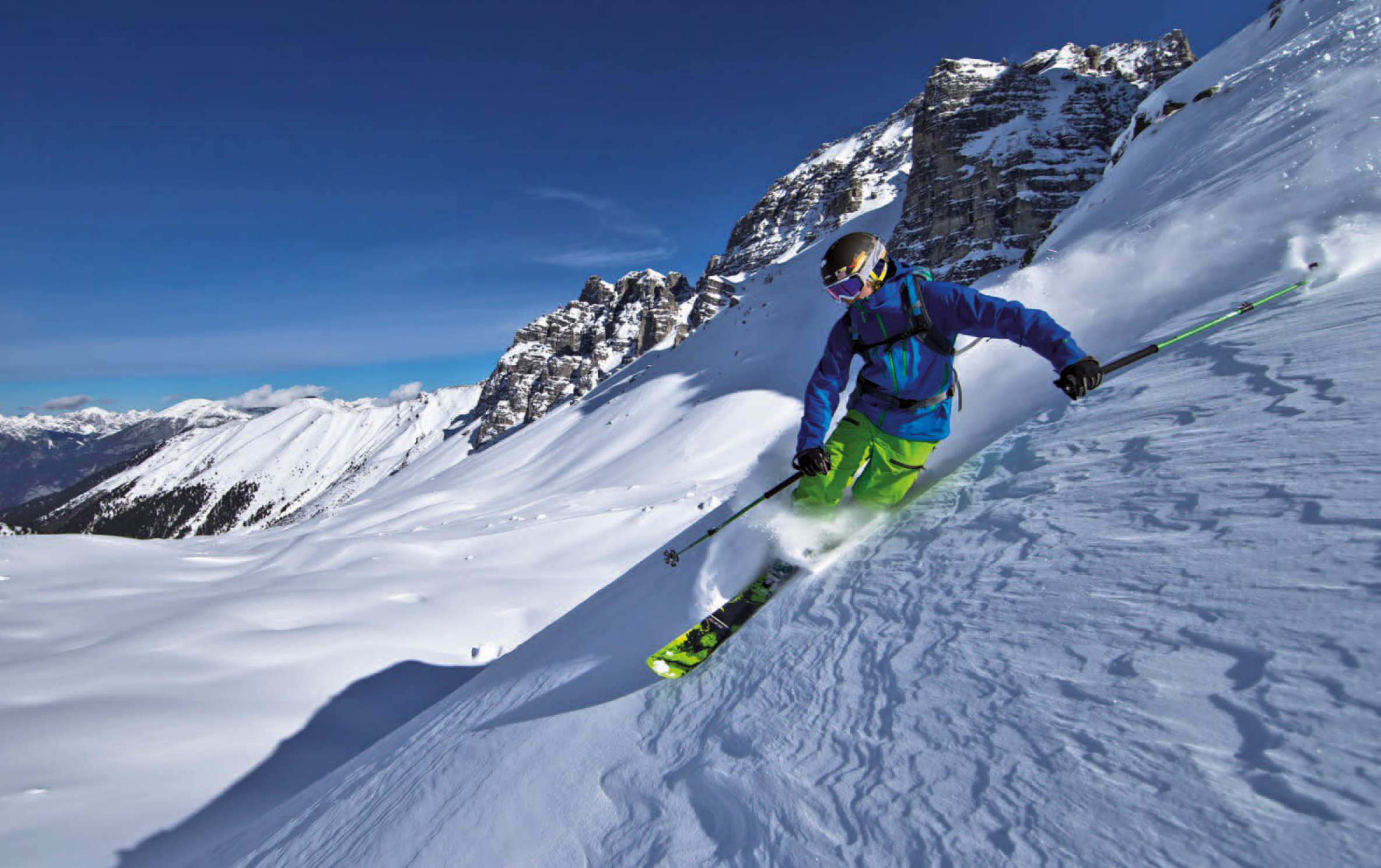
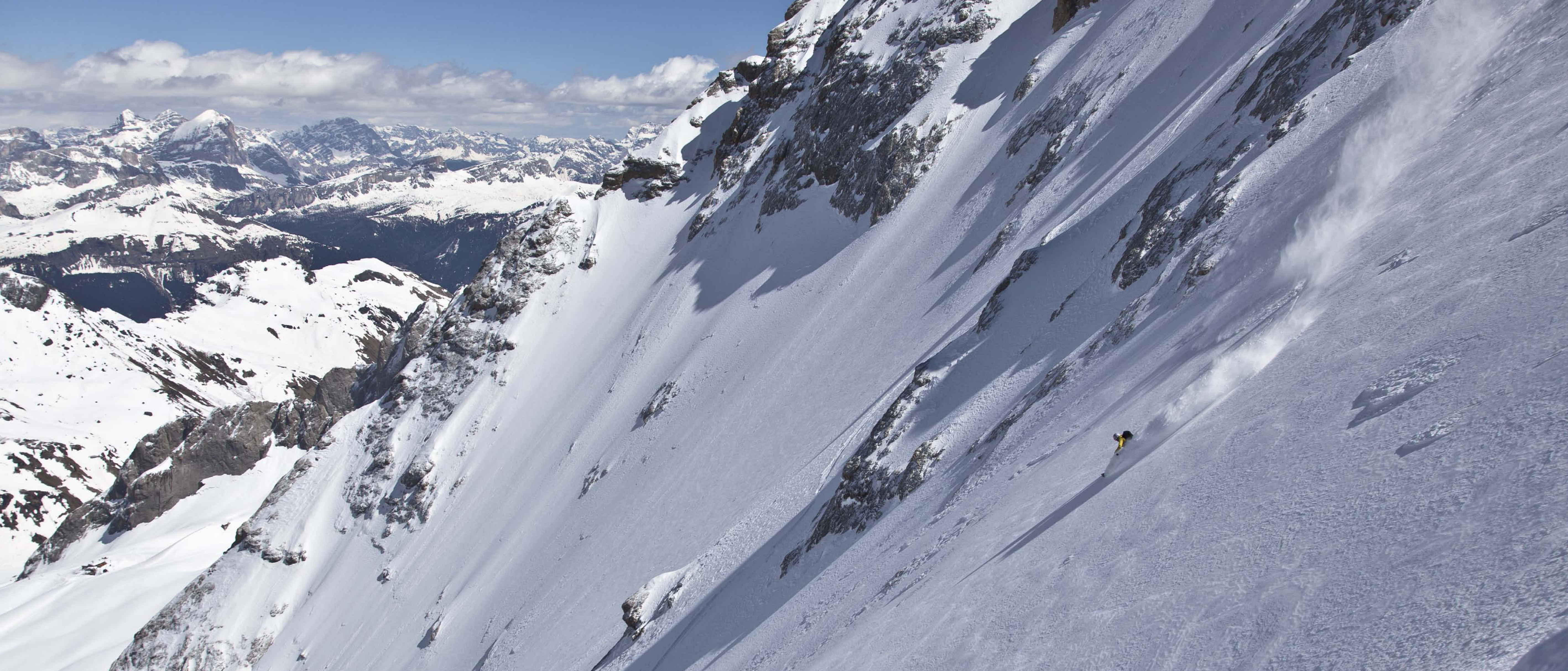
Photographer Anton Brey: from extreme skier to outdoor photographer – a portrait.
It’s hard to get hold of German outdoor and sports photographer Anton Brey because most of the time he’s somewhere on the road – winter or summer. It’s very likely that you reach him on his mountain bike or skinning up a mountain when you dial his number. But if you do meet him in person, you immediately realize that he is a real outdoorsman. Anton definitely looks a little bit like Grizzly Adams, the guy from the 1970s TV show: his thick beard, that tanned skin, the relaxed and friendly smile on his face, and his deep, soothing voice. He always seems totally cool and balanced; never really stressed out by anything or anybody.
After competing in the 1991 World Extreme Skiing Championships (WESC) in Valdez, Alaska, Anton Brey tried to find sponsors for this kind of skiing. Snowboarding was not his cup of tea. Born in the city of Garmisch-Partenkirchen – in the shadow of the mighty Zugspitze mountain – skiing and the love for the mountains were practically put in his cradle. When the very first freeskiing contest took place in 1996, the Snowthrill of Chamonix (extreme skiing had just been re-named and turned into “freeskiing”), Anton used the support he got from K2 Skis and Marker Bindings to live up to his lifestyle during these events that took place more frequently. Nevertheless, the “other side” of the sport – photography – had already caught his attention.
And then, his health suddenly forced him to stop competing. After suffering from a herniated disc in his back, Anton decided to enroll in media design classes and completed a traineeship at the GAP 1328 Summer Camp, which took place every year on Zugspitze, and a print internship at an advertising agency. “And then I kind of got stuck at Nic Nagel’s agency”, Anton remembers. Back then, Nagel was the publisher of Poachers magazine and decided to assign all responsibilities to Anton. He did not only take care of the graphic layout but also produced content and quickly earned his reputation of being a very focused yet relaxed staffer.
After running the magazine and contributing pictures for a few years, Anton decided that he did not want to spend the winters behind a desk anymore. He preferred to be outside and focused on his photography. Since 2009, Anton has only worked for the agency between May and December. During the winter, the mountains are his office. One of his greatest advantages is his mobility in alpine environments. “Other photographers don’t reach the spots where I take pictures”, he explains. Mainly because he doesn’t need a guide. Having worked as a mountain rescuer, he is self-sufficient and leads his groups himself. “I spent four years with the mountain rescue service and I am always staying up to date.”
And that’s pretty easy for him: in the winter, he spends up to 80 days on skis; during the summer, he’s out on his mountain bike as much as he can. In his eyes, that’s necessary to stay fit (“otherwise you can’t keep up with the professional athletes”) and it sharpens his senses and attentiveness for potential dangers. When Anton was on tour with the Bavarian Broadcasting Company in 2009, he got caught in an avalanche in the Bernina mountain range. Anton was rescued and survived. But that was by far not his worst experience in the job. A year before the avalanche, a friend died during a production in Norway. “Being a photographer and knowing that the next job is just around the corner, you have to learn from these experiences”, he reflects.
“You get more attentive, develop a certain gut feeling, take different decisions. This includes the ability to say ‘No!’ and turn around. Especially when you take photos, your senses are very often distracted. But after these kinds of incidents, you learn to keep an eye on every detail, not just on the guy that you see through the lens. What you experience and survive makes you more mature.” When Anton is out with a group, his assessment of the conditions is always welcome. “You need to communicate, dig snow profiles, consider the situation. And when the photographer says no, then there will be another day to take pictures.” Many of Anton’s articles and stories aren’t commissioned.
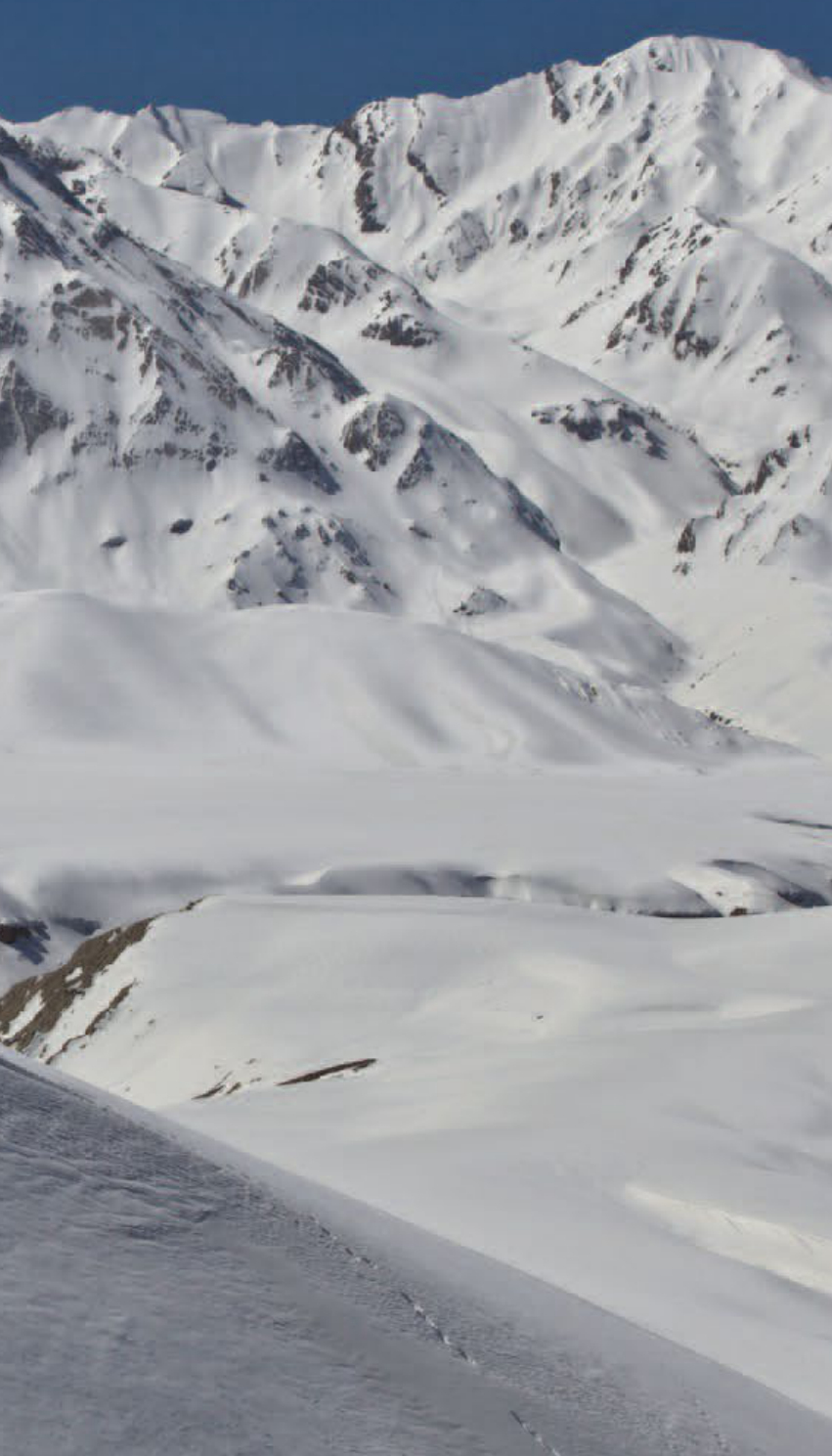
He travels with ski pros like Martin Fiala or Eva Walkner, takes pictures and then approaches magazines with the story. So it happens that some projects aren’t published. Like that trip to Iran that he calls one of his favorite stories and experiences. Another story that he calls one of his favorites was shot a lot closer to home: A series that he shot in the Hornbachkette mountain range, which was published in the very first issue of BACKLINE. Can photography as a job pay the bills? “It surely can, but not without some contracted and repeating engagements like event photography or industry shootings. I spend 80 per cent of my time behind the lens during the winter months.”
He could definitely do the same in the summer, “but that would mean that I am constantly on the road.” Which is not his intention, because he prefers to have some quality time with his wife and 20-year-old son, and also some time for his hobbies like motorcycling. So instead of travelling all the time, he limits his photo jobs and works at the agency in the summer. But: “Even then, I always bring my camera when I’m in the mountains, scout locations and search for new ideas. In the summer, I check the terrain to know what to expect in the winter.” Anton hopes that he will be able to work as a photographer for many years to come. “There’s always work to do. The limit is your own physical ability. And competition never sleeps.”
But right now, that’s not an issue. This winter, he will go on a trip to Liechtenstein with pro skier Eva Walkner and he’ll shoot a series of freeride events. And he would love to go ski the legendary Japanese powder. His plan B? He would probably focus on graphic design. “And there’s still weddings and summer houses that need to be photographed,” he says with a sarcastic voice. But he surely hates the idea of not being outside in the mountains anymore; not being on the road; not meeting all these interesting people.That wouldn’t suit him – being outdoors is what he loves - a true man of the mountains.