Finnland · Käsivarren Erämaa (Lappland)
Arctic Finland
Issue 2020 · Words: Antte Lauhamaa · Photos: Mikko Lampinen · 5 min read
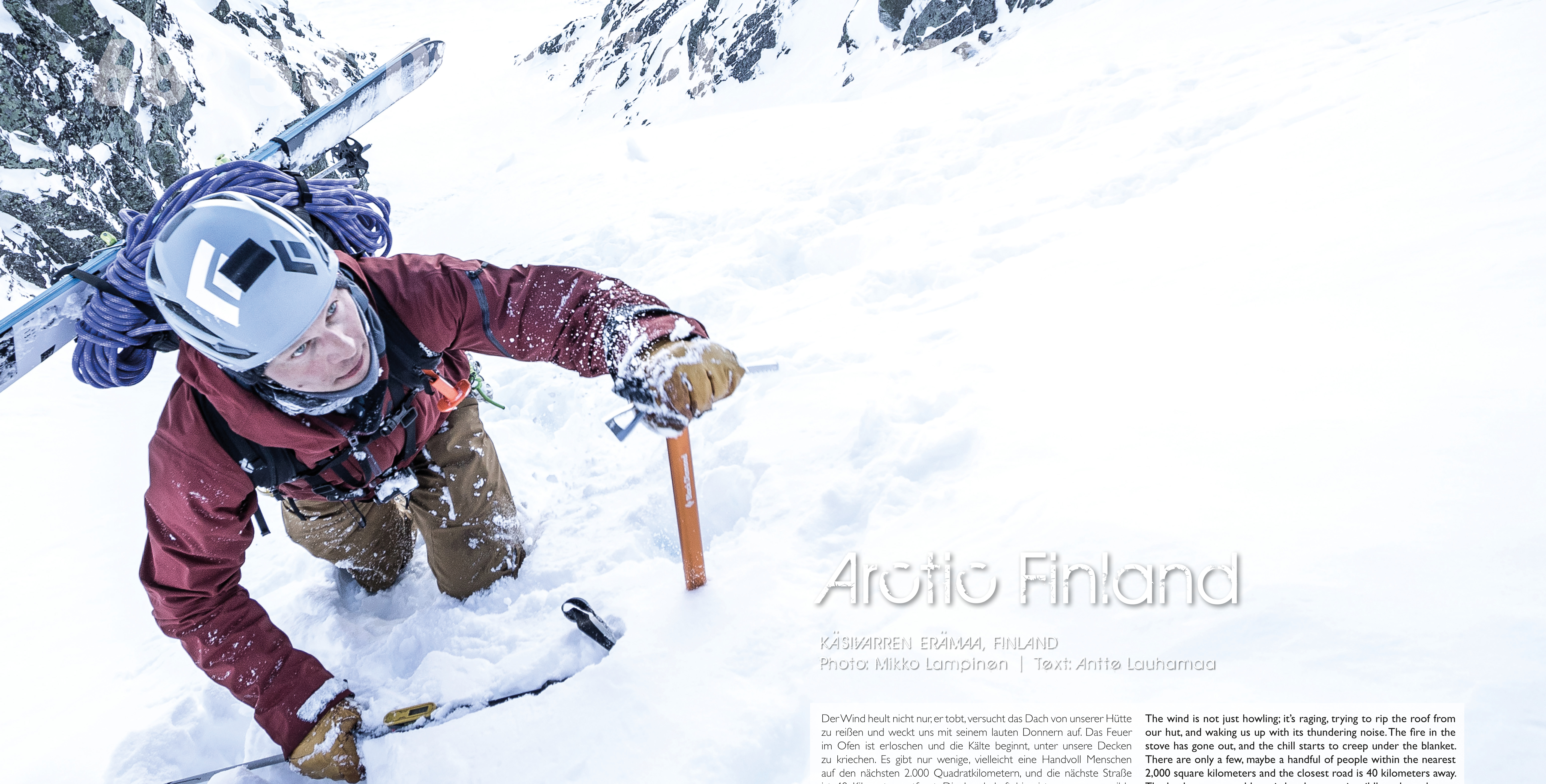
The wind is not just howling; it's raging, trying to rip the roof from our hut, and waking us up with its thundering noise. The fire in the stove has gone out, and the chill starts to creep under the …
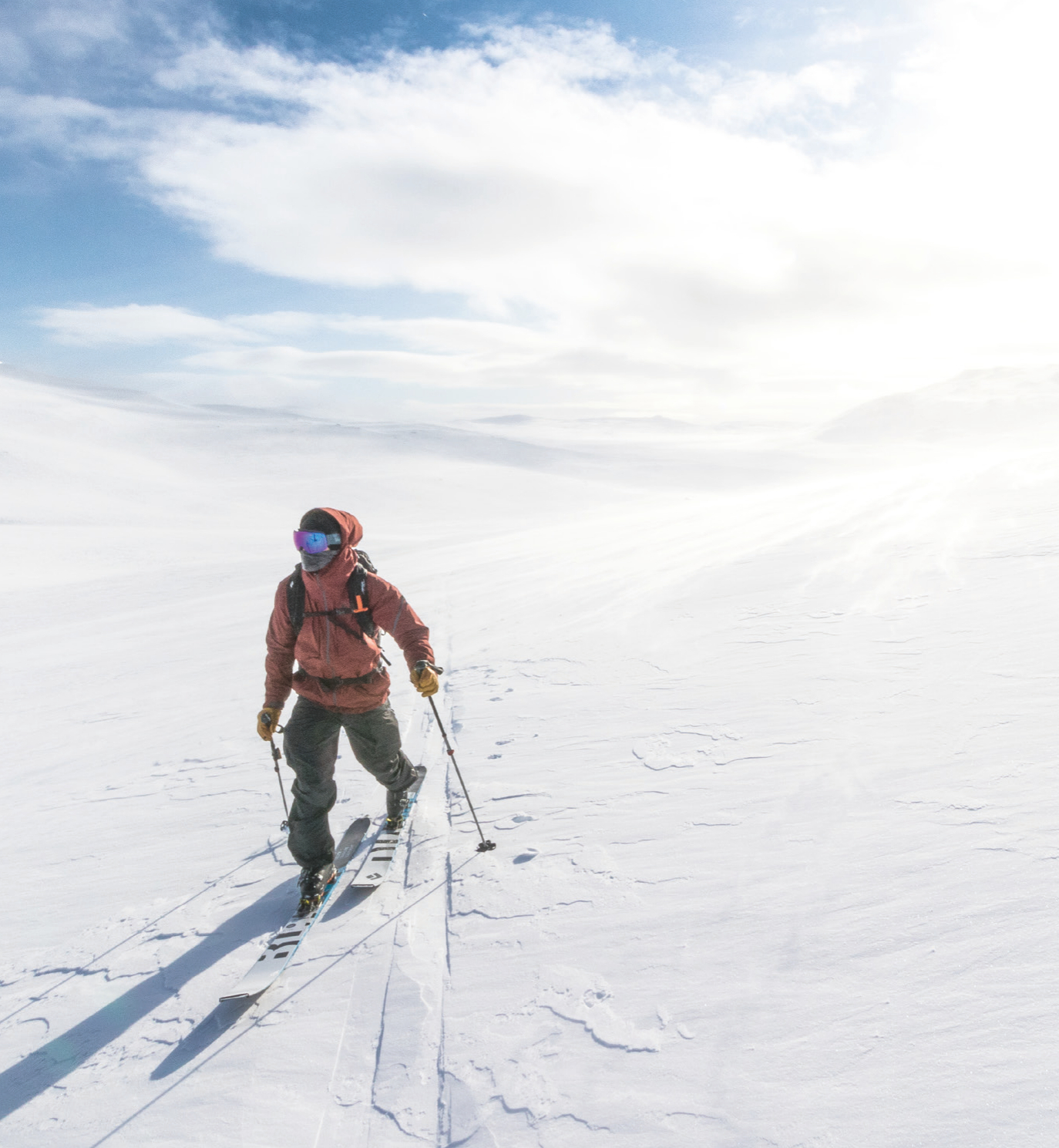
The wind is not just howling; it's raging, trying to rip the roof from our hut, and waking us up with its thundering noise. The fire in the stove has gone out, and the chill starts to creep under the blanket. There are only a few, maybe a handful of people within the nearest 2,000 square kilometers and the closest road is 40 kilometers away. The landscape around here is harsh, to put it mildly – the only tree that grows around here is the arctic birch, further down in the valleys. The wind-torn white desert reminds me of how the moon must look like. We are in the Käsivarsi Wilderness Area – one of the northernmost places in Finland. Arctic Lapland, where the reindeer roam free across the Fjälls, the typical round-shaped small mountains of this area.
As a resident of Finnish Lapland, it has been somewhat easy to overlook the skiing possibilities of this area since the mountains of coastal Norway are just behind the border. The approximate skiable vertical around here is only 400 meters, but those runs are literally in the wild. To reach the spots for skiing, you need to be able to move dozens of kilometers through arctic wilderness with no cell phone coverage. Navigational and arctic survival skills are mandatory. The Käsivarsi Wilderness Area is located in a polar region at 69° latitude. In comparison: Baffin Island and Nunavut in Canada are on the same latitude. The location, a plateau at about 500 meters above sea level, makes our trip feel like a polar exploration.
There is a 60 kilometers marked hiking trail leading from the village of Kilpisjärvi to the highest point of Finland. It's quite popular among hikers and skiers since it's a relatively easy way to get to know the northern wilderness. Summer and spring are the most popular seasons for hikers. But you barely see anybody else but reindeer herders in the late autumn and winter. There are state-maintained wilderness huts along the route, making the access somewhat easier. The huts are open and free for hikers, and they provide a warm shelter throughout the year. Snowmobiling is allowed only with special permits provided by the National Forest Administration.
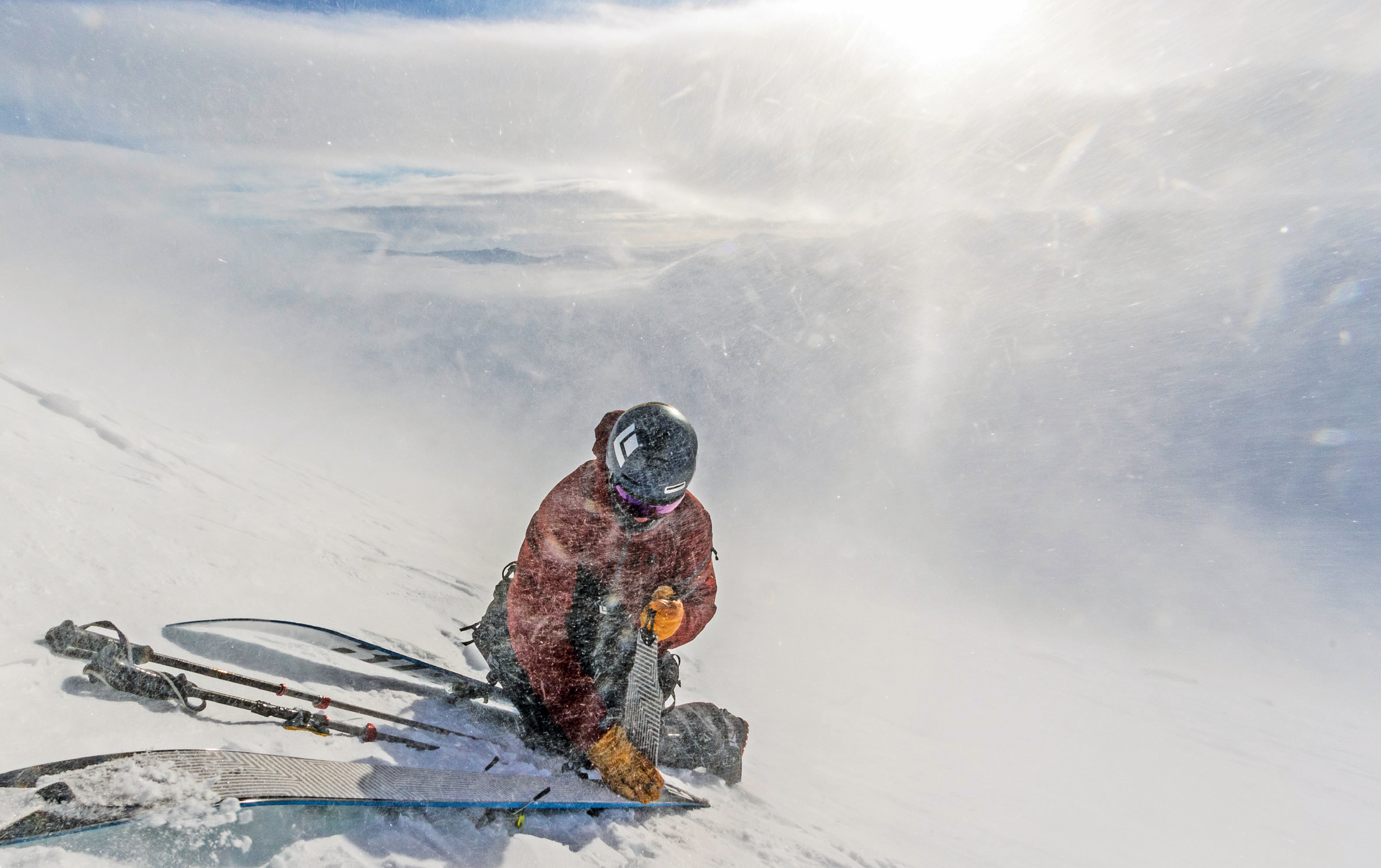
Western and northern winds coming from the coast can change a sunny day to whiteout in the blink of an eye. The winter route is marked with wooden poles that are 50 meters apart from each other. It is quite common to lose sight of the next pole in a blizzard. This is something you should be prepared for, even though hiking along a marked trail sounds easy. It can be tough to protect yourself against the elements if you run into bad weather since there are few natural shelters. Knowing how to cover, carrying the right equipment, and knowing how to use it in extreme weather are essential when you come here. Despite the raging wind, the morning turns out to be promising. From our window, we can see blue spots here and there.
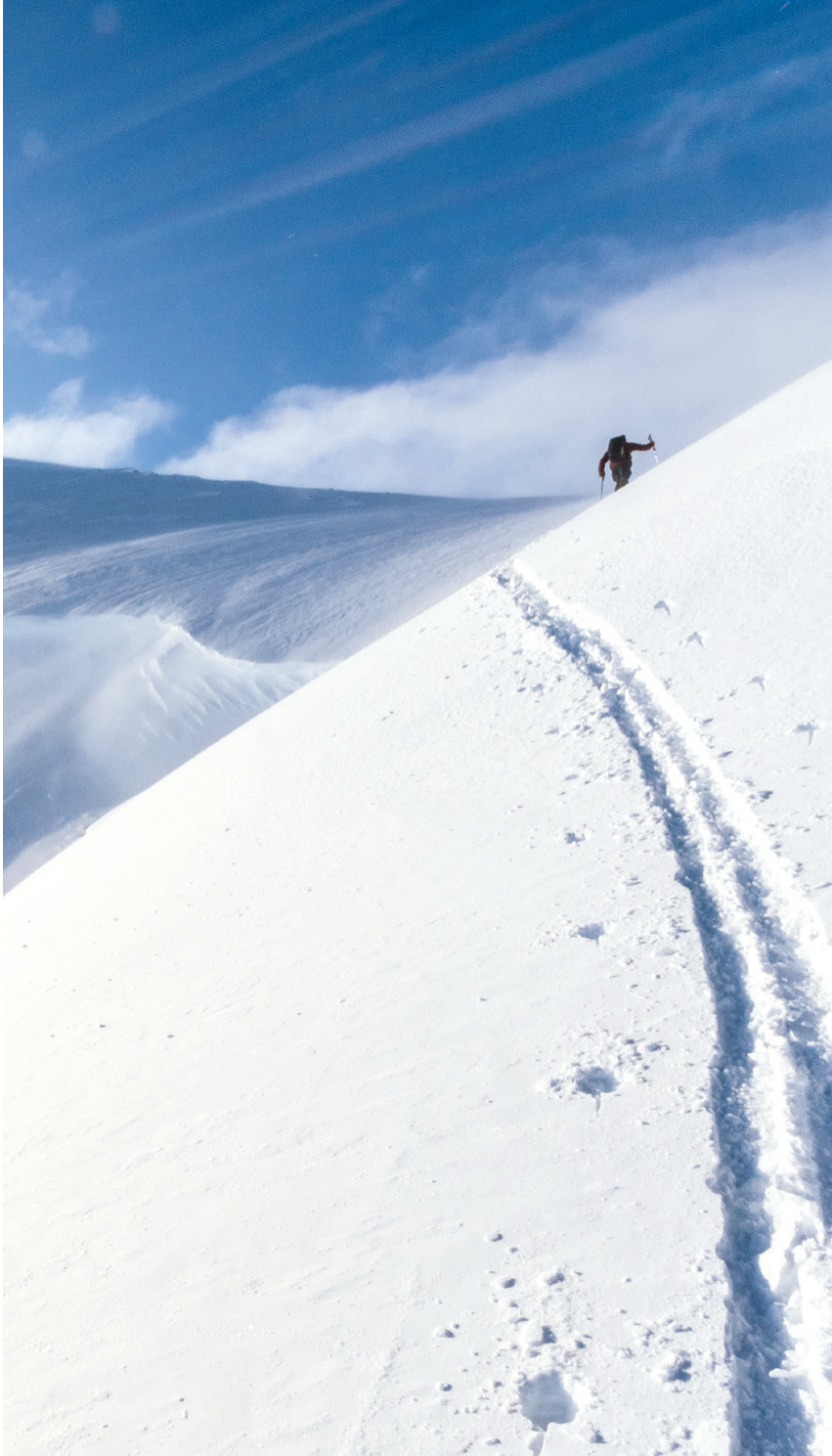
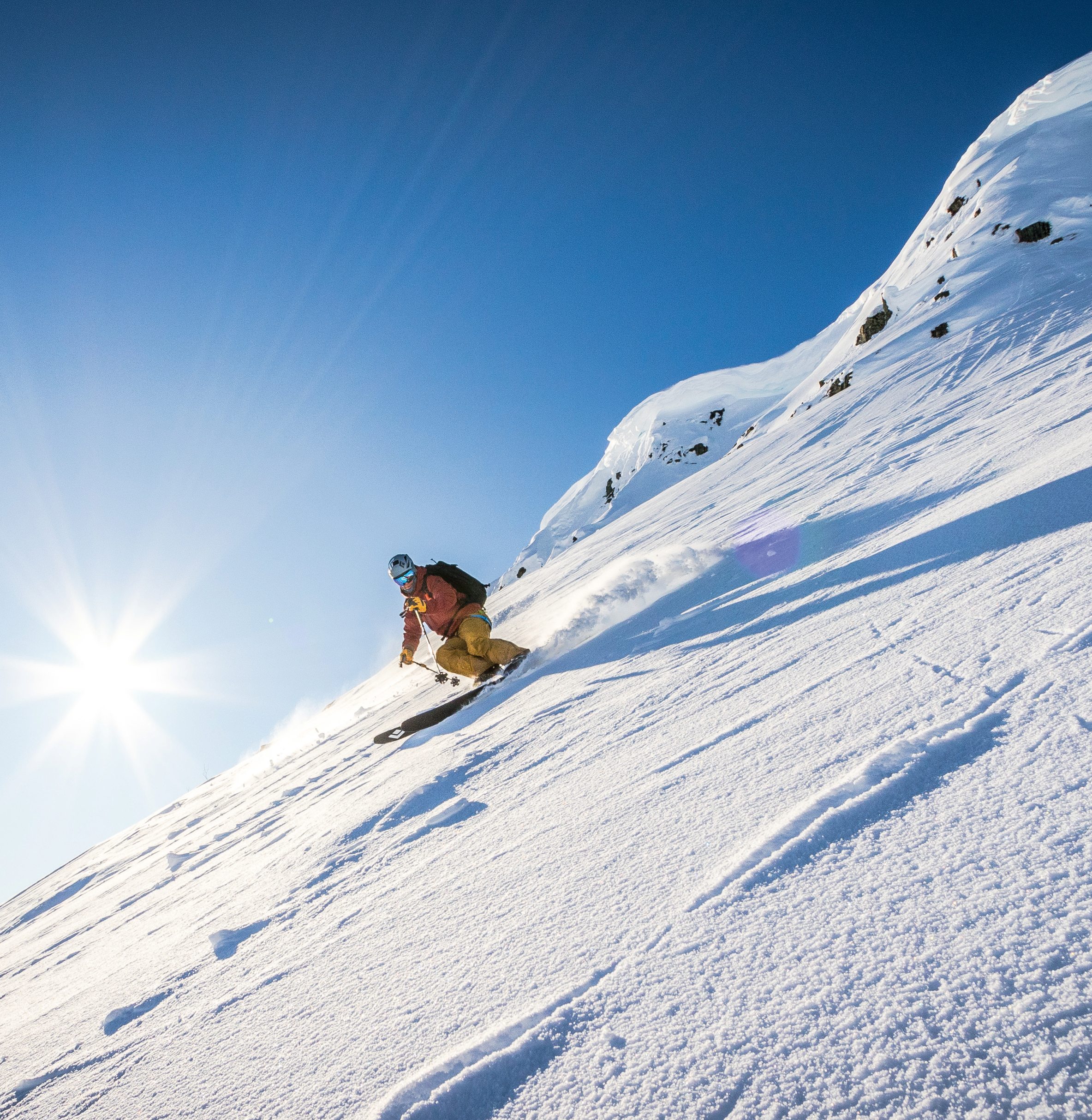
The wind is still picking up snow from the ground, but the weather signals to us that it might clear up later in the day. There is nothing else to do but wait and figure out safe spots for skiing nearby. We have a slow morning, drink coffee, and consider our options on the map on the wall. Finally, early in the afternoon, the weather clears and we head out. A few kilometers north of the hut, we find ourselves standing on the border between Norway and Finland. Blue skies and wind make for a beautiful combination. The snow is sparkling in the air, and the snow surface looks like a living white sea. Soon, the wind turns into a fierce storm and eventually, we look for cover and prepare for the descent. I try to figure out the safest way down.
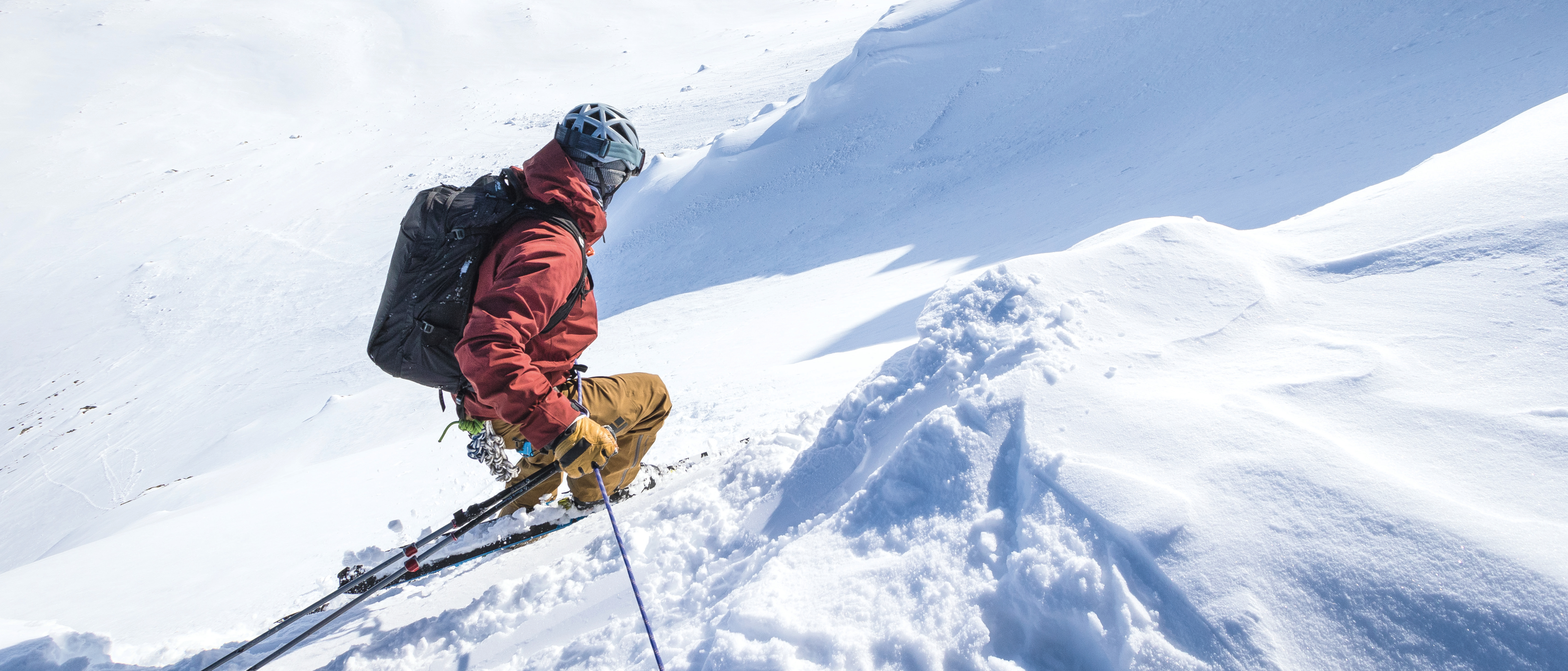
The slope is concave, making it difficult to navigate, and it's on the lee side. After a few turns, I notice growing slab formation as the slope drops. I decide to head to skier's right where the face is less steep. The snow feels nice and soft on top, but hollow below. We decide to stay on the safe side, not taking any chances. After all, this is one of the most remote places in Finland. We get another chance to ski in the evening. The wind lost its power, and this time of year, the sun doesn't set until after midnight. We ski a slope that leads to a short couloir deep between the rocks and suddenly ends with a steep drop. We safely ski around the cliff. The sun starts to set, the sky turns bright red, and even my watch says that it's getting late.
Just a few months ago, this area got no sunlight at all. And a month from now, the sun won't set. I think of the reindeer herders who live up here all year round. Their lives revolve around their animals. I wonder how they endure the darkness in winter and I assume they must carry a lot of light in their hearts. The wilderness has its own rhythm, and you have to learn to live by it. Making schedules and agendas might work in our communities, but the wilderness sets the rules out in the arctic. It might sound like a cliché, but in the middle of a raging blizzard, it becomes very clear: there is nothing you can do but wait.
Patience, adaptation and making the best of the current situation are essential knowledge and something the northern wilderness naturally teaches you. And so it goes for us. We wait and know what we do when the opportunity arises. This is adventure skiing – we ski as much as we can, whenever it's possible. To understand how to do it safely and effectively, we need to rely on all our experience and training. Reading the map, navigating, forecasting avalanches and the weather keeps us busy all day. Nevertheless, this feels like a luxury, as we operate from a warm accommodation reserved for us. The northern wind taught us a lesson for life: Don't try to turn the situation against you.
There will be the right moment, but you must learn to connect with its rhythm. The right time may not be now, but sometime later. Learn to breathe with your objective and embrace the journey. Breathe with the wind, and it will take you there.