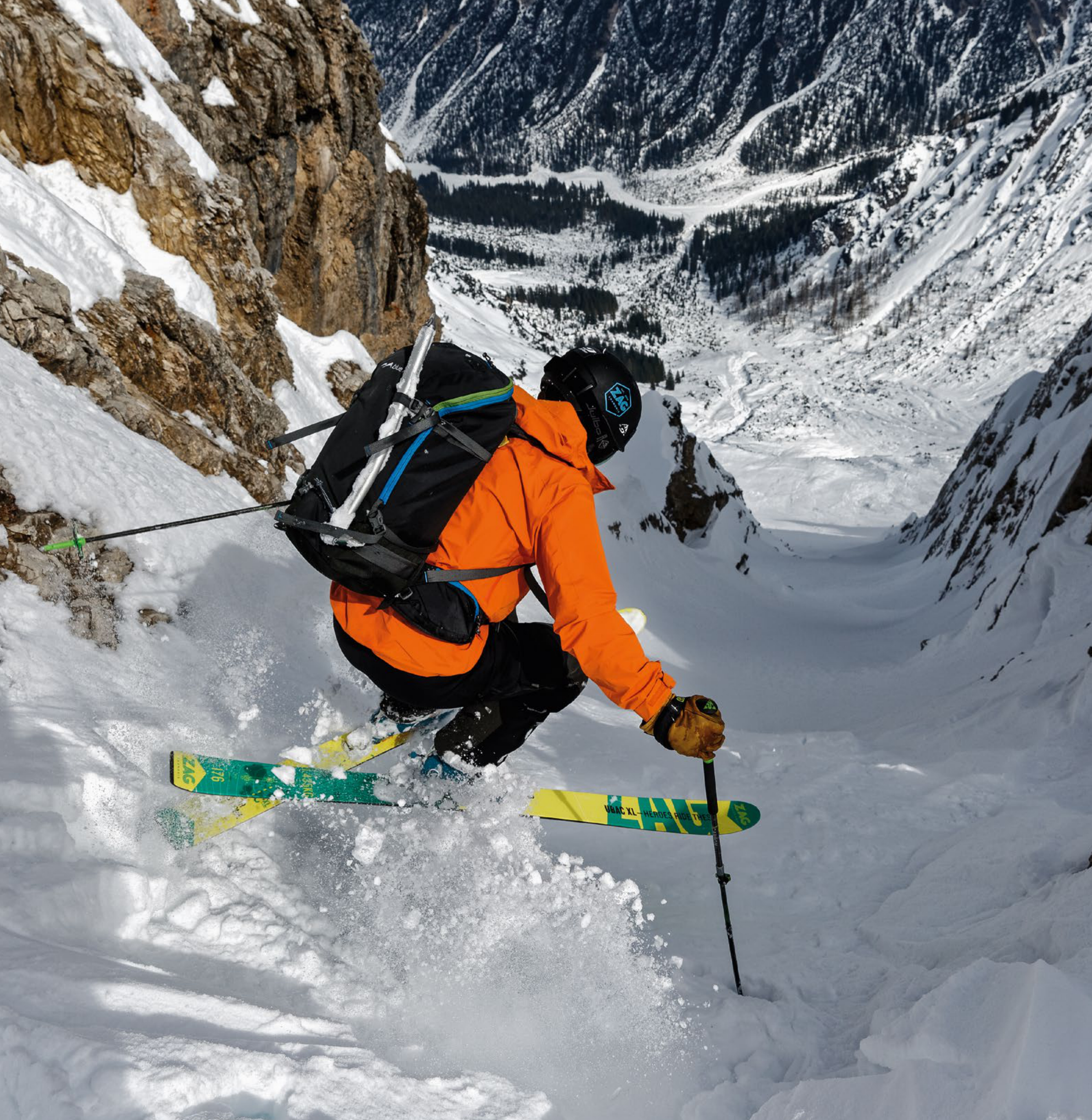
Österreich · Karwendel
My Backcountry Diaries
Issue 2017 · Words: Anton Brey · Photos: Anton Brey · 5 min read
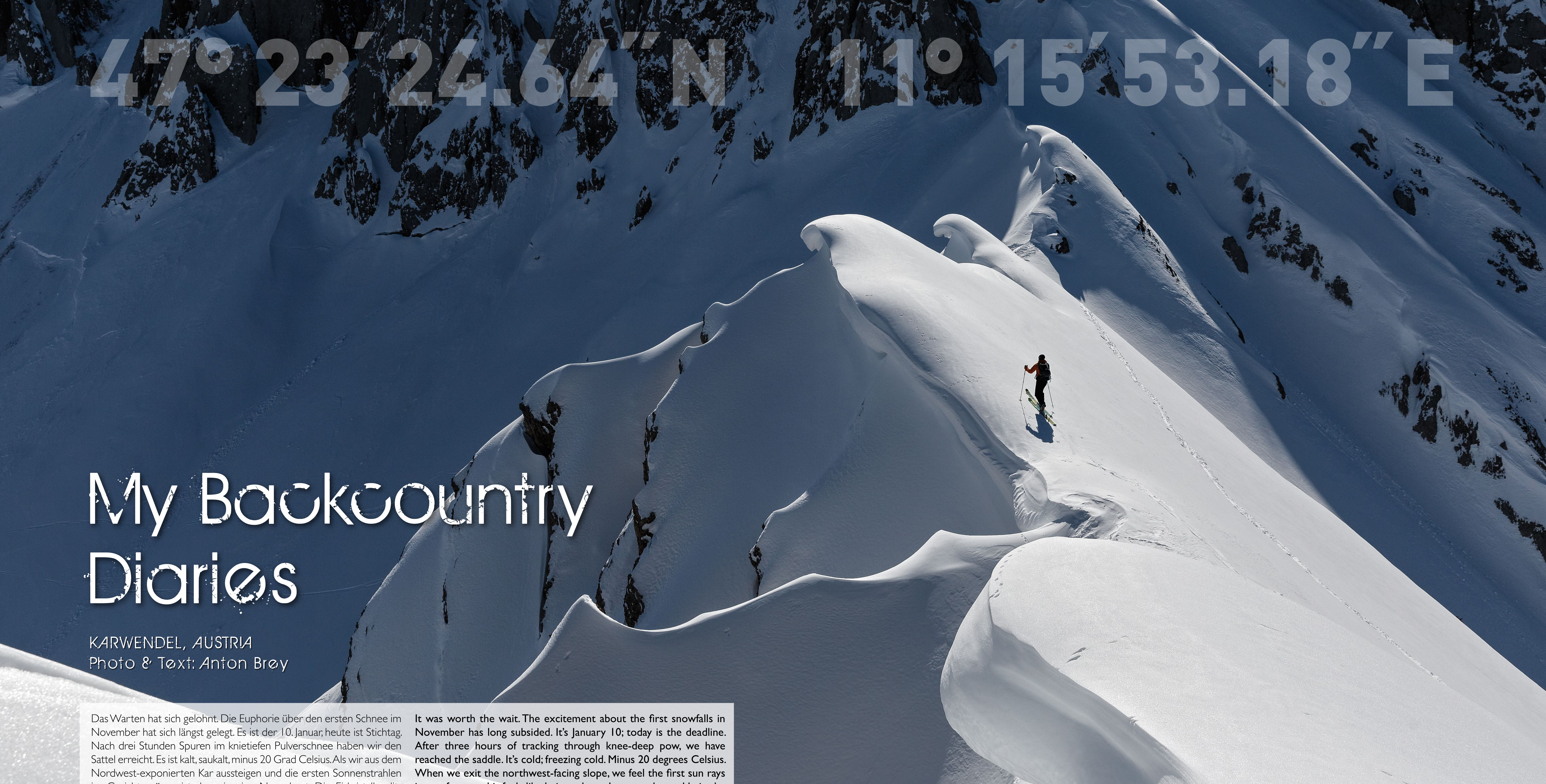
It was worth the wait. The excitement about the first snowfalls in November has long subsided. It's January 10; today is the deadline. After three hours of tracking through knee-deep pow, we have …
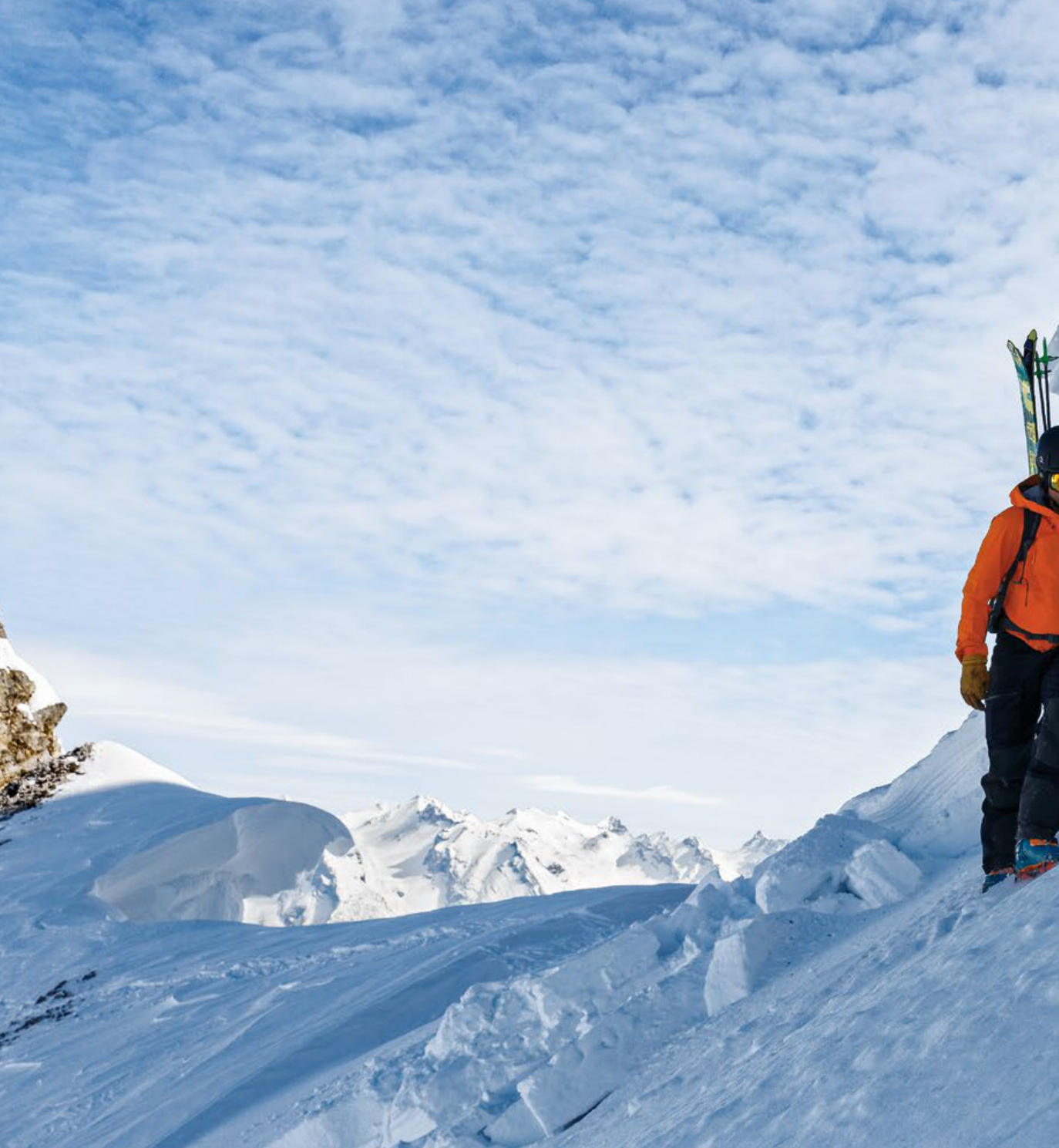
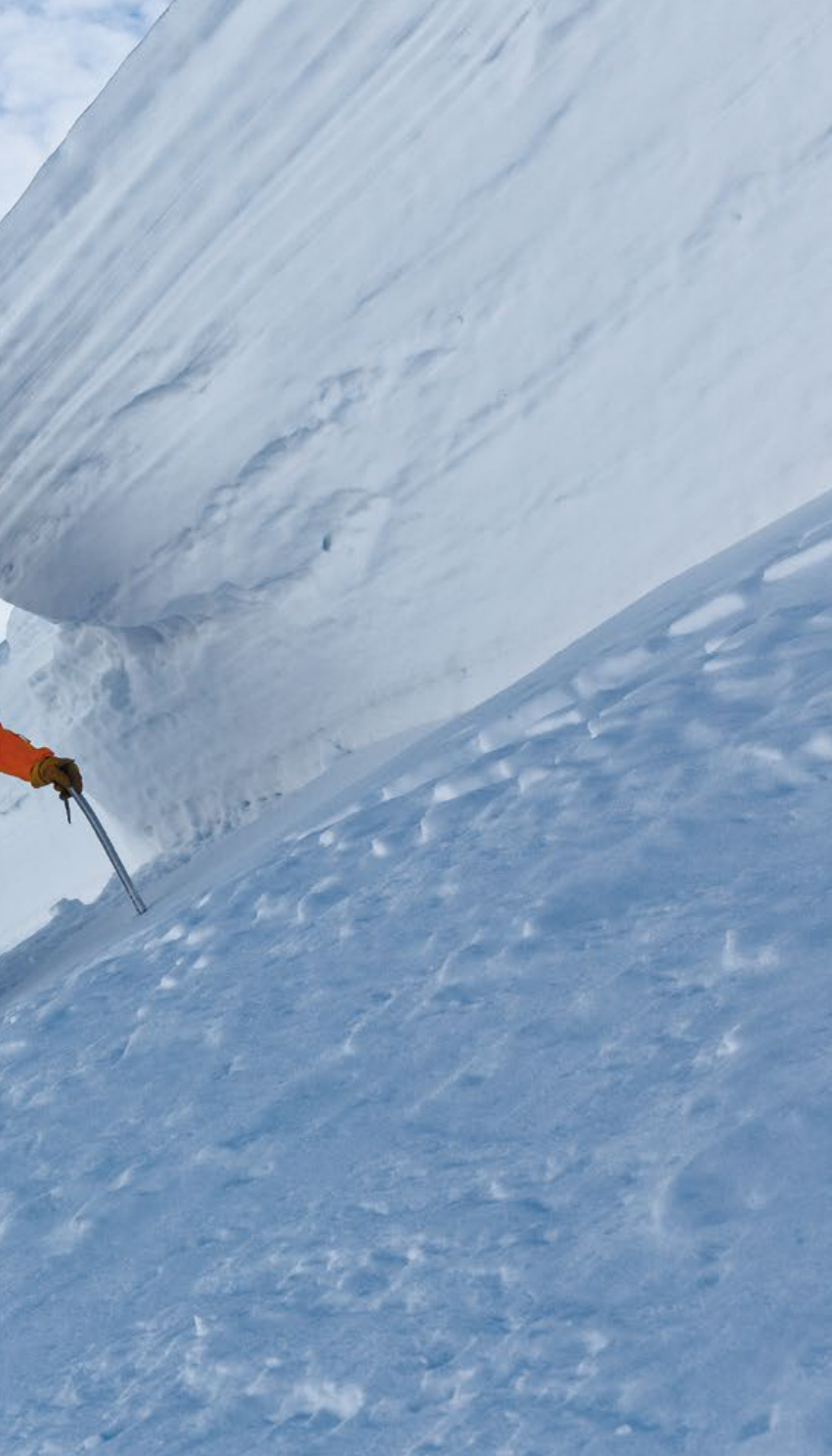
It was worth the wait. The excitement about the first snowfalls in November has long subsided. It's January 10; today is the deadline. After three hours of tracking through knee-deep pow, we have reached the saddle. It's cold; freezing cold. Minus 20 degrees Celsius. When we exit the northwest-facing slope, we feel the first sun rays in our faces, and it feels like being reborn. Ice crystals sparkle in the backlight like stardust. The valleys and peaks around us look better than ever. My friends are quite surprised, to say the least, when I tell them that I won't take any pictures today. The only record we have are a few smartphone snaps. And none of them got posted on the Internet. And that's good!
While one half of the world is flying around the globe searching for powder and the other half is posting "Pray for Snow" on the social networks, I'm preparing for the snow in my local mountains. I purchase the latest ski touring guidebook and the necessary maps for the Karwendel range, a magical place on the border between Tyrol and Bavaria. I am sure that everyone has heard of this mountain range and the names that are inextricably associated with it. Hermann von Barth, for example. The alpine pioneer made these mountains accessible by climbing 88 summits in 1870; twelve of his routes were first ascents.
In the 1920s, the climbing elite was busy developing the Laliderer North Face: Otto "Rambo" Herzog, Angelo Dibona, Matthias Auckenthaler, Toni Schmid, Mathias "Hias" Rebitsch and Heinz Mariacher set milestones by climbing new routes. But the long approach through the valleys soon lost its appeal. Today, the numerous mountain huts throughout the entire range are mostly used by mountain bikers and hikers. These distances are also the reason why skiers can only be found along the fringes of the mountain range. Who wants to drag their equipment 25 kilometers into a valley before starting a ski tour that will involve 1,500 vertical meters? Sure, it's possible; but certainly not every single weekend.
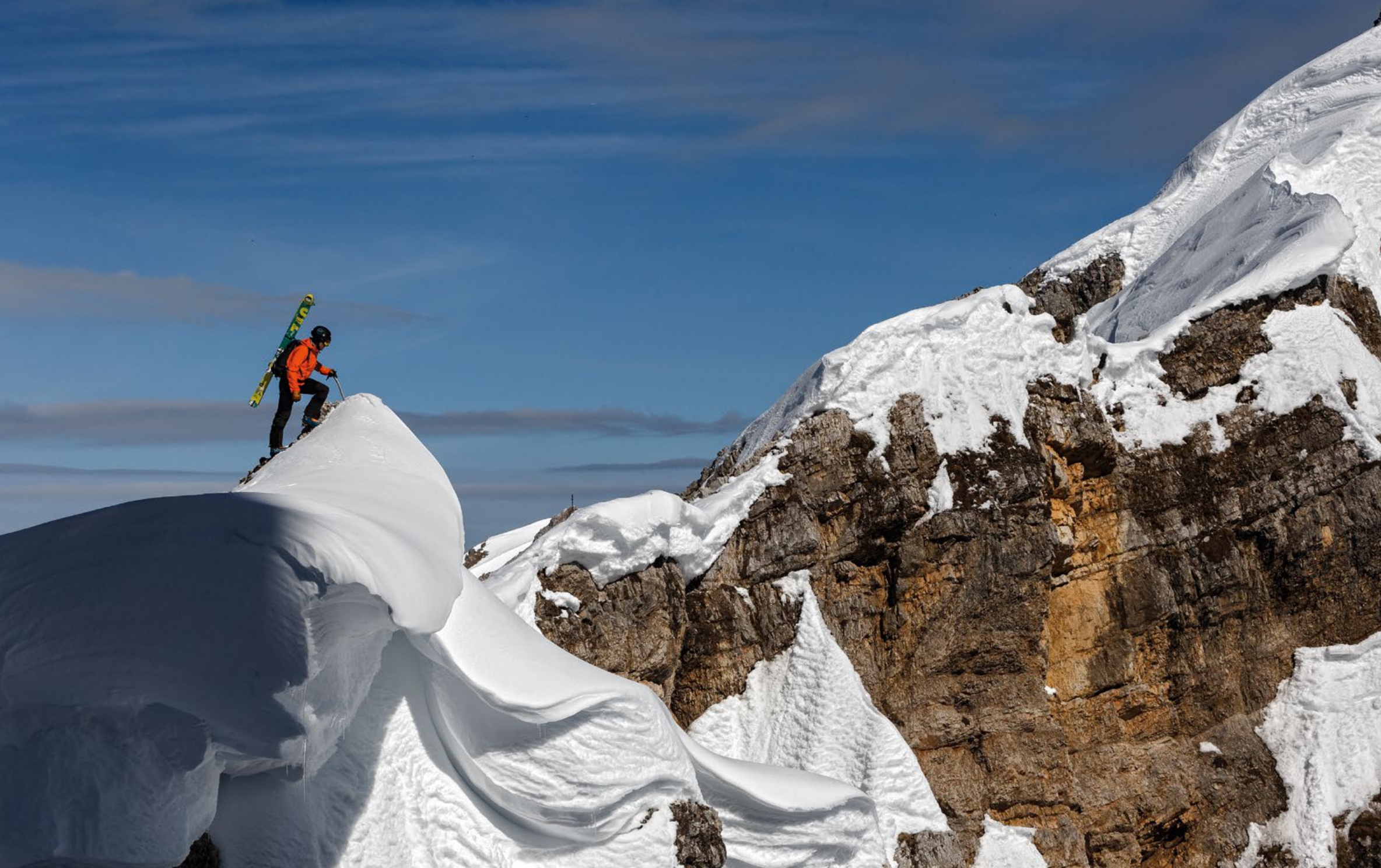
I spend every day of the last three weeks of January exploring these mountains. Two days in Pertisau, the rest of the time in Scharnitz. Most people only pass through the latter on their way from Germany to Austria, but it's actually the gateway to the Karwendel and home to another person deeply tied to this mountain range: Heinz Zak, a gifted alpine photographer, passionate climber and master slackliner. His many pictures and books describe the Karwendel range from angles, which only a few of us will ever get to see with their own eyes. I am hardly ever out there by myself. Someone is always happy to come along.
Throughout the following days and weeks, I manage to get a good idea of the snow cover and where to be at the right time to find good conditions. After all, those three weeks in January are the best of my entire season. Small scouting trips turn into entire days. We keep finding untouched gullies or yet another slope that magically entices us. Looking at the total number of vertical at the end of a day, we don't really know how we got into it. The conditions change considerably in early February. The temperatures gradually rise, and the snow line often surpasses the 2,000-meter mark. But the skiing is still surprisingly good. Sure, we don't always encounter powder, but that's what skiing is all about, right?
Being outdoors, discovering new things, experiencing and enjoying nature with all its moods and facets. From February on, the insolation changes by the week. In places that used to get no sun at all, the light now paints the shadows of the rugged ridges onto the corries. We avoid these bowls as much as we can; searching for decent conditions, we always find some great snow in the gullies facing the north. March turns out to be nothing but a real disaster. The fluctuating zero-degree line keeps bringing new snow, regularly followed by wind. In mid-March, I set out with Markus Schubert to investigate the conditions in the higher elevations. Crossing the ridge, we can already see a large slab that had come down.
Every single time I came here this winter – which must have been a dozen times – I had nothing but the highest respect for this very spot, always traversing it one by one and right below the crag to avoid having the unstable snowfield above us. There are only two options for today's ascent. Before even thinking about traversing below the break-off point, we already know how the corrie must look like. And we are right. Crossing down below wouldn't be wise. The group of skiers behind us agrees with our decision. They turn around and descend back down to the valley floor. We take a short break and work on our plan B. We finally choose a more easterly alternative. Due to its slightly different exposure, the critical spots have already self-released.
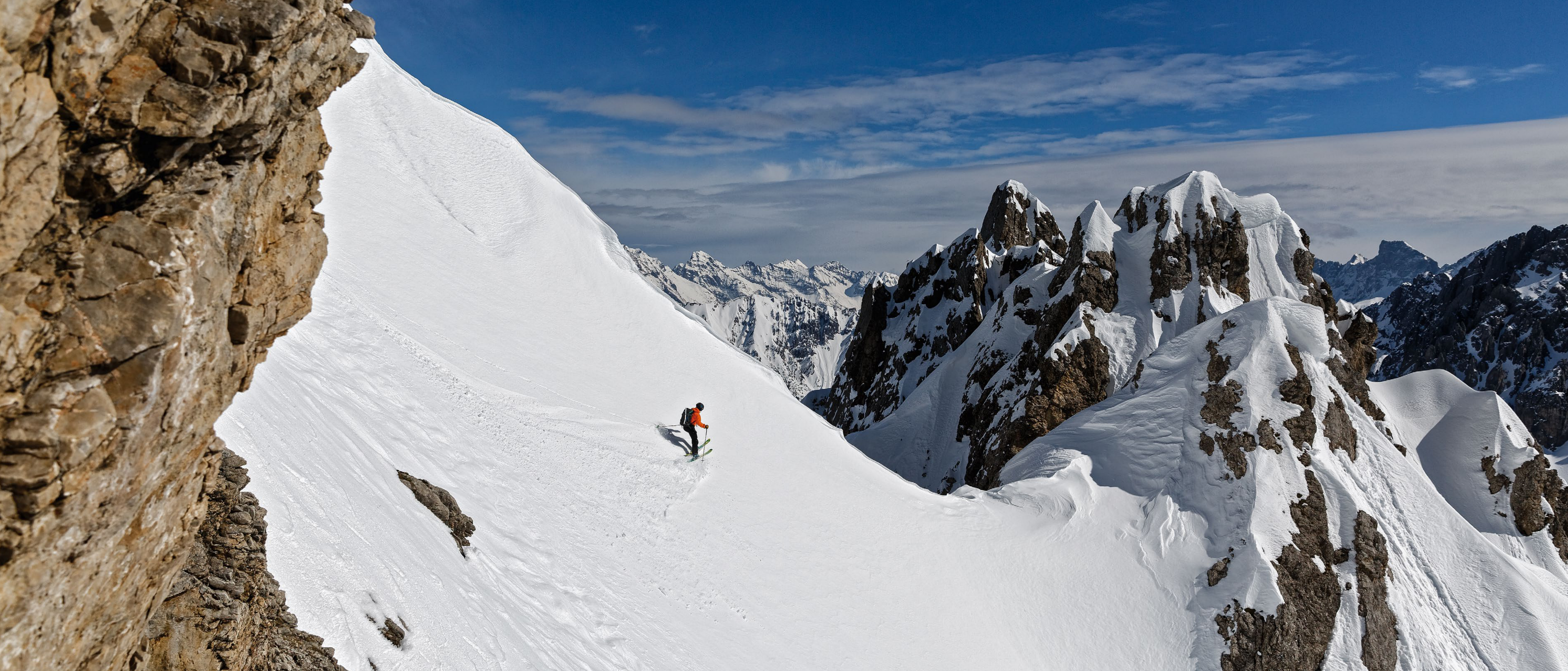
We are rewarded with an epic descent. It always pays off to know your territory. Later that day, we have to shoulder our skis for the last meters to the car. It feels like this would be the last tour of the season in these mountains, and the following weeks will confirm our intuition. And not a single forecast can change that. See you next winter, my treasured Karwendel mountains.