Chile / Argentinien · The Andes (Patagonien)
On the Road to Adventure
Issue 2014 · Words: Brody Leven · Photos: Adam Clark · 6 min read
There are no main highways zigzagging through Patagonia. Instead, the southern region of South America is crossed by only a couple of roads. Many of Chile's remote towns were inaccessible until 2003 …
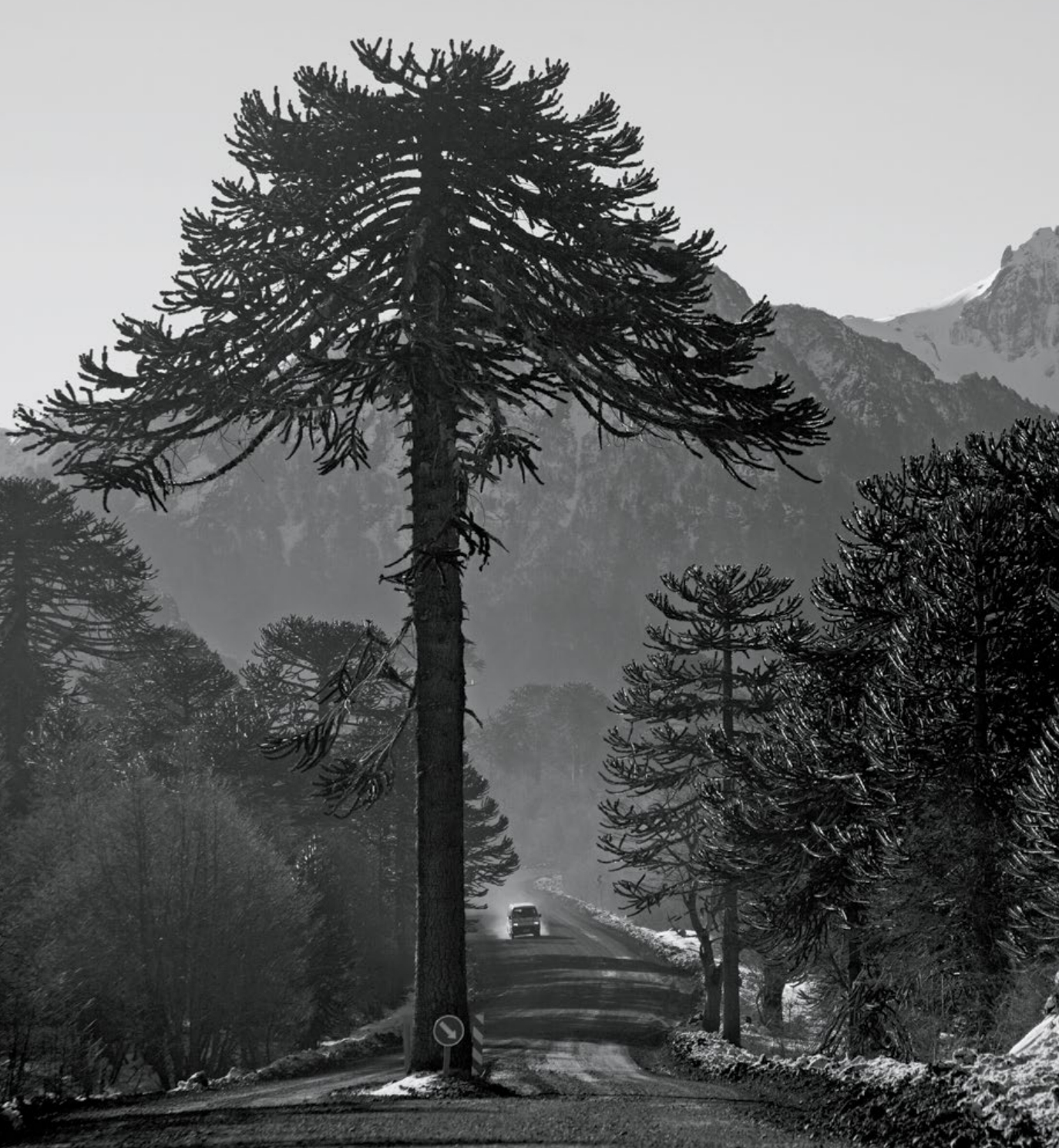
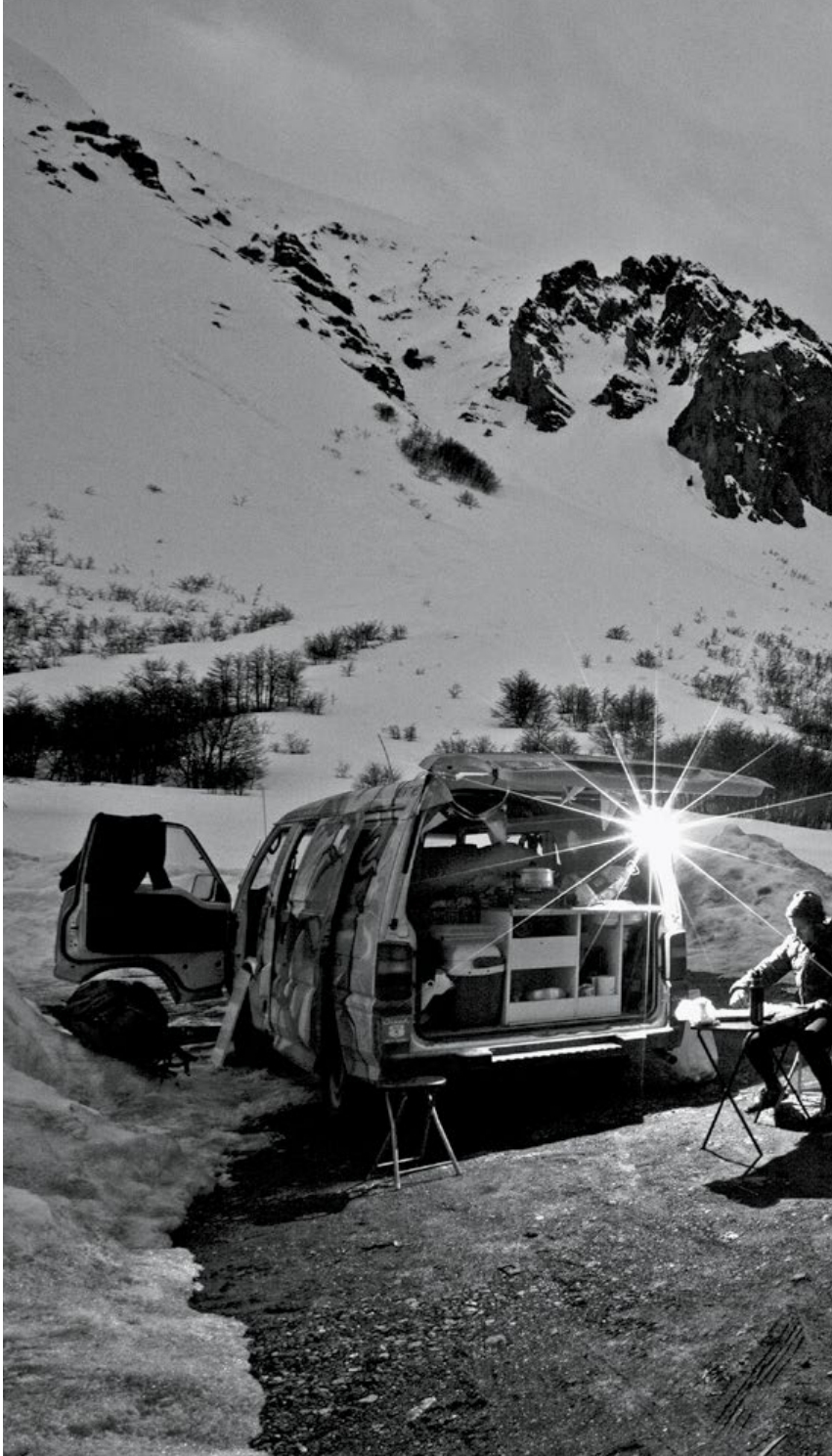
There are no main highways zigzagging through Patagonia. Instead, the southern region of South America is crossed by only a couple of roads. Many of Chile's remote towns were inaccessible until 2003, when the Carretera Austral opened 1,240 kilometers of rough roads throughout southern Chile. On the other side of the border, Argentina's Ruta 40 stretches more than 5,000 kilometers down the eastern side of the Andes Mountains. Photographer Adam Clark and I drove 5,000 kilometers of these historically significant roads – sleeping in our van, seeing mountains through the dusty windshield, and climbing and skiing anything we wanted. Our rented camper van had a small sink, silverware, a stove, storage for our gear, and a miniature bed.
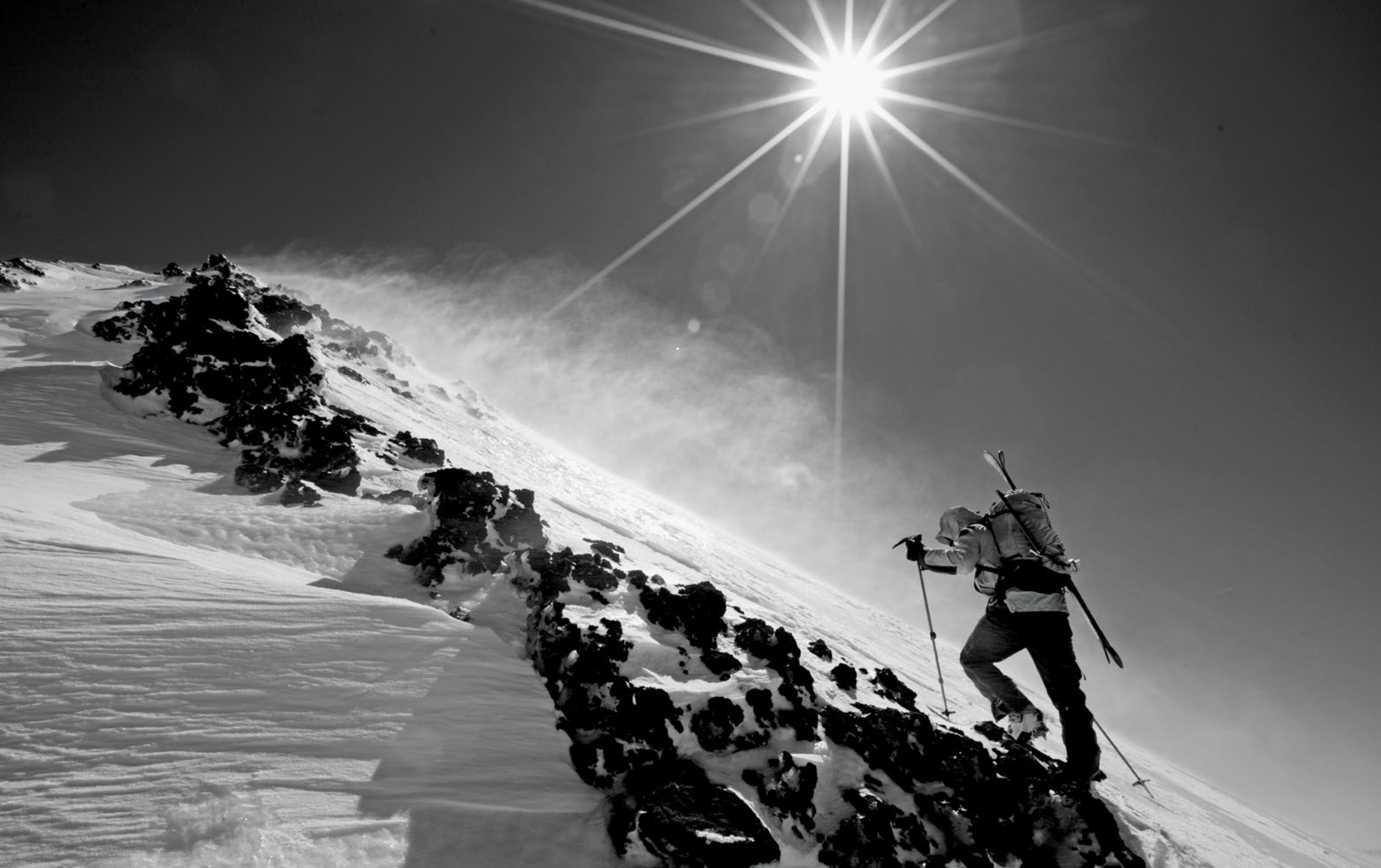
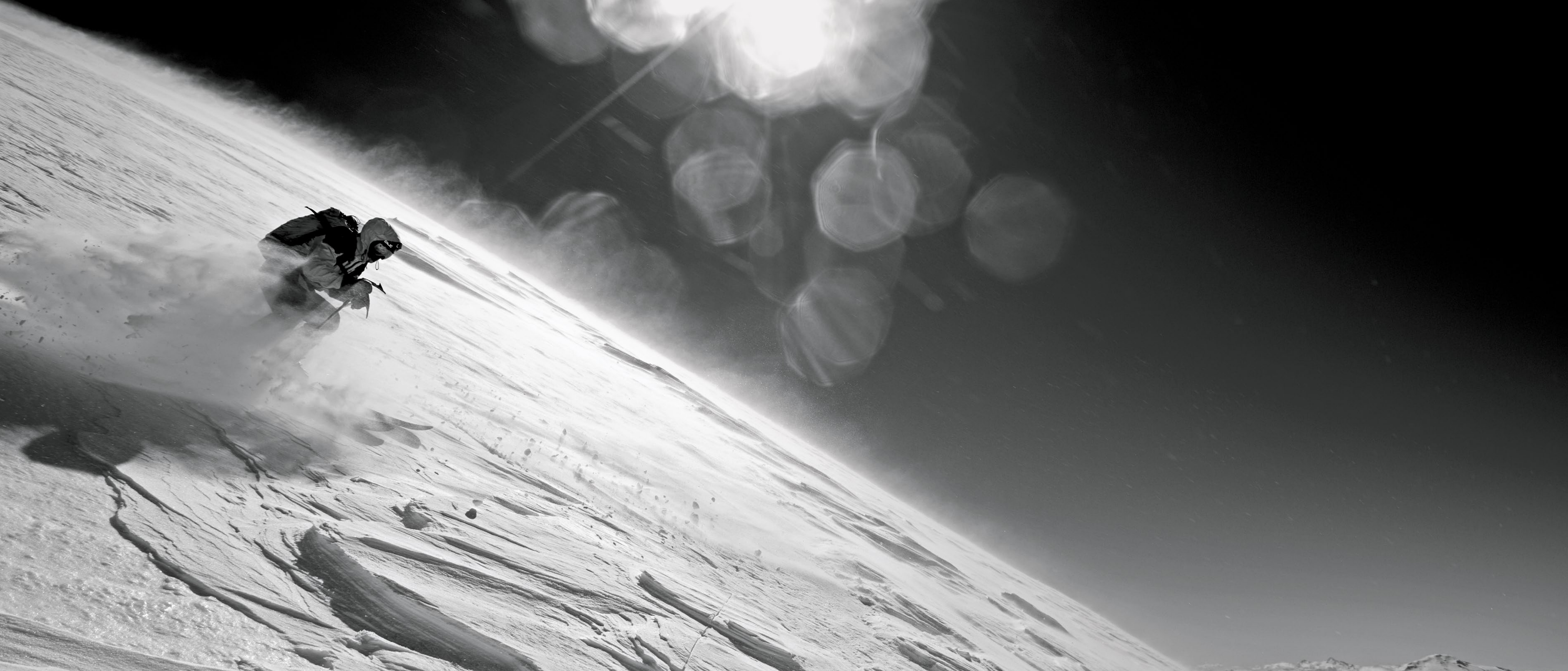
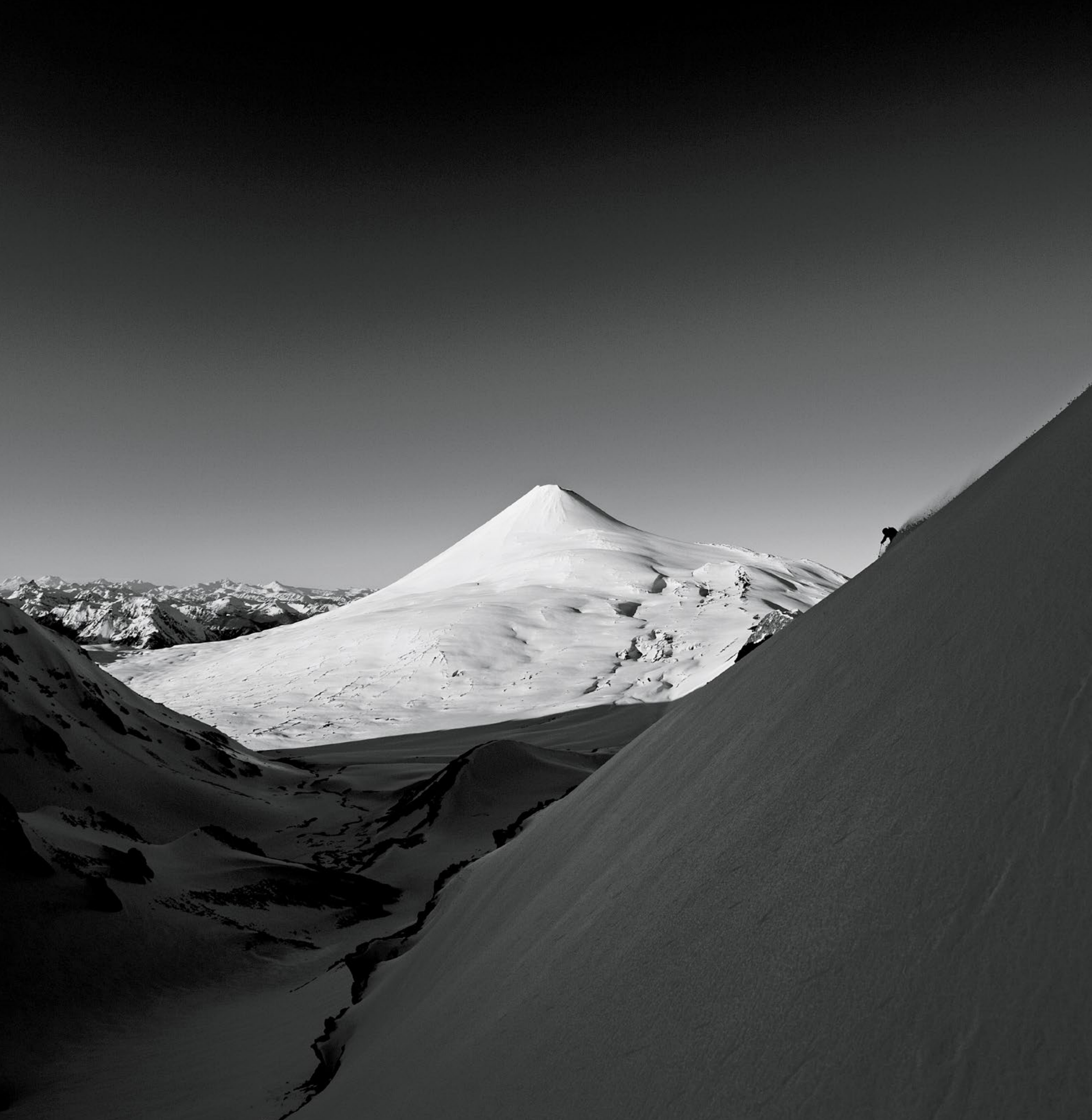
It was two-wheel-drive, but I'm convinced that only one of the wheels worked. It was our home for a month. Into the Chilean Lake District we drove, over paved roads and dirt. South of Santiago, we first climbed 2,985-meter Volcán Antuco. Overlooking the gloriously vast and deep blue Laguna del Laja, we skied from the summit under blue skies. Less than twelve hours later, we were climbing the neighboring 3,585-meter Sierra Velluda, a massive stratovolcano that likely sees few ski descents due to its remote and difficult nature. It was a taxing climb, especially given that it was September. I had little ski fitness, and we'd skied a huge volcano the previous day.
But the position of the mountain and nature of our trip allowed it to set a perfect tone for countless hours to come, both in the van and on snow. We only had a vague idea of the volcanoes that dot the landscape of Patagonia. As they came into view, we would learn their names and then ski them. We passed the town of Pucón and continued on to Volcán Lanín (3,747 meters) at the Chile/Argentina border. The trailhead is in Argentina, and the authorities gave us grief about our rental car crossing the border. A day later, we were able to drive into Argentina and climb to the refuge that sits high on the mountain, where we slept before our following day's push to the summit and descent down the very steep east face.
On the way back through Pucón, we couldn't help but ski Volcán Villarrica, peering into its summit crater to see if steam was obstructing the view of the famously visible bubbling lava. Our energy was high and the weather was cooperating. We were skiing everything we wanted; and the van was taking us there. We followed the Carretera Austral through much of Chile. The road is perpetually under construction, offering dust, dirt, sand, mud, and potholes. But it also showed us flamingos, a complete dearth of tourists, and natural beauty in the raw. It opened into vast plains and tight corridors with enormous rivers lining deep valleys. Bridges were narrow, turns unmarked. With every passing kilometer I felt more entranced with the journey.
We drove for hours as we climbed and skied from the summit of nine mountains. Our camp was a new location every night, from the vacant shores of giant lakes to gas stations. It was our rolling base camp. Adam and I quickly became intimately familiar with tire chains, nuanced burdens that we'd never before used. We put them on and took them off. Again and again. Spring weather is what we'd expected for our trip. Instead, we experienced heavy snowfalls, avalanches, and icy roads. Two hitchhikers were on the side of the dirt road. They'd been volunteering at national parks throughout South America. They taught us about the flora and fauna of our surroundings. We taught them what it meant to get a flat tire in the middle of nowhere.
Four days later, we bid them farewell at the new Patagonia National Park. We carried on through the afternoon, the granite spires of El Chaltén all but steering the car south. Driving for ten hours became significant not due to the passing time, but to the landscape through which we traveled and, most notably, to the destination toward which we pointed. Along a flowing river, we camped in Argentina after passing through the most remote border crossing I'd ever seen. One minute into the next morning's drive, we stopped at a two-meter-deep gorge that had bisected the road, making it completely impassable. There were no road signs, but the road offered a split near our campsite. We had no choice but to see where it would take us.
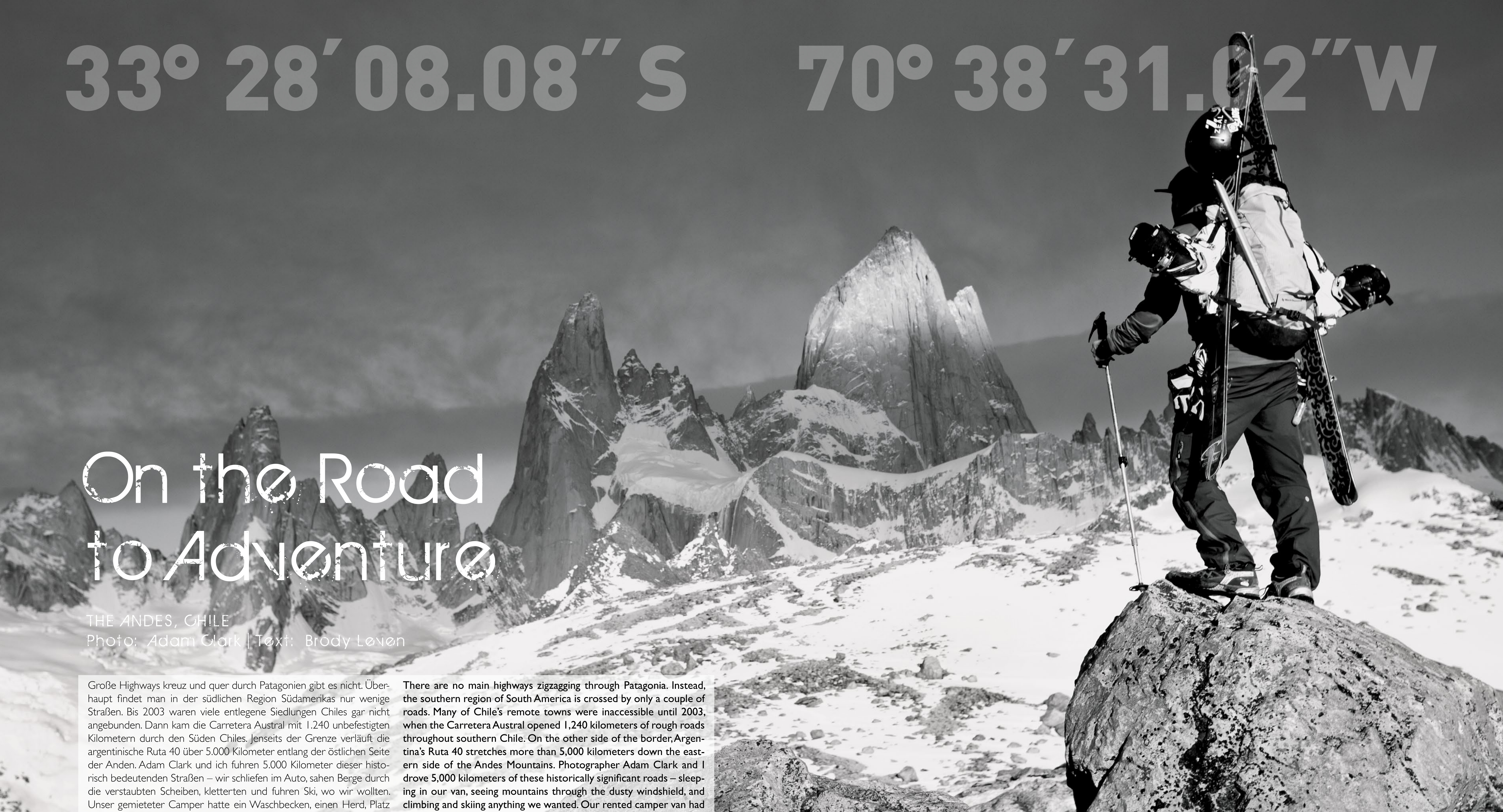
Ruta 40 is Argentina's answer to the Carretera Austral. It visits 20 national parks and crosses 5,000-meter mountain passes. It is undoubtedly the most scenic drive I have ever made, with nothing but sheer nature out the windows. Down Ruta 40 we drove, with towns more scarce and fuel even more so. The fuel light illuminated the dashboard one afternoon, and ten minutes later we passed a sign: 75 kilometers to the next town. Running on fumes, we somehow made it through the wide spaces empty of towns, but full of life. Since leaving Santiago, skiing in El Chalten in the shadows of Fitz Roy, Cerro Torre, and the other crystallized granite spires of the famous massif was our ultimate ski objective.
We'd spent our lives reading about climbing adventures to the far-off peaks, and now they were within reach. We arrived and stepped out into La Escoba de Dios – the howling Patagonian winds that sweep the high plains. One week in El Chaltén is laughable by most climbers' standards. Alpinists spend seasons in the village without seeing a single break in the hostile weather during which they can climb. With our single week, we were able to be in the mountains every day. We saw peaks from the town's sole road, put our backpacks on, and climbed. The sun rose as we crested the shores of the frozen Laguna de los Tres. After a memorably gorgeous night in a refuge along the Rio Blanco, our early start offered the most spectacular sunrise of my life.
Punta Velluda sits directly in front of Fitz Roy, and its approach never took us out of its staggering brilliance. We skied from the summit without a cloud in sight. From the road we spotted an invitingly steep peak, Cerro Crestón. For my October 5th birthday, we approached it with no expectations and a high chance of failure. Six hours later, I was utterly surprised to be standing atop it. The climbing was steep, and putting skis on was comforting. Perfect snow for steep skiing had us at the van with ample time to find a campsite on the river before departing for Punta Arenas the next day, completing our goal of driving to the southernmost mainland city in the world. A road is normally only a means of accessing a mountain adventure. On our trip through Patagonia, the road was the adventure.