Indien · Kashmir (Gulmarg)
Path of Roses
Issue 2011 · Words: Eva Walkner · Photos: Yves Garneau · 6 min read
'No problem, no problem! This is my girlfriend!' says our driver Bashir with a grin, as he blasts the horn and prepares to overtake a splendidly decorated Kashmirian bus. The fact that his …
'No problem, no problem! This is my girlfriend!' says our driver Bashir with a grin, as he blasts the horn and prepares to overtake a splendidly decorated Kashmirian bus. The fact that his four-wheeled 'girlfriend' (whose bodywork, it has to be said, had seen better years), is faced with another bus coming the opposite way doesn't seem to particularly bother him. 'She's a good girlfriend' he says laughing and strokes the steering wheel of his bus lovingly. By a hair's breadth he manages to change back into our lane. It's early February. Katharina Schuler from St. Anton am Arlberg and I, accompanied by our video and images guys Yves Garneau and Marcel Karp, are heading to one of the most beautiful freeride locations on the world – Gulmarg.
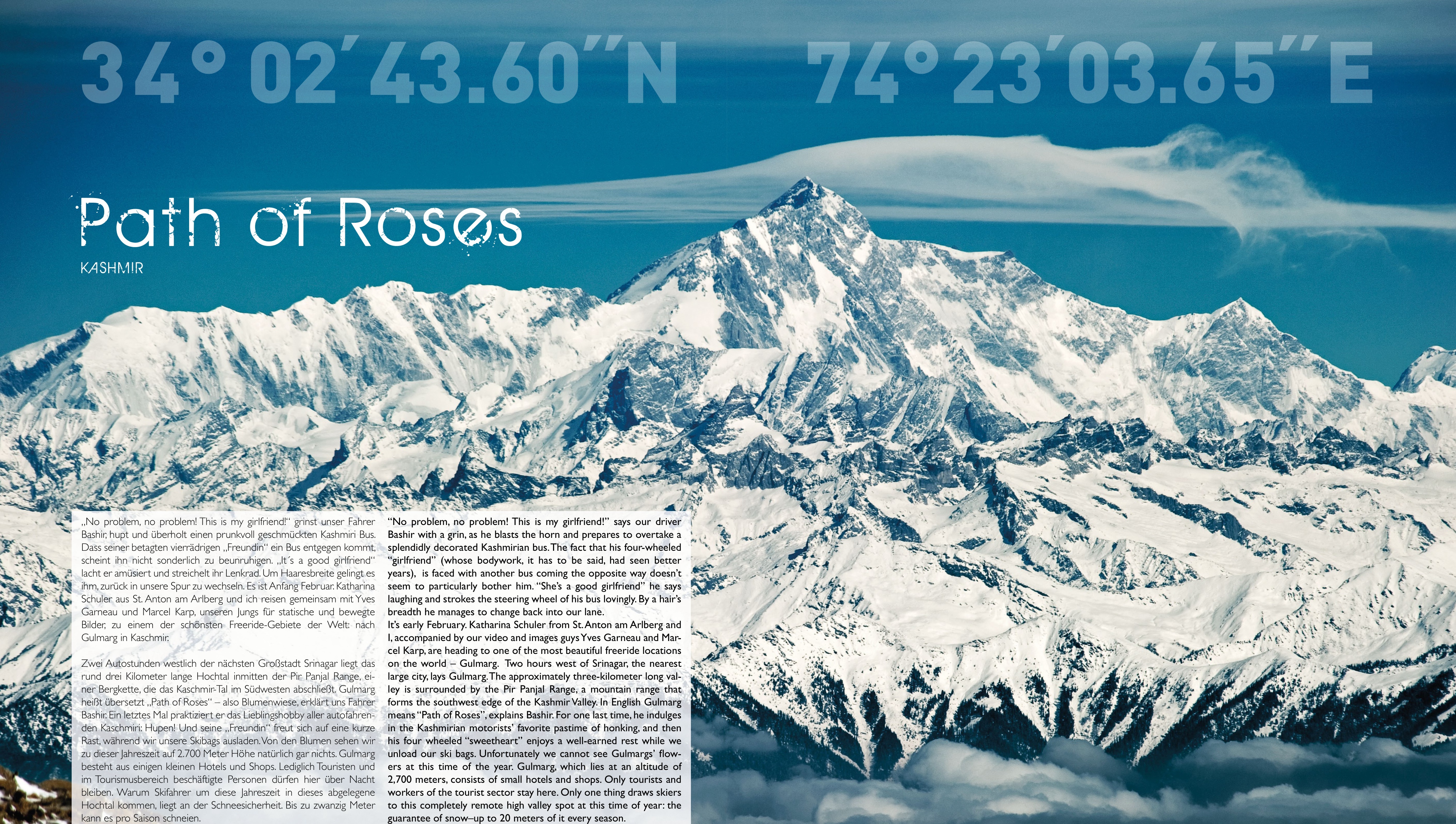
Two hours west of Srinagar, the nearest large city, lays Gulmarg. The approximately three-kilometer long valley is surrounded by the Pir Panjal Range, a mountain range that forms the southwest edge of the Kashmir Valley. In English Gulmarg means 'Path of Roses', explains Bashir. For one last time, he indulges in the Kashmirian motorists' favorite pastime of honking, and then his four wheeled 'sweetheart' enjoys a well-earned rest while we unload our ski bags. Unfortunately we cannot see Gulmargs' flowers at this time of the year. Gulmarg, which lies at an altitude of 2,700 meters, consists of small hotels and shops. Only tourists and workers of the tourist sector stay here.
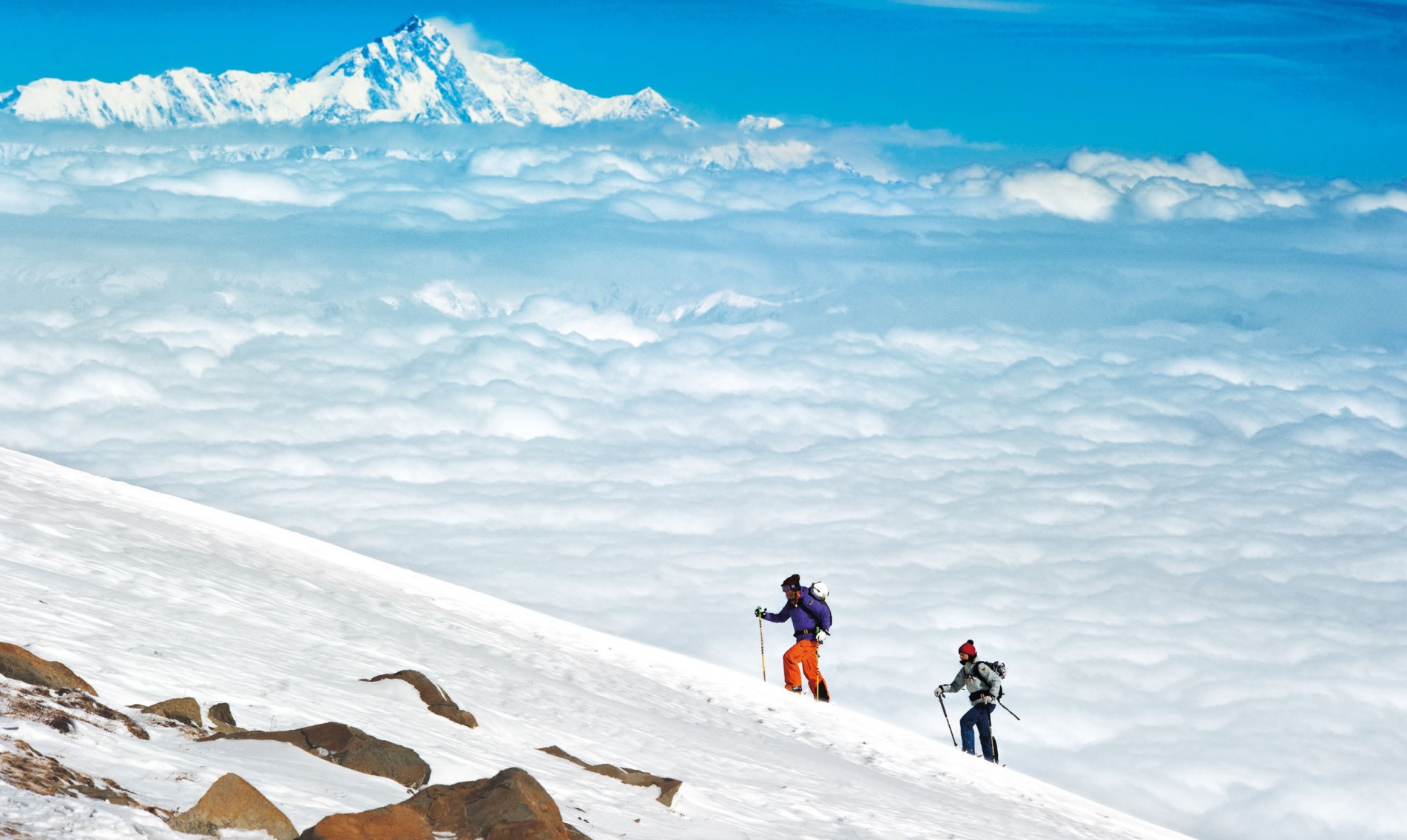
Only one thing draws skiers to this completely remote high valley spot at this time of year: the guarantee of snow – up to 20 meters of it every season. At this altitude, the air is thin: our bodies feel the effects being 4,000 meters above sea level. We stand on Mount Apharwat, which at 4,200 meters is the Pir Panjal Range's highest peak, and look across to the magnificent Nanga Parbat with a satisfied grin. I have never been to the Himalayas before, never been as aware of my own insignificance as I am now, standing surrounded by these regal giants. And I have never before seen anything so beautiful. Our first descent is called 'Drang'. First we cross a plateau and then we can choose from a multitude of untouched slopes.
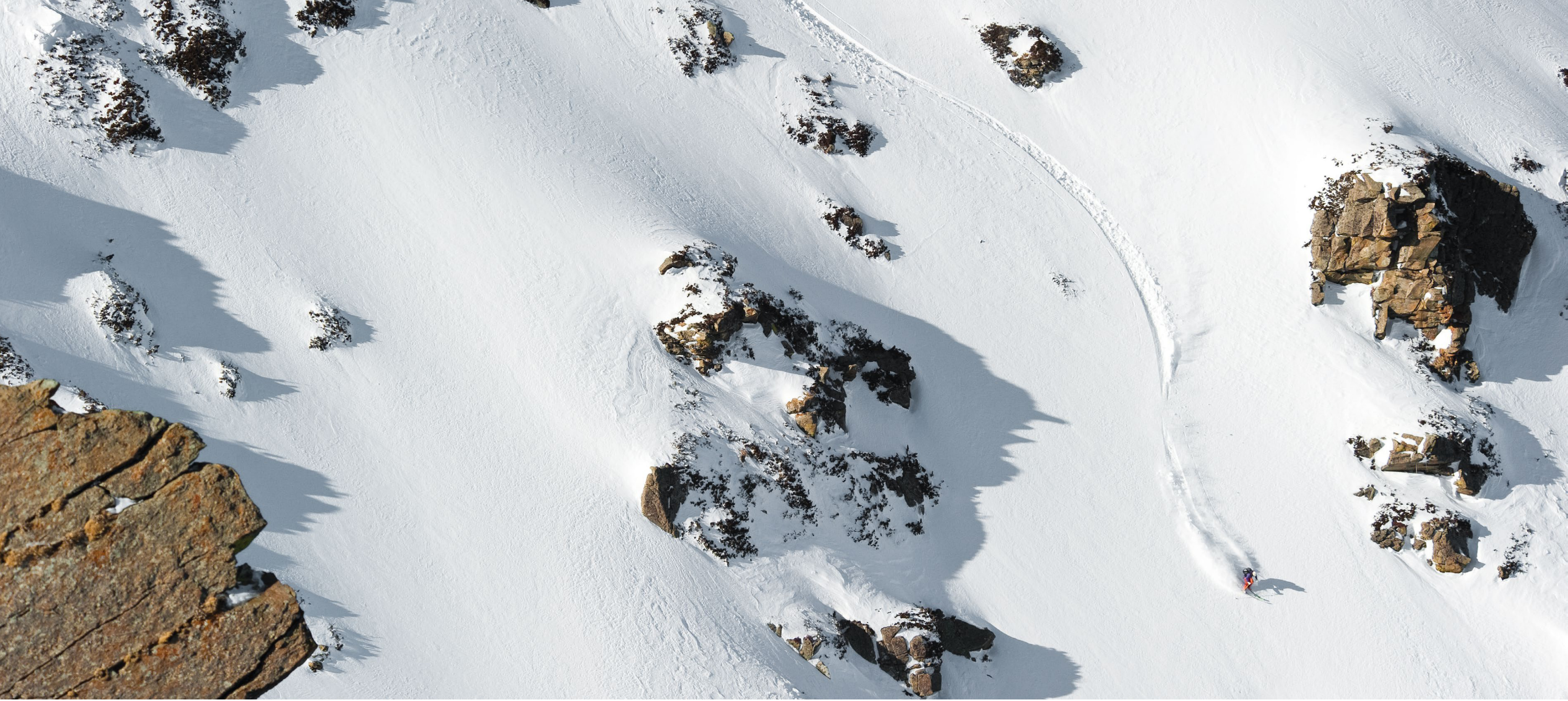
Next, it's a 2,000 meters drop in altitude to the village of Tangmarg. We enjoy the finest quality, meter-deep Kashmiri powder. The snow is completely untouched. This is truly awesome. We lay down our lines over open terrain and through the famous 'paper trees', then further down we come across perfect tree runs. Unbelievably, even days after the last snowfall, the run towards Tangmarg is still covered in virgin powder. We all agree that this is freerider's paradise. A seeming eternity of powder turns later, we end our run in a small, remote village just before Tangmarg. But what we experience here gives us real food for thought.
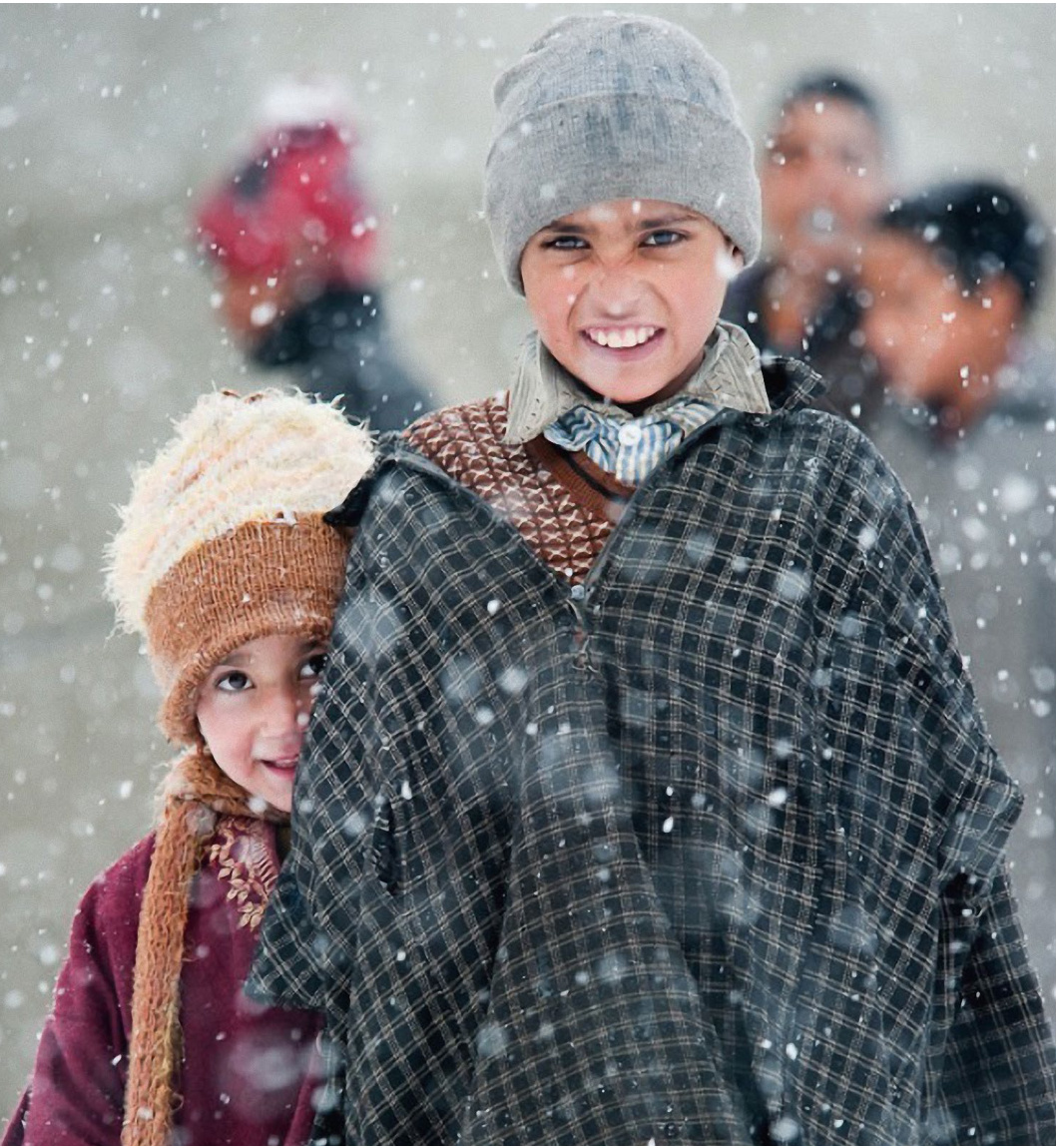
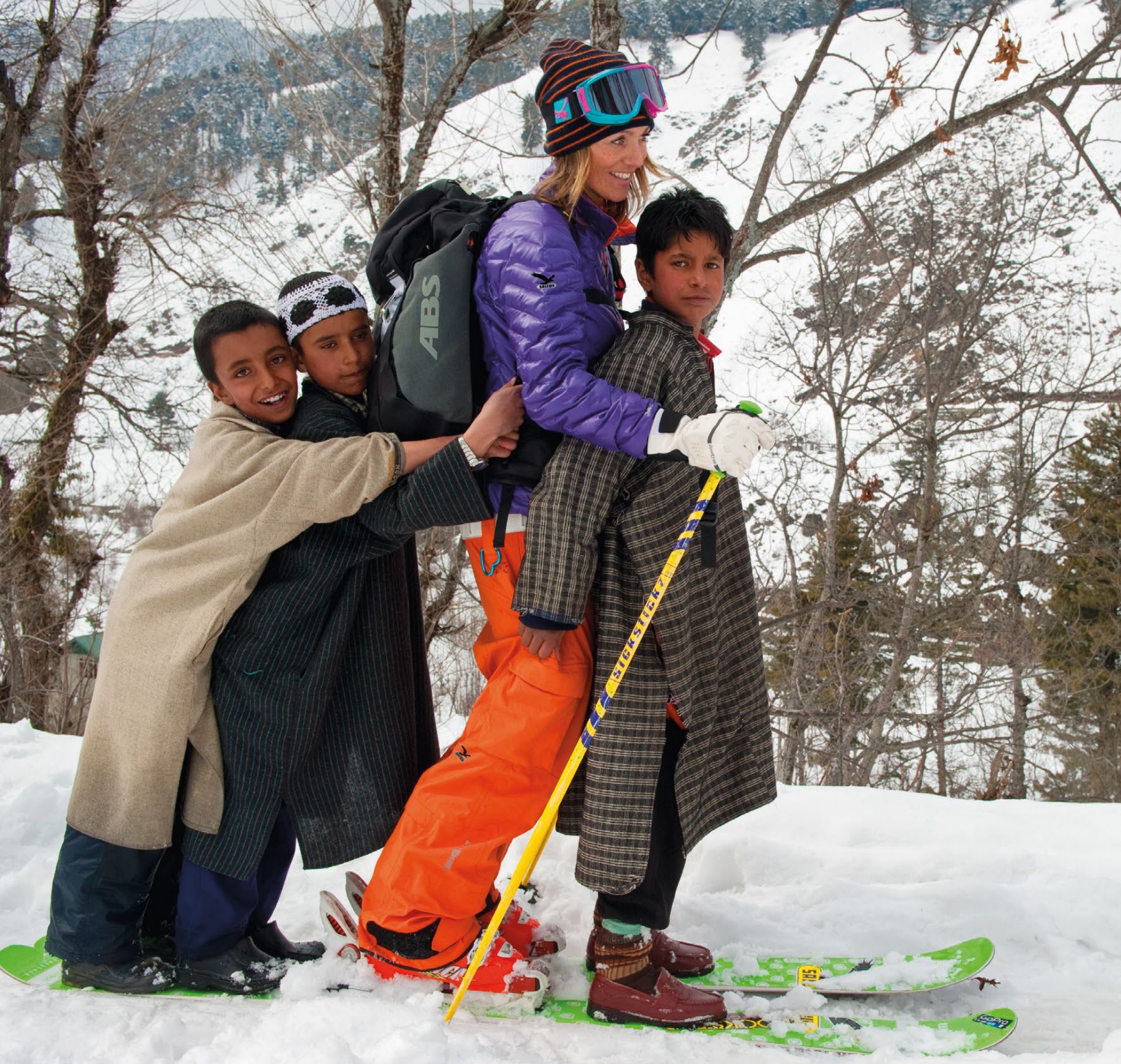
We witness scenes of inconceivable poverty: Children with shoes and clothes riddled with holes who tell us in broken English that they'd love to go to school, but that most of them don't have the opportunity; women, who go about their work in sandals or even barefoot; people living in old, tumbled down huts, which often have no heating and are overcrowded. Despite this poverty, the village kids are very friendly to us. They laugh and shriek as they play. Three of them climb on our skis and cling onto to our backpacks like monkeys. These are kids who seem to be happy even without computer games, brand name clothing or their own ski gear. We give them all the chocolate we have in our backpack.
The children act as if Christmas and their birthdays just fell on the same day. This is a place where two very different worlds collide. Children who cannot even attend school or have a bar of chocolate come into contact with wealthy Western ski tourists who pay more money for an overnight hotel stay than a local waiter earns within a month. Nevertheless, our guide Chris strictly forbids us to give them any money. We're allowed to hand out as much chocolate as we like, but no rupees. At the end of this indescribable day, we meet Yassin Khan. Yassin runs a ski shop in Gulmarg. While boasting that he sells the best saffron and carpets, he demonstrates Kashmirian-style ski service to us.
With a cigarette in one hand and a bodywork file in the other, he works away on the steel edge of a 10-year-old alpine ski. 'I'm expecting delivery of brand-new carving ski,' he says proudly. We sit down watching and listening to him attentively. 'You know, everyone believes that it's dangerous around here, that terrorists are everywhere – al-Qaeda, the Taliban. But here we live in paradise. Look around: it's peaceful, beautiful and totally safe – safer, than anywhere else in the world'. The file slips off the ski edge and onto the floor, for the third time. Then his cigarette lands on the unwaxed, faded and scratched coating of the ski. He laughs and knocks off the ash. 'Finished. Perfect for the next customer to rent,' he says.
To be sure it's a pretty unusual ski service, but it's very amusing. Yassin Khan is right. Gulmarg strikes us as safe, despite or maybe even because of the presence of many soldiers who patrol around the lifts, through the streets and in the mountain area behind. It snowed again in Gulmarg. A snowstorm with one-and-a-half meters of fresh snow was promised for the next two days, all followed by stunning mountain weather. It was worth the wait. The day after the storm we had fresh powder the whole day. Our hardest task was choosing from all the unbelievable lines. We enjoyed several days of untracked slopes and fantastic conditions.
While our photographer Yves as well as Katharina had to travel down to the valley due to a stomach bug, Justin, who works as a guide and for the Avalanche Commission, and I were off to the pipeline couloir. When Yves returned that evening, recounting how he came face to face with a snow leopard on the descent, I momentarily wished that I had taken the same run down to the valley. But the 40-45 degree pipe was great as well. We hiked about two hours up to Mount Apharwad and then a bit further to the drop in. It was a relatively short distance, but in the thin air at 4,200 meters, a simple walk becomes a real test of your fitness. We got our reward though – a cool downhill run that took us from the deepest powder into massively thick fog.
Justin did a fantastic job and led us safely into the valley. This day made a fitting end to our unforgettable adventure. With a tear in our eyes we took one last look at the mountain in the early morning light. But with home, sweet home calling we had to say goodbye to one of the most beautiful places on earth. One thing we know for sure – we will be back!