Japan · Hidaka / Mt. Chokai
The Japanese Haute Route
Issue 2022 · Words: Kei Karino · Photos: Takahiro Nakanishi · 4 min read
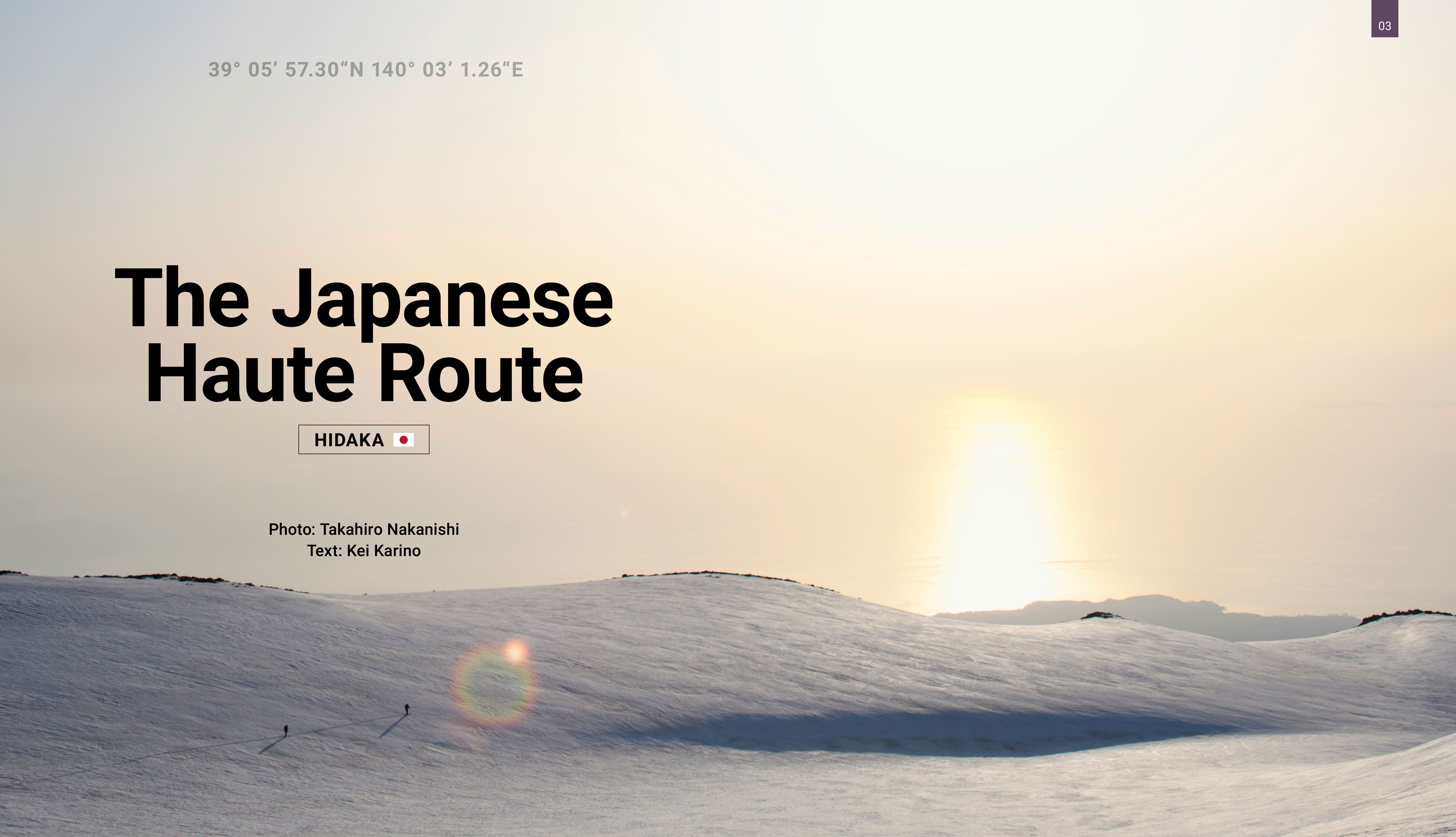
When you think of skiing in Japan, do you think of Japow, Hakuba or Niseko? If so, you have only scratched the surface. Mt. Chokai is a 7,336-foot volcano facing the Sea of Japan, exposed to cold waves from the Eurasian continent. In midwinter, the weather is harsh and…
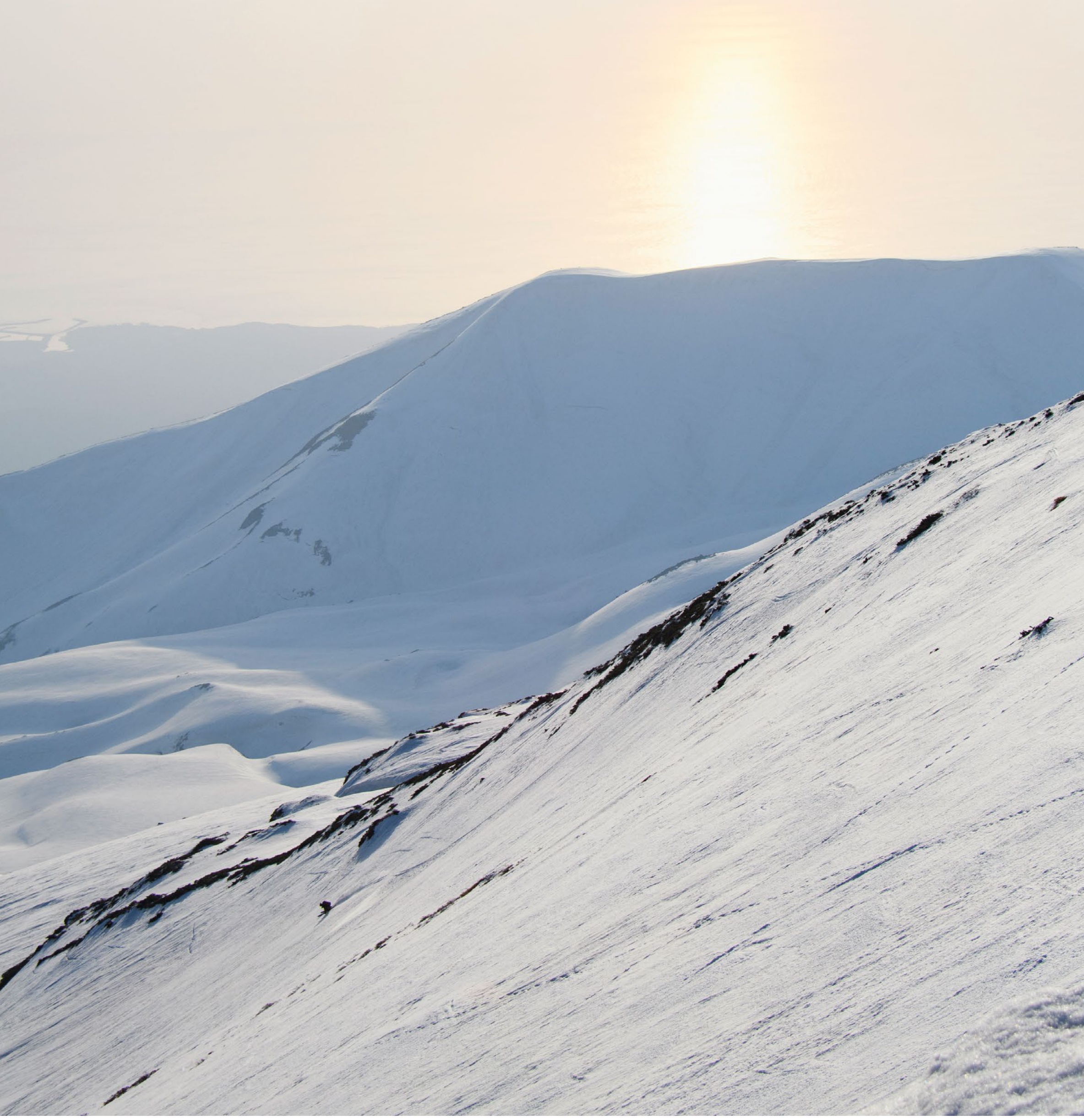
When you think of skiing in Japan, do you think of Japow, Hakuba or Niseko? If so, you have only scratched the surface. Mt. Chokai is a 7,336-foot volcano facing the Sea of Japan, exposed to cold waves from the Eurasian continent. In midwinter, the weather is harsh and inhospitable. Few people know how long the ski season really is in Japan, and Chokai has one of the longest, because thanks to abundant snowfall, you can ski there until early summer. When spring arrives, skiers climb the mountain from different directions and ski a wide variety of lines, but no one has ever thought of connecting all these routes. There are huts scattered all over the mountain – perfect conditions for a Japanese version of the Haute Route.
I first came up with this idea two years ago, and two fellow skiers agreed to join me. One of them was Hirofumi Ishizaka, a certified IFMGA guide and my ski mentor. We find time to climb or ski together throughout the year and he is a great teacher, always showing me the latest techniques and telling me about the mountains of the world. The other member of our group, Takahiro Nakanishi, is one of the best photographers in Japan. We’ve done one-day photo shoots in the mountains before, but this was going to be our first three-day trip together. The snowfall was very heavy this winter and the road to the trailhead was still closed in the spring, so we had to walk to the foot of the mountain.
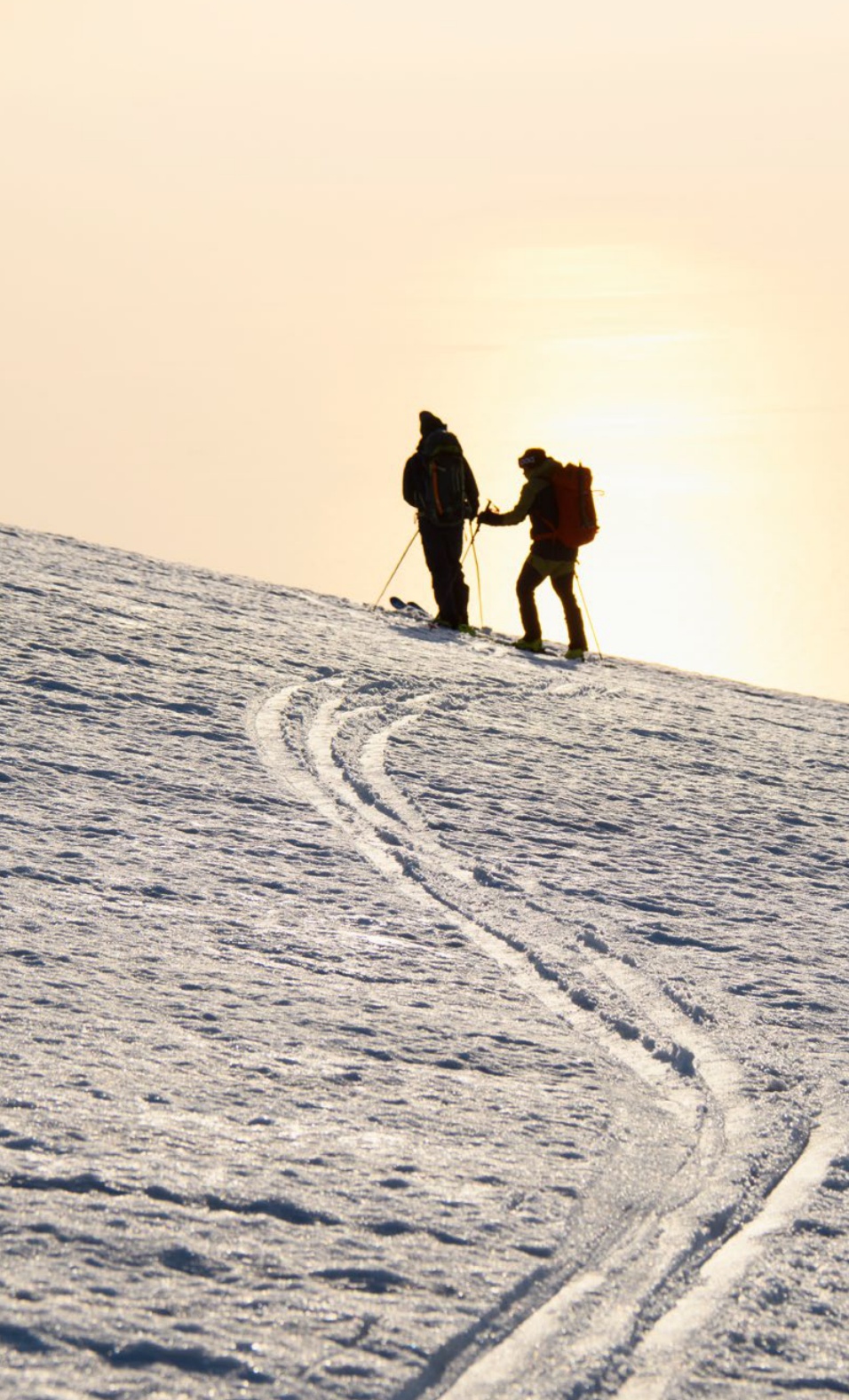
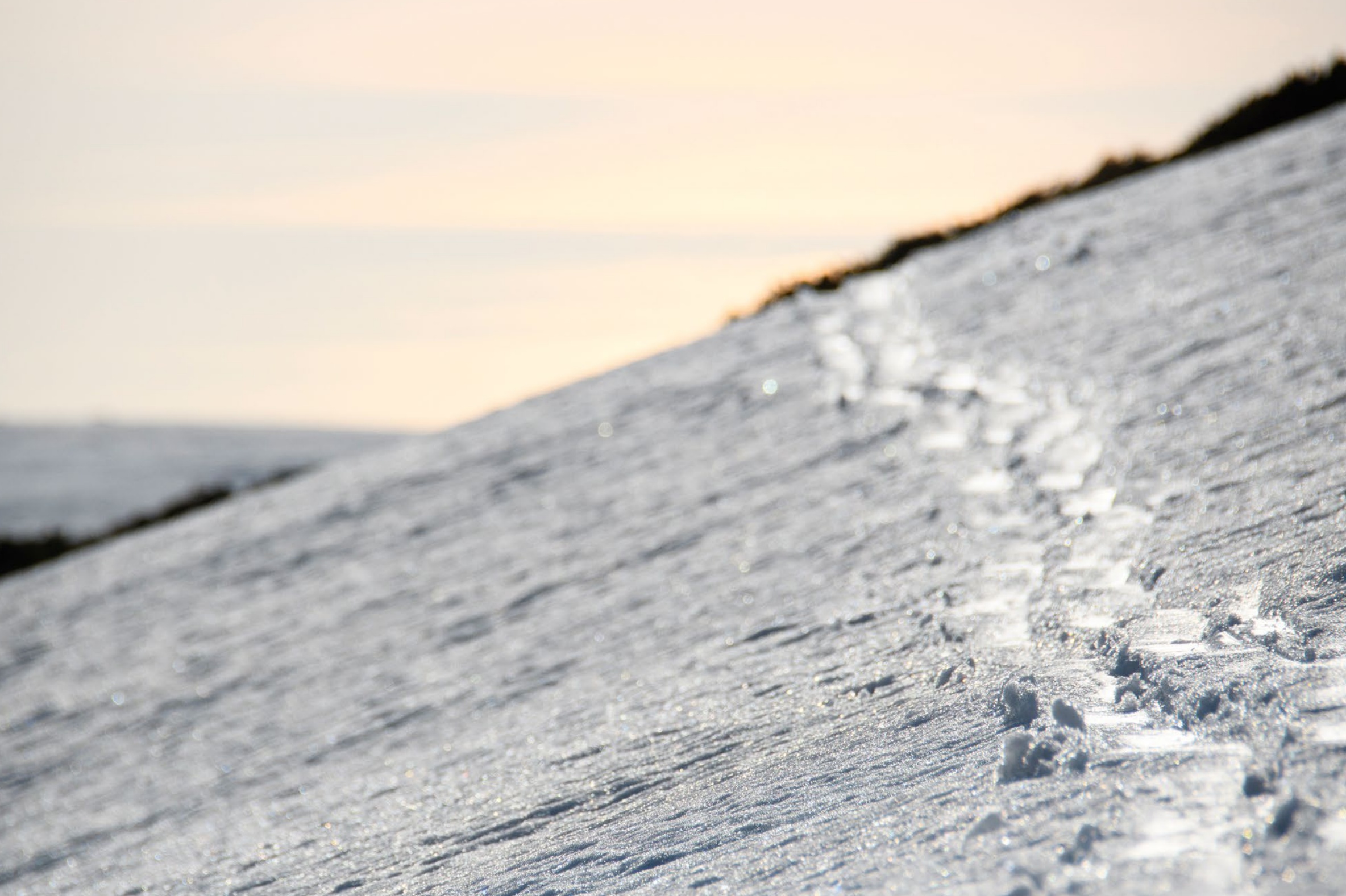
The day we set out was so warm that it is almost painful to remember. The climb was gentle at first, but we had a long way to go, and for a while it felt like we were barely making any progress. At times like that, I think it’s best not to hurry, but to take a nap when you’re tired and then move on. As we hiked deeper into the mountain, our hearts started to beat faster and our pace spontaneously picked up. We curbed our impatience, and after eight hours of hiking, we reached the summit at a magical early evening hour. From here to the hut, we had a 3,000-foot ski run to enjoy. The upper part was steep and challenging, but a wide, gentle slope awaited us at the bottom. As we were preparing for the descent, a bear appeared.
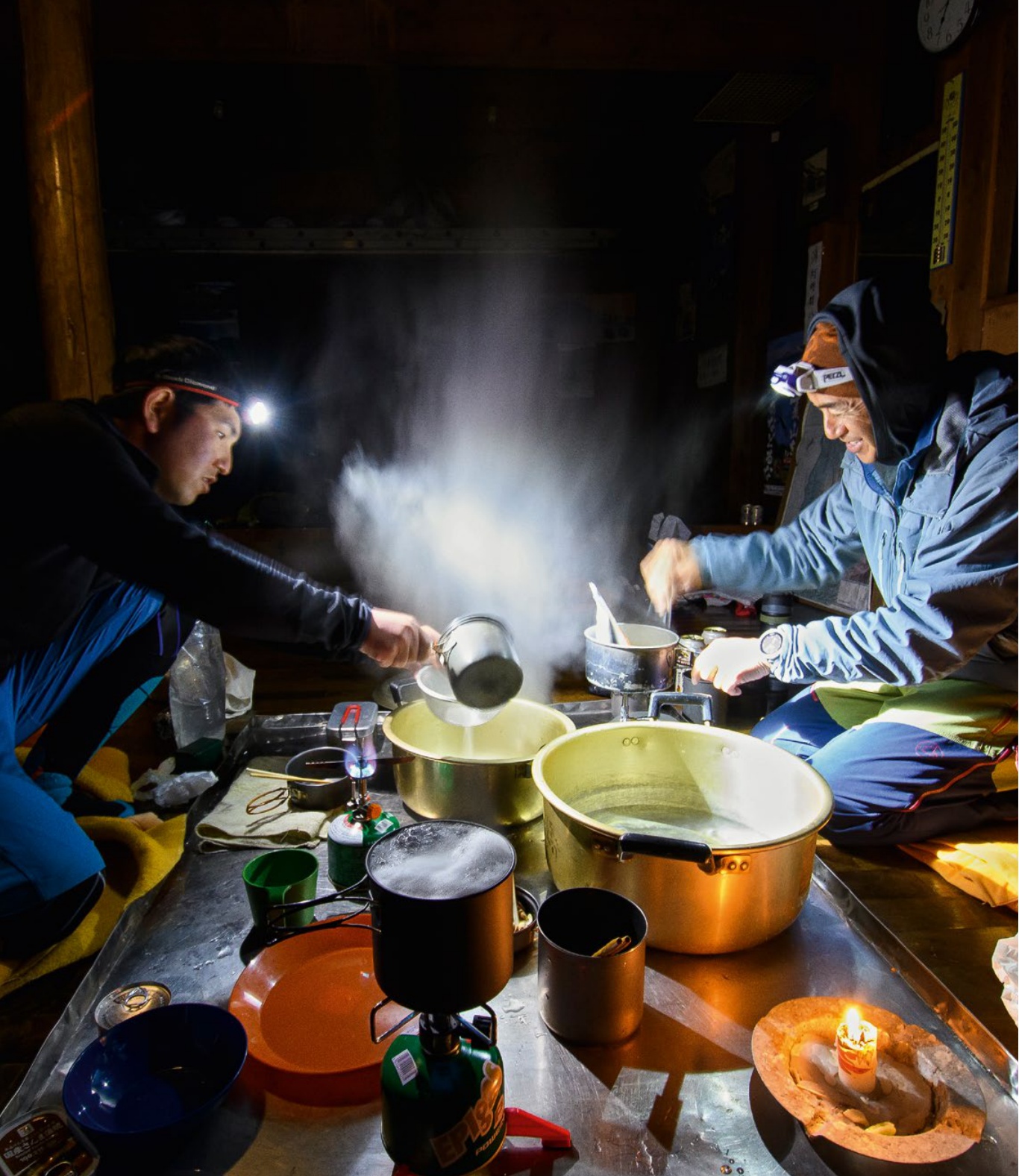
He is a resident of this area that I encounter every year, and I was happy to see him as healthy and happy as ever. After he bid us farewell, we finally got on our skis. During the first few pitches we each made our own tracks in the snow, but then we continued as a group, enjoying how time seemed to slow down for us. By the time we reached the hut, the difficult climb earlier in the day seemed a distant memory. In the summer the hut, a solid wooden building with plenty of space inside, including beds, is staffed, but in the winter it is unmanned. That evening we cooked pasta and raised a toast to the day with a couple of beers. If you brought enough supplies in the summer, you could have a real party up here!
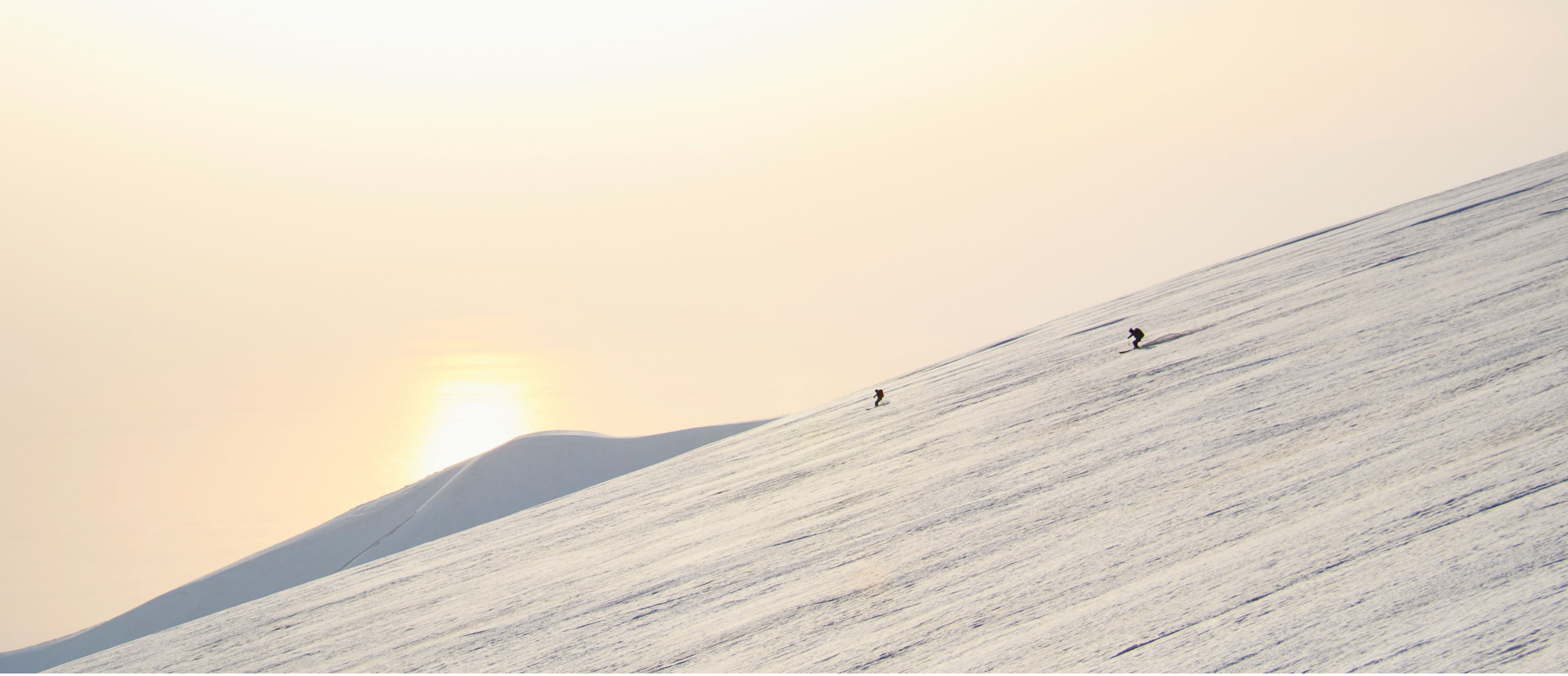
The next morning we woke up to good weather. We had originally planned to descend the middle part of the mountain, but instead decided to climb directly to the summit before the weather worsened. The valley leading up to the summit was blanketed in pure white snow, as breathtakingly beautiful as a glacier. We all had our eyes on the northern slope of the summit, for what it had to offer in terms of slope, distance, width, and location – all of it was perfect. As we skied down the face, I felt my body tensing to the right degree, and a quiet excitement coursed through me. The spring snow felt good under my skis, and I skied aggressively but in control, careful not to pick up too much speed.
Hirofumi and Takahiro were also flying down the mountain, and we all shouted “Awesome!“ between gasps. After catching our breath, we chatted about what we had just experienced and left the northern slope behind as we made our way to the hut where we would be staying that night. Along the way, it almost felt like we were slowly dipping into the ocean that lay ahead of us in the distance – an ideal ending to our second day on Mt. Chokai. Our slow descent down the mountain as we discussed the day’s events was a happy time, and the beer that night never tasted better. On our last morning, the mountain presented itself shrouded in thick fog – a complete contrast to the beautiful weather of the two previous days.
Hirofumi looked at us and smiled: “A perfect day for some navigational training!” We got out our maps and prepared in good spirits to make our descent using the compass. No fog in the world was going to spoil our Haute Route adventure now.