USA · Sierra Nevada
The Other California
Issue 2018 · Words: Hans Ludwig · Photos: Christian Pondella · 5 min read
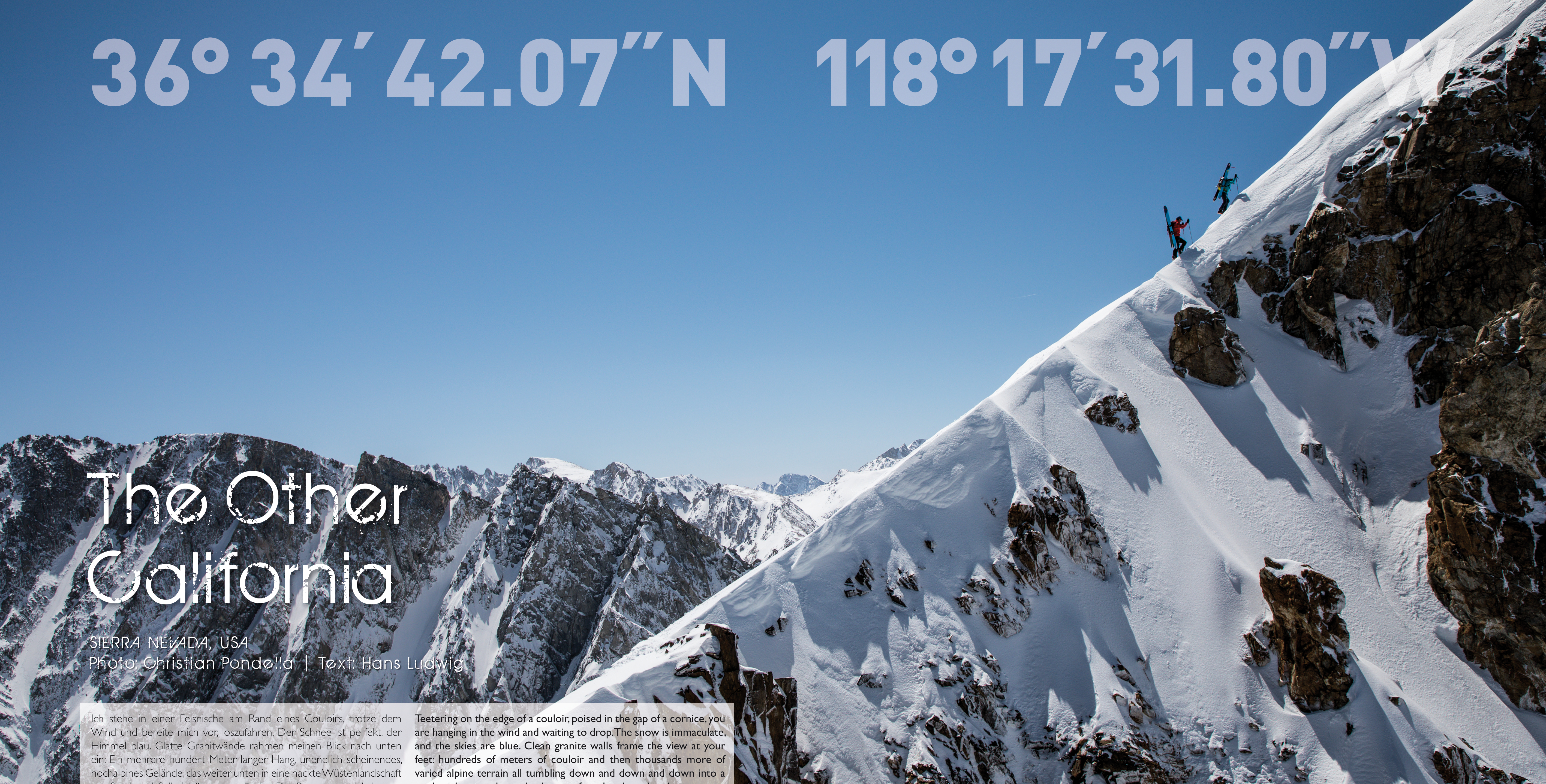
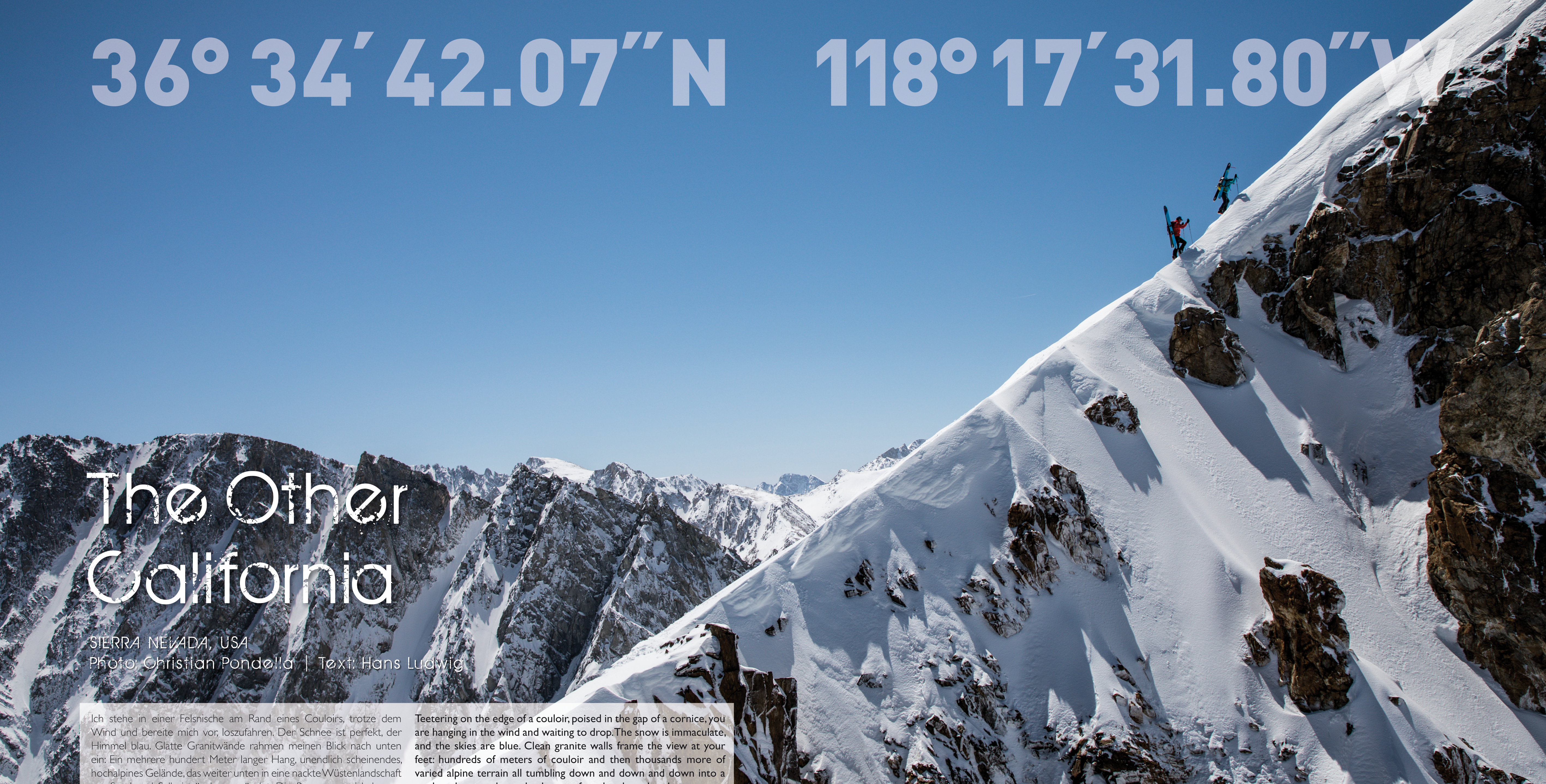
Teetering on the edge of a couloir, poised in the gap of a cornice, you are hanging in the wind and waiting to drop. The snow is immaculate, and the skies are blue. Clean granite walls frame the view …
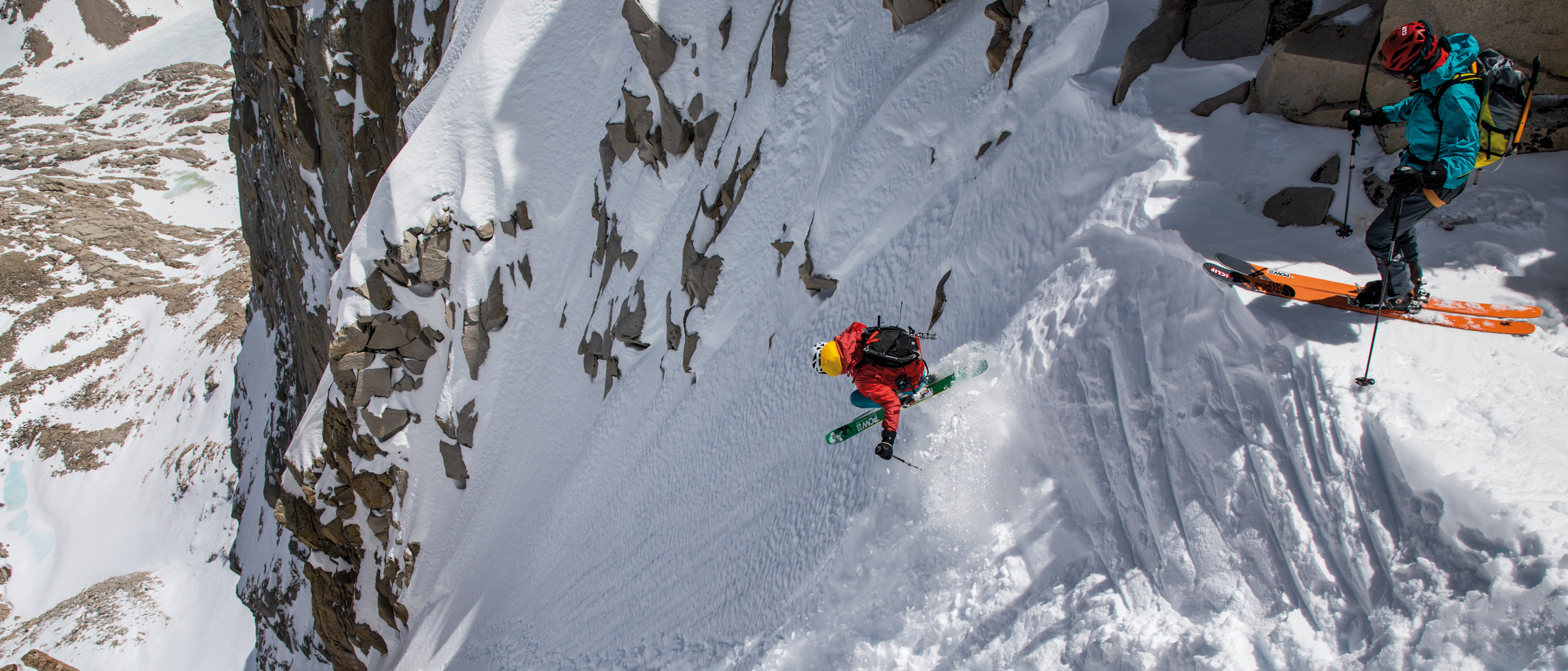
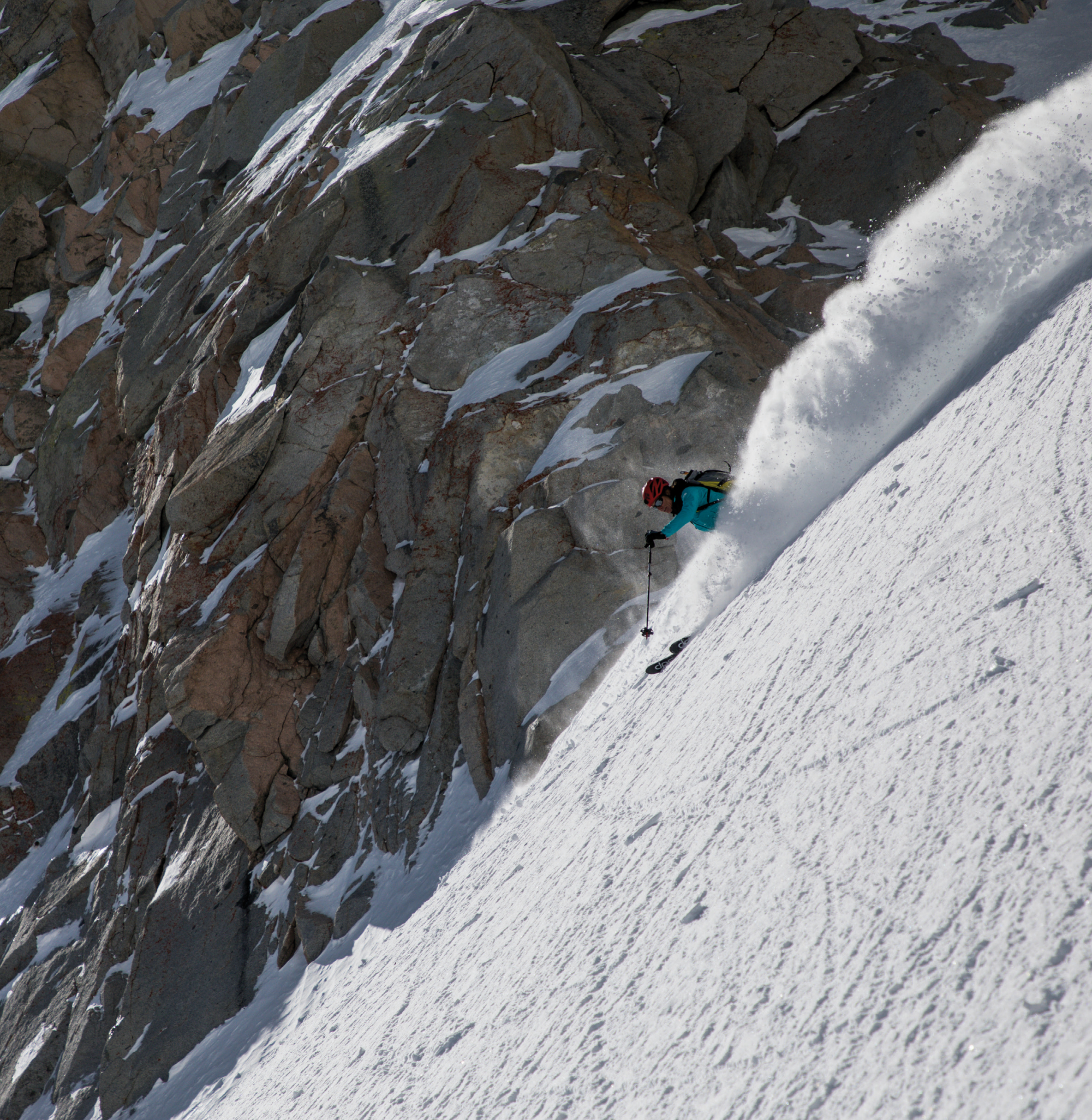
Teetering on the edge of a couloir, poised in the gap of a cornice, you are hanging in the wind and waiting to drop. The snow is immaculate, and the skies are blue. Clean granite walls frame the view at your feet: hundreds of meters of couloir and then thousands more of varied alpine terrain all tumbling down and down and down into a stark and empty desert landscape of sand and sagebrush. Around you are mountains to the horizon, white snow, and granite, a vast and empty wilderness. With the scale and the desert below, it looks like Pakistan, Afghanistan, perhaps Uzbekistan or some other stan. But after we ski down to the truck, we're going to get burritos at a Mexican restaurant because this is California. The other California.
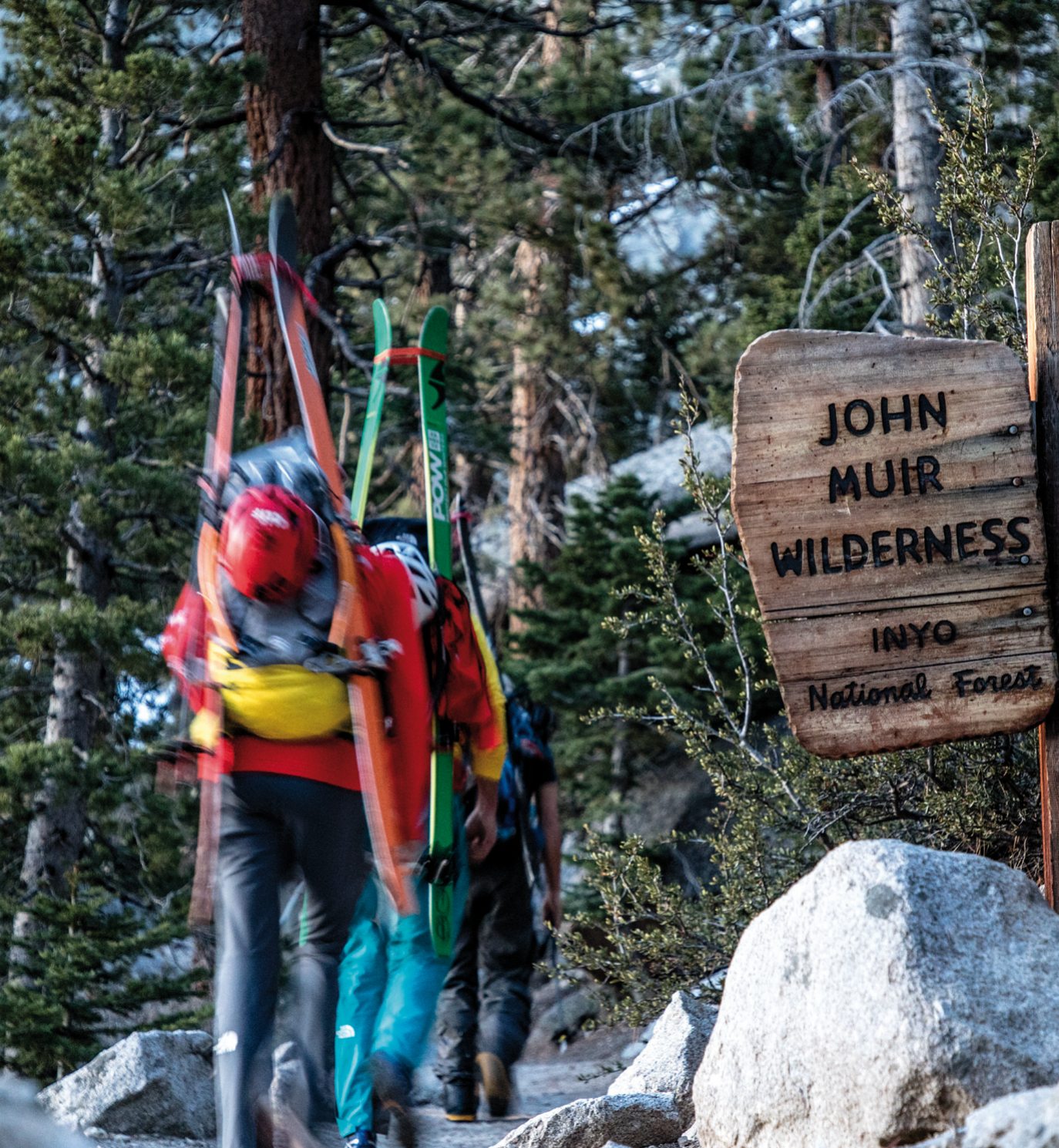
Named with a typical lack of imagination in the 1700s by Spanish conquistadors, the Sierra Nevada "Snowy Mountain Range" is the raised spine of California, tilted up to the east and a crest of more than a hundred and twenty 4,000-meter peaks that run roughly north-south for about 250 kilometers. That entire crest zone is a national park, federal wilderness or some form of protected public land where development or mechanical access is strictly forbidden. The range is an oasis of wild land right in the middle of the most populous state in the U.S., spacious and relatively uncrowded in the summer, near-deserted all winter.
No roads cross the range for roughly 200 kilometers; there are no trains, lifts, refuges, or cellular phone towers in the high mountains. Photographer Christian Pondella and I began skiing the peaks of the Eastern Sierra in the early 1990s. Dedicated Alpine-style skiers, we obstinately rejected the more-mobile but less-capable telemark solution embraced by the previous generation of Sierra ski explorers. Instead, we chose to suffer our way up with race skis and Secura-Fix touring adapters. The point of the suffering was the ability to ski the big couloirs in more than just perfect conditions, to be able to more easily negotiate technical cruxes, and most of all, to ski the big lines in the wilderness fast and powerfully, the way we would at a ski resort.
Today a pair of 208 GS skis with race boots and steel bindings hardly seems like a rational choice for wilderness travel, but that's how many of the iconic couloirs in the Sierra were first skied. And we persisted, groveling and staggering up the mountains to lie exhausted on the summit, looking out into the wilder and more remote depths of the range and fantasizing about a future where we could just fly in there with jetpacks and ski the mysterious lines that seemed so far away. The jetpacks finally arrived about ten years ago, in the form of the tech binding and lightweight boots that actually had enough downhill performance to turn bigger skis and maintain control in more technical terrain or variable snow.
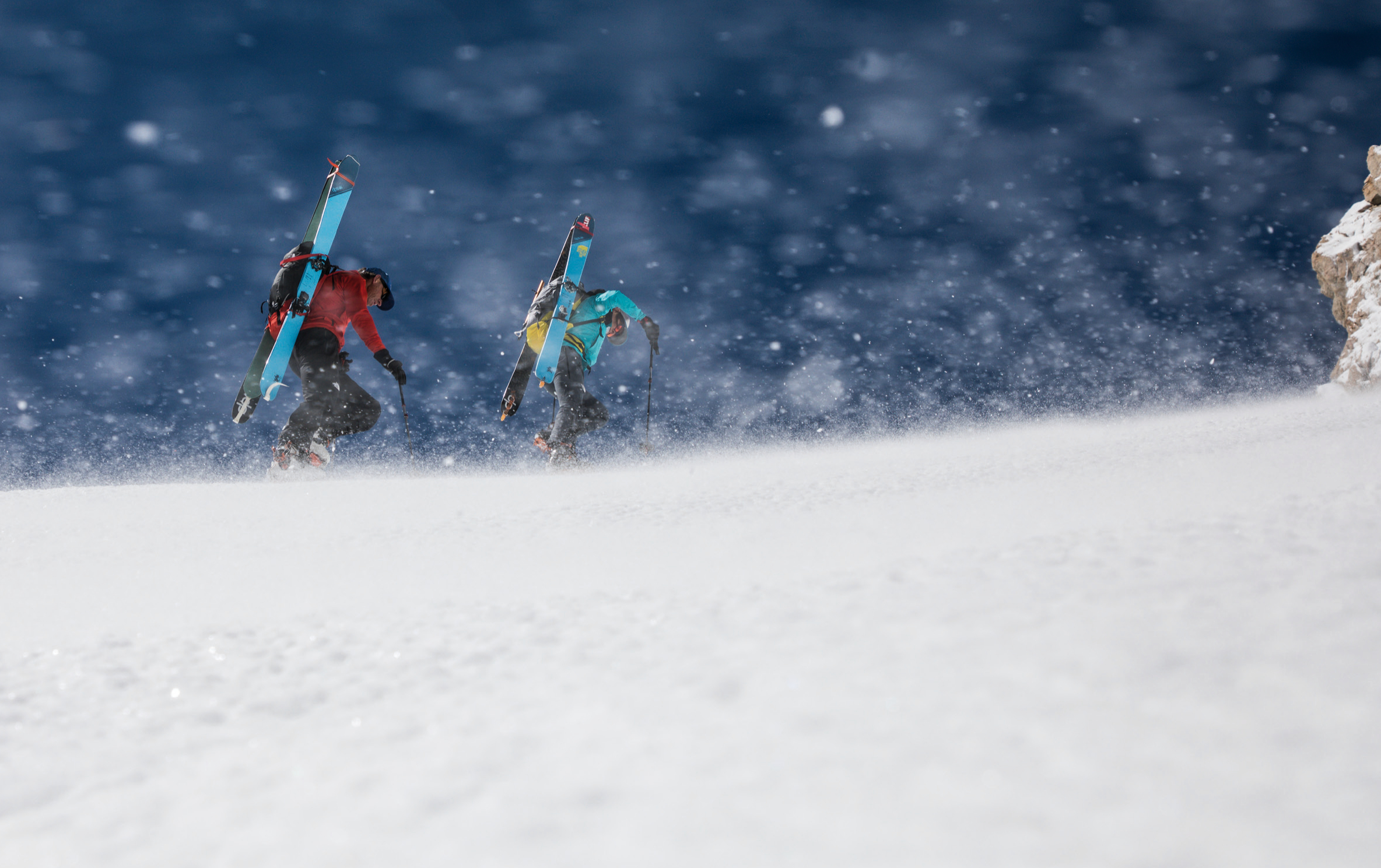
With this modern gear, the scale and distances of this wilderness mountain range are now far more accessible. Peaks that used to demand three full days to approach, climb, ski and return can now be skied in a day, at least by animals like Pondella, or Himalayan-level ski mountaineers like Hilaree Nelson or Jim Morrison. But the Sierra's allure for skiers like Nelson and Morrison isn't the traditional mountaineering goal of challenge, struggle, and summit; these mountains have something better to offer true skiers. This is perhaps the best range in the U.S. for pure pleasure skiing, for descending big aesthetic lines in powder conditions.
The California climate, relatively stable maritime snowpack, and big vertical relief combine to offer some of the sweetest lines in the country, with less commitment and avalanche hazard than ranges like the Rockies or the Tetons. And unlike the Alps, Andes, Himalayas, or the big Alaskan mountains, there are no real glaciers or accompanying seracs and crevasses, and with a handful of exceptions, no patches of treacherous black ice beneath the surface of the couloirs. The allure of the classic descents that fall along the easternmost escarpment of the range, couloirs like The Wahoo Gullies on Mount Locke, the Third Pillar Chute off Mt.
Dana, and others that can be seen from Highway 395 as it parallels the Eastern side of the range remains undiminished. There are few places, if any, in the U.S. outside Alaska that offer such easy access to terrain with this kind of scale. Most of the classic ski descents hanging over Highway 395 can be tackled with no more than skins, aluminum crampons, and a single axe. But now lightweight modern gear has opened up the peaks behind the front range, both for the traditional multi-day tour and lightweight single-day missions. Newer gear may have shrunk the range in a way, but it has also opened doors to hundreds of "new" lines. Last year, for Pondella and Co., that meant not just skiing traditional quick hits like the Wahoo Gullies on Mt.
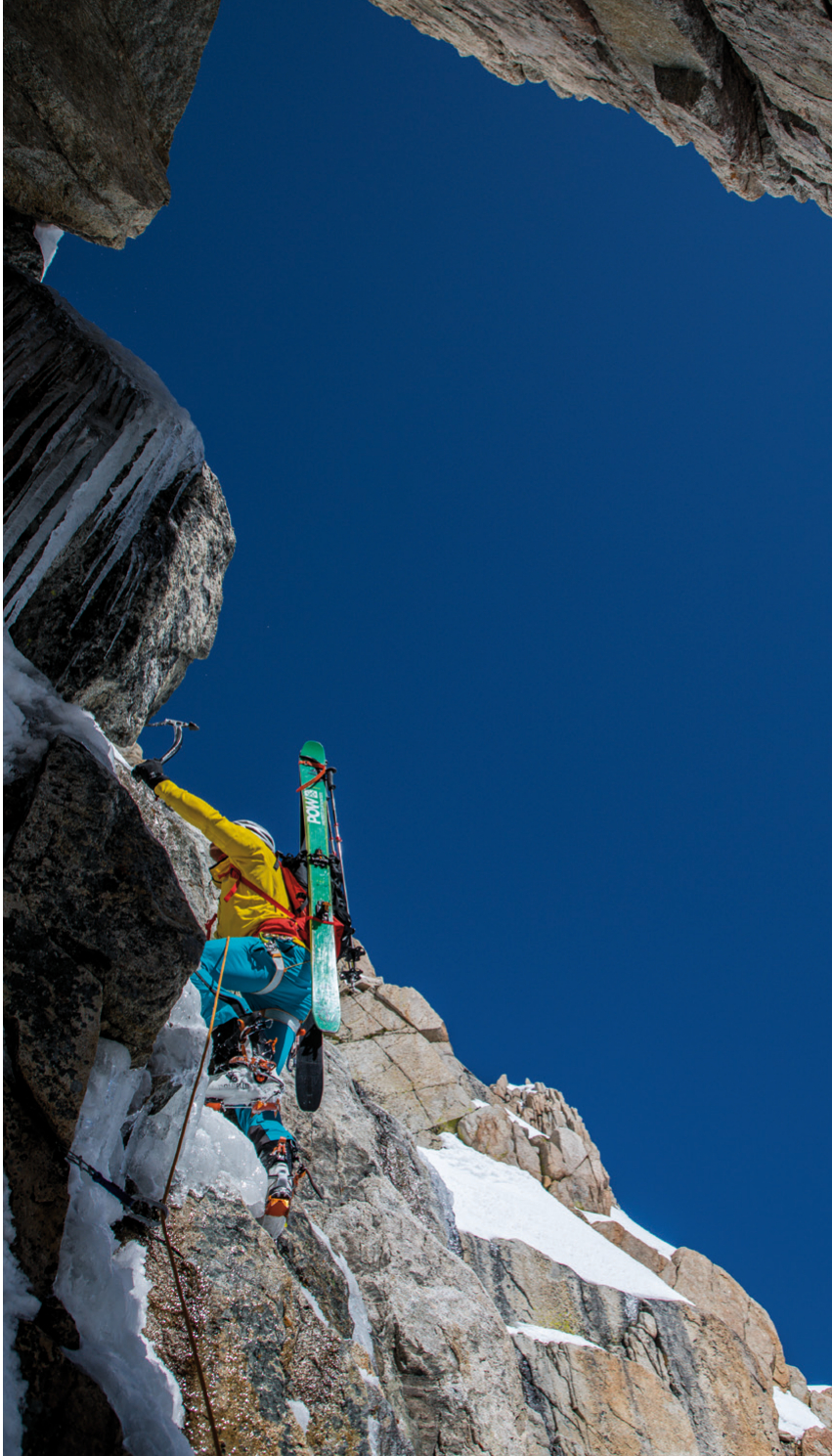
Locke near the quiet farm town of Bishop, but aiming higher, deeper. The climax of their session last season was a climb and descent of a discontinuous line on the East Face of Mt. Muir, a sub-peak of Mt. Whitney, the highest point in the lower 48 states. The east face of Muir is quintessentially lofty and craggy, a gothic wall of granite spires pierced by a slender white thread of couloir, itself split twice by vertical cliff bands that require technical climbing on the way up and rappels on the way down. The payoff: a ribbon of perfect and stable powder dropping directly from 4,273 meters into the vast amphitheater of the Whitney cirque.
In other American ranges, this would be a King Line, coveted and ticked off personal lists by dozens of ski mountaineers. But this is the Sierra, so Pondella, Nelson, and Morrison are the third known party to descend this route. There are dozens of ultra-aesthetic lines like that on Muir here in the Other California, patiently waiting to feel the caress of P-Tex and steel edges. Now it's your turn.