Russland · Chersky Range (Sibirien)
The White Maze
Issue 2016 · Words: Matthias Haunholder · Photos: Jonas Blum · 5 min read
Our plan was to ski in northeast Siberia, close to the world's coldest inhabited community, and to be the first people to ski the highest peak of the Chersky Range. We were more than prepared for a …
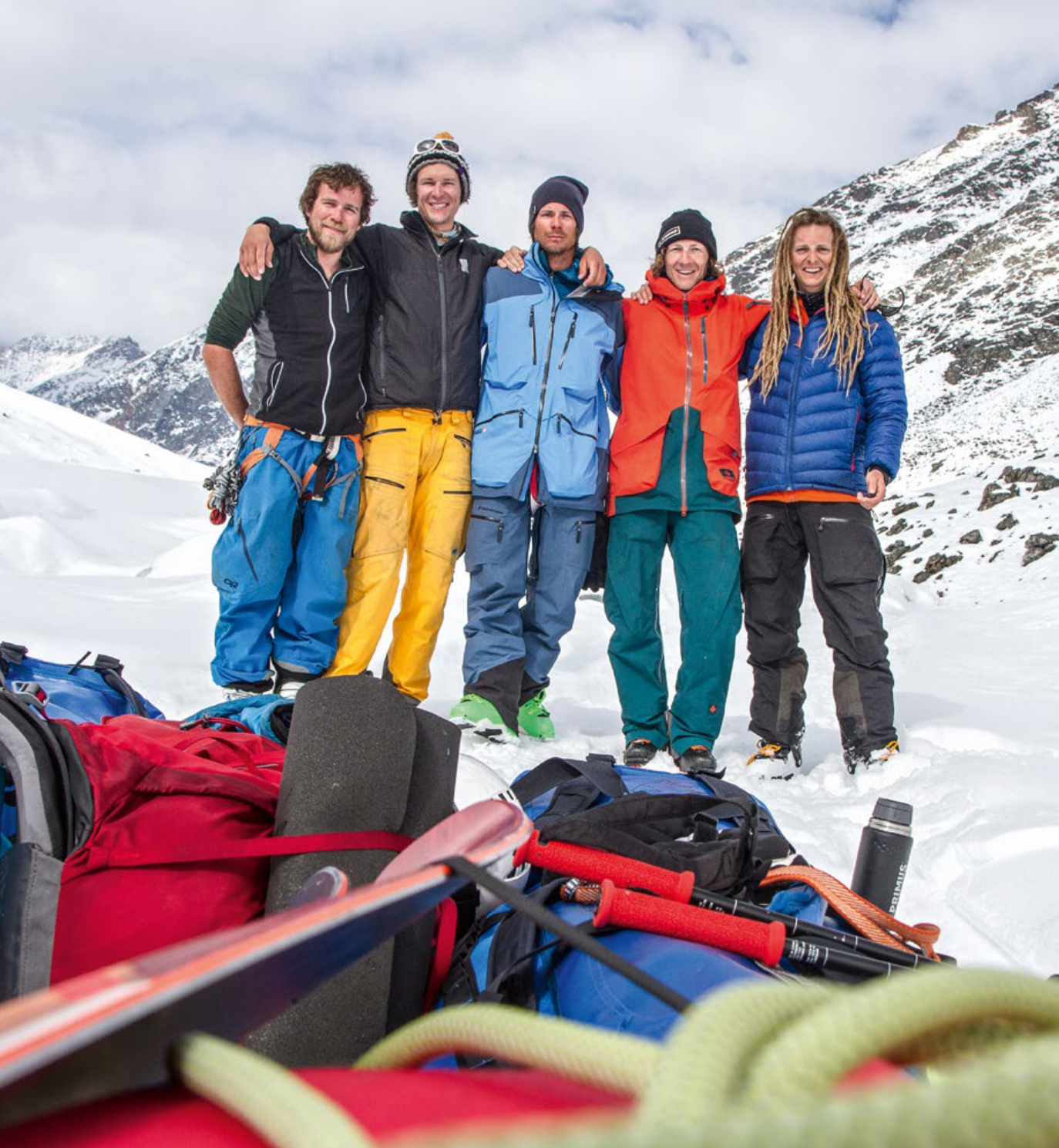
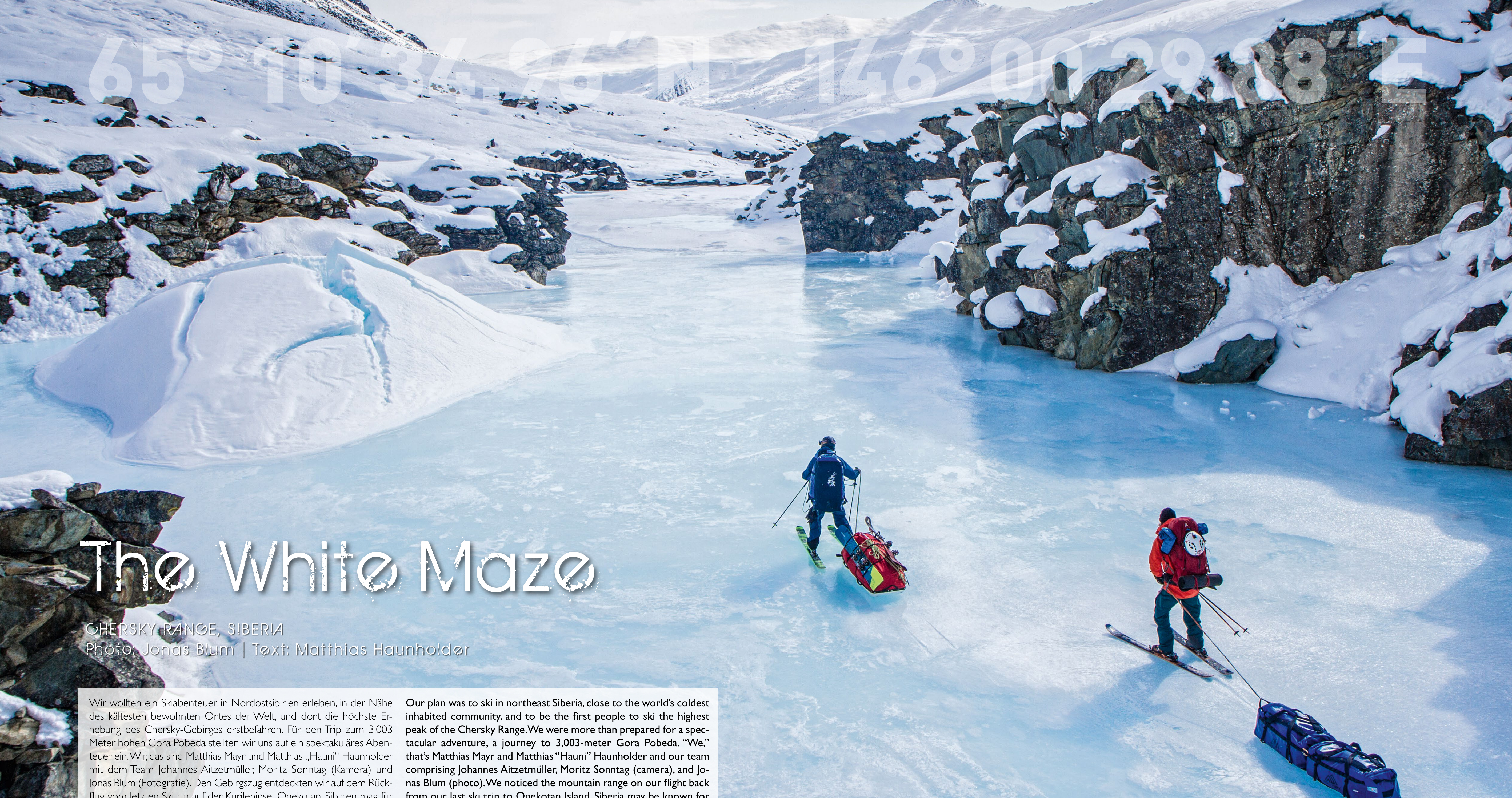
Our plan was to ski in northeast Siberia, close to the world's coldest inhabited community, and to be the first people to ski the highest peak of the Chersky Range. We were more than prepared for a spectacular adventure, a journey to 3,003-meter Gora Pobeda. "We," that's Matthias Mayr and Matthias "Hauni" Haunholder and our team comprising Johannes Aitzetmüller, Moritz Sonntag (camera), and Jonas Blum (photo). We noticed the mountain range on our flight back from our last ski trip to Onekotan Island. Siberia may be known for vast landscapes and snowy plains, but through the airplane windows, we saw a complex maze of mountains. As a result, we decided to call our film "The White Maze." Back then, we were joking about our next possible project.
A year later, we had entered the maze. As we prepared for our trip to the Siberian outback, 1,300 kilometers from Yakuts, we could only find sparse information and scarcely suitable maps. Even Google Earth failed to be helpful. Not the best preconditions for the proper organization of a first descent. As a result, we focused on getting to know the right people and left for a scouting first trip in late January. Hansjörg Franz, a Tyrolean who was familiar with Yakuts from a motorcycle trip through the area, mentioned a guy named Bolot, a Yakut tour operator who spoke English. Bolot was clearly impressed by our project and supported as where he could.
One of his friends, Ajar, referred us to a Nomad family who had their winter camp near the mountain range. One day before our arrival, Bolot found a man who regularly transported goods to the family with his van. Bolot also arranged a meeting with Vasily, a former soldier who had climbed the Gora Pobeda in the 1980s (the first ascent of the "Victory Mountain" was realized in the 1960s) and was able to show us old photos and a very imprecise map of the area. To handle the last, burdensome leg of the trip into the mountains, it was necessary to meet the Nomads, who spent the entire winter in a log cabin 1,300 kilometers from us.
It took us 42 hours in a small van to reach Sasyr, followed by a three-hour ski-doo ride before finally arriving at the Nomad camp. Upon our arrival, we were greeted with a delicious dinner – reindeer meat, fried dumplings with cranberry jam, and Russian black tea. The family had many questions; they were very interested in our plans, but they also told us we were crazy for wanting to climb the mountain on skis. Nevertheless, they promised to shorten our approach by lending us their reindeer sleds. Under one condition: we had to be back from the mountain by May 9th. Otherwise, the rivers would start to melt and turn impassable for several months. They recommended to set out as late in spring as possible to allow the dry and bottomless snow to settle.
We started our expedition in late April, and the laborious preparations paid off. The promised reindeer had left camp earlier than originally planned, but the nomads pulled out some old snowmobiles instead and took us as far as possible. The last two kilometers took us six exhausting hours on foot. The snow felt like foam – simply bottomless. Still far from Pobeda, we established our base camp. The next day, we set a track with 40-kilograms packs on our backs to set up a forward-operating camp. The mountains were still hidden by clouds. We used our satellite phone to call the weather station and learned about a four-day window. We made use of every single day from dawn till dusk – long days with nearly 16 hours of sunshine.
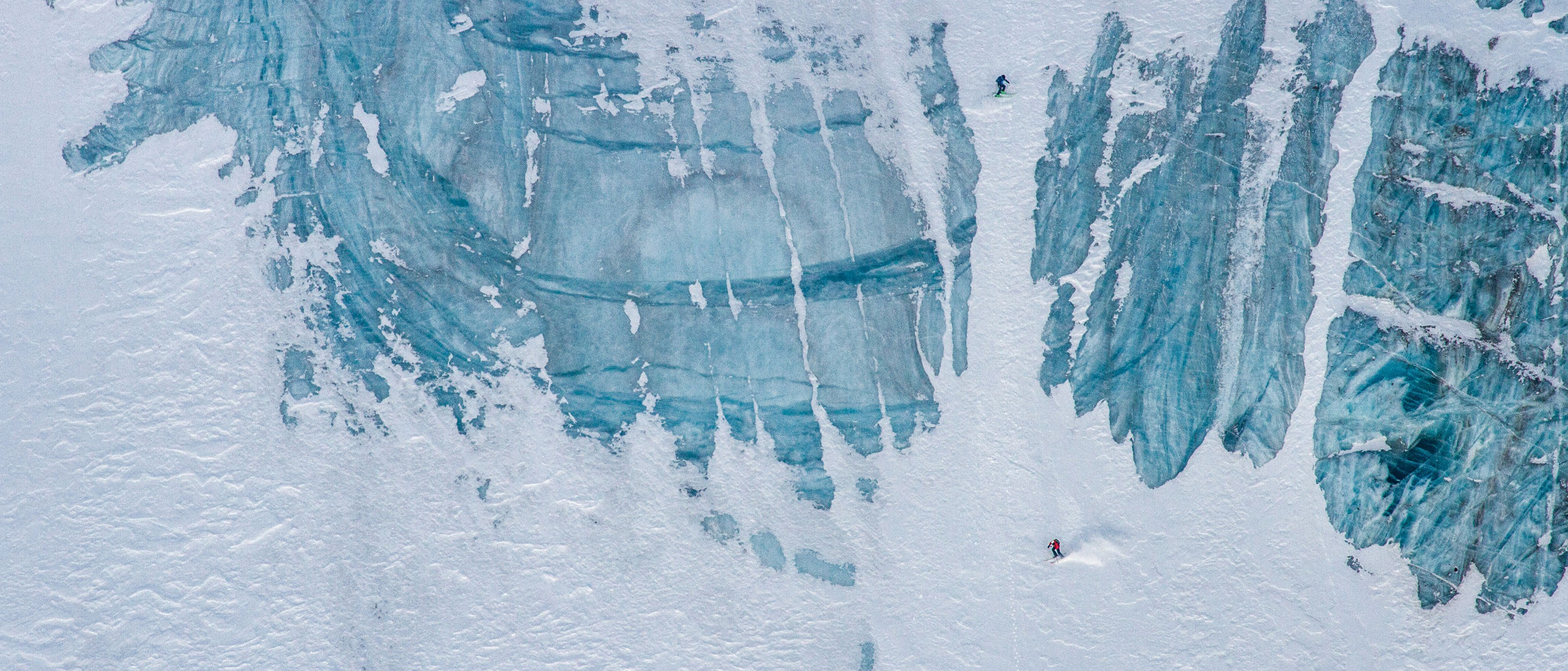
We were still undecided whether to ascend Pobeda from the south or the north, and we also had no idea about the snow quality. To see the south face and test the snow, we decided to climb an ice-fledged peak on the opposite side. From there, we spotted a channel leading from the saddle to Pobeda's summit. It appeared extremely steep and had a large cornice at the end. What we didn't see was whether it provided a continuous line. Our first run across the glacial ice and crusted snow wasn't too delightful, but it felt good to be on skis again finally. We decided to attempt an approach from the South the following day. Still tired from the previous days, we set out with only the most necessary gear in our packs.
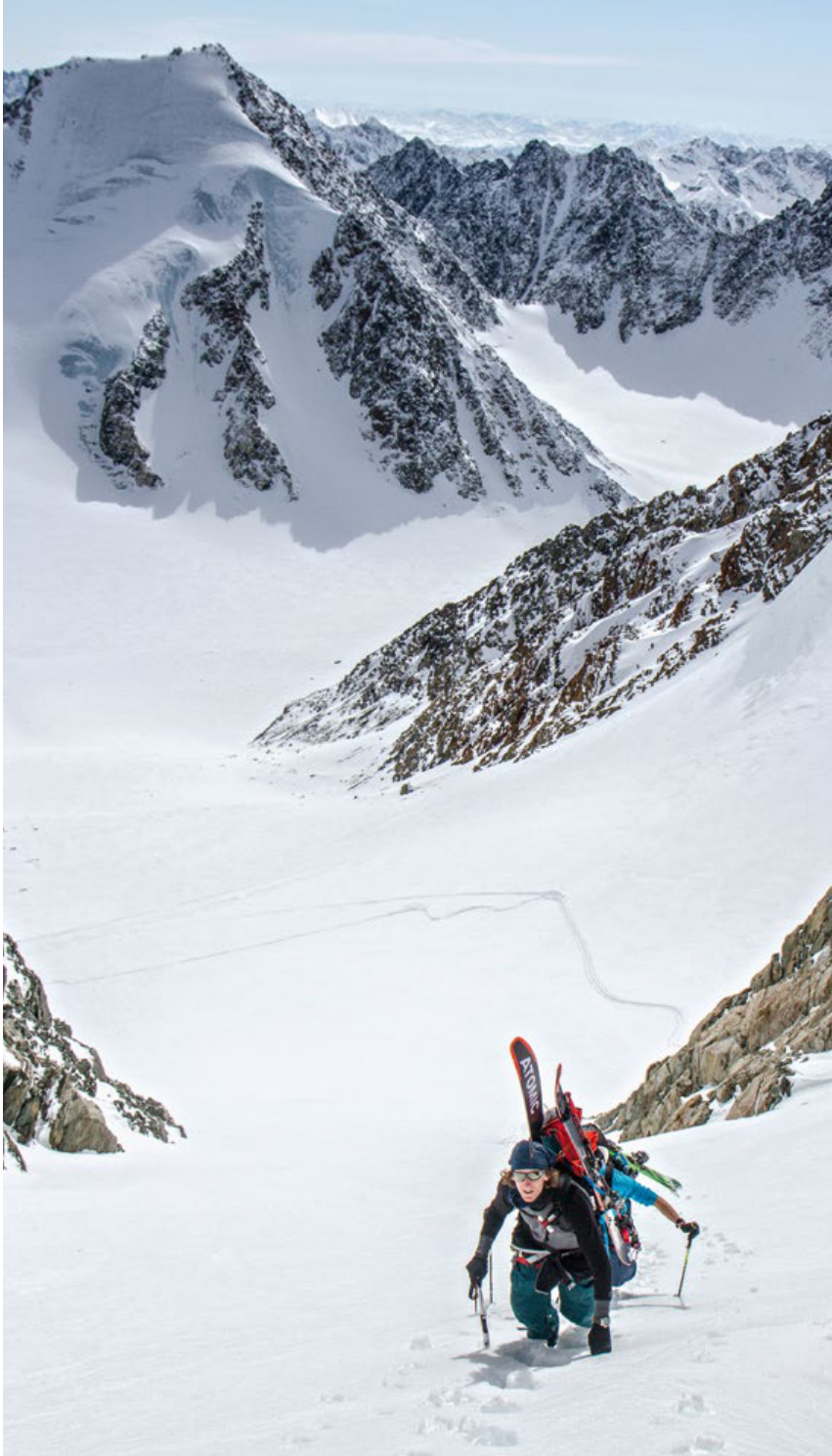
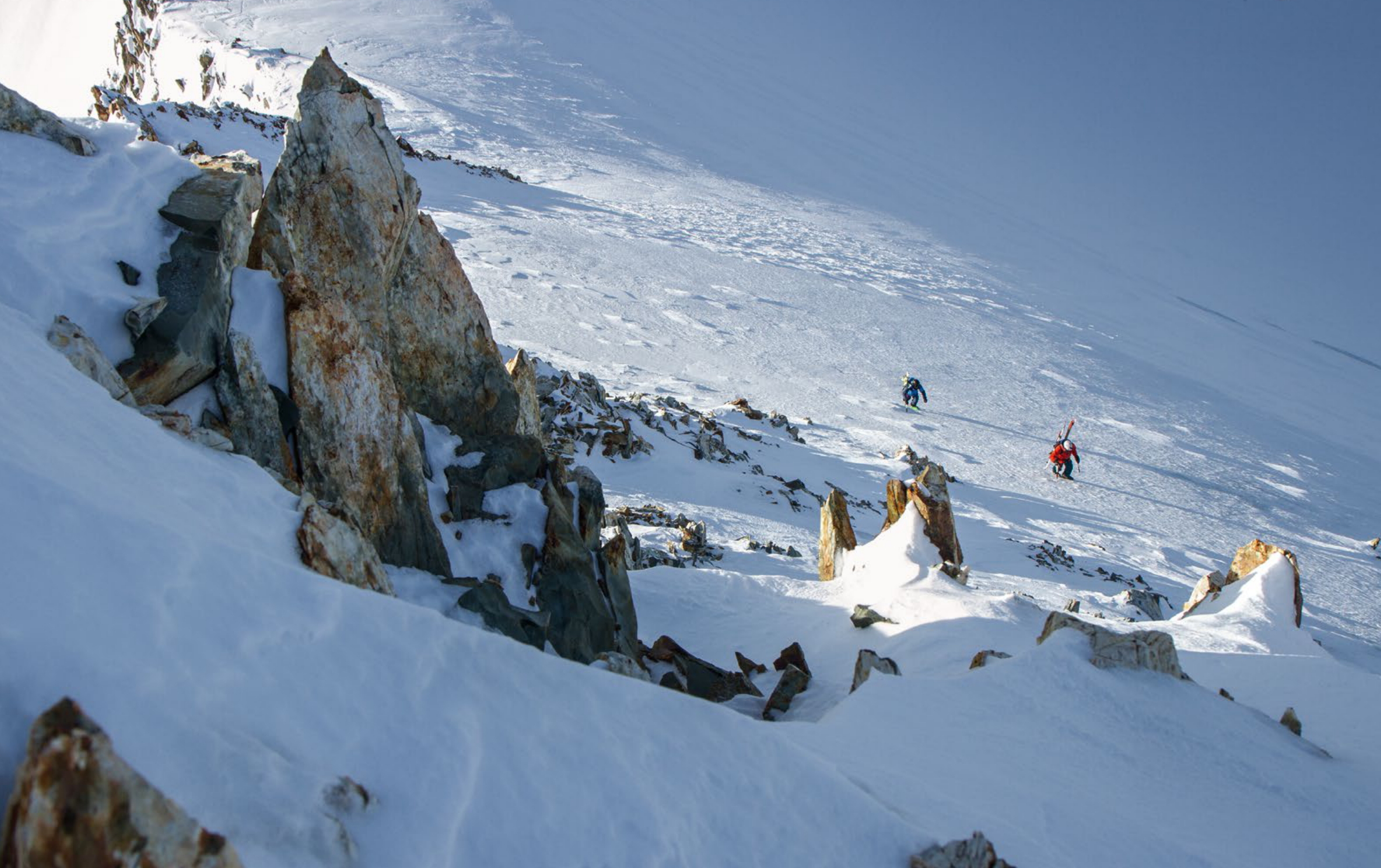
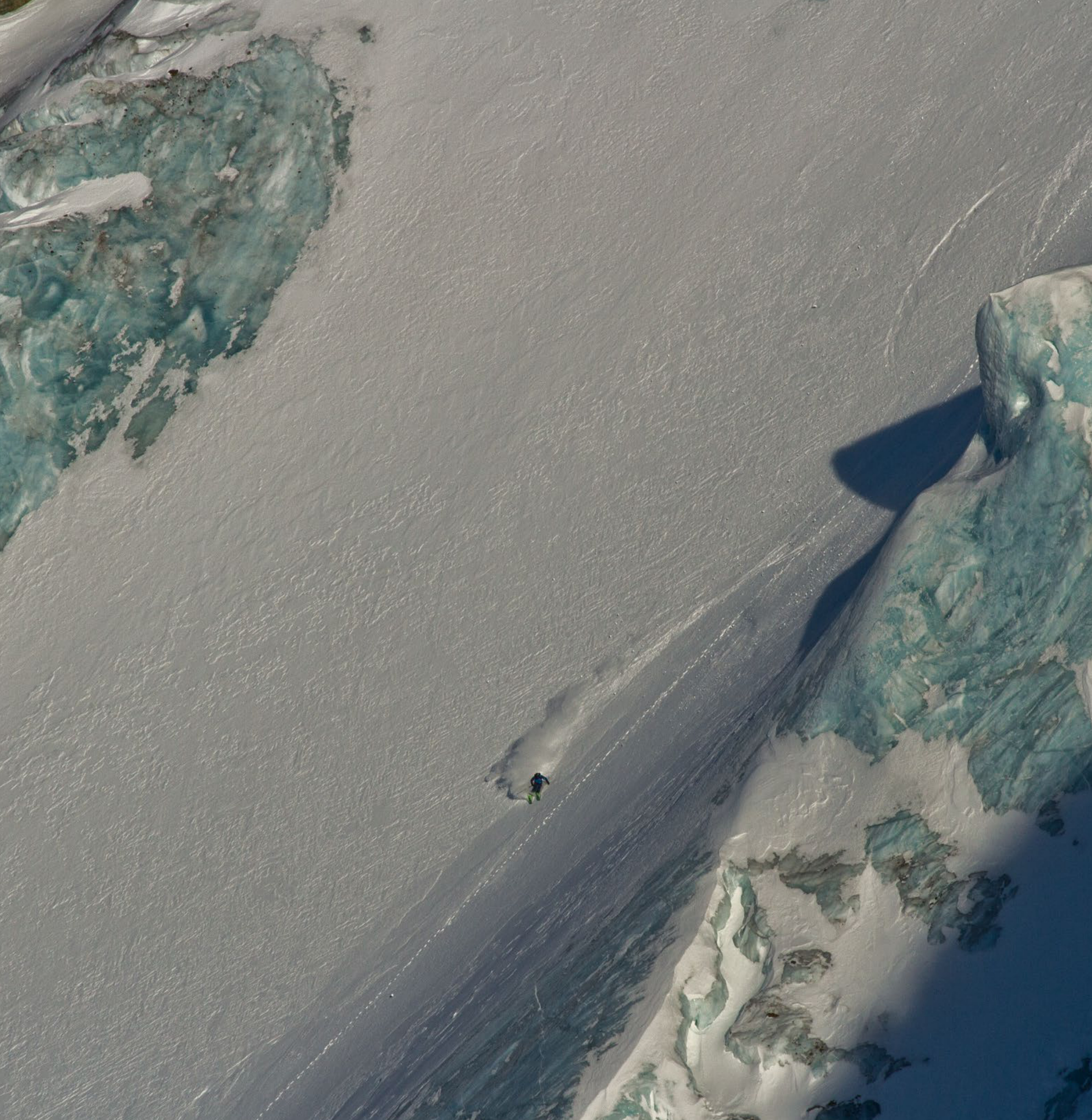
On the way up, we discussed Moritz' and Johannes' camera positions. Jonas, the photographer, was determined to summit with us. After three hours, we mounted the skis to our packs and pulled out our ice axes, ready to tackle the spectacular chute. The snow conditions were good, and it looked like the slope was skiable. We encountered a bend in the middle of the chute, but no major obstacles. Reaching the saddle, we looked over the ridge and down the north side. The terrain was extremely steep and featured an almost continuous, hanging convex glacier. Unskiable. Crossing over a corniced, narrow ridge with loose rock, we finally reached the summit. "Yeah! How cool!" Skiing the chute was next, and it was the highlight of our trip.
The very steep upper part led to a narrow section that was too steep and long to go straight-line, but also too tight to set proper turns. But we made it. In retrospect, the snow conditions turned out to rather bad, but what we had accomplished would have been impossible a year earlier. Exhausted, relieved, and overjoyed, we arrived back at our camp. The next day, we realized another first descent of an icy northward slope. When the weather finally broke, we hiked to the pickup point where the nomads greeted us with their run-down snowmobiles. The snow had melted incredibly fast during the last few days, and the rivers had swelled.
We spent the 20-hour, 300-kilometers trip from Sasyr to Ust Nera on the bed of a Russian URAL truck, proudly and joyfully looking back on an unforgettable ski adventure in Siberia.