Georgien · North Caucasus (Tusheti / Dartlo)
Tushetti Calling
Issue 2019 · Words: Martin Fiala · Photos: Martin Fiala · 5 min read
The sky is cloudy; the clouds only tear open for a few short instants. Sun rays manage to cut through from time to time before they disappear again. A giant lamb vulture with a wingspan of almost ten …
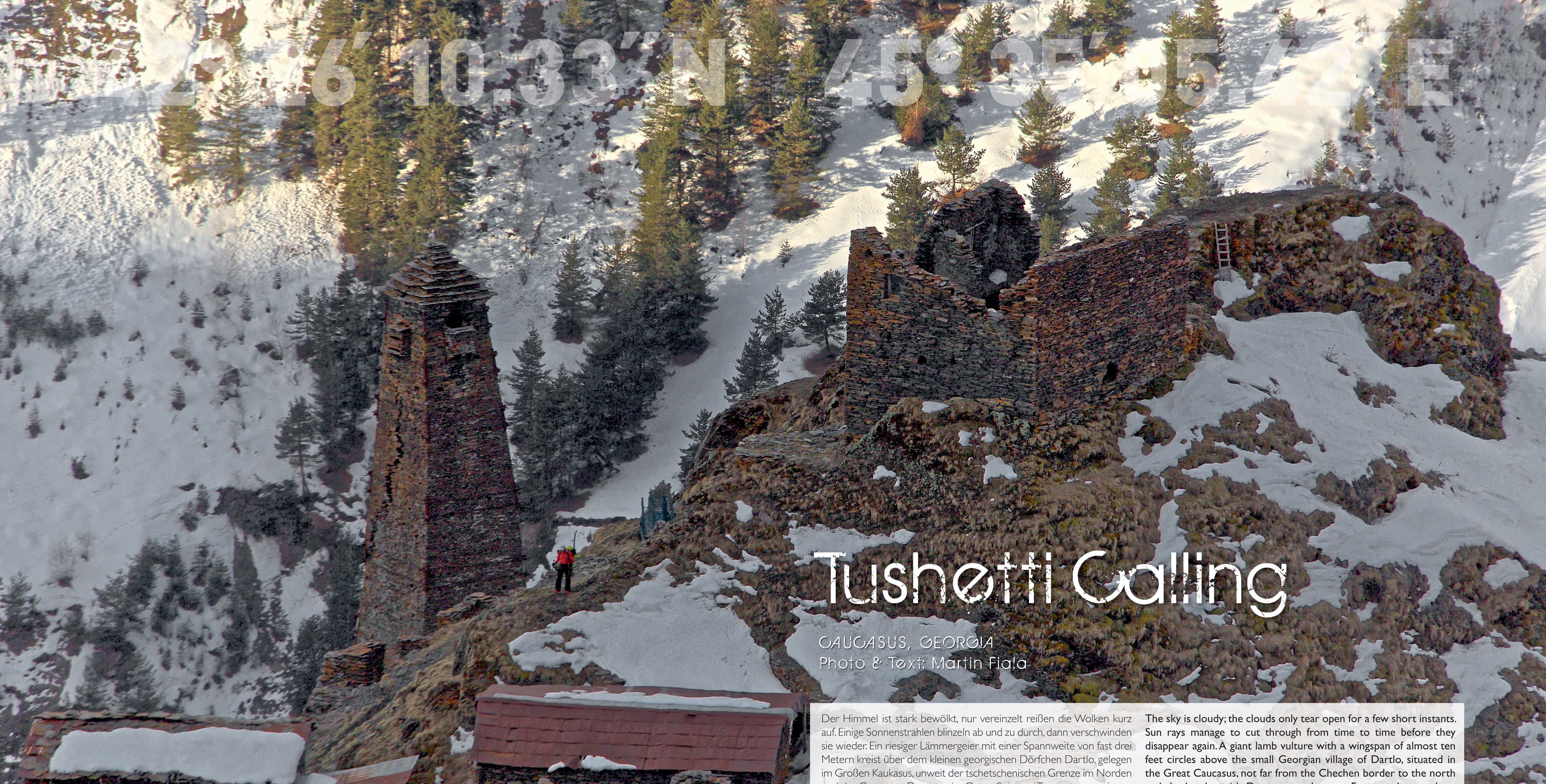
The sky is cloudy; the clouds only tear open for a few short instants. Sun rays manage to cut through from time to time before they disappear again. A giant lamb vulture with a wingspan of almost ten feet circles above the small Georgian village of Dartlo, situated in the Great Caucasus, not far from the Chechen border to the north and the border with Dagestan to the east. For two days we have been staring at the sky, hoping to see the helicopter that would take us back to civilization, back to our jobs and families. Axel's plan B is clear: "We can make it on skis in two days... if we hurry up!" Mäx, Marvin, George, Nika and Irakli look at me questioningly and amazed. I nod helplessly, and my gesture cannot relax the situation; Axel is serious!
During the summer months, the region of Tushetti can be reached via one of the most dangerous passes in the world, the Abano Pass at almost 3,000 meters above sea level. An adventurous gravel road of nearly 100 kilometers from Pshaveli to close to Dartlo, surrounded by the wild Caucasus, which reaches altitudes up to 4,500 meters in this region. In the cold season, the mountains belong exclusively to the vultures; there are hardly any people who spend the winters here, which made it all the more tempting to be invited to visit and explore this wild region. Unfortunately, the weather already delays the beginning of our journey. A few days later than planned, we reach the lonely alpine valley of Pirikita Alazani, south of the Caucasian main ridge.
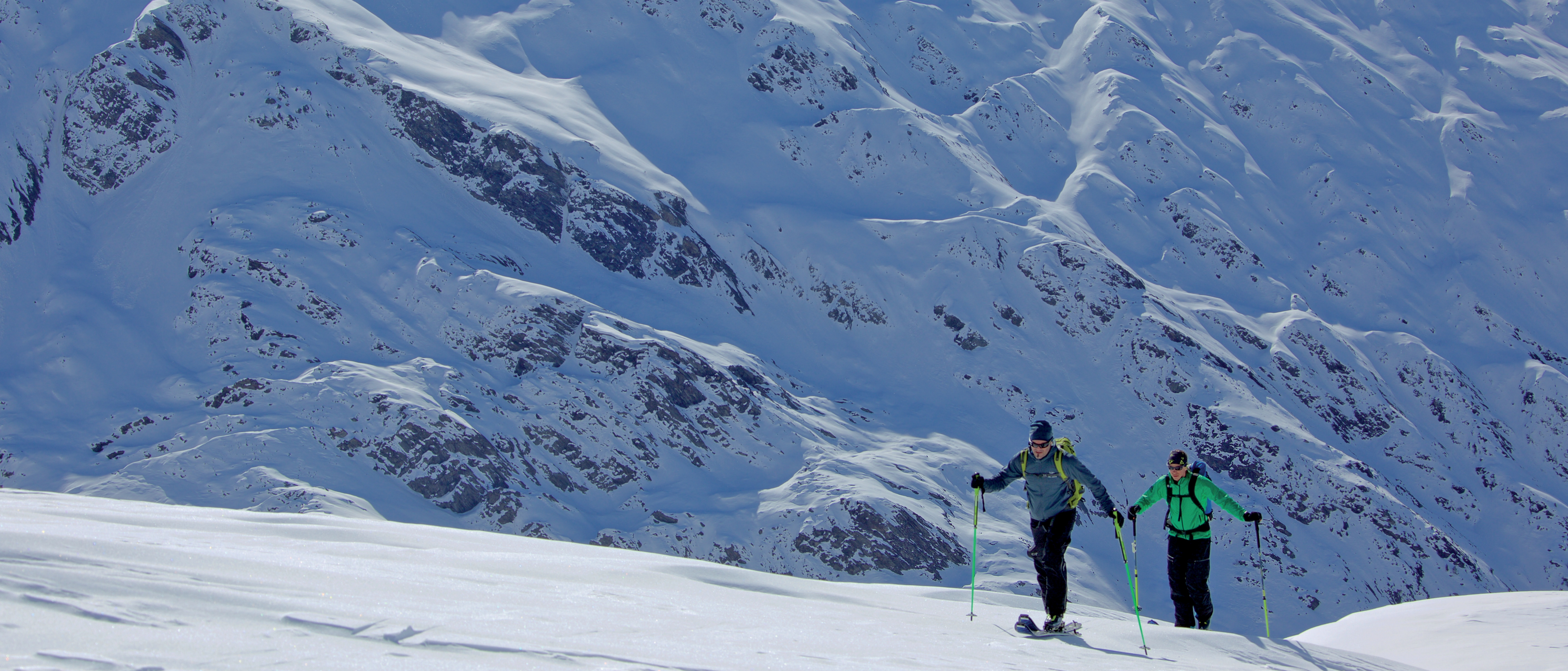
The southern slopes are snow-free up to 2,500 meters, but above that, it's more than 2,000 vertical of pristine winter wonderland. We are curious about the conditions, but we also realize: This won't be a quick joyride. George is a geographer and brought a rare detailed map of the region, which we study immediately. After a few hours, we are forced to exclude various destinations. Some summits at the border to Chechnya in the north are taboo. "The border is guarded, and I can't guarantee that we won't be shot at". George's dry comment does not fail to impress.
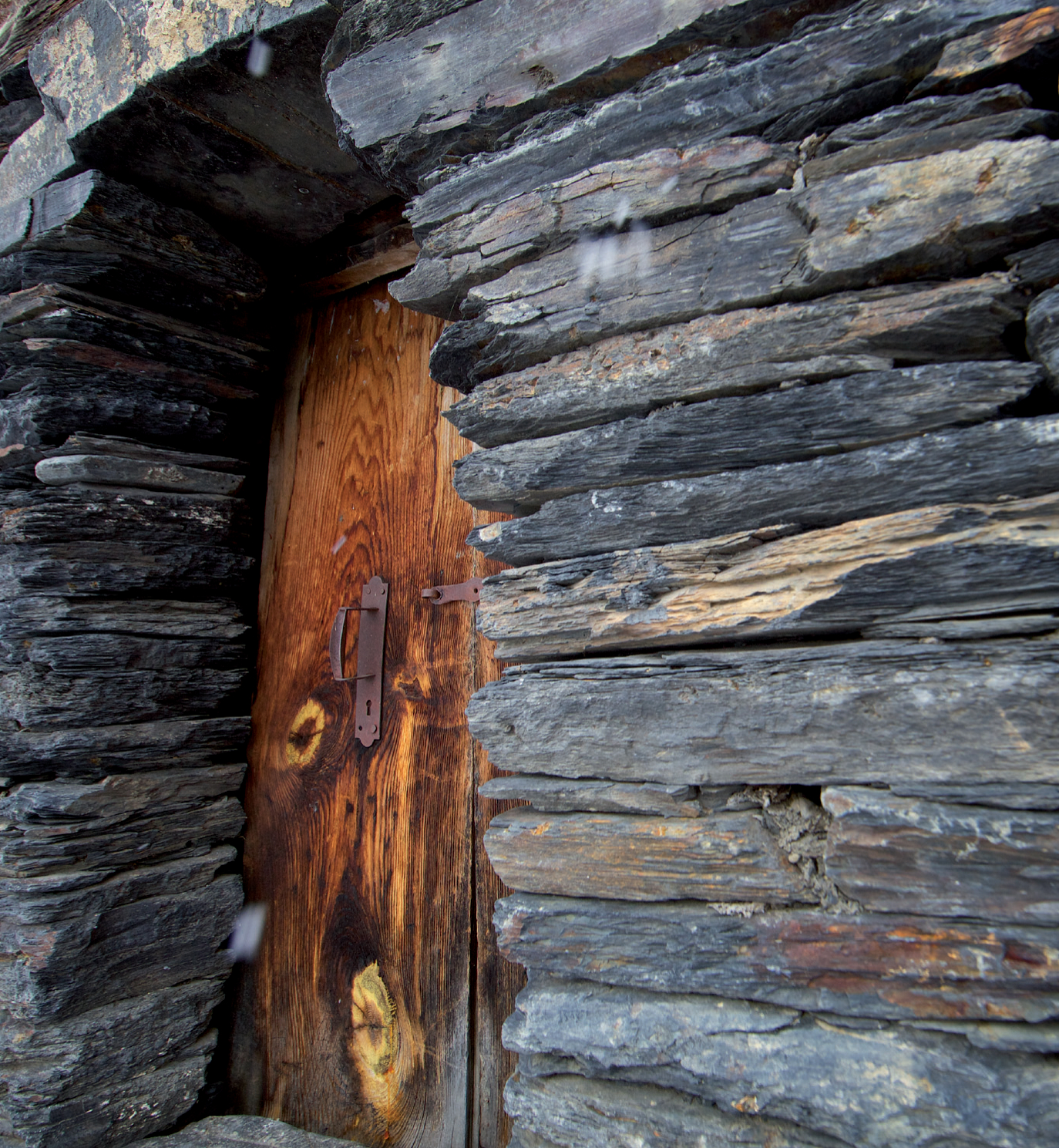
The up to 1,500 meters tall and mostly up to 50 degrees steep northern slopes south of us do not seem undoable, but the visible cracks in the snow cover shortly under the ridge are not exactly enticing. We decide to leave Dartlo early in the morning in the darkness and follow the prominent ridge in a northerly direction to explore the conditions before making further plans. The hospitality of the owners of the "Keto Guesthouse," who came out only for us this winter, is overwhelming. However, the temperature in the building falls well below freezing point at night. At least the wind is kept out by a plastic tarp covering the facade. The alarm goes off at 5:00.
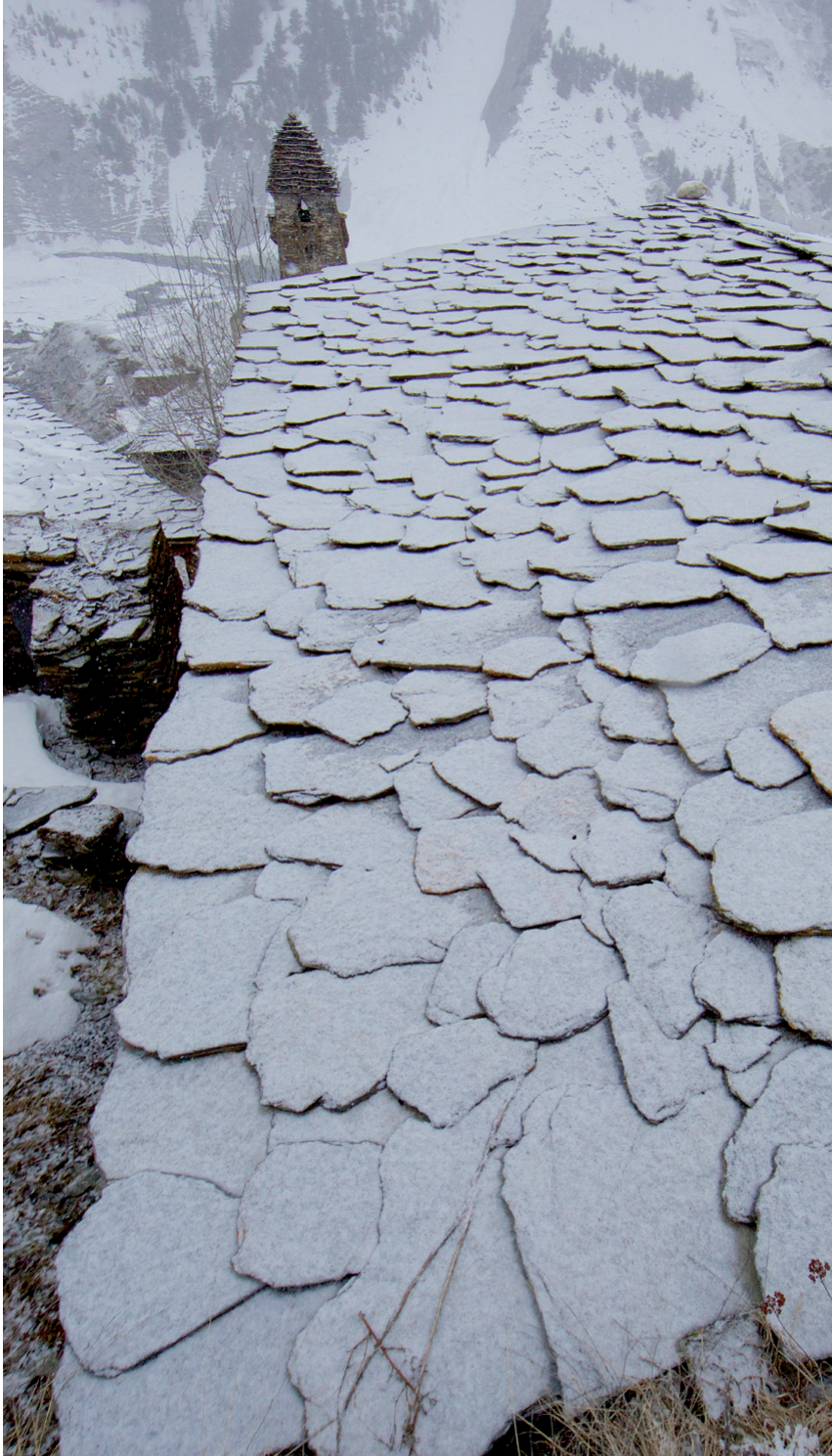
The way to the outhouse is manageable without a headlamp, I just have to follow my shadow in the bright moonlight. Back at the hotel, I eat some nuts and drink warm tea before tackling the first 500 snow-free meters. I am the first one out, hoping to score some pictures of the beautiful towers above Dartlo with the first rays of sunshine hitting the mountains. After 600 meters, I reach the snow. Looking back down, I notice Axel starting his ascent through the decaying towers. After some photos I move on to look for the easiest ascent route. The snow cover is thoroughly frozen. In a steep upswing, as I set a switchback turn, I suddenly hear a violent "bang." Alarmed, I try to classify the sound.
I quickly realize that the snow cover has settled remarkably. Axel catches up with me first, followed by Marvin and Mäx. We decide to dig a snow profile. The result is sobering, but not surprising after the heavy settling noise. We discover two distinct weak layers with large snow crystals – one near the surface, and one about 40 centimeters deeper. We agree that we can continue for the time being with the moderate inclination of the slopes ahead of us. Axel is going ahead. After roughly 1,300 vertical meters, Irakli and Nika catch up with us. Every 200 meters of altitude, Irakli takes a short break, smokes a cigarette and then sets off again like a machine, accompanied by constant heavy snow-settling noises.
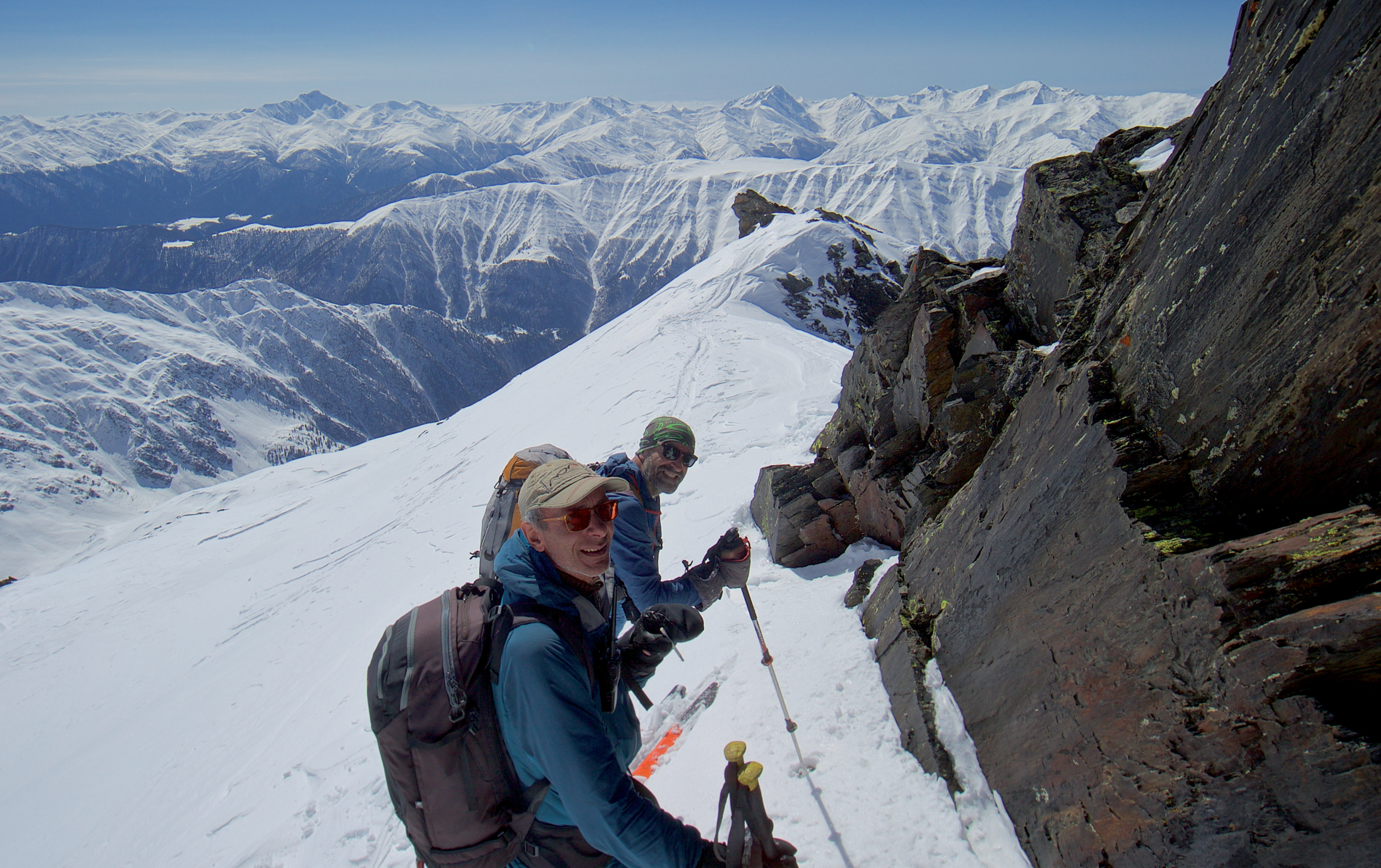
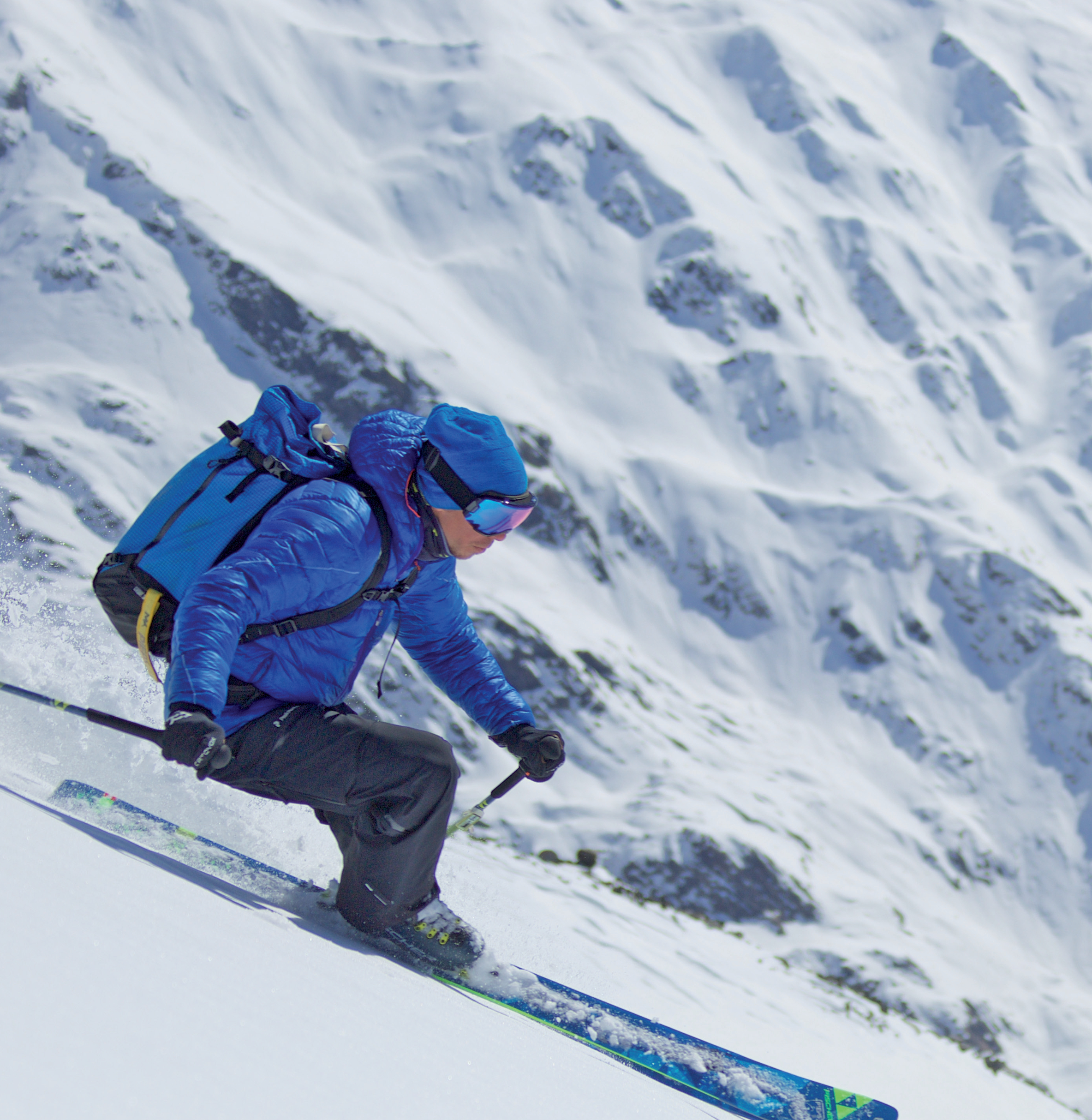
"This is my own special altitude doping," he says with a grin. The theory is probably not scientifically proven, but empirically speaking, it appears to work for him pretty well. After more than 2,000 vertical meters, we reach a pre-summit at just about 4,000 meters above sea level. From here, the ridge north of us drops steeply to both the east and the west. We agree that this is the point to call it a day. The views of the main ridge of the Caucasus are overwhelming. We notice many great lines right in front of us and some fantastic northern slopes to the south. For a moment, we dream of all the possibilities we could have here. Skiing down, we even find some powder in the upper part and perfect spring conditions further down.
The run seems to be endless. When we finally reach the valley, we immediately start to plan the following days. But the weather forecast is unambiguous. A prominent low-pressure system is approaching. We decide to split up the next day: Axel, Mäx, Marvin, and Irakli set out on a ridge further east to head north. Nika, George, and I ascend southbound to explore the options around Omalo. At the same time, we order our exit one day earlier than planned. But the helicopter can't fly due to bad weather. The following day, the lamb vulture is circling over our heads, and Axel is wondering what to put in his backpack for the 100-kilometers hike back to civilization. One hour after the last announced pickup time, we suddenly hear a rattling sound in the sky.
Next, we are on a horrifying flight with zero visibility that almost gives us a heart attack. But that's a different story. Gmadlob – thank you very much!