Schweden · Låktatjåkka Mountain
Waffles, Powder and Wild Terrain
Issue 2019 · Words: Mattias Fredriksson · Photos: Mattias Fredriksson · 5 min read
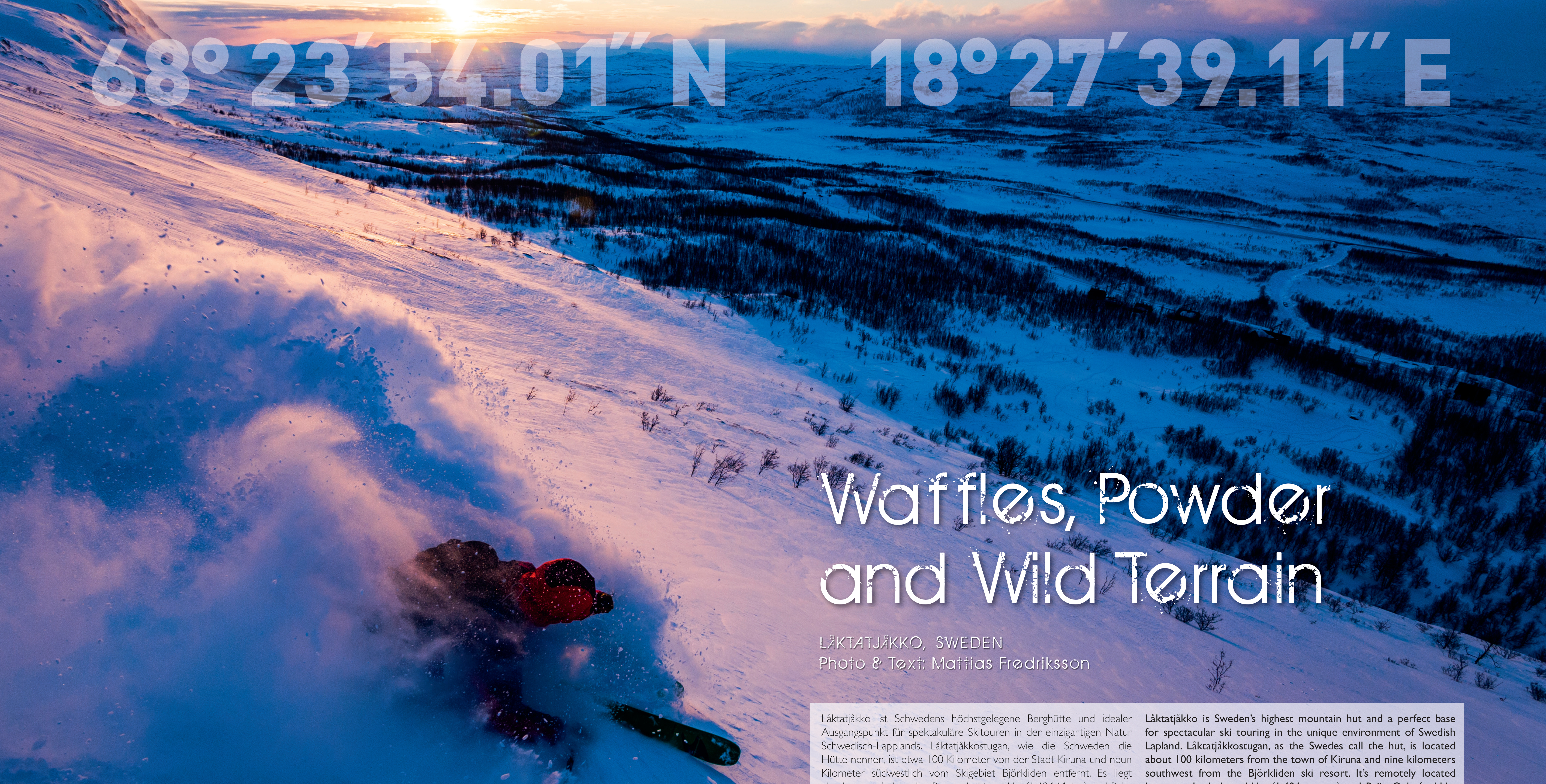
Låktatjákko is Sweden's highest mountain hut and a perfect base for spectacular ski touring in the unique environment of Swedish Lapland. Låktatjåkkostugan, as the Swedes call the hut, is located …
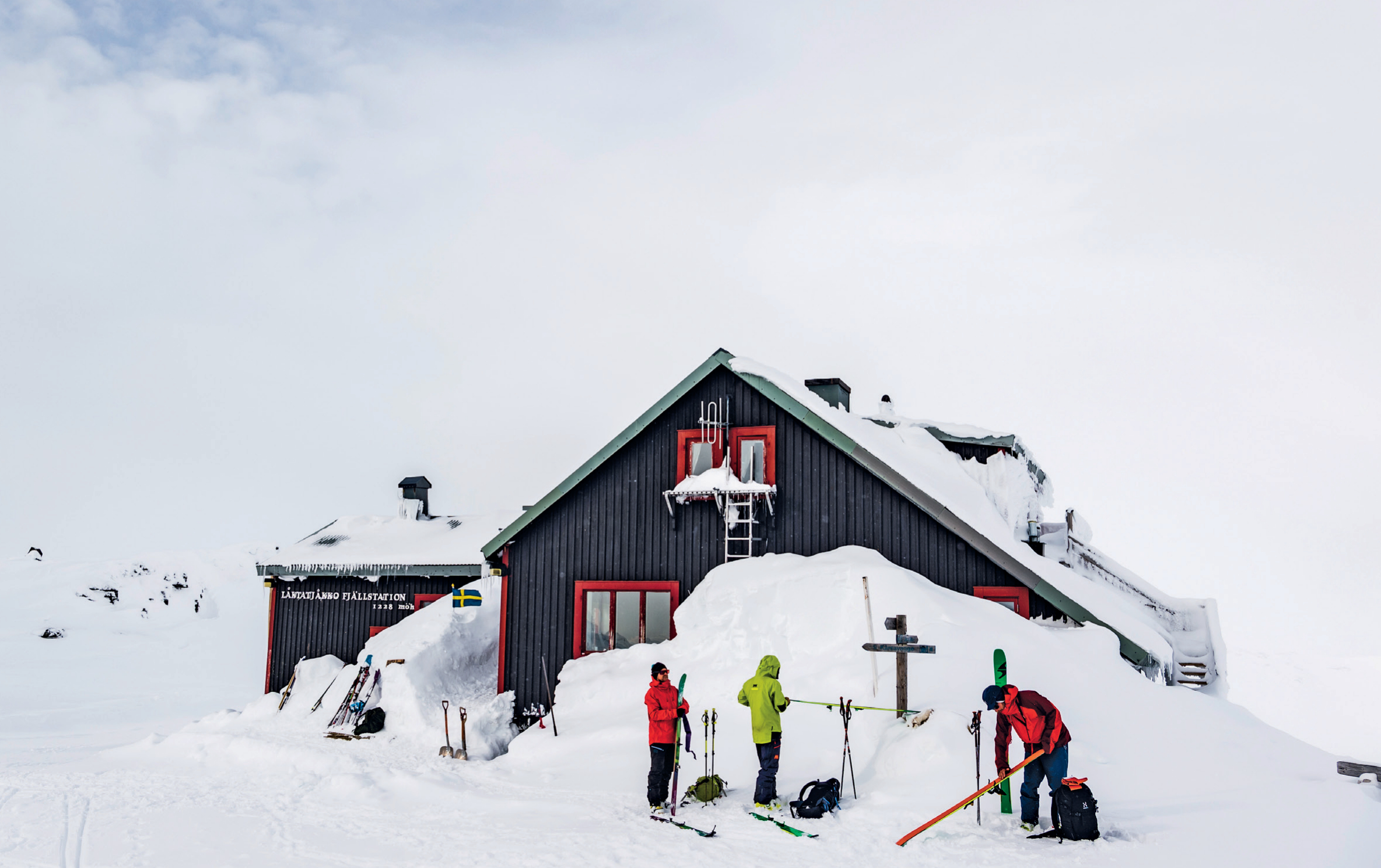
Låktatjákko is Sweden's highest mountain hut and a perfect base for spectacular ski touring in the unique environment of Swedish Lapland. Låktatjåkkostugan, as the Swedes call the hut, is located about 100 kilometers from the town of Kiruna and nine kilometers southwest from the Björkliden ski resort. It's remotely located between the Loktacohkka (1,404 meters) and Bajip Gohpácohkka (1,410 meters) mountains, but the standard is surprisingly high. Låktatjåkkostugan can accommodate 18 people, the restaurant serves a three-meal course every evening, and you will be able to enjoy Sweden's highest bar. There is also a sauna, a cozy living room with a small library and a special waffle menu. Most importantly, the hut has a very genuine atmosphere.
It feels like we walk in a bowl of milk; the wind is blowing, it snows sideways, and I am freezing cold. The red crosses marking the trail are the only clue where to go, and sometimes even they disappear in the whiteout. Maybe it wasn't the best idea to go for a ski tour today, but after traveling all the way to Björkliden in Swedish Lapland, 195 kilometers north of the Arctic Circle, we wanted to stretch our legs and get some fresh air. We soon regret our decision as we walk in circles to find our way back to the Låktatjåkkostugan, Sweden's highest mountain hut with 1,228 meters above sea level. For the record: Sweden's highest mountain, Kebnekaise, is only 2,097 meters high. Eventually, we find our way.
A few red crosses take us back on track, and soon we are even skiing powder. The short but adventurous tour makes the delicious waffles at the hut taste even better. The history of Björkliden, Låktatjåkko and the surrounding area started when iron ore was found in the towns of Kiruna and Gällivare at the end of the 18th century. The mountainous region between Kiruna in Sweden and the Norwegian border was entirely rural and there were no roads. To transport the iron ore from the mines to the harbor in Narvik the governments of Sweden and Norway decided to build a railway through the mountains. Construction started in 1898, and only four years later the Ofoten Railway opened.
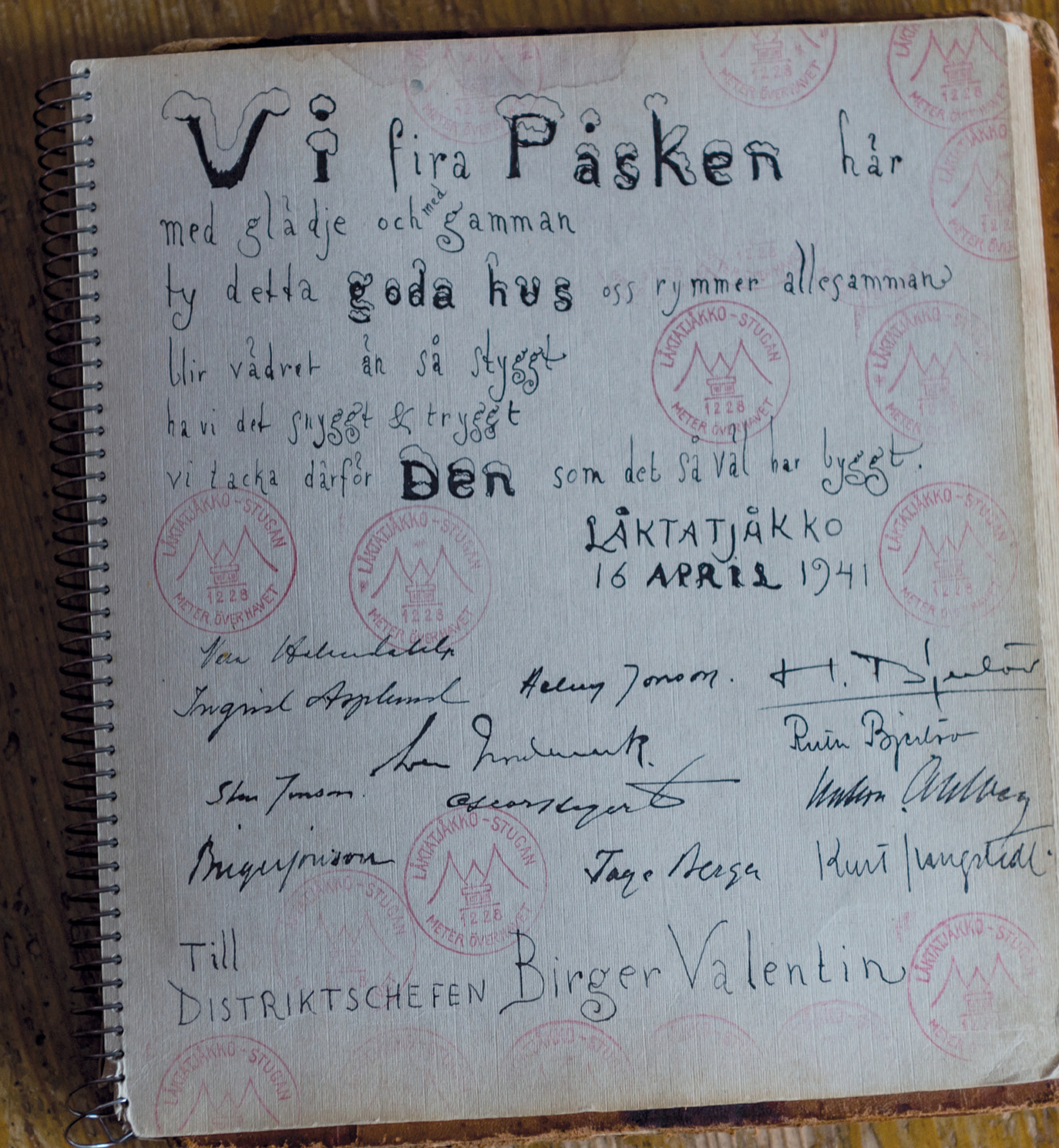
The route between the Låktatjåkko train station via the Låktatjåkko pass and down to Björkliden soon became popular with hikers and skiers. The weather is often harsh, so it seemed logical to build a hut at the pass. The doors to Låktajåkko Mountain Lodge opened in 1939. Tourism wasn't allowed in any mountain stations during the war, so the start was a little slow. Post-war, the hut quickly became a destination for Swedish outdoor fans. When skiing became a national sport in the 1970s, with Ingemar Stenmark ruling the World Cup, it finally became known beyond regional borders. We wake up to heavy snowfall and lots of fresh snow the next morning. Inspired by the hut staff, we go for a few quick laps near the hut.
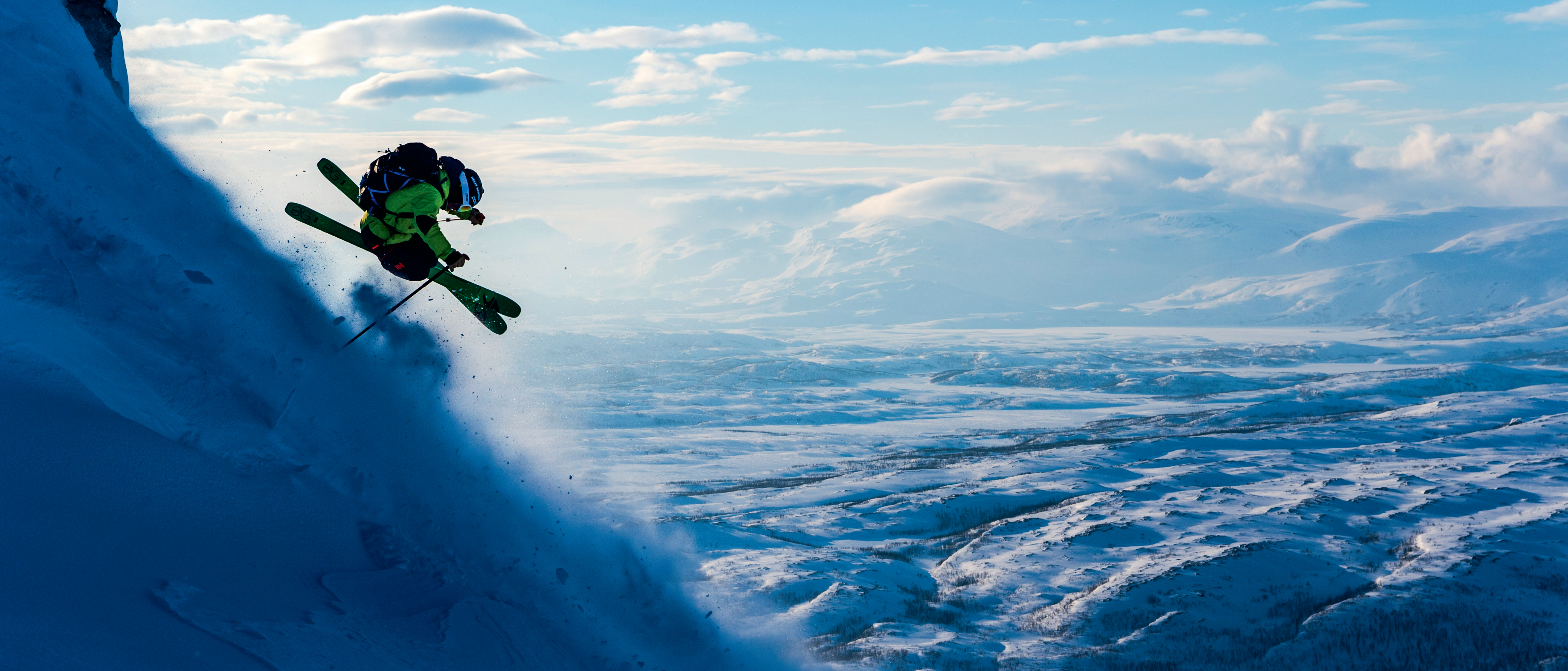
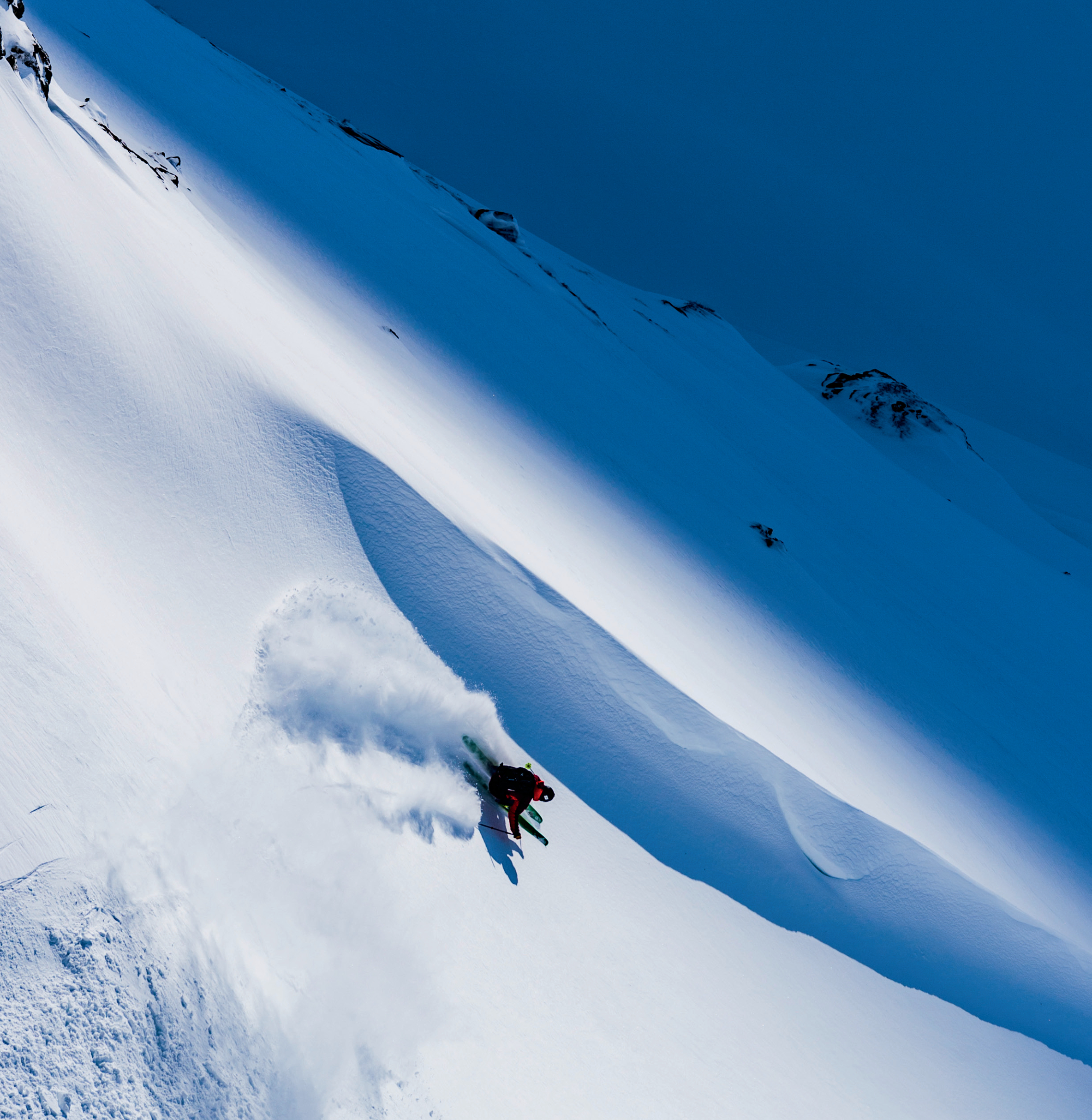
Somebody already laid a skin track, which makes our first tour to Bajip Gohpácohkka a fast and smooth one. The snow is super light when I drop in, and the movement between my turns feels like swimming in a bowl of cotton balls. This is definitely not your typical Swedish ski day! The lap is short, but steep with up to 50 degrees. The snow cover feels stable, most likely because the storm came in from the Atlantic ocean with a lot of moisture. After a break and a quick waffle lunch, we set off to climb Loktacohkka on the other side of the hut. We find our way through the storm and rip the skins off right next to the typical stone pile located at the summit.
The snowstorm lasted the whole day and carried a lot of snow, which makes us extremely cautious as we ski the 1,000 vertical meters run towards Kopparåsen and down to the road from Kiruna to Narvik. The terrain is steep and more exposed, so the danger is a lot greater on this side of the mountain. Entirely alone, we feel pretty small, and naturally, we select our lines rather conservatively. All of a sudden, the sky opens up. The remaining 600 vertical meters are magical, especially the last wind-protected pitch down to the train station in Kopparåsen. It is mid-April, but here, in the Arctic, it's still mid-winter and the skiing is as good as it gets.
Once down in the valley, it's a bunch of happy skiers skinning back up to the Låktatjåkko Mountain Lodge during the blue hour. The perks of staying at this hut include being located high up in the mountains and having quick access to the terrain in the morning. Staying at the hut also provides a nice, familiar feeling. Guests and staff meet in the combined living room and bar to read and talk at night. There is no Internet, barely any cell service, but a lot of good books and a surprisingly good selection of beer, wine, and whiskey. The restaurant also serves excellent local food, such as reindeer and elk. The next day, we head west after an early breakfast. It's quiet; the only sound comes from our skis and skins.
We cover a bit of distance before we reach the summit of Gearggecorru (1,419 meters). The view is stunning: big mountains everywhere. The terrain is wild and impressive. It almost feels a bit surreal that we are in Sweden. It feels more like the Alps or at least like Norway. There is not a single person around, even though we are relatively close to civilization and in a popular mountain area. We drop in towards Rissajaure, Northern Europe's clearest lake, and I enjoy every second of the skiing before we finally reach the Låktatjåkko train station.